
After the AfD’s win in the German state of Saxony-Anhalt, refugees and civil-society groups warn that the party’s influence could be felt long before it potentially changes or influences the law -- through tougher administration, restricted access to work and education, and a growing climate of exclusion, created through its dominant presence in the state's parliament.
The far‑right Alternative for Germany (AfD) celebrated its recent historic 43.8 percent result in Saxony‑Anhalt as a mandate for a "deportation and remigration offensive."
Although the party fell three seats short of an outright majority in the state parliament, it still won more than double the vote share of the governing Christian Democrats (CDU) -- making it the strongest result ever achieved by a far-right party in a German state election since before the Second World War.
The AfD's election program for Saxony‑Anhalt promises more deportation detention, centralized refugee housing, compulsory work for asylum seekers, "special classes" for children without permanent residence, and cuts to integration and democracy‑promotion programs.
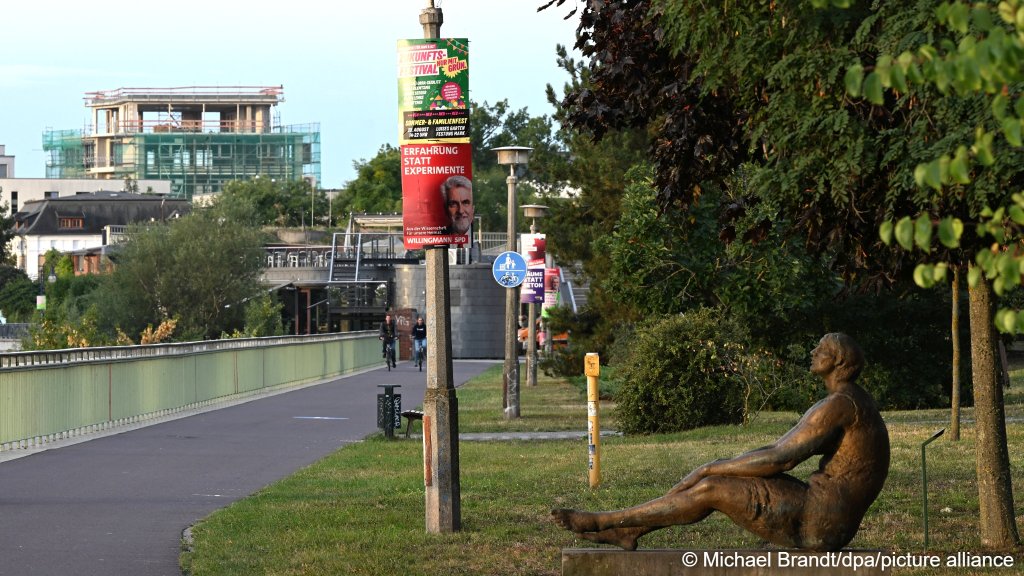
It remains unclear to what extent such measures can and will be implemented. However, for refugees and people with a migration background, the most immediate changes will likely be felt in everyday experiences and in the way neighbors think and talk about who belongs, and who doesn't.
"Our concern is that a policy based on deterrence, control and exclusion would make everyday life much more uncertain for many people," says Saaeid Saaeid, spokesperson for the Saxony‑Anhalt Refugee Council, speaking to InfoMigrants.
"This would affect not only possible changes to legislation, but also the atmosphere in public authorities, accommodation centers, schools, workplaces and public spaces."
Experts warn that, whatever government emerges from coalition talks, Saxony‑Anhalt is already becoming a "testing ground" for how far an openly hostile approach to migration can be pushed through administrative practice and political discourse.
Read AlsoAfter AfD's record result: Voices from Saxony-Anhalt
Climate of exclusion
Reem Ahmed, a researcher at the Institute for Peace Research and Security Policy at the University of Hamburg (IFSH), argues that the AfD’s program must be read not only as a list of measures, but as part of a broader ethno-nationalist project.
"This kind of discourse contributes to a broader climate of exclusion and helps to normalize hostility towards refugees and people with a migrant background," she says. Those likely to be affected include not only people without secure legal status, but also "those with long‑term residence permits -- or even German citizenship -- who do not conform to the AfD’s ethnic-nationalist view of who can be considered 'German'."
Ahmed expects this to translate into increased "social withdrawal, greater reluctance to approach authorities or seek support," as well as broader symbolic effects that reinforce marginalization of already vulnerable communities.
Karl Kopp, Europe director of the refugee‑rights organization Pro Asyl, describes the AfD’s chapter on "immigration and remigration" as "de facto a program of expulsion."
"It turns hatred, social exclusion, detention and deportation into guiding principles -- and spreads fear and terror among those affected," he says.
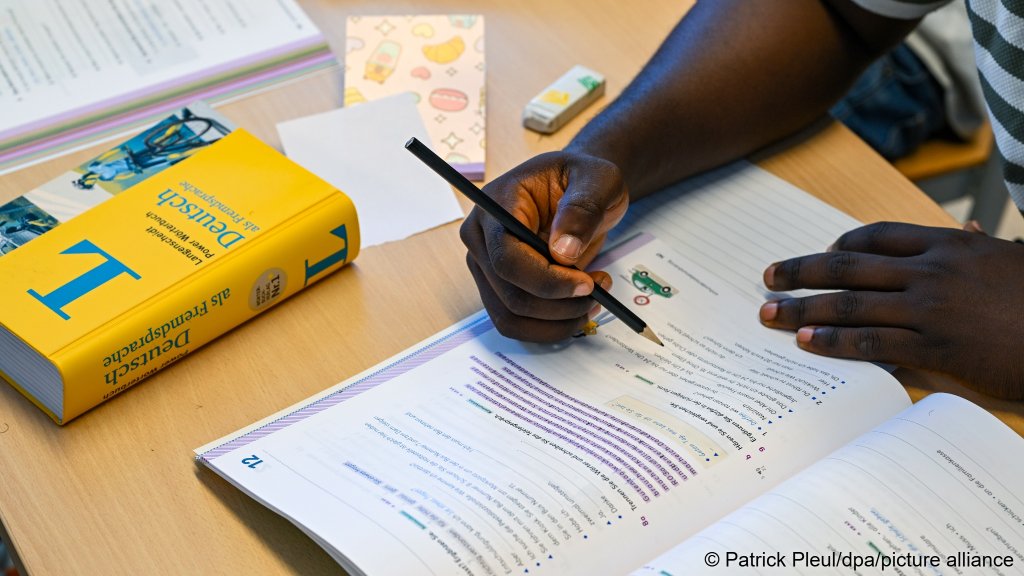
Saaeid notes that since the vote, he has been inundated with questions from refugees and people with a migration background.
"Many people are already asking: What does this mean for my residency status, my family, my children, my work and my future?" he says. "Particularly affected would be people in asylum procedures, people with tolerated status, people with residence restrictions and those who depend on counseling and support."
For him, the key point is where policy is actually experienced by those affected. "Politics is decided not only in the statute book, but in everyday life," he says.

Those concerns are already visible on the streets of Magdeburg. In the run‑up to the vote, around 150 migrant‑owned shops took part in a "Migra‑Strike," closing for several hours in protest against racism and to signal, they said, what they believed an AfD‑led state could mean for their businesses and families.
Since the election, interviews with migrants and minorities in Saxony‑Anhalt have described people weighing whether to leave the state, fearing attacks and feeling that their future has suddenly become insecure.
Read AlsoImmigrant‑owned businesses in Magdeburg stage 'Migra‑Strike' ahead of state election
Administration as a pressure tool
Even if the AfD ends up running the state government, the party cannot abolish the individual right to asylum or conclude its own international return agreements, as these things are done on a federal level. However, Saaeid points out that "implementation [of these rules] takes place locally." Germany operates in a decentralized federal system, therefore individual states and the politicians in government have significant influence over state authorities, initial reception centers, schools and funding priorities, while its influence over municipalities and other local bodies would depend on the relevant legal and administrative arrangements.
Kopp sees particular danger in the everyday work of the administration under what he describes as "this new ethno‑nationalist guiding principle," which the party has set out.
"That is where tolerated status, hardship cases, work and residence permits, accommodation and deportation detention are decided," he says. "An AfD‑led administration could delay decisions, harass people seeking protection and create maximum pressure."
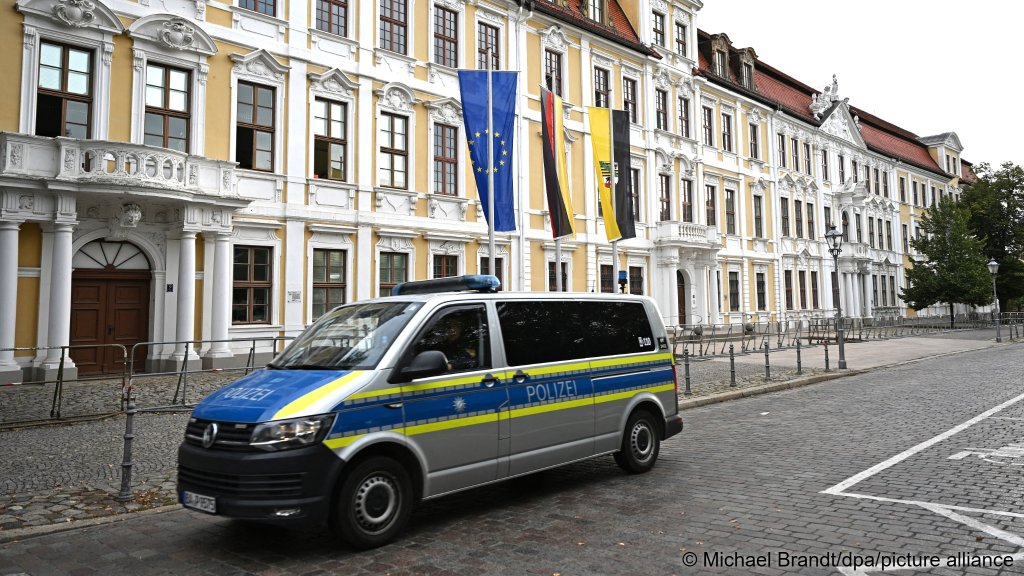
Kopp also points out that many legal safeguards in Germany operate primarily through individual administrative or judicial proceedings. "Those affected would then have to defend themselves in court in each individual case. That is why strong advisory services and adequately funded legal aid are needed," he thinks.
The courts may be able to provide interim relief in urgent cases, but a definitive legal challenge can still take months or years. In the meantime, says Kopp, "the ethnic nationalists' calculation is to create facts on the ground -- and to rely on judicial corrections coming only months or years later," he adds.
Read AlsoAnalysis: The legal limits of an AfD government in Saxony-Anhalt
Segregation and surveillance
One of the AfD’s central demands is to "centralize" refugee accommodation away from city centers and extend stays in large reception centers.
Ahmed warns that this "physically separates refugees from everyday social and economic life." Adding that "it raises practical barriers to inclusion and sends a message that people are unwelcome and temporary."
Saaeid states that longer stays in large centers, combined with stricter residence obligations, would be felt as constant pressure. This would especially be felt through "more difficult access to work," essential services and social participation, he says.
Advocacy groups in the state have pointed to the psychological impact of living for months or years under permanent supervision, with the fear that any missed appointment or minor mistake could be used to threaten removal.
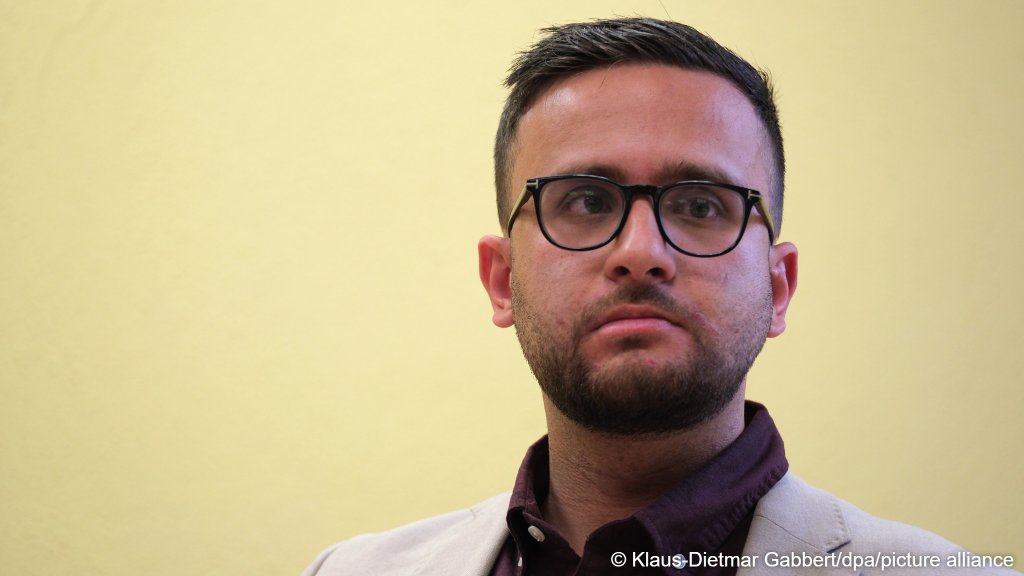
The AfD’s program also proposes "special classes" for children with temporary residence status, presented as a way to address language barriers and prepare for possible return.
Ahmed sees such measures as "inherently exclusionary and they signal othering from the outset," she says. They mark children as 'different' and reinforce stigmatization and separation from their peers rather than enabling integration and inclusion."
For Kopp, the idea crosses a line."Children would be judged not by their educational needs, but by their parents' origins. 'Permanent special classes' are clearly unlawful."
He notes that EU rules on reception conditions require equal access for asylum‑seeking children to the regular education system and allow teaching outside mainstream classes only for short transitional periods.

Saaeid also stresses the effect on children's lives. "Children need rapid access to the regular school system, to language, social contacts and a stable everyday routine," he says.
Teachers' organizations and education experts have similarly warned that segregated classes risk creating parallel structures that cut children off from pathways into training and higher education, and can reinforce prejudice among classmates and parents.
Read AlsoWhat would the AfD change in Saxony-Anhalt?
Compulsory work under blocked access
Another AfD proposal is a work obligation for asylum seekers -- a requirement that people receiving state support undertake work or community service, under threat of sanctions.
"The demand for compulsory work is cynical, but unfortunately not new," says Kopp. "Refugees are already prevented from entering regular employment by extensive work bans and bureaucratic hurdles. We have been criticizing this for years."
"First excluding people from the labor market and then obliging them to work creates a discriminatory special law," he says.
Saaeid argues that integration through work cannot be achieved through punishment.
"Work and integration do not function through coercion and deterrence," he says. People need "real access," including language courses, work permits, recognition of qualifications and stable living conditions. "If integration and democracy‑promotion are cut at the same time, exactly those structures disappear that prevent conflicts and strengthen cohesion."

Saxony-Anhalt has higher unemployment and lower full-time earnings than the national average, even as employers report shortages in sectors including manufacturing, healthcare, logistics and hospitality. This makes access to regular employment particularly significant -- but it does not mean that refugees can automatically fill those vacancies, since their access depends on their status, residence arrangements and any applicable work restrictions.
Under the EU’s recast Reception Conditions Directive, applicants for international protection must generally be given access to the labor market no later than six months after their application has been registered, provided that no first-instance decision has been taken and the delay is not attributable to them. Member states may allow access earlier.
Research and policy literature link early, regular employment with greater self-reliance and more positive relationships within local communities. Yet in Saxony-Anhalt, refugees anticipate a situation in which they remain excluded from ordinary jobs while being compelled to undertake low-paid or unpaid assignments. They say this risks treating them as a reserve workforce rather than as members of society.
Deportation task forces and the politics of belonging
The AfD also wants more deportation detention and a state‑level "task force" to coordinate removals, promising "deportation from minute one" for people without residence permits.
While a state government can not independently decide who has a right to asylum or residence, it could prioritize deportations in budgets and staffing, expand detention capacity and put political pressure on municipalities to cooperate.
"A state government cannot suspend existing law, the Basic Law or binding distribution rules," Kopp says. "The danger, however, is that an AfD‑led administration could systematically use its discretionary powers against refugees."
He adds that "a task force would concentrate the state’s pressure and enforcement against people seeking protection. The AfD’s role model is [something akin to the US Immigration and Customs Enforcement squad] ICE."
Kopp argues that US practices, which include raids, mass arrests, publicly staged deportations -- show how "deportation authorities can become instruments of authoritarian deterrence" for entire communities.
The comparison is a political assessment rather than a legal prediction. German authorities would still be bound by constitutional safeguards, EU law and judicial oversight. But Kopp fears that the intent -- to make migration feel risky at every step -- could influence how enforcement powers are used.

Beyond specific measures, Ahmed sees the AfD’s victory as part of a shift in how belonging is defined.
"Such measures reinforce the AfD’s message that asylum seekers are regarded as unwelcome and temporary," she says. "More broadly, this aligns with the party’s political project of drawing sharper boundaries around who is considered to belong to German society and who should be excluded."
Journalists and researchers in Saxony‑Anhalt have reported increased fear among migrants of verbal abuse and attacks, a rise in racist incidents, and a sense among immigrant‑owned businesses that they must visibly show resistance or risk being silently marginalized.
At the same time, there have been protests, neighborhood meetings and solidarity actions in support of migrants and minorities -- signs that the state is also becoming a test‑case for how robust democratic counter‑mobilization can be.
Read AlsoHow Mustafa is taking on the far-right AfD in Saxony-Anhalt?
Turning fear into collective action
For refugee organizations, the question is now how to respond if Saxony‑Anhalt becomes a testing ground for far‑right migration policy.
"Our strategy is: inform, advise, document, network and publicly contradict," says Saaeid. "Those affected need reliable information: What is really changing? What will not change overnight? Which rights still apply? Where is support available?"
He urges people not to make panic decisions, but to seek advice and assistance, secure documents, observe deadlines and learn about their rights.
"We must not go into shock. We have to translate fear into counseling, protection and collective action," he says.
Kopp calls for organized human rights monitoring to allow for unlawful decisions to be challenged quickly, racist attacks and abuses by state authorities to be documented, and independent advice and legal assistance to be protected.
"Together with initiatives in Saxony‑Anhalt, we have to act on several levels...and, above all, protect those affected in practice."
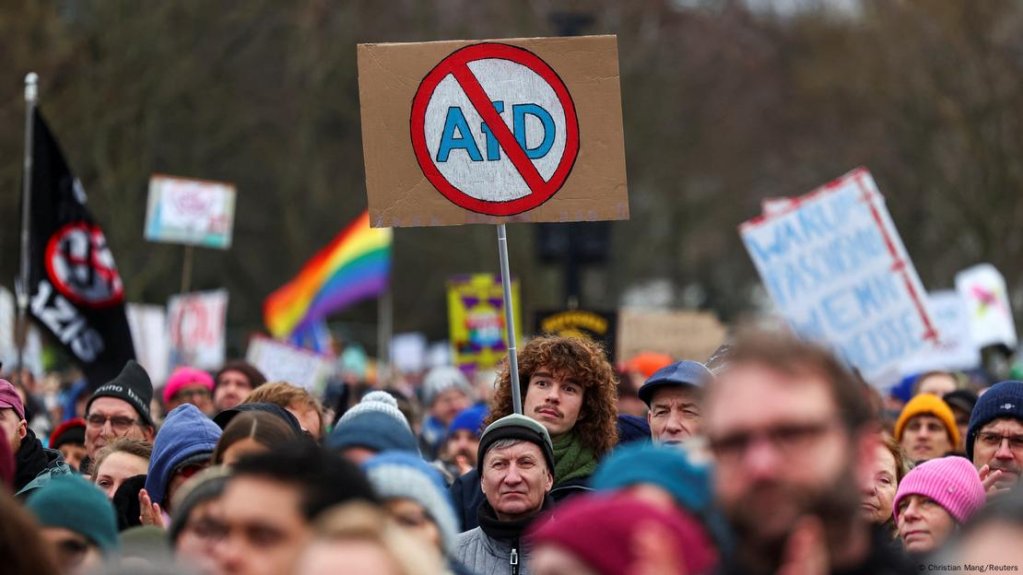
Broad alliances are essential, says Kopp. "We need strong refugee councils and initiatives like victim‑support organizations. And of course we have to forge strong alliances with churches, trade unions and committed municipalities. Together, we are defending an open, democratic migration society."
Ahmed, too, stresses the importance of civil‑society networks in offering practical help and making discriminatory practices visible.
"Civil society can play a crucial role by exposing restrictive practices and building local solidarity networks" to help people access key services, she says. "The goal should be twofold: to offer practical support whilst also ensuring that discriminatory practices are documented and made publicly visible."
Read AlsoWhat does Saxony-Anhalt's election mean for migrants?