
Some six weeks after the mass arrival of migrants to Spain's Ceuta enclave, police have relocated hundreds of migrants to a new facility. Authorities have moreover said that over 5,000 migrants were sent back to Morocco over the last month.
The Spanish government says work is accelerating on two new accommodation facilities in the country's enclave of Ceuta. According to news agency Reuters, the two sites are to house more than 1,000 people.
The goal is to move more migrants who entered Ceuta in late July off the streets, Reuters reported on Monday (September 14).
Meanwhile, tents in Ceuta's port area are almost ready to accommodate migrants, according to news agency EFE.
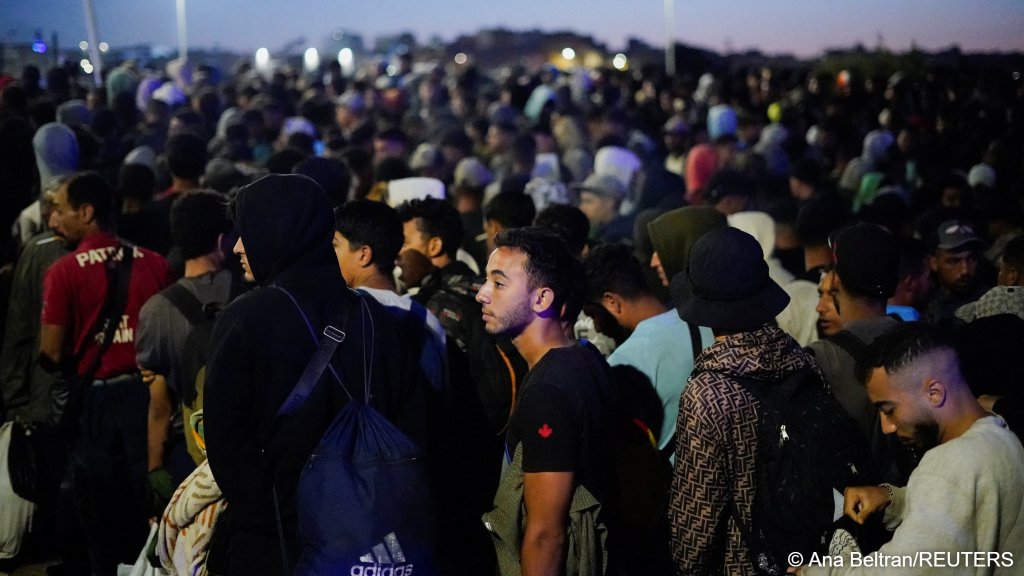
Beltran/Reuters
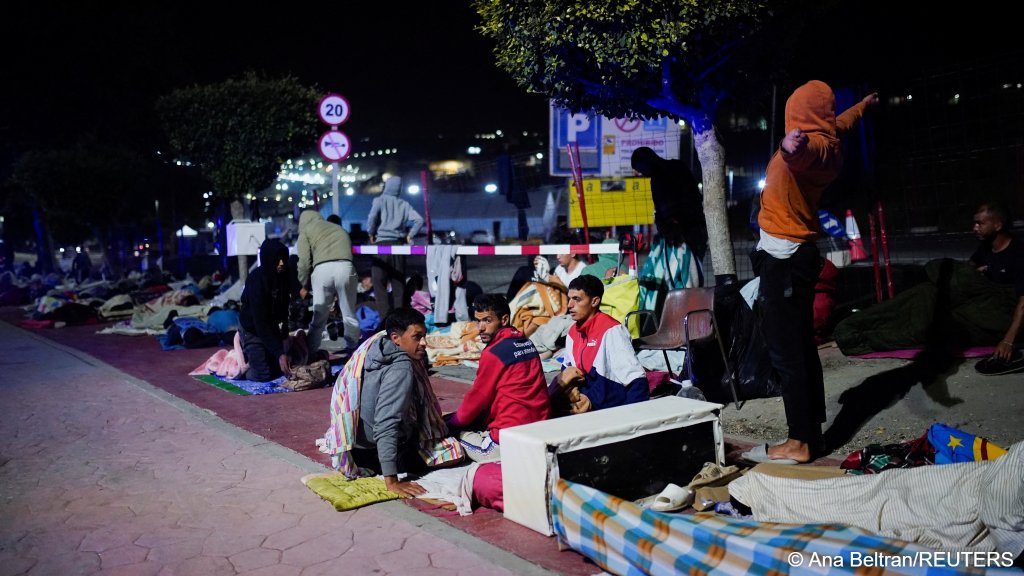
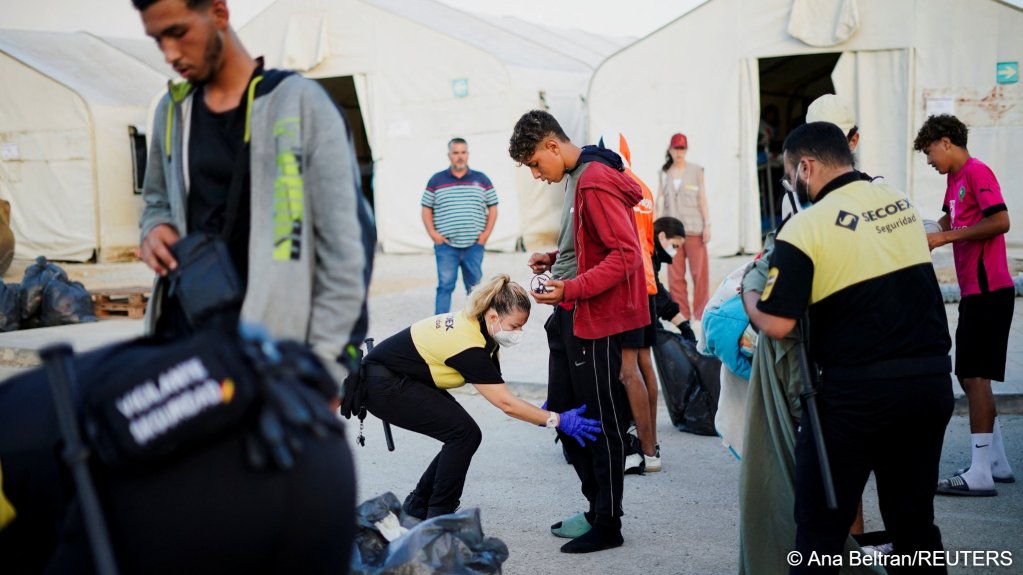
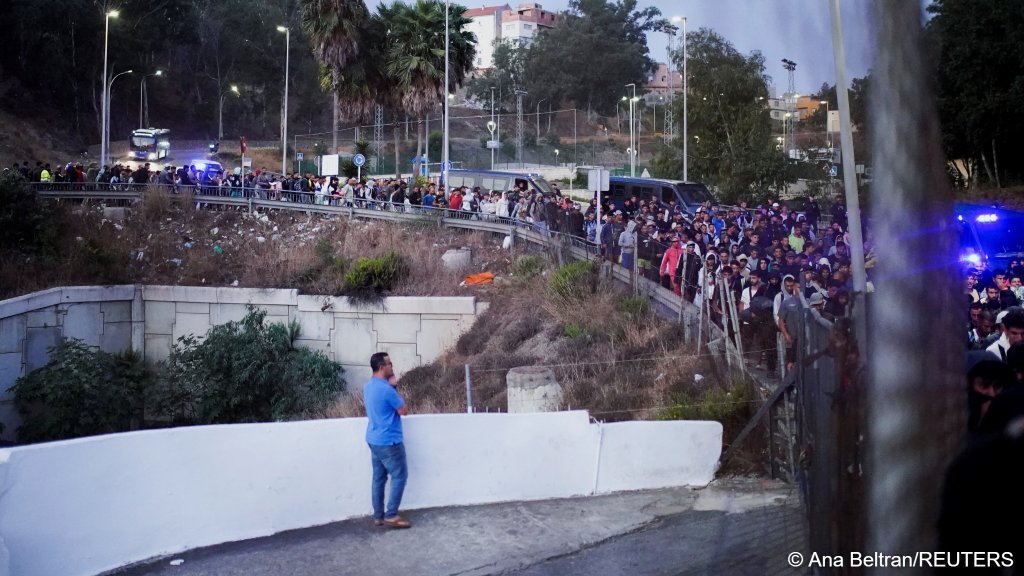
Beltran/Reuters
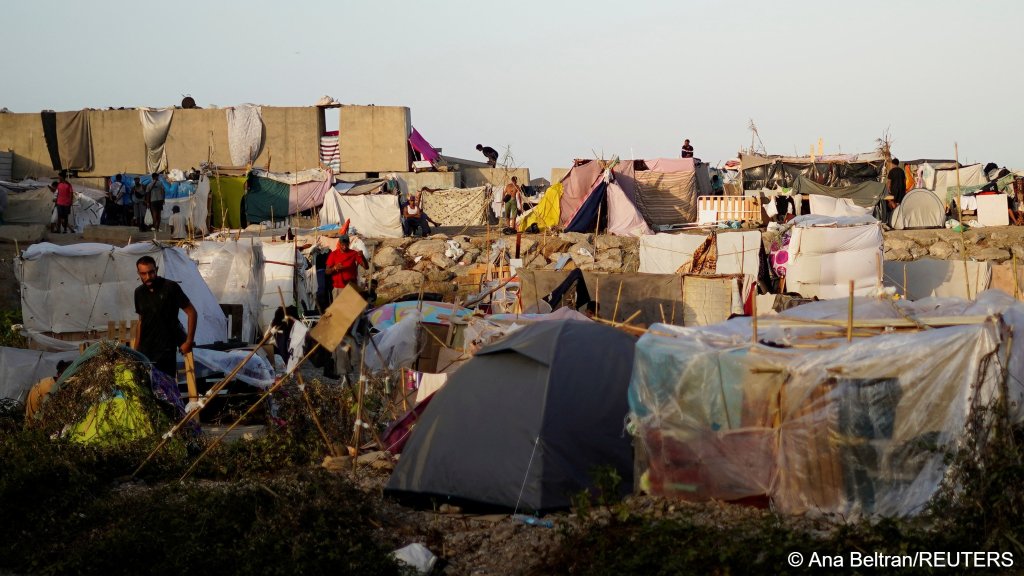
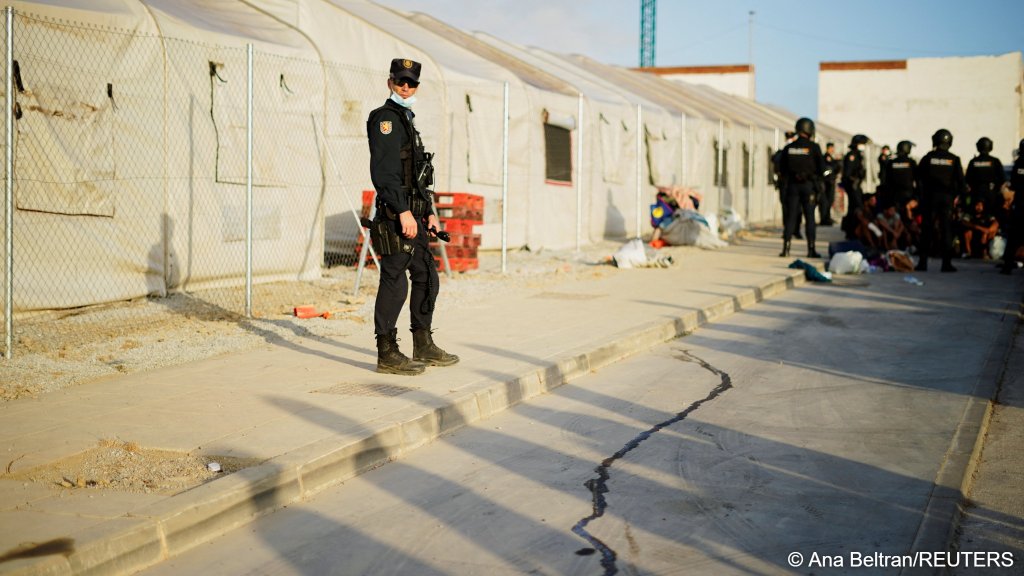
mass crossing of migrants at the border with Morocco in Ceuta, Spain on September 13, 2026 | Photo: Ana Beltran/Reuters
Separately, the five cases of chickenpox detected among the unvaccinated migrant population in Ceuta are "contained and isolated," EFE reported citing a statement by the National Institute of Health Management.
Since late July, when tens of thousands of mostly male migrants crossed from Morocco into Ceuta over the span of two days, the situation in the enclave has become a significant source of political tension as well as unrest.
Over 70,000 migrants reportedly swam from Morocco to Ceuta or climbed over border fences on July 30 and 31. Around 100 reportedly died. Most migrants who managed to enter the Spanish enclave returned immediately.
Read AlsoCeuta: Fires destroy makeshift migrant homes
Over 5,000 migrants back in Morocco
On Sunday (September 13), the Spanish government reported that over 5,300 migrants left Ceuta for Morocco over the course of the last month. This is expected to take some pressure off the tense enclave as Prime Minister Pedro Sanchez faces criticism ahead of next year's election.
Since the mass arrival, authorities have worked to process asylum claims for those remaining. But, from pictures and various government estimates, hundreds, if not thousands have remained sleeping in makeshift shelters on the streets and beaches of the enclave.
Government response lead Angel Victor Torres stated via social media that 5,321 individuals had "voluntarily returned" to Morocco since August 10. Furthermore, 90 people had "given up" protection requests and "almost 1,000 people are being registered with the aim of being able to complete their return proceedings," he added.
Read AlsoCeuta: What you need to know about migrant returns
While Ceuta leader Juan Jesus Vivas, a member of the conservative Popular Party (in opposition in Spain's central government) estimated 13,000 migrants remain, government estimates for the numbers in Ceuta are significantly lower. Protesting locals accuse officials of abandoning the city amid an ongoing humanitarian crisis, prompting the migration ministry to add 864 temporary shelter spaces, pushing total capacity to roughly 4,300.
with AFP, Reuters