
The UK and Belgium signed an agreement on Wednesday to allow faster information sharing in an effort to target people-smugglers operating small boats carrying migrants across the Channel from Belgium to the UK.
The UK and Belgian government have signed a new law‑enforcement agreement to disrupt organized criminal gangs behind small‑boat crossings of the English Channel, as smugglers increasingly operate out of Belgium in a shift attributed to a crackdown by British and French authorities to stop crossings from northern France.
Signed on Wednesday (September 9), in London by British Home Secretary Shabana Mahmood and Belgian Interior Minister Bernard Quintin, the UK‑Belgium Law Enforcement Cooperation Agreement (LECA) will enable police in both countries to exchange intelligence autonomously and more quickly, helping identify, disrupt and dismantle people‑smuggling networks, Britain’s Home Office (interior ministry) said in a statement.
Under previous arrangements, certain information exchanges required judicial approval before intelligence could be shared, creating delays at critical stages of investigations and reducing investigators' ability to develop a timely picture of criminal networks operating across both countries, the ministry added. The new deal removes those barriers, allowing officers to share information autonomously and act faster against cross‑border criminals, while strengthening joint investigations and specialist training to detect and disrupt activity linked to small‑boat crossings and wider organized crime such as drugs and firearms smuggling.
Read AlsoUK and France expand Channel policing
UK seeks closer cooperation with EU
The ministry described the deal as the first law enforcement agreement of its kind between Britain and an EU member state since the UK left the bloc in early 2020.
Mahmood said the agreement would help UK and Belgian police "tighten the net around the criminal gangs behind small‑boat crossings," adding that migrant smuggling networks operate across borders and that the UK would work with international partners to track them down and bring them to justice. She said small‑boat crossings were down significantly but that more work was needed.
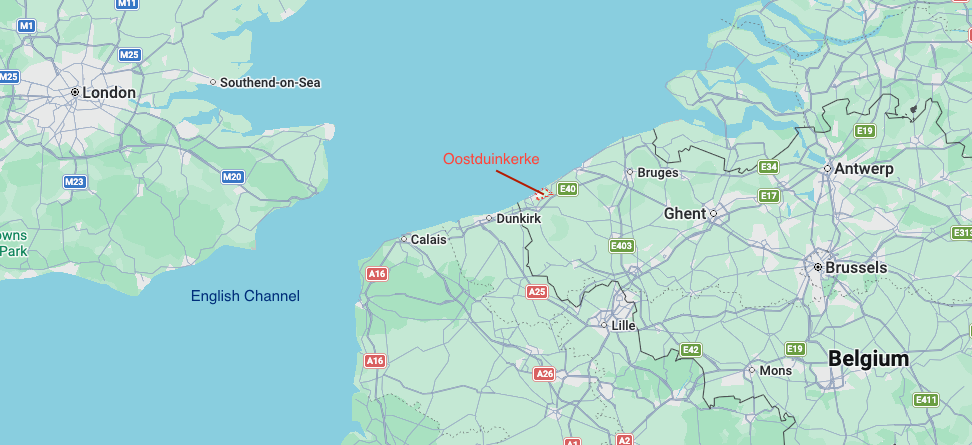
Quintin said Belgium and the UK, as neighboring countries were aiming for close operational police cooperation that had already delivered concrete results, and that the new text strengthened their tools to fight migrant smuggling and drug‑related organized crime together "with greater effectiveness."
Belgian government figures showed in May that the country had intercepted more than 400 people attempting to cross the Channel since the beginning of the year, while no boats were spotted in the whole of 2025 according to government figures. Officials said this was a result of France cracking down on crossings to England’s southeast coast from near Calais. Britain’s interior ministry said cooperation with Belgian authorities had resulted in more than 50 arrests linked to migrant smuggling and over 40 vehicle seizures this year.
Read AlsoUK: Small boat arrivals fall to a seven-year low
Focus on organized crime
Earlier this year, organized crime facilitator Adem Savas was sentenced to 11 years' imprisonment and fined 400,000 euros in Belgium for supplying thousands of boats and engines to criminal networks involved in migrant smuggling across the English Channel. The conviction followed a joint investigation between the National Crime Agency (NCA) and Belgian authorities after his arrest at Amsterdam Schiphol Airport in November 2024.
NCA International Director Will Middleton said in a statement that Belgium was one of the agency’s most important partners and that the agreement would allow deeper cooperation and improved intelligence sharing against drug traffickers, firearms smugglers and people smugglers.

Last month, the Home Secretary announced a record deployment of NCA officers to tackle organized immigration crime, with the number of dedicated officers increasing from 376 at the start of 2025 to almost 800. Working alongside international partners, those officers have helped seize more than 1,100 boats and engines since the election.
Read AlsoFrance: One migrant dead, 81 rescued as Channel crossings resume
Increasing politicization of small boat arrivals
London has been grappling with how to reduce Channel crossings for the past few years. The issue has become increasingly political and has been seized on by far-right parties and activists in the UK, with violent protests becoming more common. The UK government has said that the number of irregular migrant arrivals over the summer months was the lowest since 2020, in part because of its enforcement deal with France.

People crossing the Channel in small boats are often fleeing war, persecution, famine or extreme poverty, and many have already endured abuse and exploitation on long, dangerous journeys, including in places like Libya, according to humanitarian groups. There is no safe, general route to apply for asylum from outside the UK, and existing refugee resettlement schemes are limited and targeted, which organizations say pushes some toward irregular routes. Those who aim specifically for the UK often cite family reunification, language ties, former colonial links, unsafe or unstable conditions in other European countries, and previous failed asylum claims elsewhere as factors.
In April 2026, the UK and France signed a new three‑year border security deal under which Britain would pay France up to 660 million British pounds (around 768 million euros) to reduce irregular Channel crossings, funding a large increase in personnel on France’s northern coast and new surveillance tools. As UK-French policing has intensified along the French coast, smuggling networks have adapted, with growing use of Belgian departure points and routes, according to migration monitors, as well as some departures from further south on the French coast, leading to the arrival off the Isle of Wight and eventual disembarkation near Portsmouth earlier this week.
The deadliest recorded small‑boat disaster in the Channel occurred in November 2021, when an overcrowded inflatable dinghy sank, killing at least 31 people, including a seven‑year‑old child -- only two people survived. In September 2026, 14 suspected smugglers went on trial in Paris over the disaster, facing charges including manslaughter and facilitating irregular immigration as part of an organized criminal group.
Read AlsoFrance: Suspected people smugglers on trial over mass Channel drowning
With AFP