
The AfD fell three seats short of an outright majority in Saxony-Anhalt. Whether it governs as a minority, coalition, or remains in opposition, its ability to reshape migration policy will depend on the limits of German and European law -- and on how much influence it gains over the state administration.
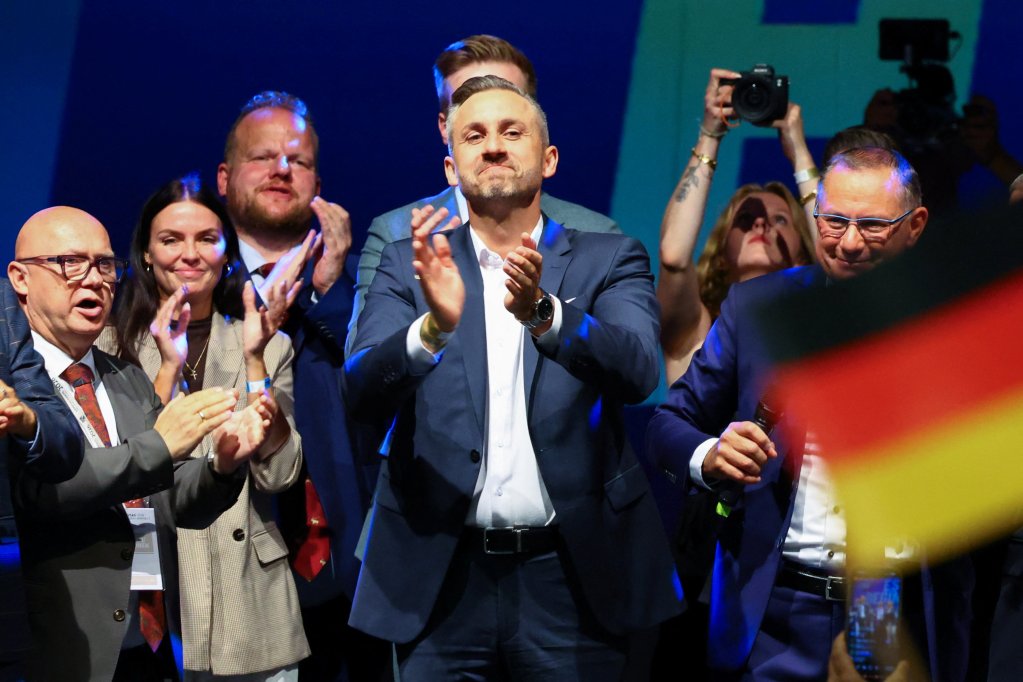
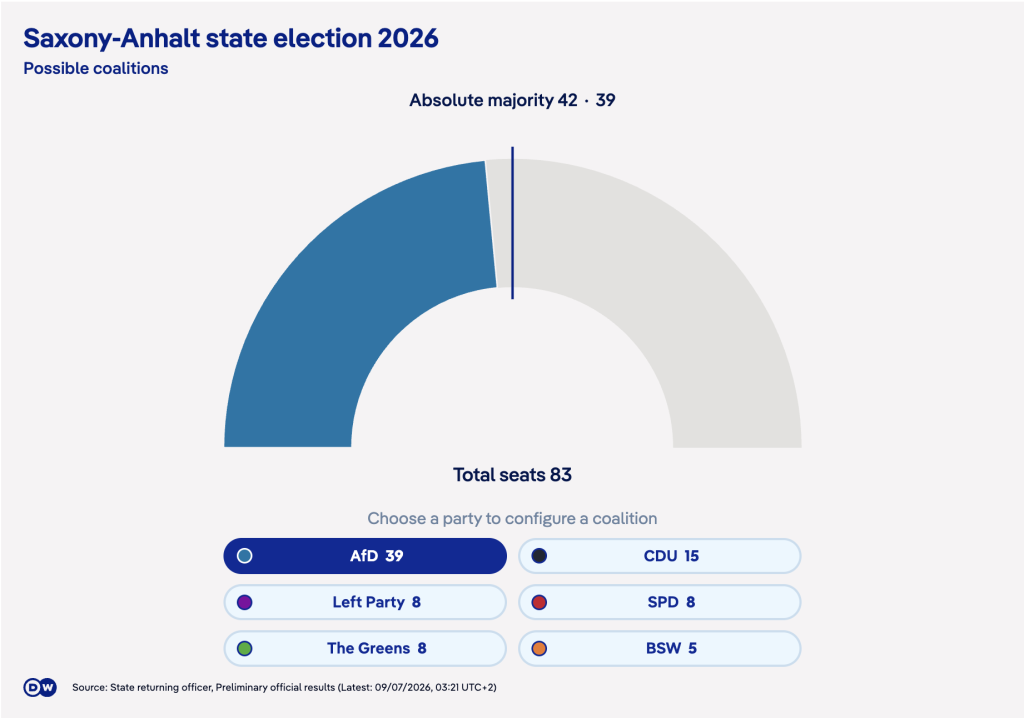
The far-right Alternative for Germany (AfD) party’s 43.8 percent result in the east-central German state of Saxony-Anhalt has opened the possibility of the party entering state government for the first time. It won 39 of the 83 seats in the state parliament -- three short of the 42 needed for an absolute majority. The result leaves the party with several options: it could attempt to govern as a minority, seek an arrangement with the Sahra Wagenknecht Alliance (BSW) or remain in opposition while using its unprecedented parliamentary strength to pressure the parties that govern.
The party's ability to implement its program would nevertheless be limited. Many of its central demands concern asylum, residence and social policy, areas largely governed by federal or European law. Therefore the more immediate question is not simply whether the AfD could change the law, but how far it could change the way existing rules are applied.
For migrants and refugees, that distinction could be decisive.
"It is important to be clear that not everything falls within the competence of a federal state, and not everything can be changed overnight," Saaeid Saaeid spokesperson for the Saxony-Anhalt Refugee Council told InfoMigrants.
"But state-level politics has considerable influence over how laws are implemented -- whether in a human-rights-based and fair manner, or in a way that is as restrictive and deterrent as possible," he added.
Read AlsoWhat would the AfD change in Saxony-Anhalt?
What the AfD could not do
The center-right Christian Democratic Union (CDU) won 15 seats, while the center-left Social democrats (SPD), Greens and The Left each won eight. The BSW took five seats. An AfD-BSW government, or a government formed by all other parties excluding the AfD, would each have 44 seats, just enough for a majority.
The BSW has ruled out a formal coalition with the AfD but has said it could cooperate with the party on individual projects. It has also raised the possibility of tolerating an AfD minority government. The CDU, SPD, Greens and The Left have rejected cooperation with the AfD.
A legal analysis on the website of German public broadcaster ARD's news program Tagesschau found that roughly two-thirds of the AfD’s migration proposals could not be implemented as presented: some fall outside state competence, while others would conflict with German, EU or international law even if attempted at the federal level.
Saxony-Anhalt could not suspend the individual right to seek asylum, impose a blanket admission stop, conclude its own international return agreements or refuse people allocated to it under the Königstein quota. The state currently receives around 2.7 percent of asylum seekers distributed among Germany’s states.
Sarah Lincoln, legal director at the Society for Civil Rights, told InfoMigrants that several of the AfD’s central demands would be legally impermissible.
"Many of the migration-policy measures announced by the AfD in Saxony-Anhalt fall neither within the state’s competence nor would they be legally permissible at the federal level -- for example, abolishing the individual right to asylum, imposing admission stops or revoking naturalizations," Lincoln said.
Permanent special classes for refugee children could also raise serious constitutional and European-law concerns. Funding for integration services could be reduced or redirected, but not below legally required minimum standards.
Lincoln said the AfD’s demands could nevertheless influence other parties and the wider political debate.
"The AfD is already having far-reaching effects on public discourse with demands of this kind, because it is driving other parties ahead of it and gradually making positions that violate human rights appear acceptable," she said.
Read AlsoGermany: Migration commissioner wants extra preschool year to become mandatory
The Interior Ministry
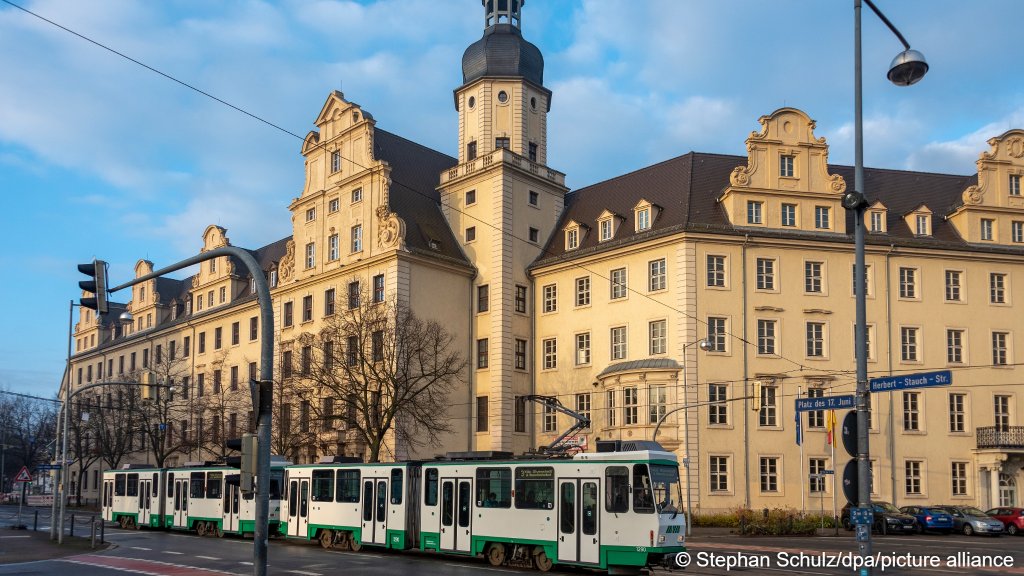
The Interior Ministry would be one of the most significant portfolios in coalition negotiations. It oversees the police and the state’s domestic intelligence service, while also influencing migration administration.
Markus Thiel, a professor of public law at the German Police University in Münster, told the German legal publication Verfassungsblog that a new interior minister could establish a different security policy without waiting for legislation to change. Possible steps include reorganizing departments, replacing political civil servants, shifting policing priorities and issuing instructions, decrees and guidelines.
"Above all, instructions, decrees and guidelines can quickly establish a significantly different line," Thiel said. "The new minister’s distinctive approach can therefore become visible very quickly."
In Saxony-Anhalt, the domestic intelligence service is integrated into the Interior Ministry. The minister has administrative and professional oversight and can influence its personnel, working methods and priorities.
A minister could not lawfully order the agency to stop monitoring a particular category of extremism, including the AfD, if that contradicted its statutory mandate. But significant shifts in emphasis would be possible.
The first signs of a politically motivated shift might appear through changes in staffing and policing. Thiel warned of the potential for "discriminatory, disproportionate, arbitrary or selectively targeted police measures," with warning signs emerging gradually through organizational and personnel changes.
Read AlsoImmigrant‑owned businesses in Magdeburg stage 'Migra‑Strike' ahead of state election
The administrative grey zone
Legal experts argue that the same distinction applies to migration administration. The state could increase detention capacity, create larger accommodation facilities and prioritize deportations within the limits of federal and European law.
It could not deport people where a legal obstacle exists, including a lack of identity documents or medical unfitness to travel. But officials could still use administrative discretion to increase pressure on people seeking protection, Lincoln said.
"For example, by further increasing the pressure to cooperate in obtaining a passport, granting tolerated status for vocational training less frequently or refusing to recognize medical certificates," she noted.
Lincoln also warned that a state government could instruct police to enter church premises and remove people in church asylum if the Federal Office for Migration and Refugees had rejected a hardship application. That is a possible legal and administrative scenario, not an established AfD policy, and would remain subject to legal challenge.

A government could create larger or more centralized accommodation facilities, but it would have to comply with European requirements concerning safety and the protection of vulnerable people.
Speaking to InfoMigrants, Karl Kopp, the Europe director of the NGO Pro Asyl, stated that an AfD-led administration could use its discretion to make life more difficult for refugees and migrants.
"The particular danger lies in the everyday work of the administration under this new ethnic-nationalist guiding principle: decisions on tolerated status, hardship cases, work and residence permits, accommodation and deportation detention," Kopp said.
"A state government could delay decisions, harass people seeking protection and create maximum pressure," he added. "Those affected would then have to defend themselves in court in each individual case. That is why strong advice services and effective legal-aid funds are needed."
Scenario one: AfD minority government
An AfD minority government could control the executive branch, appoint ministers and pursue policies within the existing legal framework. Thiel’s analysis of the Interior Ministry suggests that a minister could also reorganize departments, change personnel and set new administrative priorities without waiting for legislation to be amended.
It would not have a reliable majority in the Landtag (state parliament), however. It would need support from other parties for the budget and for major legislation. The result would be a government with executive power but limited legislative control -- able to change administrative practice, but dependent on shifting parliamentary majorities to pass laws.
Read AlsoGermany: new deportation center for rejected asylum seekers opens in Saxony
Scenario two: AfD-BSW agreement
An AfD-BSW agreement would give the two parties 44 seats, enough for a majority. That would allow them to elect a minister-president, approve a budget and pass state legislation if the arrangement remained stable.
The AfD would have a more reliable parliamentary basis for pursuing policies within state competence, including administrative and policing priorities. The BSW would nevertheless be indispensable. With only a two-seat majority over the 42 seat threshold to govern, it could demand policy concessions and ministerial influence, and disagreements could threaten the government’s survival.
The arrangement would remain subject to federal, European and constitutional law. It could not suspend the right to seek asylum, override federal residence law or independently conclude international return agreements.
Read AlsoGermany: From emigration to immigration destination
Scenario three: all other parties govern
The CDU, SPD, Greens, Left and BSW would also have 44 seats. They could therefore form a majority government, elect a minister-president and pass legislation if they reached a governing agreement and maintained coalition discipline.
But the five-party alliance would also only have a two-seat majority and would span major differences on migration, economic policy and security. Its stability would depend on all five parties supporting the government on key votes.
The AfD could not normally veto ordinary legislation with 39 seats against a united 44-seat majority. But, as the largest opposition party, it could use parliamentary inquiries, committees, motions and public pressure to expose disagreements within the coalition. That could make the government more politically vulnerable, although it would not give the AfD a formal blocking power.
Read AlsoGermany: How to woo voters with an immigrant background
Legal safeguards
For migrants and refugees, legal safeguards are crucial when a decision threatens detention, deportation, tolerated status, a work permit or access to accommodation and support.
Individuals can seek urgent relief from the administrative courts. The opposition can challenge what they consider to be unconstitutional state laws before the Federal Constitutional Court, while cities and districts can challenge what they consider to be unlawful state instructions.
But these remedies are generally triggered by individual decisions. They may correct an unlawful measure after it has been taken rather than prevent a broader administrative policy from emerging or work as a barrier against an ongoing disregard for rule of law principles.
Legal scholars including Thiel, have said public officials have a duty to object to unlawful instructions, but note that protection is limited. If an objection is rejected, an official may refuse an order only if it violates human dignity or clearly constitutes a criminal or administrative offense. Politically motivated instructions that remain formally lawful would therefore have to be challenged through the courts.
However, Lincoln told InfoMigrants that civil-society organizations were already preparing "to take action against measures by a future state government in Saxony-Anhalt that violate fundamental rights, and to stand alongside those affected."
She also points out that many rules "leave authorities with room for discretion or interpretation at the implementation level," including in accommodation, social support and integration services.
Municipalities could also work with welfare organizations to maintain advice and protection structures -- such as Diakonie, Caritas, the Workers' Welfare Association, the Red Cross and others, even if state funding were cut, Lincoln said.
Kopp warned that courts might intervene only after restrictive practices had already affected people’s lives.
"The ethnic nationalists' calculation is to create facts on the ground -- and to rely on judicial corrections coming only months or years later," he said.
Read AlsoWhat does Saxony-Anhalt's election mean for migrants?
Government or deadlock?
The AfD’s 43.8 percent result gives it considerable political weight without automatically giving it control of the state. Whether it enters government, supports a minority administration or remains in opposition, the party will shape coalition negotiations and the political debate.
Legal scholars suggest that control of the executive branch would be a more immediate issue than control of every relevant law. A new interior minister could use organizational changes, personnel decisions, policing priorities and administrative instructions to establish a different political line.
The AfD could not normally veto legislation if the other parties maintained a majority. But its strength could make a broad alternative coalition harder to manage, while an AfD-led administration could use existing administrative powers to pursue the most restrictive policies available within the law.
The decisive question is therefore how much control the AfD gains over the executive branch -- and whether courts, civil servants, municipalities, opposition parties and civil society can effectively challenge unlawful measures before restrictive practices become established.
Editor’s note: Passages attributed to Markus Thiel are translated from his interview with Verfassungsblog. Quotations from Saaeid Saaeid, Karl Kopp and Sarah Lincoln have been translated from German.
Clarification: This article has been updated to better clarify that both a coalition between the AfD and BSW, and a coalition of all other parties in the state parliament -- the CDU, SPD, Greens, Left and BSW -- excluding the AfD, would hold 44 seats -- a two‑seat majority over the 42 seats required to command a majority in the 83‑member parliament.