
A public opinion poll indicate that healthcare was the top issue at 15 percent, especially among 65-84 year olds. The issues of immigration, integration and law and order tied at 13 percent. Now, some are worried that if Sweden continues on its path of strict migration policies, it could have a detrimental effect on healthcare provision in the country.
Sweden will hold elections on Sunday (September 13) in what analysts say could return Social Democratic leader Magdalena Andersson to office and unseat Prime Minister Ulf Kristersson’s liberal-right governmental coalition.
Since Kristersson's coalition took office in October 2022, they have had support from the Sweden Democrats in order to get some of their policies through parliament. This has meant that migration policy has taken a stricter turn in recent years. Now, some analysts are wondering whether a stricter migration policy could actually be having a detrimental effect on Sweden's healthcare provision, all big issues for Swedes ahead of the upcoming election.
The Social Democrats are campaigning on a 2026 platform that combines stronger welfare services, tougher policies on organized crime, but they have pledged to maintain the increasingly restrictive immigration policies that came in the period after the 2015 refugee crisis.

Back then, Sweden received more than 160,000 asylum applications, more than 12 percent of all applications in the European Union. Around 35,000 were recorded to be unaccompanied minors.
Analysts describe post-2015 as a turning point when Sweden went from being a country with the highest numbers of asylum seekers per capita to one of the lowest a decade later.
The Swedish Migration Agency projects asylum applications to fall further, to around 4,200 in 2026 and 3,700 in 2027.
Increasingly restrictive migration policy
The shift in migration policy that began after 2015 saw increasingly restrictive policies across labor migration, asylum, family reunification, and access to social benefits.
- End of a route from asylum to employment
The spårbyte ("track change") was abolished. This ended the legal path that allowed rejected asylum seekers to switch to a work permit. Existing workers affected by the change would have to leave Sweden and apply from abroad.
In an email to InfoMigrants, the Swedish Migration Agency confirmed that around 650 people have received a deportation order as a result of this program.
- 'Teen deportations'
Minors who arrived with families or as labor migrants often faced expulsion upon turning 18, or a few years later, because residency based on parental ties expired or failed to convert to permanent status.
In March 2026, the Swedish government temporarily halted these teenage deportations and moved to reform the rules following widespread public backlash and protests.
- Increased salary threshold for certain occupations
Salary threshold was increased to at least 90 percent of the median salary in Sweden to qualify for a work permit
The government exempted 27 shortage occupations which included important healthcare jobs. These occupations require a 75 percent threshold.
- Government authorities required to act as immigration informants
Six government authorities are obligated to report people without a residence permit to the police: the public employment service, pensions agency, tax agency, social insurance agency, and two other national bodies. An estimated 30,000 to 50,000 undocumented people are projected to be affected.
A health sector dependent on foreign staff
An August 2026 poll by Novus, a private polling and research agency, asked 1,029 adults to choose their single most important electoral issue. Results indicate healthcare was the top issue at 15 percent, especially among the 65-84 year olds. Among 18–34-year-olds, immigration and healthcare were joint top, at 16 percent each. Among 50–64-year-olds, immigration and law and order tied for top place at 14 percent each.
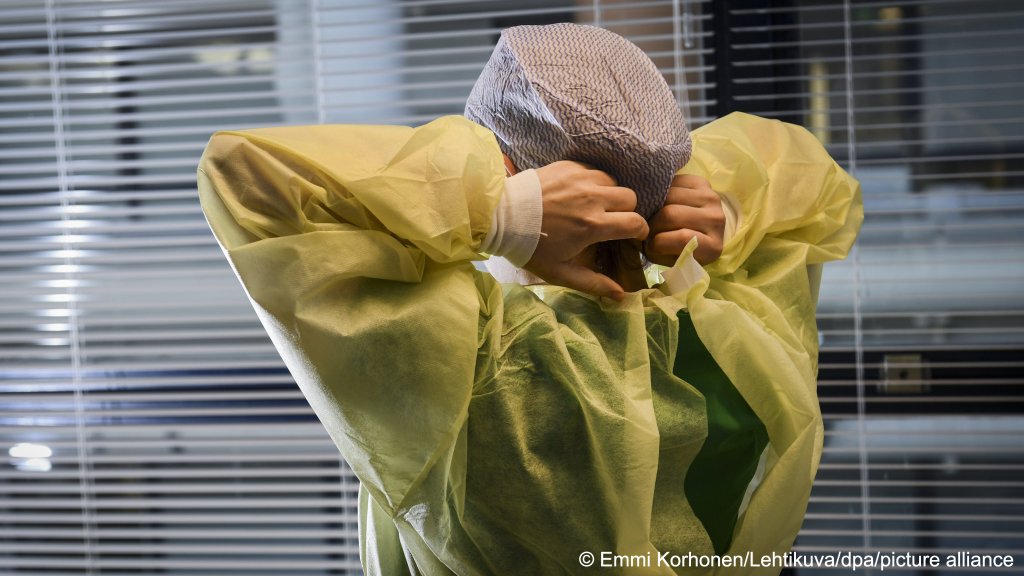
The electoral weight of healthcare and immigration reflects a practical tension between voters' demand for functioning public services powered by a migrant work force and Sweden’s increasingly restrictive migration policy. That tension is especially visible in the workforce where statistics indicate that 37 percent of specialist doctors, 53 percent of municipal care assistants and 37 percent of assistant nurses are foreign-born. Additionally, the government estimates that elderly care alone must recruit more than 50,000 additional employees by 2030.
This week, Henrik Emilsson, a senior lecturer at Malmö University, with a specialism on migration policy, wrote in The Conversation describing the government's migration policy as becoming "as restrictive as possible, while continuing to comply with the minimum standards required under EU law and international refugee law."
At the polls on Sunday, Emilsson said that the deciding factor is not "whether Sweden should maintain a restrictive migration policy, [rather] whether a future government can be trusted to do so."