
The mass arrival of people in the Spanish enclave of Ceuta from Morocco continues to be a flashpoint. As migrants continue to arrive, authorities in Ceuta call on the EU for help and Spain is criticized for its handling of the situation.
More than a month after it was estimated that more than 72,000 people crossed from Morocco into the Spanish enclave of Ceuta, the government is still grappling with addressing the needs of those who remain.
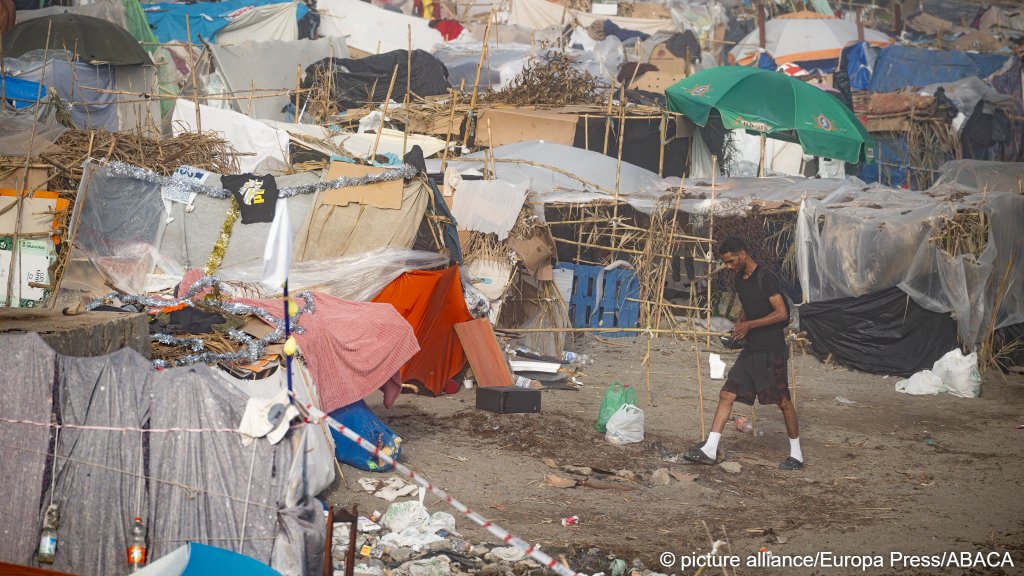
El Trampolin beach in Ceuta has emerged as an informal settlement for the irregular migrants. Makeshift shelters pieced together from cardboard, plastic and yards of cloth are hung from poles and sticks to make tents. Thousands have reportedly been moved from the beach into reception facilities but hundreds remain or returned despite government efforts to re-locate them.
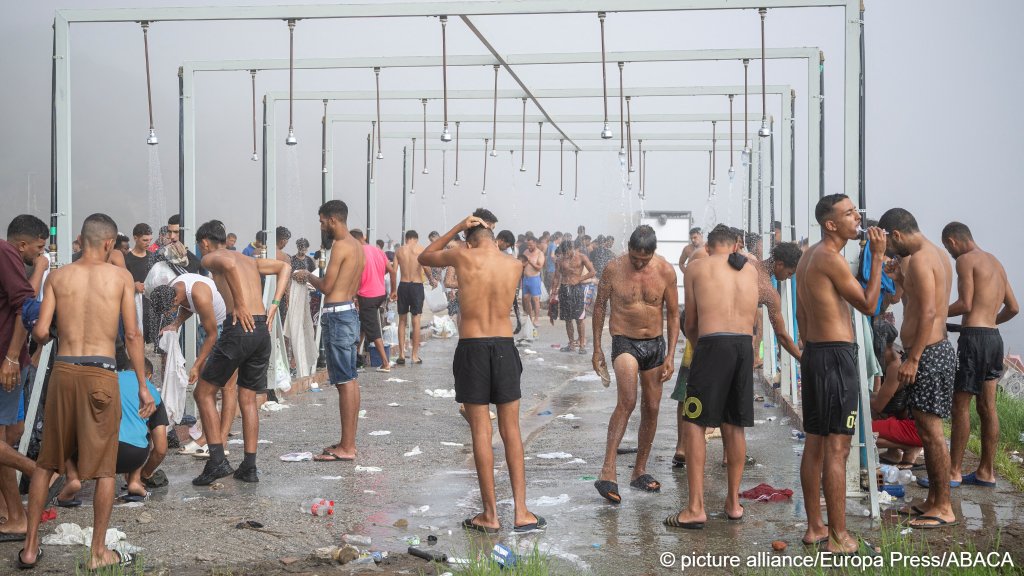
Speaking at a press conference at the European Parliament in Brussels yesterday (September 8), Juan Jesús Vivas, regional president of Ceuta, said that it is unclear how many people remain in Ceuta, but estimated that the number could be anywhere from 5,000 to 15,000.
Local Spanish media Cadena SER reported that dozens of minors are camped out along a 200 meter street in Ceuta. The minors, who are reported to be between the ages of 13-16, are sleeping on the ground out in the open. Some cover themselves with jackets, others with plastic sheeting. For most of the day, they wait. Wait for someone to give them food, wait for the government to decide on what happens next for them.
In a statement released on Tuesday (September 8), Ángel Víctor Torres, Minister of Territorial Policy and Democratic Memory for Ceuta, explained that the two priorities of the past week have been preparing spaces for the migrants to carry out mandatory registration and an evaluation of individualized cases that could lead to family reunification or other legal options.
Torres said that a total of 4,516 people have voluntarily returned to Morocco while about 278 people have been returned since August 10. Meanwhile, 2,004 minors have been registered. A reported 3,400 places have been set up as temporary accommodation. The government expects this to reach 6,000 places in the coming days.
Mass protests across Spain
The still unfolding humanitarian situation has angered citizens who insist that the government should have been able to detect and prevent the en masse arrival into Ceuta. Carrying signs that read, "Ceuta is not for sale. It is to be defended.", protestors blamed the Spanish government and president Pedro Sanchez.
"The Spanish government should have known about this. (If they did not), then we are very poorly governed. That means that we can be invaded at any moment," one protestor said.
Addressing Parliament last week (September 3), Sanchez defended the actions of Spanish border guards saying that they made the right decision to protect human life. More than 140 people reportedly died while attempting to enter Ceuta either by swimming or climbing border fences.
Sanchez also rejected allegations that Morocco had orchestrated the entry, saying that there is "no solid evidence" of Moroccan responsibility for the influx of arrivals.
Read AlsoMigrant arrivals in Ceuta: What does the Schengen Agreement say about border protection?
Survey reflects sentiments in the streets
A recent public sentiment poll however, conducted by 40dB for Spanish news outlets, SER and El País, indicate that nine out of ten Spaniards blame the Moroccan government for the Ceuta arrivals. A significant portion also attribute the events to organized crime and clandestine immigration networks, to influencers on social media promoting entry into Ceuta, and disinformation about a recent court ruling preventing pushbacks and returns of people who enter Spain via Ceuta.
The survey also indicated that 70 percent of Spaniards believe that there is a need for tighter border controls--even if it disadvantages vulnerable migrants. Less than 20 percent are in favor of facilitating the reception of people in precarious situations. An interesting opinion that surfaced in the survey was support for stricter border controls. Expectedly, supporters of the far right party VOX approved of this, however, the survey showed that more than 50 percent of socialist voters also favored it.
Read AlsoSpanish report flags Moroccan police's 'total permissiveness' in Ceuta migrant rush
'Nothing to hide'
The government has decided to declassify border control documents which include situation and alert reports from the National Intelligence Center (CNI), the Armed Forces Intelligence Center (CIFAS), the National Police, the Civil Guard, and other border control agencies. The documents, which cover the period July 1 - August 1, are said to include situation and alert reports over the time when the greatest number of migrants arrived.
The move is in response to the allegations made by the opposition party that the government had prior knowledge about the arrivals and did not do enough to prevent it.
The Minister of Inclusion, Social Security and Migration and Government spokesperson, Elma Saiz, said that the information can be disseminated without compromising national security. "We have nothing to hide," she reiterated.
Read AlsoSpain: Tensions in aftermath of Ceuta mass migrant crossing