
Migrants in the capital of Berlin share their reactions to the AfD's landmark state election victory in Saxony Anhalt. They talk about their experiences of living in Germany and what some perceive as a changing environment even before this political landslide.
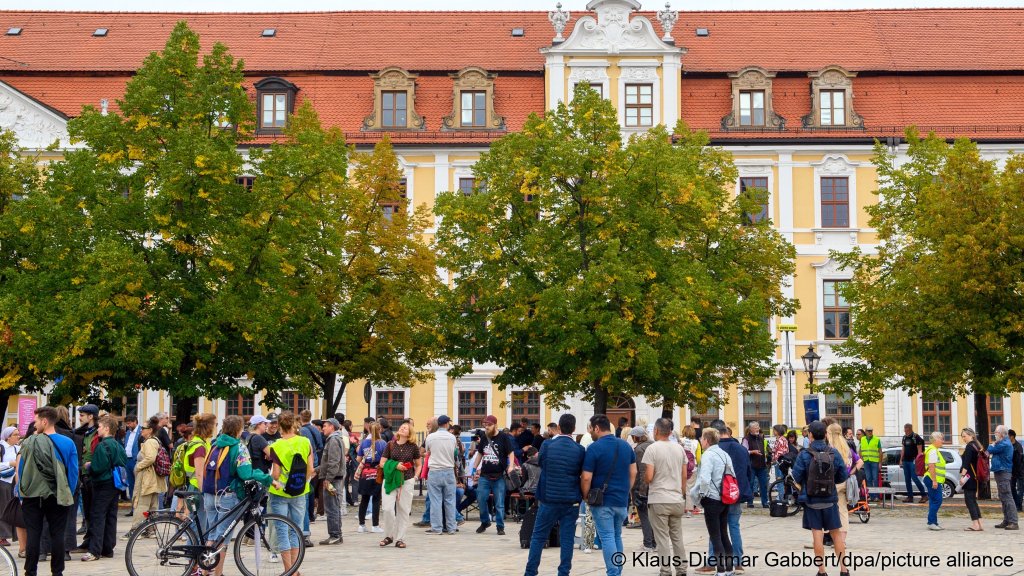
The landslide victory of the Alternative for Deutschland (AfD) right wing extremist party in Saxony-Anhalt, eastern Germany on Sunday (September 6) has pushed Germany into unfamiliar political territory.
Since 2023, Saxony-Anhalt’s domestic-intelligence service classified the AfD in the region and its youth party, Generation Germany as extremist right-wing, citing its "fundamentally racist" views and its "demands for the disadvantage of people whom the AfD perceive as foreign," along with its expressed "contempt" for state instutitions and the people who work for them, as the greatest threat to democracy in the state.
The AfD's policies include an immediate and total ban on immigration from selected non-EU countries, preventing churches from accommodating refugees, ending the constitutional right to asylum and mass deportations through the creation of a "deportation task force."
The election results sparked waves of alarm across Germany in many different quarters, not least in the outgoing ruling coalition, led by the conservative CDU party. The CDU / CSU union in Berlin had long declared a so-called "firewall," preventing them from any cooperation with the AfD. Most other parties have done the same. But following this latest result, it remains to be seen if the firewall will continue to hold on all fronts.
Nearly two-thirds of Germans are concerned about the election result in Saxony-Anhalt, according to a poll of voters published by German public broadcaster ARD on Monday evening (September 7).
Out of 1,051 eligible voters in Germany who were surveyed by the pollster Infratest dimap, 64 percent said they viewed the election outcome with concern while 24 percent said they were pleased. The remaining 12 percent said they were indifferent.
Other east Germany states go the polls
The next test comes on September 20, when voters in Mecklenburg–Western Pomerania and Berlin go to the polls. One election will show whether the AfD can repeat its electoral victory elsewhere in the former East, while the other will measure the party’s appeal in Germany’s diverse capital.
Official numbers indicate that of the 3.9 million people who live in Berlin, the number of people with a migration background (translates as foreigners and Germans with a migration background) in Berlin rose to 42 percent in 2025. The neighborhoods with the highest percentages of residents with a migration background live in the districts of Mitte (59 percent), Neukölln (52 percent), and its neighboring district, Friedrichshain-Kreuzberg (50 percent).
In the Kreuzberg district of Berlin, life and culture resulting from generations of migrant arrivals can be seen in the store names written in English and Arabic and the smattering of Turkish cafes along the streets.
On Tuesday (September 8), InfoMigrants spoke to residents about what the AfD rise means for them. They had diverse opinions, but all were hesitant to speak in public. Many agreed to speak only on condition of anonymity.
Elizabeth, who tends a fruit stall at the busy U-Bahn station of Hermannplatz said that she "trusts" the AfD and thinks its policies are good for the people. When asked about the party’s position on foreigners, she said, "I have a German passport." Elizabeth came to Berlin about 13 years ago to join her husband, who had moved from Nigeria more than a decade before her, she explained to InfoMigrants.
Another woman who declined to give her name said she was disappointed by the election results, but was not surprized. "I’ve been expecting it for 2-3 years now." Within the confines of Kreuzberg and Neukölln, she feels like she is living in a bubble where she is isolated from racism, but that feeling changes if she leaves her preferred areas of the capital.
"I don’t feel this way in parts of eastern Germany. I never go there unless I have a wedding or something to attend. My friends who live in the east say that they have been feeling the rising racism and now avoid going out late at night."

In the fruit shops and Turkish cafés along Sonnenallee, which is colloquially known as "Arab Street," Mustafa told InfoMigrants that the results of the elections left him "not feeling good." He is considering going back to Lebanon even though he has lived in Berlin for the last 15 years, he said.
Ahmad, who sells tea and Turkish coffee from his streetside cart, has been in Berlin for 24 years and traces Syria, Jordan, and the Palestinian territories as places in his family’s migration path. "Many foreigners live here in Berlin. The AfD wants foreigners out of Germany so the foreigners don’t want the AfD to win."
Read AlsoWhat would the AfD change in Saxony-Anhalt?
Not just about winning
A man who is of Asian descent told InfoMigrants that the rising social hostility towards foreigners is not just about the AfD winning.
"What difference does it mean if they win in the next elections, if underneath, Germany has always been racist from the start? Now, the AfD gives that once hidden racism a political platform and election results," he believes.
Some weeks back, the man and his neighbor said they had been attacked by two young men while they were at a neighborhood 'Späti', while getting a beer before going home.
Recounting the incident, the man said, "We were just minding our own business when two of them came to our table and sparked a conversation, asking us where we are from."

That seemingly innocuous question sparked a heated conversation about the gentrification of Berlin, the lack of economic opportunity for young people, and the rising cost of living. All of these, the two young men estimated to be in their 20s, said was the fault of migrants.
When the Asian man and his neighbor began to walk away to avoid confrontation, the two young men went after them and began physically assaulting them and a scuffle ensued. The police intervened but the Asian man alleges that it was only him who was restrained and handcuffed.
"That has never happened to me in my life. I have lived in many parts of the world and in some sketchy places, but nothing like that has ever happened."
Still angry about the incident, the Asian man said, "I’ve lived in Berlin for three years and have never really felt like I belong here."
He hopes that migrant groups will get organized and not just talk about election results but also talk about what to do to protect themselves against aggression and what to do if that kind of incident were to happen again.
"I just remember what another friend, of African origin who had also experienced a hate crime, told me, 'In every country you go to, there will be racists, but don’t forget that Nazis live in Germany.'"
As a nation, German society and successive governments have worked hard to atone for their Nazi past and the racist and discriminatory actions that were carried out in the name of its ideology.
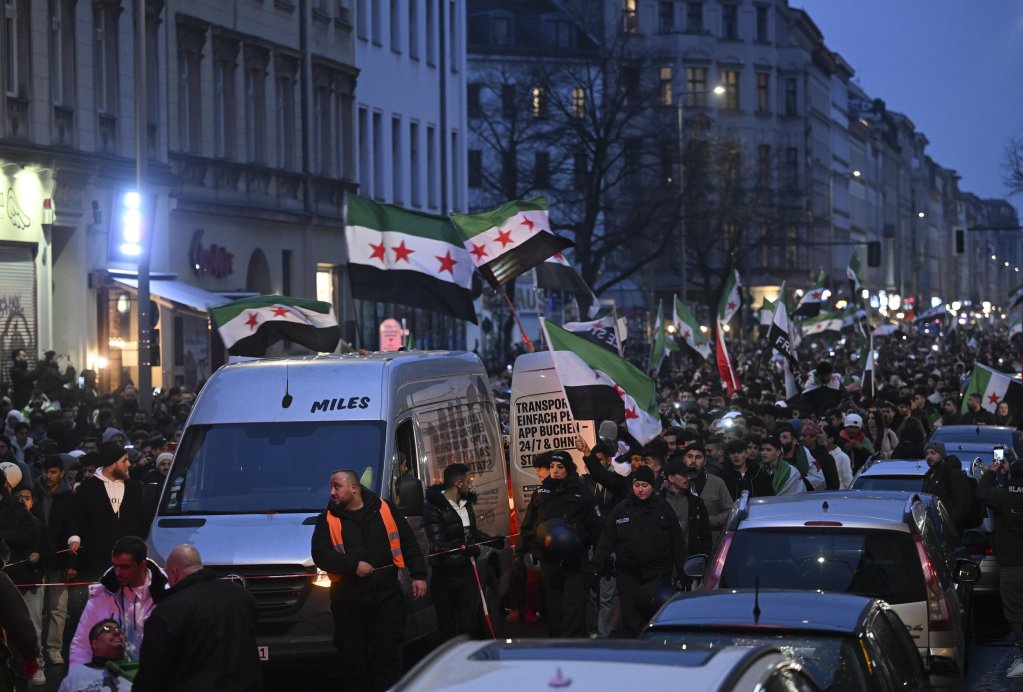
Demonstrations against the rise of the AfD and other right-wing parties and views have also been taking place across Germany, both before and since their election victory.
Now the state institutions across the country are working out how to handle the situation. CDU leader of Germany's most populous state North Rhine Westphalia, Hendrik Wüst told Germany's state broadcaster ARD's news program Tagesthemen on September 8: "We now have to work out, how the state handles a party constitutionally, that is classed by the intelligence services in some states as having hostile views towards that constitution."
Read AlsoGermany: Racism is almost a daily reality for Muslims