
Twenty‑one Moroccan migrants were returned to Morocco after throwing stones at a Spanish patrol on Ceuta’s El Trampolín beach. The incident is being presented as routine enforcement, but it highlights wider questions about border control, Spain’s domestic politics, Rabat’s ties with Washington and the role of social media in shaping migration narratives across Europe.
Twenty‑one Moroccan migrants have been returned to Morocco after throwing stones at a Spanish army patrol and Guardia Civil officers on Ceuta’s El Trampolín beach. Spanish sources say no one was injured and that those involved were identified and agreed to a "voluntary" return.
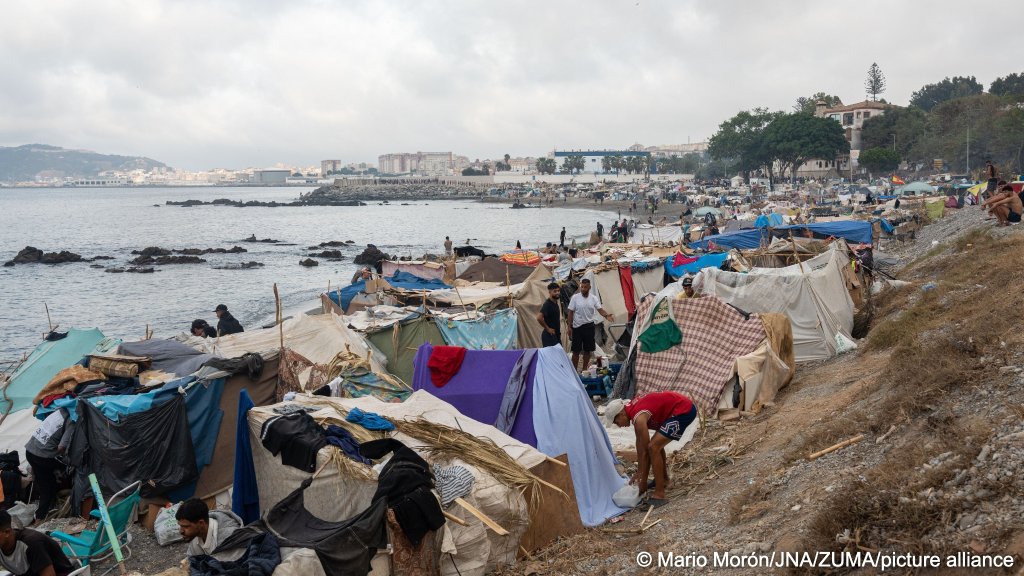
The incident took place on Saturday night (September 5), near El Trampolín, the stretch of coast where one of the largest informal migrant camps appeared after tens of thousands of people entered Ceuta in late July. A joint Spanish army patrol and Guardia Civil unit was reportedly pelted with stones and rocks as it moved along the shoreline. Authorities report no injuries and no material damage. The 21 men were arrested, identified, and subsequently returned to Morocco on the basis that they consented to go back.
Days earlier, a criminal court in Ceuta ordered the deportation of 11 Moroccan nationals after a stone‑throwing attack on a military patrol in the Benzu area that injured four soldiers. In that case, the defendants admitted to participating in the attack and their prison sentences were replaced with deportation under a plea agreement. These episodes point to growing friction between a small number of migrants and security forces in different parts of the enclave.
Read AlsoSpain: Tensions in aftermath of Ceuta mass migrant crossing
'Voluntary' returns in a pressured environment
Spanish sources describe the 21 men as having agreed to their own return. In legal terms, a voluntary return is different from a forced deportation. It is meant to imply consent and, in some cases, can be tied to simplified procedures or assurances about treatment on the other side.
In Ceuta, however, the line between voluntary and pressured choices is not always clear. Many migrants have been living for weeks in overcrowded camps, with limited access to services and uncertain prospects of regularization or a right to remain. Police operations, political pressure and public debate over the crisis create an environment where agreeing to go back may appear to be the most realistic option, even for people who would prefer to stay and seek protection or work.
The case of the 21 also fits into a wider pattern of rapid returns and deportations since late July, with Spanish authorities stressing the need to restore order and process cases quickly. Spanish officials later said that 69,500 migrants had been returned to Morocco and that those returns had been "voluntary." At the same time, legal constraints shape what Madrid can do. Spain’s Supreme Court has ruled that migrants intercepted at sea trying to reach Ceuta or Melilla cannot be summarily sent back to Morocco, limiting some return options and feeding political debate over migration law.
Read AlsoCeuta: What you need to know about migrant returns
Minors in Ceuta: numbers, conditions and vulnerability
Among those still in Ceuta are hundreds of unaccompanied minors living in difficult conditions. The child protection system has registered 1,478 unaccompanied migrant children in Ceuta, but it is estimated that around 1,200 more are still waiting to be identified. Save the Children Spain says the Ministry of the Interior has registered 2,500 "children and adolescents" in Ceuta so far, while various social and neighborhood organizations estimate that there could still be thousands of minors awaiting identification and referral to protection services.
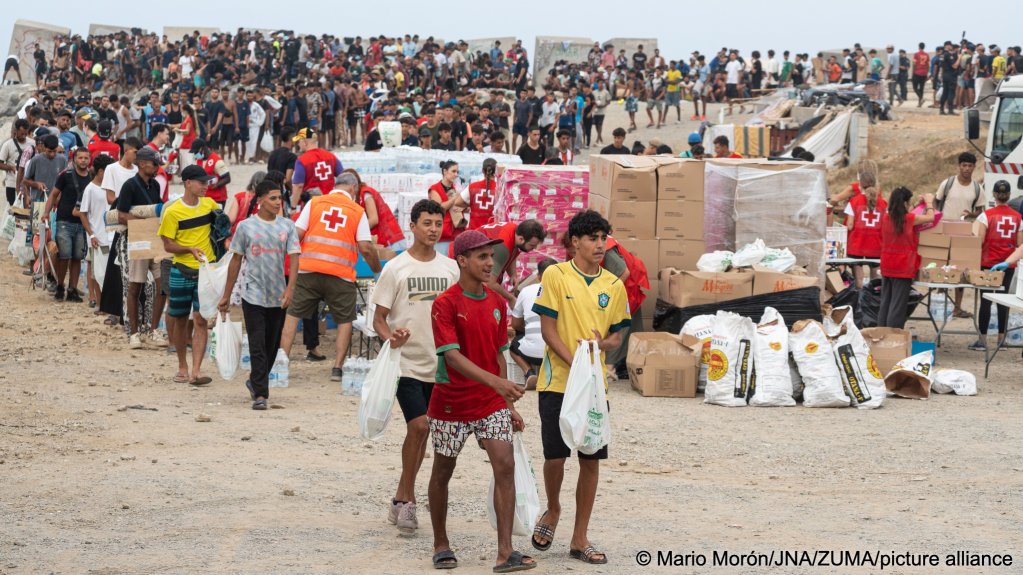
Many of these children are sleeping on beaches, in mountains and in precarious spaces while administrations discuss competencies, transfers and reception. The ordinary reception capacity for unaccompanied foreign minors in Ceuta is set at just 29 places, far below the number identified after the July arrivals. The Spanish government has announced plans to transfer approximately 500 unaccompanied minors to the mainland, prioritizing girls and children under 13 as the most vulnerable profiles.
At the same time, family reunification in Morocco remains the stated priority, but officials acknowledge that in most cases there is no realistic possibility of return. Under international law, the removal of unaccompanied minors is subject to strict safeguards, including the requirement to consider the child’s best interests. NGOs have warned of possible human rights concerns in this context, including unprotected minors and alleged illegal returns.
Read AlsoUnaccompanied minors at risk of sexual assault in Ceuta
Disinformation suspected foreign interference
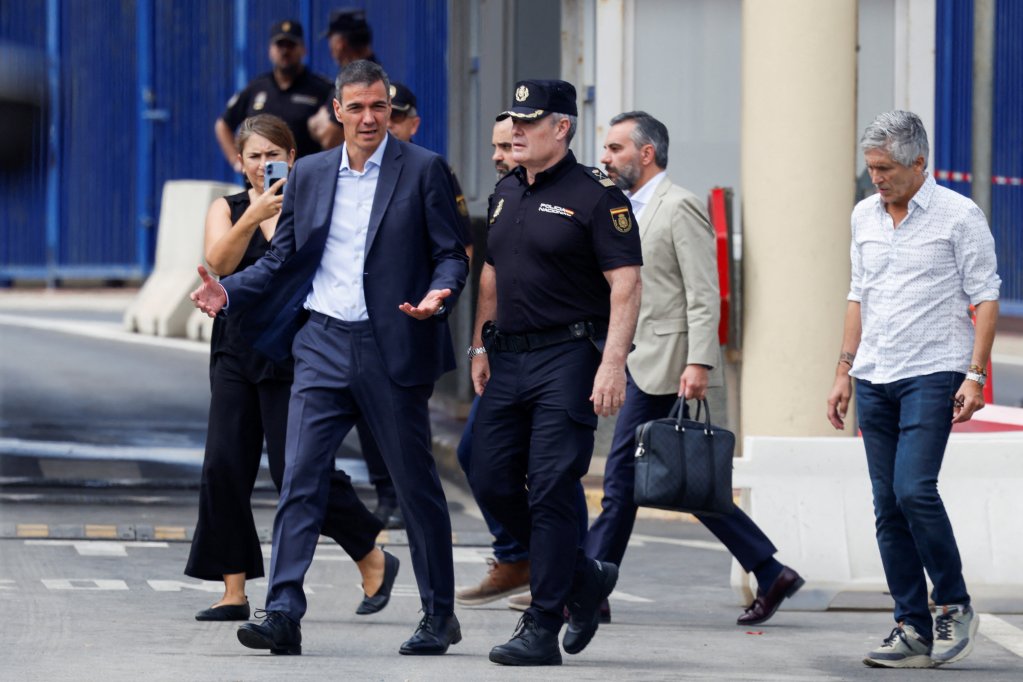
Spanish Prime Minister Pedro Sánchez has repeatedly said there is no evidence that Moroccan authorities were behind the mass crossings into Ceuta in late July. In interviews and parliamentary statements, he has stressed that Spanish intelligence and security services have not provided information suggesting Moroccan state involvement, and he has described cooperation with Rabat on migration as "frankly positive."
At the same time, Sánchez has accused social media networks "linked to Russia and Israel, as well as to the international far right," of spreading disinformation that helped fuel the crisis. He told Cadena SER that fake accounts had distorted a Supreme Court ruling on migrant returns, creating the impression that anyone reaching Ceuta by swimming could not be deported, and that this narrative was amplified by trafficking networks and political actors using migration to "attack not only Spain but also Europe."
These allegations drew a sharp response from Israel, whose foreign minister, Gideon Saar, called them "brazen lies," while the Kremlin rejected any connection between Russia and the Ceuta migration crisis. Independent analyses have reported that Russia‑linked accounts promoted a far‑right narrative online during the crisis, although the precise scale and impact of such activity remain debated.
In Spanish political discourse, some voices on the far right continue to describe the border breach in sensationalist terms, describing it as “an invasion" and an "act of war promoted by Morocco and allowed by Sánchez." Similar dynamics can be seen in other recent episodes. On Wednesday, a bottlenose dolphin calf was found dead on Trampolín beach in Ceuta. Local group Defense of Urban Trees, Biodiversity and the Environment (DAUBMA) alleged that the animal was attacked by people on the beach and filed a complaint, but no perpetrator has been formally identified. The incident was widely shared online, with some users explicitly linking it to the presence of migrants, with animal‑rights groups warning that such stories can be instrumentalized to reinforce dehumanizing narratives about migrants.
The gap between official statements, intelligence assessments and persistent suspicions helps explain why there is a stronger focus on each new incident, such as the stone‑throwing and recent returns, and these are quickly absorbed into wider narratives surrounding Ceuta.
Morocco, Trump and the search for leverage
The Ceuta crisis has also become an international issue, not only because of what happens on the Spanish side of the border. US President Donald Trump has repeatedly criticized Spain’s border management, tying his comments to wider disputes over defense spending, arguing that Spain does not pay what it should to NATO.
These remarks matter because they land in a context where Morocco is actively cultivating closer ties with Washington. Rabat has signed a six‑month communications campaign with the US public relations firm Qorvis, worth 210,000 US dollars, as part of an effort to build what Moroccan officials describe as a "golden age" in relations with the United States. Spanish officials are concerned about the role of Trump’s administration in giving Morocco the confidence to challenge both the EU’s external border and Spain’s sovereignty over Ceuta and Melilla.
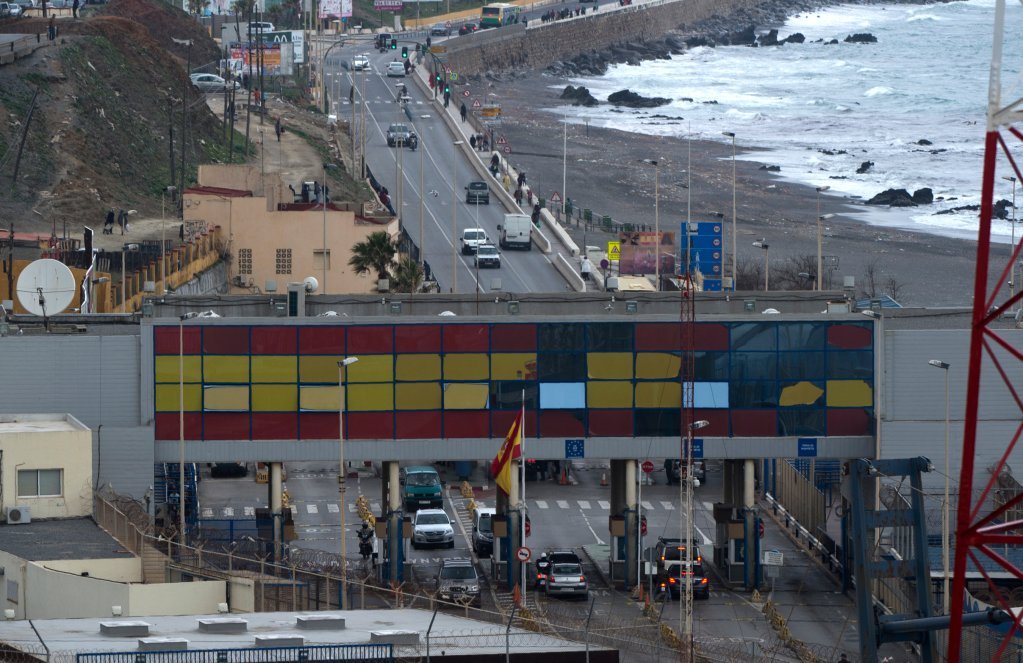
From Rabat’s perspective, strong US backing can be used to push for new concessions on the status of the two Spanish enclaves, or at least to harden its negotiating position on migration, security and regional influence. In this setting, Trump’s public comments on Spain do more than echo domestic Spanish debates. They reinforce a narrative that Morocco can exploit: that Madrid is weak, that Europe is divided, and that Rabat’s cooperation on migration comes at a price.
Read AlsoSpanish report flags Moroccan police's 'total permissiveness' in Ceuta migrant rush
With AFP and Reuters