
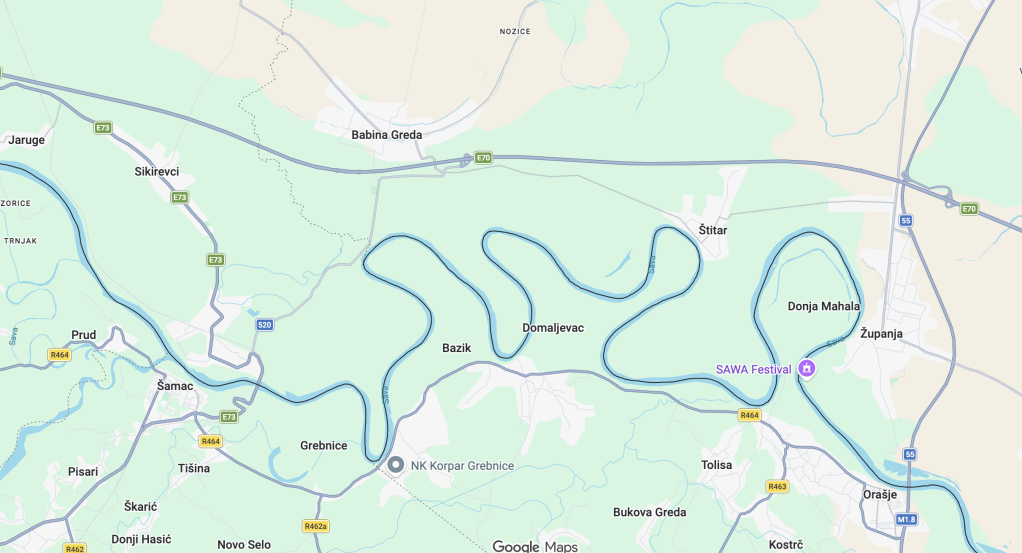
Bosnia and Herzegovina's border police say they prevented 96 people from irregularly crossing into Croatia in two operations on Wednesday near the village of Bistrica, seizing two boats intended for a Sava river crossing and identifying two suspected migrant smugglers.
The Border Police of Bosnia and Herzegovina said on Thursday (September 3) that its Gradiška unit, working with the Ministry of the Interior of Republika Srpska, carried out two operations on Wednesday in the village of Bistrica.
In the afternoon, officers prevented 63 people -- 40 Pakistani and 23 Bangladeshi citizens -- from irregularly crossing the border. Acting on the order of the Prosecutor’s Office of Bosnia and Herzegovina, investigators conducted an on-site inspection, seized two boats and identified two people suspected of involvement in migrant smuggling.
Later that evening, a second group of 33 people -- 18 Afghan, 13 Bangladeshi and two Pakistani citizens -- was stopped in the same area while attempting to cross the state border. The Service for Foreigners’ Affairs, Field Center Banja Luka, has been notified and investigations into both incidents are ongoing.
The operations took place along the Sava River, which forms part of Bosnia's northern frontier with EU member Croatia. Croatian police supported the operation with aerial surveillance, deploying drones to monitor movements along the river overnight, according to regional reporting.
Read AlsoCroatian authorities search for smuggling suspect related to migrant deaths
Balkan route
Bosnia lies on the so-called Balkan route, a primary overland corridor used by undocumented migrants and refugees seeking to reach the European Union.
Frontex, the EU's border agency, registered more than 4,900 irregular border crossings on the Balkan route in the first seven months of 2026, down 26 percent year-on-year, though humanitarian groups caution that lower detection figures can also reflect changing smuggling tactics and under-reporting.
A Mixed Migration Centre (MMC) briefing based on 888 interviews in Sarajevo between November 2025 and January 2026 underscores that the route remains active despite tighter controls, with people relying heavily on smugglers to navigate enforcement and terrain.
"Smuggling is often essential to complete the journey, with many respondents reporting they could not cross borders or avoid detention without smugglers," the briefing said.
The MMC also noted that services vary by route, but border transit is the core service; some journeys involve a single smuggler for the entire trip, while others use multiple operators in sequence.
Read AlsoBalkans: Europol arrests five suspected migrant smugglers
Gangs and violence
According to the MMC report, abuse is common, with smugglers, gangs and, in some locations, even security forces implicated in robbery, violence and detention. Bulgaria and Serbia were most frequently cited as dangerous, while Bosnia sees frequent pushbacks from Croatia.
Recent incidents underscore the risks along the corridor. In late August, Serbian police rescued three Turkish and two Afghan nationals who had been abducted in Belgrade and held for a 30,000-euro ransom, in a case authorities linked to migrant-smuggling networks.
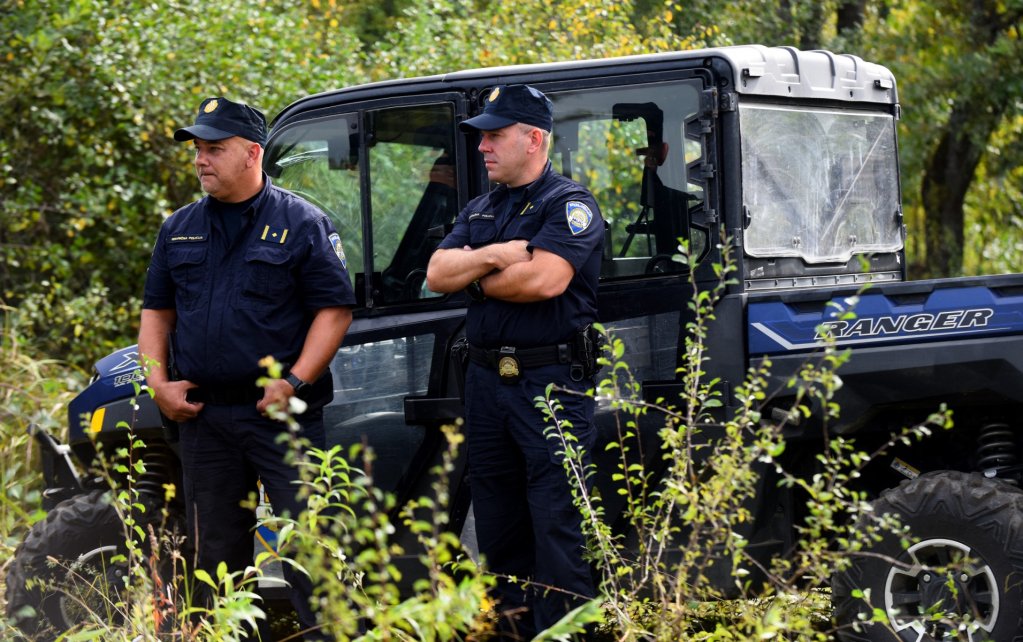
On the Croatian side, InfoMigrants also reported in May that four people were found dead and two others in poor health after being abandoned near the border, in an incident attributed to smugglers.
The seizure of boats on the Sava points to organized river-crossing methods, consistent with smuggling networks adapting to intensified land-border surveillance.
Read AlsoSerbia: Turkish and Afghan nationals rescued after Belgrade kidnapping
Shifts in the Balkan route
The recently intercepted groups were predominantly Pakistani, Bangladeshi and Afghan nationals -- nationalities that feature prominently in the MMC's sample from the Western Balkans. The study found that economic factors (insufficient income, job insecurity) were the most commonly reported driver of movement, often alongside violence, insecurity and conflict, particularly for Afghans and Syrians.
Broader route shifts are also reshaping movement through the region. IOM data show that while arrivals on the Eastern Mediterranean route fell by around 30 percent to 9,032 in the first part of 2026, onward movement through the Western Balkans rose 38 percent to 11,035, a divergence the agency says may reflect delays between people arriving in Greece, Cyprus or Bulgaria and continuing their journeys through the Balkans.
Bosnia remains a key transit country on the Balkan route, even as EU member states and regional authorities step up joint operations and surveillance along key crossing points.