
At least five bodies were recovered and more than 80 people are feared dead after a cayuco that left The Gambia 27 days earlier was found drifting south of Gran Canaria. Three of the 44 survivors remain in critical condition in hospital.
More than 80 migrants, including a baby, are feared to have died after a wooden cayuco was found drifting in the Atlantic with only 44 survivors and five bodies on board, Spanish maritime rescue authorities said on Thursday (August 3).
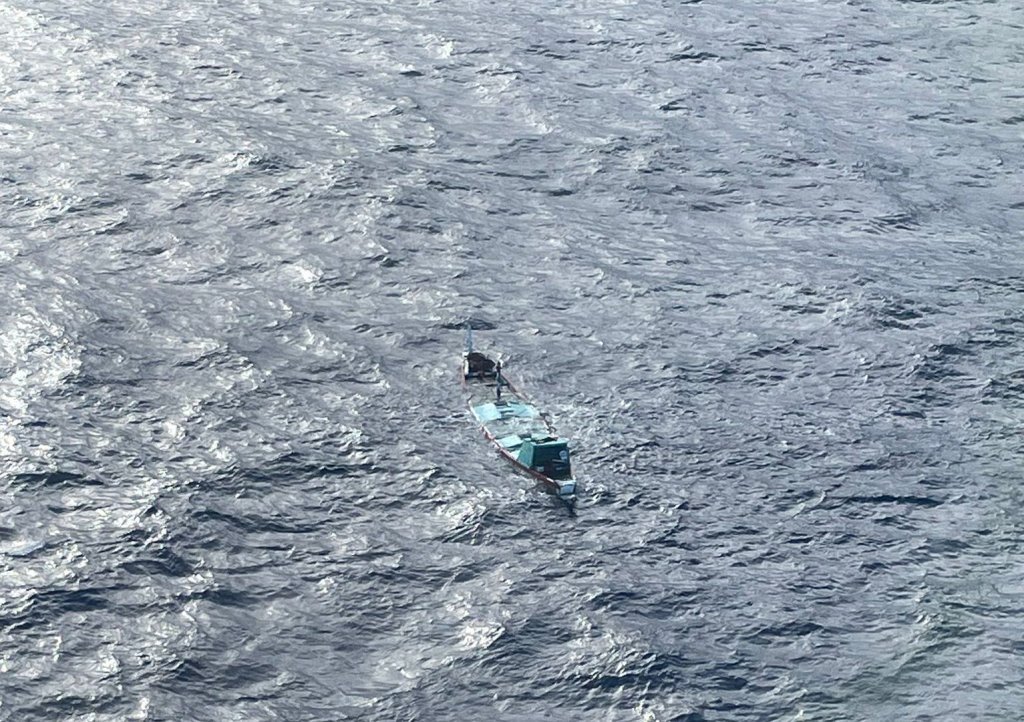
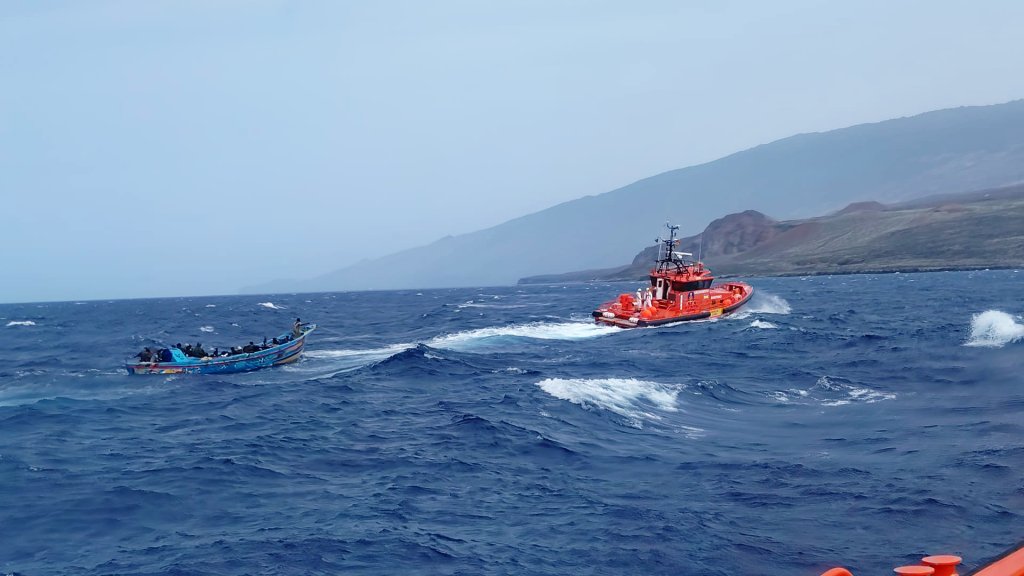
According to Spain’s Maritime Rescue Service (SASEMAR), one of its planes spotted the "precarious" boat about 74 miles (120 km) south of Gran Canaria on Wednesday afternoon. The rescue vessel Guardamar Urania reached it around midnight; strong winds and 2.5‑meter (8‑foot) waves prevented crews from recovering the five bodies found inside.
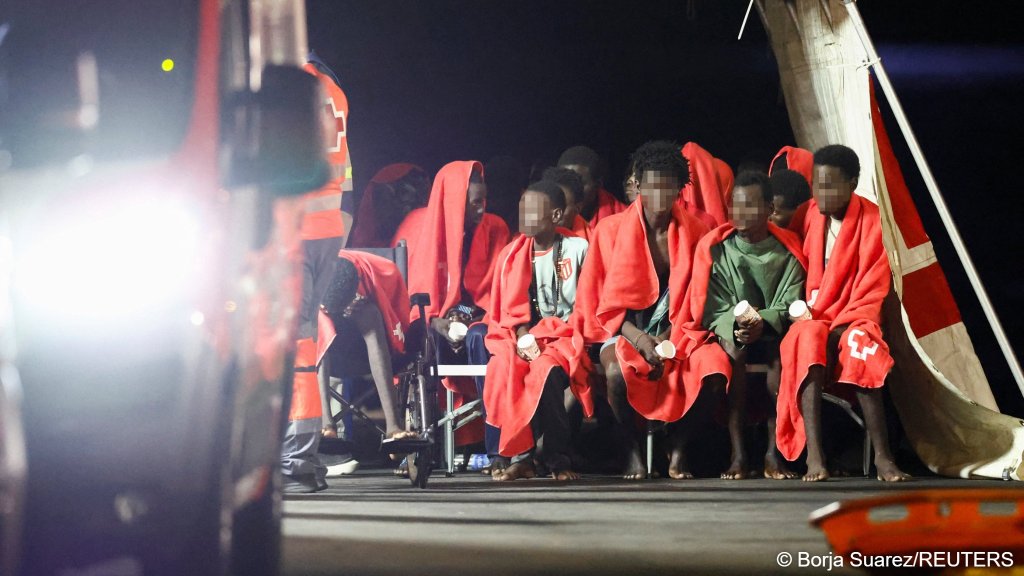
Three men in critical condition were evacuated by helicopter to hospitals in Las Palmas. The remaining 41 survivors were brought by boat to the port of Arguineguín in the early hours of Thursday, where Red Cross teams treated severe dehydration and disorientation.
The boat is believed to have left The Gambia in early August and a third of passengers appear to have died during four weeks at sea.
Read AlsoMoroccan navy intercepts 201 migrants headed to Spain's Canary Islands
Weeks at sea, seawater, bodies thrown overboard
José Antonio Rodríguez Verona, a Red Cross spokesperson in the Canaries, told The Associated Press (AP) that all 44 survivors were male, some underage, from Mali or Senegal. Many collapsed or vomited upon reaching land after drinking seawater when provisions ran out, he said.
Survivors reported that more than 120 people had originally been on board, including women and a baby, and that they had been at sea for “many, many days” -- some estimating nearly a month. As people died, their bodies were tossed into the ocean until survivors no longer had the strength to do so, according to accounts relayed by aid workers.
Helena Maleno Garzón, founder of the Spanish NGO Caminando Fronteras (Walking Borders), reported on X that 83 people had died on the voyage, including three women and a baby, and that the boat had departed Gambia 27 days earlier, on August 7. The Associated Press (AP) said it had sought further comment from Maleno but had not received a response.
Read AlsoCanary Islands: 245 migrants rescued from three boats near Lanzarote
One of Europe’s deadliest migration routes
The West African Atlantic route to the Canary Islands remains one of the most lethal migration paths to Europe. While arrivals to the Spanish archipelago have fallen significantly in the past year, tens of thousands of people have died or gone missing in recent years, with several migrant boats getting lost and drifting all the way across the Atlantic to the Americas.
Madi Jobarteh, director of the Edward Francis Small Centre for Rights and Justice in The Gambia, told reporters that limited opportunities are a major driver of irregular migration, noting that many educated and skilled young West Africans leave in search of jobs, healthcare and basic services. "With a huge young population, most of whom are not in education, employment or training, the tendency to migrate is high," Jobarteh said.
Gambia’s information minister declined to comment on the dead and missing; the Immigration Department did not respond to requests for comment.
Read AlsoIOM warns that migration routes to Europe are becoming more dangerous
SAR gaps and the limits of deterrence
Canary Islands regional leader, Fernando Clavijo, said the tragedy underscored the need for a state policy on migration, especially after a deadly migrant crossing in Spain's North African enclave of Ceuta in July, which left around 100 people dead.
"It is intolerable that lives continue to be lost. The Canaries cannot get used to or accept as normal the fact that the Atlantic continues to be a death trap," he said on X.
For EU institutions and member states, the incident also underscores persistent gaps in search‑and‑rescue capacity, early warning and coordinated response on the Atlantic façade, as well as the limits of externalization and deterrence‑focused policies when economic and protection drivers remain unaddressed.
Human rights groups such as Walking Borders are frequently contacted by relatives of missing migrants and often relay calls for help and rescue to Spanish authorities, highlighting the informal but critical role NGOs play in documenting deaths and triggering operations on one of Europe’s most overlooked maritime frontiers.
The incident lands as the EU and Spain face renewed pressure to expand coordinated Atlantic search‑and‑rescue capacity and to reconcile deterrence‑focused externalization deals with the reality of high‑fatality, open‑ocean crossings from West Africa.
Read AlsoSpain: Dozens rescued near El Hierro after desperate search
With AP and Reuters