
Weeks after over 70,000 people crossed from Morocco into Spain’s North African enclave in late July, thousands remain in Ceuta, where authorities are managing accommodation, registration and possible returns. The situation has sparked protests in Ceuta and across Spain, fueling a wider debate over migration policy, security, relations with Morocco and the capacity of public services.
On September 3, Ceuta’s official day of celebration, the Spanish enclave should be marking its history with ceremonies, concerts and cultural events. Instead, its streets have been the setting for protests over a border crisis that has exposed the fragility of the city’s resources -- and widened Spain’s political divisions.
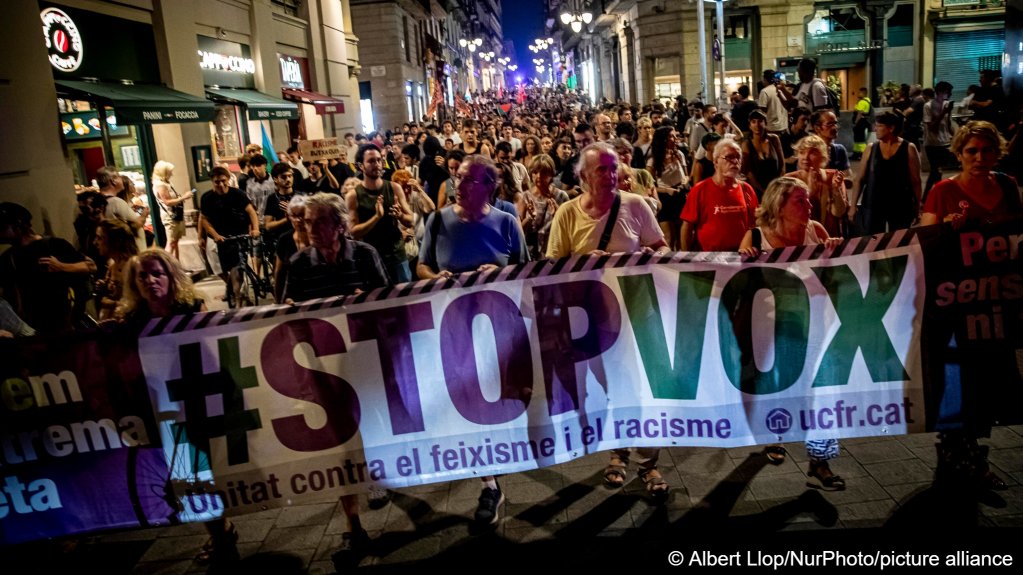
Tens of thousands of people rallied across Spain on Wednesday (September 2), including around 50,000 in Madrid according to local authorities. Demonstrations were also held in Ceuta, Barcelona, Valencia, Seville and other cities.
Protesters carried Spanish and Ceutan flags and demanded a return to what they called "normality", while some called for migrants to be expelled and for Prime Minister Pedro Sánchez to resign. Reuters reported that more than 10,000 migrants may still be in Ceuta, according to estimates by the city’s authorities, although the national government has cited a lower figure of roughly 5,000.
The protests were formally convened by the Spanish Federation of Municipalities and Provinces, but they were promoted by the conservative People’s Party (PP) and the far-right Vox. The Socialist-led government accused its opponents of using the emergency to attack Madrid rather than support Ceuta.
"This is not about defending Ceuta and the Ceutans, it is about attacking the government," Territorial Policy Minister Ángel Víctor Torres said on Spanish radio, according to the Associated Press (AP).
That dispute captures the political dilemma facing Spain. The government must respond to a genuine humanitarian emergency while also addressing residents’ concerns about safety, public services and the management of the border. At the same time, it is attempting to prevent the opposition from turning the crisis into a broader indictment of its migration policy.
Read AlsoCeuta: Four migrants arrested as Spain asks EU for help processing migrants
A deadly and unprecedented crossing
The immediate crisis began on 30 and 31 July, when approximately 72,000 people crossed or attempted to cross from Morocco into Ceuta. Many swam around the border fence, while others entered on foot. At least 90 people died according to figures cited by the Associated Press; other accounts, including statements from Ceuta’s authorities, have put the toll at more than 100.
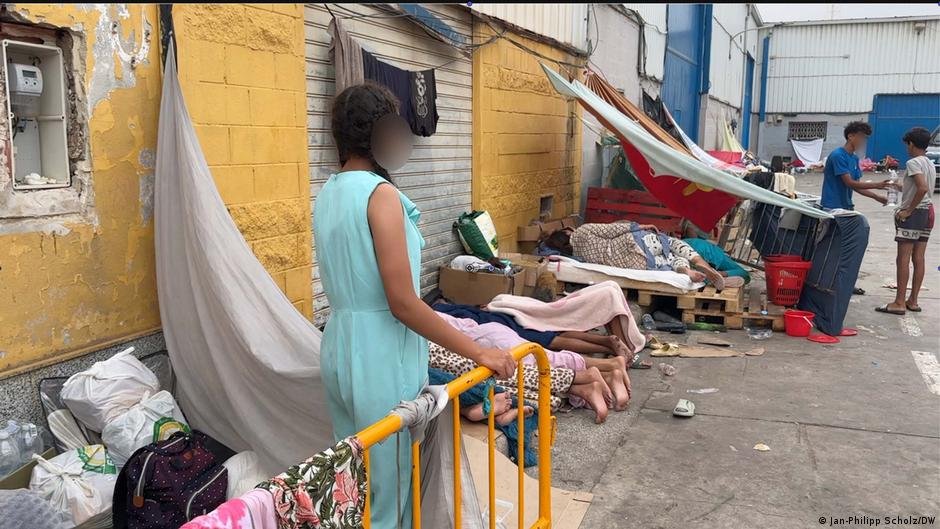
Most of those who entered returned to Morocco or were escorted back within hours. But thousands remained in the enclave, which has a population of approximately 80,000 to 84,000 people. Some are living in informal camps, on beaches or in the streets. The national and local authorities have also provided differing estimates of how many remain, a discrepancy that has become part of the wider dispute over the government’s handling of the emergency.
For those who stayed, the journey’s promised destination -- Europe -- has become a period of waiting. Otman Ianaya, a 40-year-old Moroccan man, told AFP that he crossed with his wife and two young daughters because there was no work in Morocco and he wanted to build a future for his family.
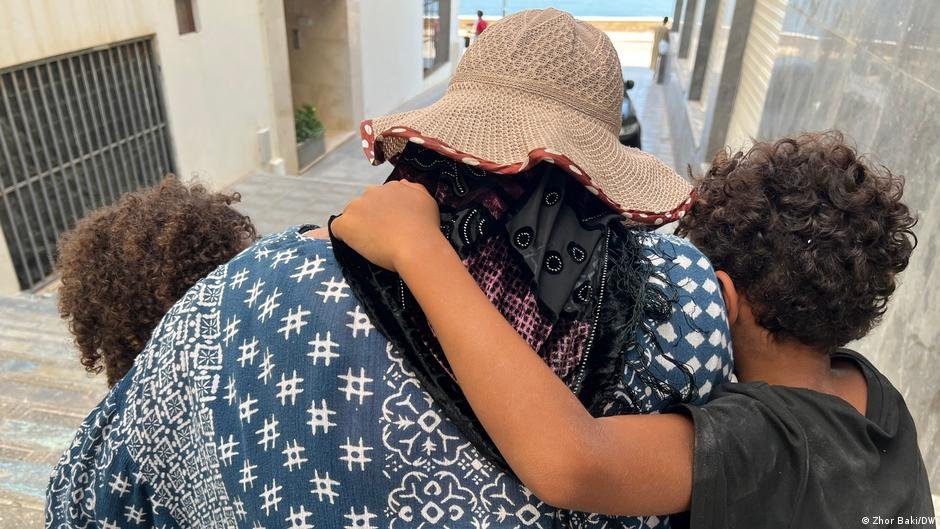
They slept rough until volunteers provided sheets and blankets. Ianaya now queues for hours for food distributed by the Red Cross. His experience illustrates the gap between the strategic language surrounding the crisis and the daily reality of those caught in it: people who are variously described as migrants, irregular entrants, security risks or victims, but who remain without a clear and immediate solution.
The situation is particularly sensitive in cases involving unaccompanied children and people seeking international protection. Some arrivals may be eligible for return to Morocco if they have no basis to remain in Spain, while others must have their asylum or protection claims assessed individually. A blanket approach risks conflating people with different legal statuses and protection needs.
Read AlsoMoroccan families travel to Ceuta border in search of missing loved ones
Residents caught between fear and anger
Ceuta’s residents have also been placed under exceptional pressure. The city’s accommodation capacity has been expanded from around 500 places to more than 3,400, while more than 1,600 police officers have reportedly been deployed. Local organisations and politicians say those measures remain insufficient.
There have been clashes, reports of attacks on migrants and confrontations involving military patrols. The BBC reported that some local protesters attempted to prevent food and water from reaching migrants, while migrant camps on Trampolín beach were set alight. It also reported the arrest of migrants accused of throwing stones at a military vehicle.
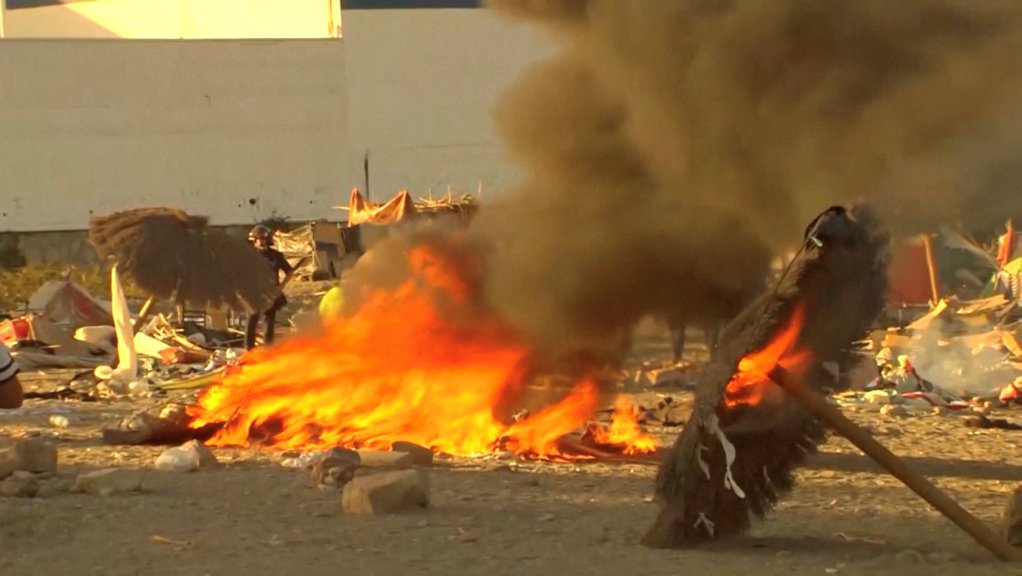
Some experts and NGO have warned that these incidents should not be used to erase legitimate concerns among residents, but neither should reported insecurity be converted into collective blame.
Protest slogans referring to migrants as "invaders" have merged concerns about public order with claims about national identity and territorial integrity. Juan Jesús Vivas, Ceuta’s conservative regional leader, has described the episode not as a migration crisis but as a violation of Spain’s territorial integrity.
Ceuta’s symbolism helps explain the intensity of the response. The territory is one of the European Union’s two land borders with Africa, alongside Spain’s other North African autonomous city, Melilla. Morocco contests Spanish sovereignty over both territories. The border is therefore not only a migration route but also a point where questions of Spanish identity, Moroccan territorial claims and European border control intersect.
Read AlsoSpanish report flags Moroccan police's 'total permissiveness' in Ceuta migrant rush
The unanswered question of responsibility
The causes of the mass crossing remain contested.
Spanish officials have referred to misleading social-media claims, including the false idea that people who entered Ceuta by swimming could not be deported. Reuters reported that videos and posts on platforms including Instagram and TikTok circulated inaccurate information about Spain’s border policy.
Sánchez has said that people traffickers and disinformation networks helped encourage the crossing. He has also alleged that accounts linked to Russia, Israel and international far-right groups later amplified disinformation surrounding the crisis, citing Spanish government assessments and work by the European External Action Service.
The claims have not been publicly substantiated in detail. The Spanish government has not provided examples of the alleged Russian or Israeli campaigns, and both countries have rejected the accusations. That does not establish that online manipulation did not occur. It does, however, mean that the allegation should be presented as an assertion by the Spanish government rather than as an independently proven fact.

Morocco’s role is equally contentious. Critics of Sánchez have pointed to Rabat’s previous use of migration pressure as a means of influencing Spain. The prime minister, by contrast, has defended Morocco as a partner that helped facilitate the rapid return of most of those who crossed. Reuters reported that Sánchez said Spain had no intelligence indicating Moroccan authorities were involved.
The competing explanations reflect different political interests. The opposition wants to establish that the government failed to protect Spain’s border. Sánchez’s government wants to preserve its relationship with Morocco, which is central to Spain’s cooperation on migration and security. The result is a debate in which the evidence remains less developed than the political claims.
A crisis without a simple legal answer
The practical problem is immediate, but the legal framework is complex. People who entered irregularly do not all have the same status, and not everyone can lawfully be returned without an individual assessment. Those seeking asylum or another form of international protection must have access to procedures capable of identifying protection needs. Children, particularly unaccompanied minors, require additional safeguards.
This is where the language of "returning everyone" collides with the legal and administrative reality. Spain can enforce immigration rules, but enforcement must remain consistent with obligations relating to asylum, non-refoulement, child protection and due process. The faster the political demand for removal becomes, the greater the need for transparent procedures and independent oversight.
The government has sought assistance from Frontex to help process the remaining cases. It has also increased emergency accommodation and announced substantial financial support for Ceuta. The Associated Press reported that Madrid had earmarked 309 million euros for the city’s social services, housing, economy and security. Reuters separately reported additional emergency and recovery funds, including 168 million euros for economic measures and 180 million euros pledged for medium-term recovery.
But money alone will not resolve the underlying conflict. Ceuta needs accommodation, registration, protection screening and safe arrangements for children. It also needs a credible plan for distributing responsibility between the autonomous city, Madrid, other Spanish regions and European institutions.
Read AlsoHiba's Ceuta story: 'It was a girl on Instagram who convinced me I had to leave irregularly'
The danger of permanent emergency
The continuing situation in Ceuta has placed pressure on local services and intensified public debate. Migrants remain in temporary camps, on beaches and in the streets, while residents continue to express concerns about accommodation, security and the authorities’ response. Political parties have offered competing interpretations of the crisis, including differing views about migration, border management and the government’s handling of the situation.
As the situation continues, it has become increasingly difficult to separate the practical challenges of emergency management from the wider political debate. Individual incidents are being interpreted through competing perspectives: for some, they highlight concerns about border control and public order; for others, they underline the risks faced by migrants and the need for protection. Morocco’s role and the Spanish government’s response have also become subjects of political disagreement.

A durable response would need to address the different aspects of the situation at the same time. This includes supporting Ceuta’s residents, preventing violence, providing adequate accommodation and services, and assessing protection claims on an individual basis. It would also require further clarification of how the large-scale crossing occurred, including the evidence relating to alleged online misinformation, as well as the respective responsibilities of Spain, Morocco and the European Union.
Ceuta’s official holiday commemorates the territory’s history. This year, the occasion has also highlighted the continuing challenges facing the enclave. Residents are seeking security and institutional support, while migrants require access to lawful procedures and basic assistance. The situation has prompted calls for a response based on verified information, clear responsibilities and measures that address both local concerns and migrants’ legal and humanitarian needs.
Read AlsoCeuta: Spain says most economic migrants won't qualify for asylum
With AP, AFP and Reuters