
Italy has sent back 23 Egyptian nationals to Cairo on a charter flight coordinated with Frontex and Egypt. All 23 are said to have been expelled from Italy and had criminal records for offenses against persons and property.
Italy has expelled 23 Egyptian nationals in a joint repatriation operation with the European Union's border and coast guard agency, Frontex.
Specialized personnel escorted the 23 Egyptians, Nova News reported on Friday (August 28). According to the Italian news outlet, the expelled Egyptians have "criminal records and police records for crimes against persons and property." The report added that the operation was made possible with collaboration with the Cairo government, based on a migration cooperation deal which allows readmission, with the option of using charter flights, to send back Egyptian citizens who arrived in Italy through irregular means.
Under the agreement, identity verification procedures for individuals seeking readmission may be conducted on Egyptian territory.
Read AlsoAmnesty criticizes detention and asylum procedures under Italy-Albania migration deal
Lampedusa arrival reportedly first to undergo 'accelerated repatriation'
Of the Egyptian nationals, 19 had been kept in detention centers designed for repatriation (CPR) -- one in Caltanissetta-Pian del Lago on the island of Sicily, one in Gradisca d'Isonzo near the border with Slovenia, 13 in Milan-Corelli, two in Turin-Brunelleschi, one in Brindisi-Restinco, and one in Palazzo San Gervasio in southern Italy.
Two individuals were expelled by the Milan Police Headquarters, while the Varese and Messina Police Headquarters each ordered one expulsion, Nova News reported. The Egyptian national who arrived on the shores of the southern island of Lampedusa on July 7 and was subsequently expelled by the Messina Police Headquarters is the first person to undergo the "accelerated asylum and repatriation procedure" introduced under the new Migration and Asylum Pact last June, following the completion of the judicial phase, according to the report.
In 2026, including today’s operation, Italy has organized 16 charter repatriation operations to Egypt, resulting in the deportation of 381 foreign nationals. In 2025, a total of 18 charter operations were carried out, leading to the repatriation of 454 Egyptian citizens.
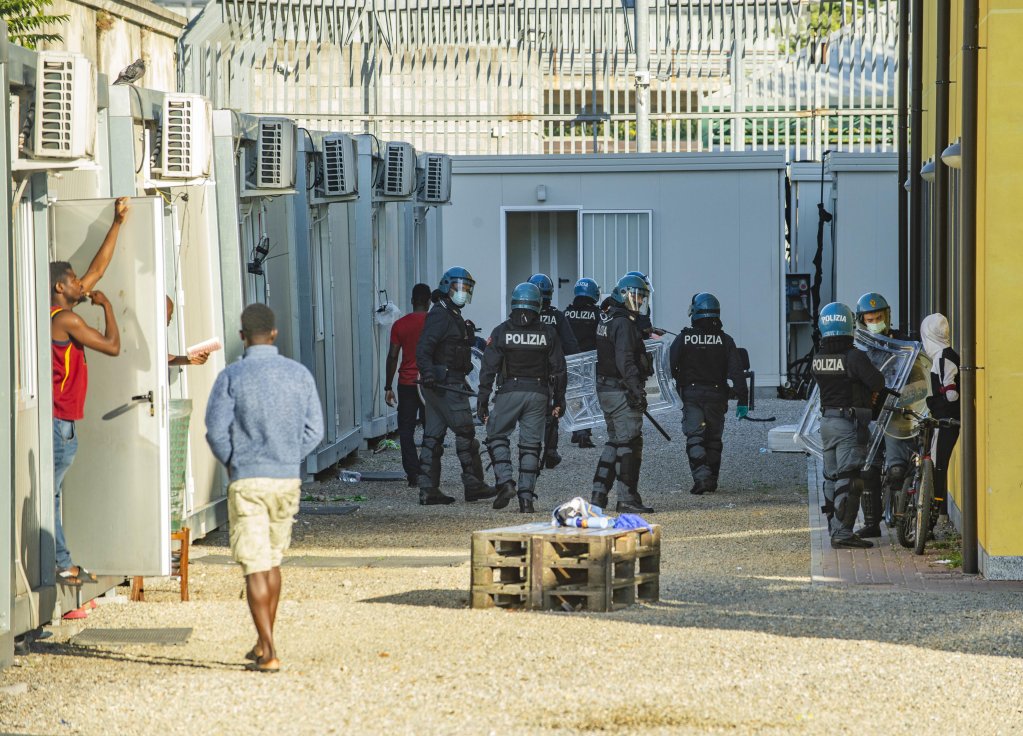
Italy toughens migration policy despite drop in irregular migrant arrivals
According to new UNHCR data, irregular migration to Italy has dropped by more than half compared with 2025, with fewer people reaching Italian ports along the Central Mediterranean route. Most arrivals continue to come from Libya, although numbers from there have also declined significantly. Smaller numbers are arriving from Tunisia, Algeria and Turkey.
Despite the fall in arrivals, the Meloni government has pursued tougher asylum and anti-smuggling rules (as well as new offences and tougher penalties in response to migrant smuggling), reached migration agreements with North African countries, and bolstered efforts to repatriate migrants.
Offshore detention and the EU Asylum and Migration Pact
The Albanian detention hubs, which have faced significant delays and legal hurdles, are one of the Meloni government's flagship migration initiatives. The Albanian centers are now operating mainly as a repatriation hub for migrants transferred from Italy, rather than as the offshore asylum-processing system initially promoted by Meloni.
Under the new EU Asylum and Migration Pact, member countries of first entry are given stronger protections concerning asylum applications and are eligible for financial support. Several EU member states are seeking to return to Italy asylum seekers who first entered the bloc through the country before travelling elsewhere in Europe.
The Meloni government has described the new EU rules as a positive development for Italy and argues that they provide stronger protection for countries of first entry. The Italian opposition, however, has been critical of the new rules, particularly as Italy faces the possibility of receiving more people returned from other EU countries.
Read AlsoAmnesty criticizes detention and asylum procedures under Italy-Albania migration deal
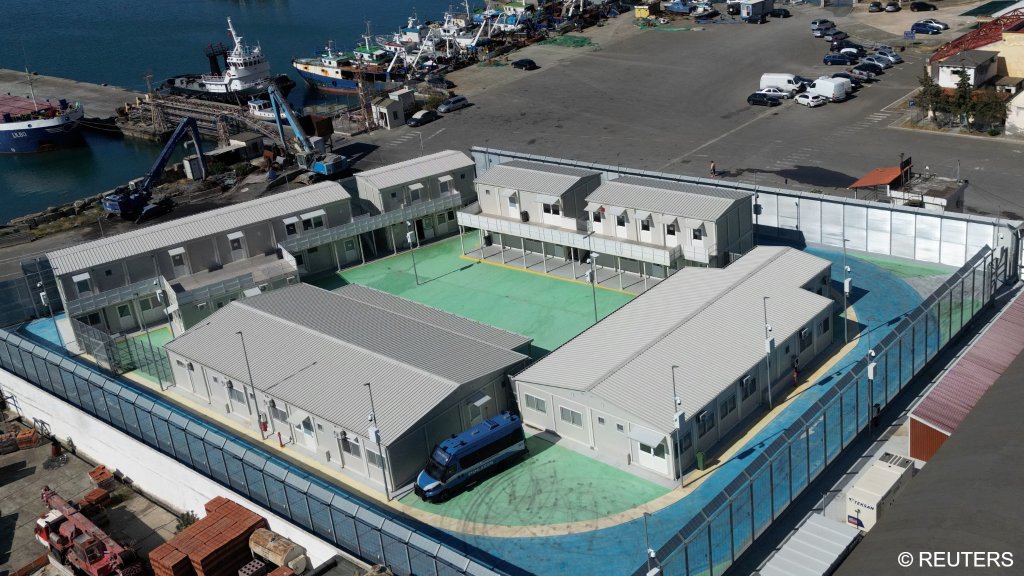
EU sees region-wide decline in irregular migrant entries
The fall in arrivals to Italy comes amid a broader decline in irregular migration across the EU's external borders. Frontex recorded a 37 percent decrease in irregular crossings during the first seven months of the year compared with the same period in 2025. The Central Mediterranean route from Libya and Tunisia to Italy and Malta, together with the eastern Mediterranean route from Turkey to Greece, accounted for 60 percent of registered irregular arrivals.
Even though migrant crossings fell on both routes, Frontex recorded an increase on the western Mediterranean route to Spain. Tougher migration policies remain central to Meloni's government even as the pressure on Italy's maritime entry points, such as in Lampedusa and Sicily, has eased.
Italy is heading toward a national parliamentary election in 2027. Recent reporting indicates that Meloni’s coalition faces competition both from the center-left and from a newer party further to the right. Futuro Nazionale, a new far-right party founded by Roberto Vannacci, has been campaigning strongly against mass migration as tougher migration policies continue to have an electoral audience in Italy.
Read AlsoItaly issues new threats for Germany to cooperate on Dublin returns