
Germany deported 22 Afghan men convicted of crimes to Kabul on Tuesday, the latest in a series of charter flights as Berlin expands returns to Afghanistan. Human rights advocates warn the deportations are part of a policy that "abandons moral standards and human rights principles."
Twenty-two men were deported via a charter flight to Kabul from Germany on Monday (August 31). The flights took off from the Halle / Leipzig airport and were set to land in Kabul, Afghanistan.
Four of those deported were from the federal state of Thuringia. In a statement, the state's minister for migration and justice, Beate Meissner (CDU), said, "Thuringia, together with the federal government, is thus continuing its consistent policy of deportations." Additional detention places reportedly had to be organized at short notice for the deportation because the deportation detention center in Arnstadt was full.
Taken together with the deportation flight that took place last week, this brings the number of Afghans deported from Germany to 250 since the beginning of the legislative period under Chancellor Friedrich Merz.
The German Federal Ministry of the Interior announced in mid-June its intention to expand deportations of Afghan criminals to their home country via three charter flights per month.
Currently, only male Afghan nationals are being deported. Women are excluded because German and EU authorities consider that women in Afghanistan face persecution on the basis of their gender under Taliban rule. This position is reinforced by an October 2024 landmark judgment of the Court of Justice of the European Union (CJEU).
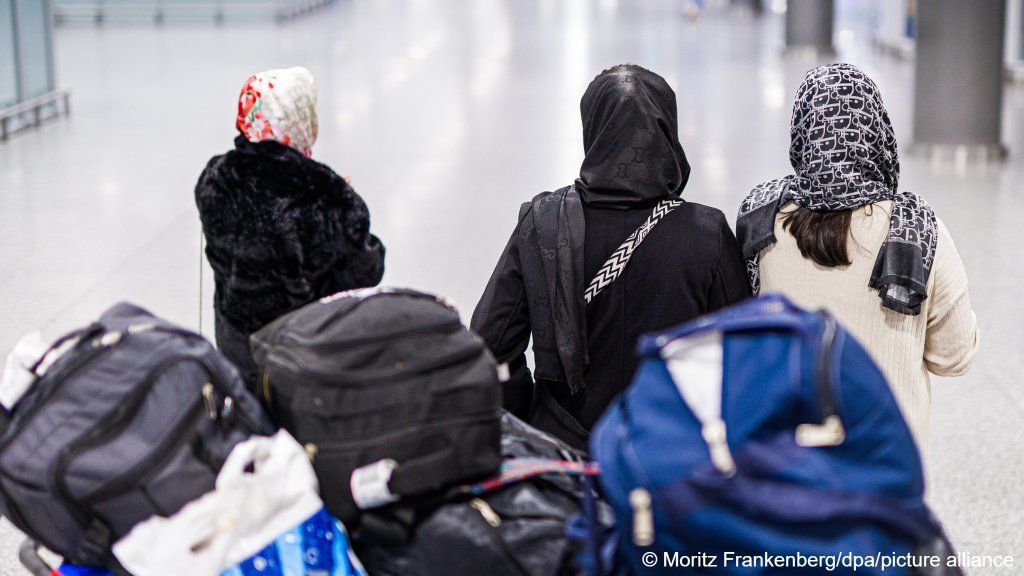
According to the ruling, the cumulative effect of the Taliban’s discriminatory measures against women and girls, which include bans on most work and education, restrictions on movement and dress codes, and lack of protection against gender-based and domestic violence, is tantamount to "acts of persecution" under EU asylum law.
However, human rights watchdogs have warned that Afghanistan under the repressive rule of the Taliban is not a safe country for both men and women.
In a statement, Nina Alizadeh Marandi, expert on asylum policy and law at Amnesty International in Germany, said, "Afghanistan is not a safe country. This applies not only to women, but to all returnees. Even if people have not been granted asylum, they must not be deported to Afghanistan according to human rights standards. Any expansion of deportation practices and any further negotiations with the Taliban for this purpose is a violation of human rights guarantees and endangers human lives."
Read AlsoGermany deports 31 Afghan men to Kabul, including one with no criminal record
Widening deportation
The continued deportations mark a shift in Germany's police regarding the deportation of Afghan nationals, which had previously been limited to convicted criminals and people deemed a "security threat."
German law and policy outline two key categories in this matter:
- Straftäter or "criminal offenders": People who have been convicted of criminal offenses in Germany.
- Gefährder, or "potential threats": Individuals who are considered a present danger to public safety even if they have not necessarily been convicted. This may include people who are on police watchlists or under surveillance for suspected extremist or violent activity.
That has now been widened.
In July, an Afghan man without a criminal record whose asylum claim had been rejected was among those who were deported. Interior Minister Alexander Dobrindt has stressed that anyone without residency rights must expect to leave Germany, and that the government is "consistently implementing this course".
In reaction, Helen Rezene, Managing Director of Pro Asyl, said, "Now, the next barrier has fallen: For the first time, a person without a criminal record has been deported to Afghanistan. We have warned against precisely this development from the outset. Germany’s disastrous collusion with the Taliban is a moral bankruptcy – and a disservice to the fight against Islamism."
Read AlsoAfghan allies still waiting for the safety Germany promised
Taliban delegation arrives in Germany
The German government said on Monday (August 31) that it had authorized a delegation of Taliban government representatives to enter Germany to coordinate more deportations of Afghan nationals, AFP reported.
"We have approved the short-term entry of a technical support team," a foreign ministry spokesman told a press conference in Berlin, with the stated goal of "increasing the number of deportations to Afghanistan".
In a press briefing on Monday, spokesperson for Germany's Federal Foreign Office Martin Giese said that it is in Germany's interest that Afghan representatives are able to provide consular services to the estimated 450,000 Afghan nationals living in Germany and facilitate their repatriation.
"It is the clear goal of the Federal Government to increase the number of deportations to Afghanistan. We are working towards this goal," said Giese, who added that the short-term entry of a technical support team was to enhance the efficiency of the Afghan mission.
When asked about the kind of technical support the delegation would provide, Giese explained, “It's really about creating the necessary technical infrastructure in Afghan embassies so that, for example, labels can be printed in passports, and so on. These are really, if you will, technicians who make sure the equipment works.”

According to the interior ministry, stringent security checks were carried out on the personnel before they were given short-term visas which were geographically restricted to Germany.
Speaking to RedaktionsNetzwerk Deutschland (RND) on Tuesday, Pro Asyl's Rezene said, "With each additional visa, the German government is politically legitimizing the internationally condemned Taliban regime. It is opening the door to Germany, and thus to Europe, for the Taliban."
According to an investigation by German newspaper Tagesschau published last November, financial sanctions have been in place against the Taliban regime since 2021 because of their human rights violations.
The Afghan delegation was reportedly also tasked with ensuring that the substantial revenues generated by the Afghan embassy and consulates in Germany are transferred to Afghanistan while bypassing financial sanctions.
Read AlsoFive years of Taliban rule, displacement, migration, deportation and a human rights crisis