
Five EU states are negotiating with Kigali to host rejected asylum seekers under Brussels' new return law. Rights groups warn of abuses, and past deals delivered only a handful of deportees at huge cost.
Representatives from several European countries visited Rwanda this week, with discussions under way for it to serve as a transit point for deported migrants -- the most concrete sign yet that the EU's new "return hub" strategy is moving from political rhetoric to active negotiation.
The German magazine Der Spiegel reported last week that Germany, Austria, Denmark, Greece and the Netherlands were preparing to send a delegation to Rwanda to discuss setting up centers for people who have had their asylum claims denied. All five have said they want to create "hubs" outside the European Union by the end of the year, after the European Parliament passed legislation in June allowing member states to do so -- a move that has drawn sharp criticism from rights groups as well as other member states such as France and Spain.
"The visit indeed occurred and the negotiations are ongoing," Rwanda’s Foreign Minister Olivier Nduhungirehe confirmed to AFP but refused to provide further information on the talks or a possible timetable.
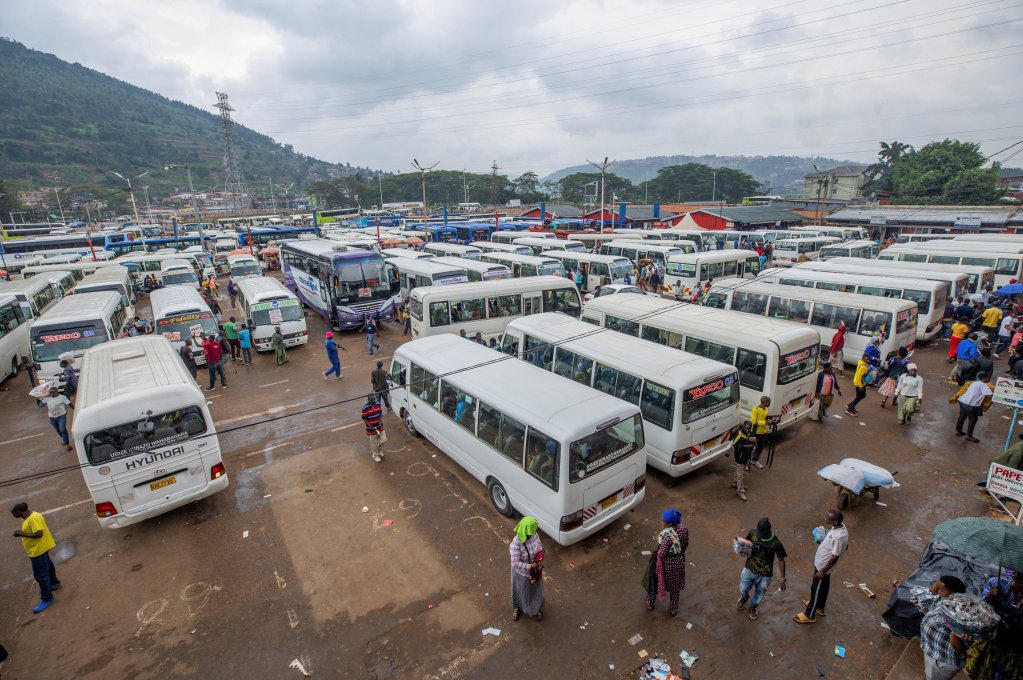
The government in Kigali indicated earlier this month that it had begun "preliminary discussions" with several European countries about migrant transit centers but did not specify which. One suggestion under discussion is the Gashora Transit Centre, some 60 kilometers (37 miles) from Kigali, where migrants stranded in Libya were sent from 2019 while their asylum applications were processed. Many have since left, government spokesperson Yolande Makolo told a local radio station.
AFP reported in April that the five European countries were considering migrant agreements with about 10 states, including Rwanda.
Read AlsoRwanda confirms talks with EU to potentially host migrant return hubs
The new 'EU Return Regulation'
The negotiations rest on the EU's new Return Regulation, politically agreed by member states and the European Parliament in June and described as the bloc’s strictest-ever migration law. The regulation does not use the term "return hubs" explicitly, but it lays out the conditions under which an EU country -- or the EU itself -- can strike an "agreement or arrangement" with a non-EU country to transfer people who have no legal right to remain in Europe and are already subject to a return decision. However, this is not a return to their country of origin, but rather permits states to detain them outside of the EU indefinitely where there is little oversight.
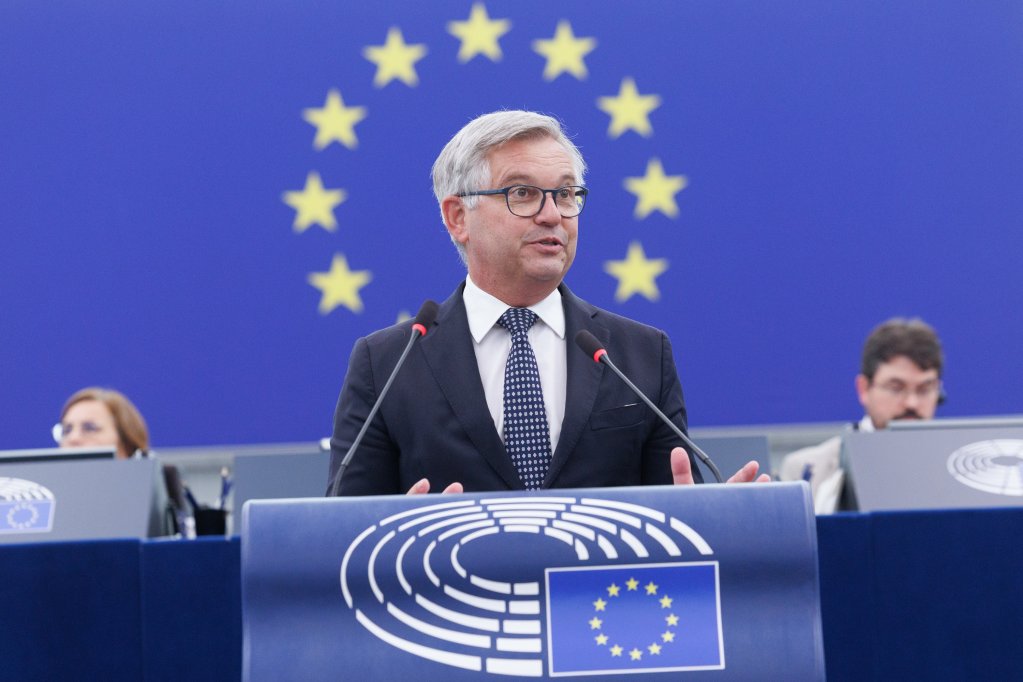
Crucially, the law permits transfers to a third country even where the person has no prior connection -- by nationality, residence or transit -- to that country. That is the legal precondition for so-called return hubs. Under the regulation, the removal process is complete once a person has arrived in the designated third country. Although the agreement with the host state must implement Union law and international-law requirements, subsequent detention, status, onward movement and access to remedies are in practice governed primarily by the agreement itself and the host state’s own legislation.
The law has been politically agreed but has not yet formally entered into force.
Read AlsoItaly and Denmark push for return hubs outside EU in joint statement
Human rights warnings
The regulation states that any such arrangement "may only be concluded with a third country where international human rights standards and principles in accordance with international law, including the principle of non-refoulement, are respected." That clause is where critics say the plan is most exposed.
In July, the Council of Europe’s Commissioner for Human Rights, Michael O’Flaherty, published a letter to the five governments urging a "comprehensive ex ante assessment of potential direct or indirect human rights risks" before any deal is struck -- an assessment the regulation does not explicitly mandate.
Sara Prestianni, advocacy director at the NGO Euromed Rights, has questioned what methodology, if any, is being used to conduct such assessments. Speaking to Euronews, she described the countries under consideration as "characterized by human rights violations".
The political momentum behind return hubs is reinforced by a narrative that has moved from rhetoric into hard law: the idea that third countries are weaponizing migration against the EU -- so-called "migration blackmail" or "migrant instrumentalization". Under the EU’s Crisis and Force Majeure Regulation, adopted as part of the New Pact on Migration and Asylum and due to apply from July 1 2026, a situation of "instrumentalization" is defined as one in which a third country or hostile non-state actor "encourages or facilitates" the movement of third-country nationals towards the EU’s external borders "with the aim of destabilizing the Union or a Member State".
Legal scholars warn that the concept is vague, difficult to prove and prone to expansive interpretation. Yet it is now being used to justify prolonged derogations from fundamental rights at borders, including systematic pushbacks and restrictions on access to asylum. That same logic underpins the return-hub debate: if migration is framed as a hybrid threat or form of coercion, then extraordinary measures -- including offshore detention and transfers to remote third countries -- are presented as necessary defenses rather than political choices.
Read AlsoWhat the new EU migrant 'return hubs' deal means in practice
Outsourcing -- expensive, restrictive and ineffective?
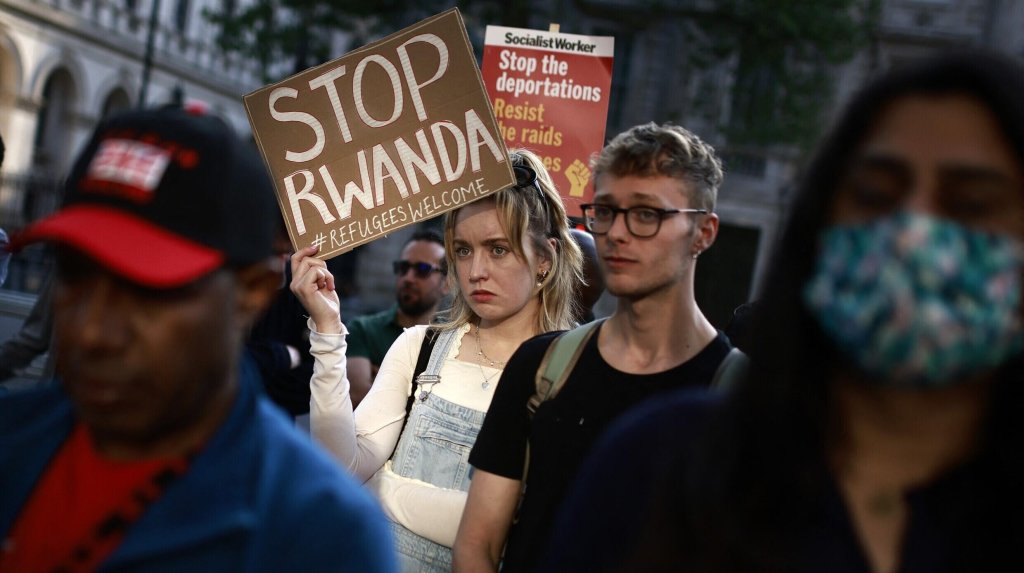
Rwanda is a familiar name in this debate for a reason. Kigali struck a deal in 2022 with the Conservative UK government of then-prime minister Boris Johnson to accept undocumented migrants. The scheme became a defining -- and deeply contested -- feature of UK asylum policy. The UK Supreme Court ruled in November 2023 that Rwanda could not be considered "safe," citing the risk of persecution or ill-treatment for transferred asylum seekers. When Labour’s Keir Starmer took office in 2024, he scrapped the plan outright.
The scale of that scheme’s actual impact is a cautionary data point for the current push: despite years of preparation and significant UK government spending, only four people were ever voluntarily relocated to Rwanda before it was abandoned. UK government data put the combined cost of the Rwanda partnership and associated implementation of the Illegal Migration Act at 715 million pounds.
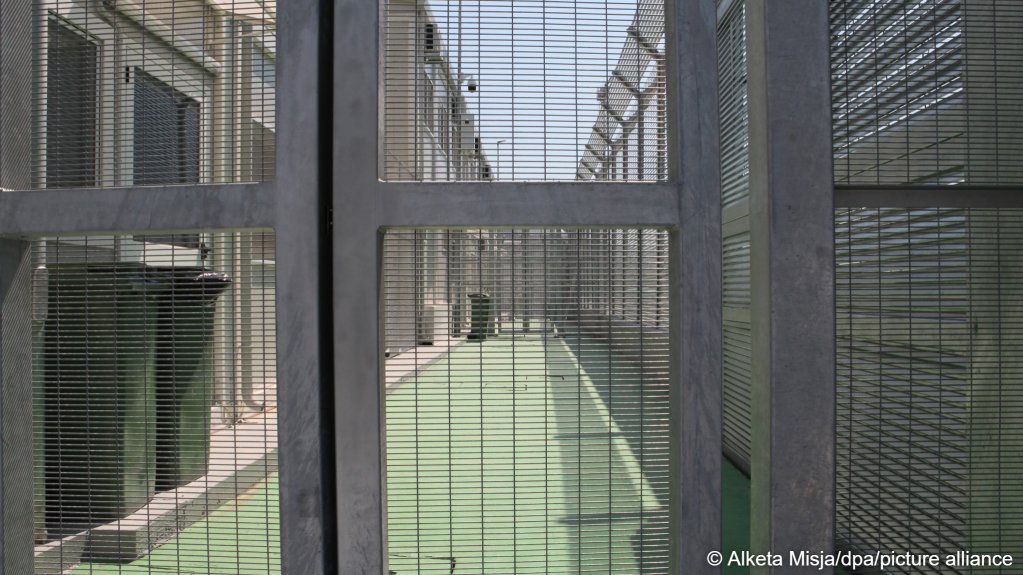
Italy’s parallel experiment offers a similar lesson. Its offshore migrant centers in Albania, opened in October 2024, were originally designed to process asylum claims on Albanian soil under Italian authority -- technically not a return hub, since it targeted asylum seekers rather than people who had already been ordered to leave. After legal challenges, including Italian judges rejecting the government’s “safe country” designations for states like Bangladesh and Egypt, Rome converted the Albanian centers into deportation facilities for irregular migrants with existing return orders in March 2025.
Italy had initially projected housing around 3,000 migrants a month there; the real total has reportedly been around 500 people in total since the conversion at a cost of over 670 million euros. The legality of transferring detained migrants outside the EU is now before the EU Court of Justice, which has yet to rule.
Read AlsoUK wins court case over canceled Rwanda asylum plan
The Next Test: Copenhagen meeting
Germany, Austria, Denmark, Greece and the Netherlands -- dubbed the "group of five" in Brussels diplomatic circles -- want to have at least one return-hub partnership agreed by the end of 2026, with a formal signing envisaged for early 2027, according to a diplomat cited by Euronews. The European Commission has been kept informed of the talks but is not directly involved in the negotiations, which are being conducted bilaterally or as a coalition outside formal EU channels.

The next milestone comes on September 4, when immigration ministers from the five countries are due to meet in Copenhagen, hosted by Danish immigration minister Morten Bødskov, to take stock of progress and discuss legal frameworks and practical operations for the centers. The European Commission will attend as an observer.
Rwanda is not the only country on the group’s list. Greek daily Kathimerini has reported that the five states are in advanced discussions with Uganda, aiming to make a facility there operational as early as next year, though the governments involved have declined to confirm this, citing concerns that publicity could jeopardize the negotiations. AFP reported in April that the five countries were weighing migrant agreements with roughly ten states in total, Rwanda among them. Kenya and Ghana have also been named as possible locations.
Read AlsoEU reported to be considering 12 possible countries to site migrant 'return hubs'
Distorting the core return system
A deeper risk, analysts warn, is that return hubs distort the EU’s core return system. Member states issue several hundred thousand return decisions each year, but the US experience suggests a single hub would handle only a few hundred cases a year -- a marginal fraction of the overall caseload. If political attention and resources shift towards high-visibility hubs abroad, the less glamorous but more consequential work of documentation, consular cooperation, assisted voluntary return and reintegration support risks being starved of funding and political capital.
Davide Colombi, a migration researcher at the Brussels-based think tank CEPS, has flagged a more basic negotiating problem."I definitely see questions as to what the third country might ask in return for hosting people who are not nationals of that country," he told Euronews.
The financial and diplomatic costs of these arrangements are already visible. In the United States, a Senate minority report found that five governments receiving direct payments for third-country deportations had accepted about 300 transfers by January 2026, with more than 32 million US dollars in direct payments and at least 7.2 million US dollars in flight costs -- in some cases exceeding 1 million US dollars per person.
For the EU, the price is likely to be similar: direct payments to host governments, infrastructure funding, technical assistance, and political concessions on issues ranging from sanctions to trade. The risk, as analysts warn, is "policy entrapment" -- once these costs are sunk, poor results may lead not to closure but to higher payments, weaker safeguards or further diplomatic concessions to rescue the project.
Read AlsoLeaders of France and Spain speak out against return hubs
High visibility but limited impact
Return hubs may have a limited role for a small subset of people whose return cannot otherwise be carried out -- for example, convicted offenders or security risks who cannot be deported directly. But they are unlikely to fix low return rates, nor should they become the principal symbol of a return policy whose performance will continue to depend on cooperation with countries of origin, documentation, assisted voluntary return and reintegration.

Whether Rwanda -- or Uganda, the other frontrunner -- ultimately hosts a functioning EU return hub remains genuinely uncertain. Legal challenges, high costs and extremely limited operations in past schemes suggest a policy that may benefit partner governments and EU politicians more than the EU’s own return system or taxpayers.
For now, all that is confirmed is that the conversation has moved from speculation to an actual delegation on the ground in Kigali -- with the next real test coming at the ministers’ meeting in Copenhagen on 4 September.
Read AlsoRefugees and migration: Is Europe closing its doors?
With AFP