
As Morocco steps up efforts to curb irregular migration to Spain following a recent rise in arrivals to Ceuta, it said it had intercepted 201 migrants trying to reach the Canary Islands after departing from Western Sahara. The disputed territory, largely controlled by Morocco and formerly a Spanish colony, has emerged as a departure point for migrants seeking to reach the Canary Islands following tougher migration controls across North Africa.
The Royal Moroccan Navy said it intercepted a boat on Saturday (August 29) carrying 201 migrants who were attempting to reach Spain's Canary Islands.
Citing a statement from the General Staff of Morocco's Royal Armed Forces, Spanish news agency EFE reported that the vessel was intercepted 185 kilometers (115 miles) southwest of Dakhla, a coastal town in the disputed Western Sahara.
The group of migrants, which included women and children, was taken to the fishing village of Roc-Chico, about 190 kilometers southwest of Dakhla, the source added.
The Armed Forces, which did not specify the migrants’ country of origin, stated that after receiving the necessary care on board, they were handed over to the Royal Gendarmerie for the "usual administrative procedures," according to EFE.
As of August 15, there had been nearly 5,000 migrant arrivals on the Spanish islands, a drop of nearly 60 percent compared to the same period last year.
Despite the decline in arrivals, the NGO Caminando Fronteras estimates that, between January and May, at least 635 people died or went missing on the perilous Atlantic route.
Read AlsoSpain: Migrant death toll nears 100 this week, en route to Ceuta and Balearic Islands
Disputed Western Sahara becomes irregular migration departure point
Western Sahara, largely controlled by Morocco, is a disputed territory that was formerly a Spanish colony. After Spain withdrew in 1975, Morocco claimed and controls most of the territory. The territory's Polisario Front, a Sahrawi (people of Western Sahara) political and armed movement that seeks independence for Western Sahara, operates a self-declared Sahrawi government, with major support from Algeria – another point of contention.
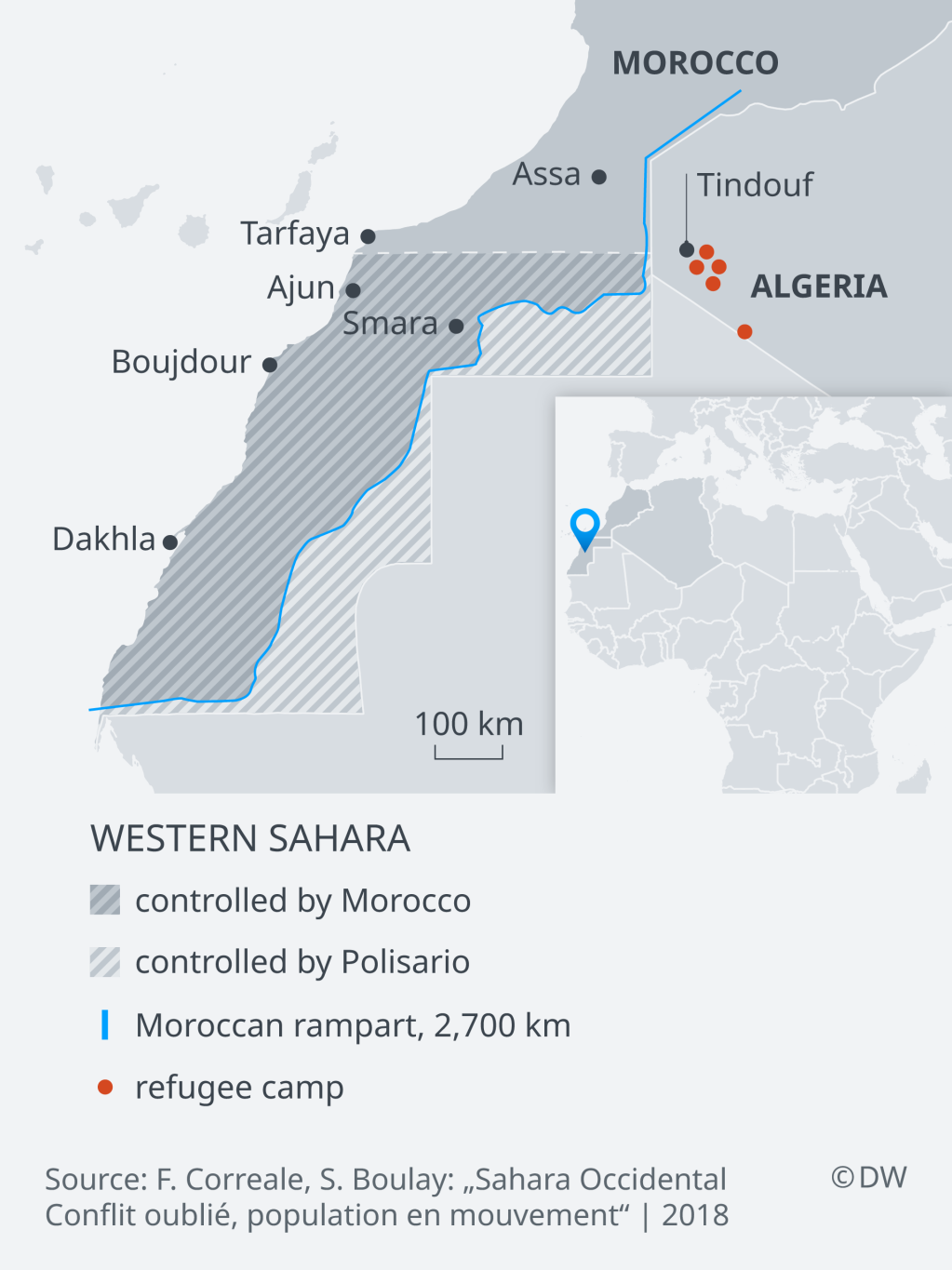
The Western Sahara dispute has influenced irregular migration mainly by making the northwest African Atlantic coast a shifting departure zone. According to the UN Office on Drugs and Crime (UNODC), migrant smugglers have used departure points in southern Morocco and northern Western Sahara for boats bound for the Canary Islands, particularly since 2020. When Moroccan or Mauritanian controls increase (with European Union support), routes tend to shift farther south to places such as Mauritania, Senegal and The Gambia, according to UNODC research.
Though the shifting political and security context around Western Sahara is contributing to shaping where irregular migrant boats depart, economic hardship, conflict, climate change and insecurity in West and Sub-Saharan Africa remain major push factors.
The route is extremely dangerous, with the International Organization for Migration (IOM) recording 1,214 deaths or disappearances in 54 shipwrecks in 2025.
With EFE