
Ahead of the state election in Saxony-Anhalt, migrants fear the consequences of the far-right anti-immigrant AfD party coming to power. At the same time, voters with an immigrant background are turning away from political parties.
As a far-right regional election victory looms in the eastern German state of Saxony-Anhalt, many people with a migration history are readying to pack their bags, fearful of the AfD party's threatened "deportation and remigration offensive".
On September 6, the anti-immigration, Islamophobic and Russia-friendly Alternative for Germany (AfD) party, which currently polls at around 40 percent, is expected to score a historic win in the small state of Saxony-Anhalt.
For Ayman Alyoussef, a Syrian-born cardiologist in the city of Quedlinburg, the prospect of a far-right election victory brings fear that anti-foreigner sentiment will intensify.
Alyoussef, who arrived in Germany in 2014 and is now a German citizen, says he is generally well-regarded by his patients and medical colleagues. However, he reports that he and his family, who wear headscarves, occasionally face open hostility while in public.
"There are patients who arrive at 3:00 am with a heart attack. I am able to get them through an acute crisis," Alyoussef told the AFP news agency. "Afterwards, they are very grateful when they realise that a foreigner helped them.
"But out on the street, they don't know that I am a cardiologist. They think I am just a foreigner receiving assistance from the city. That is why they say they don't want someone like me here. That is the problem."
Read Also'Remigration': How a word threatens to change migration views in Germany
Stark prospects
Saxony-Anhalt's Refugee Council, AFP reported, has highlighted that many foreign-born residents are already facing social exclusion and racism, adding that the political rhetoric regarding mass deportations has created a climate of profound fear and uncertainty among the foreign-born population.
Five years of AfD rule, particularly if the confirmed far-right extremist Saxony-Anhalt chapter of the party were to rule with an absolute majority, would indeed have far-reaching -- and potentially devastating -- consequences for minorities in Saxony-Anhalt.
In its state election manifesto, the AfD has vowed to, among other things, abolish asylum on the grounds that entry to the state is only possible through a safe third country, stripping foreigners with criminal convictions of their residency permits, no longer viewing Ukrainians as war refugees and denying them benefits, abolishing church asylum, making recognized refugees work in waste disposal and outdoor cleaning operations, putting acquired citizenships under review and using prisons to incarcerate those ear-marked for deportation.
Ulrich Siegmund, the AfD's candidate for state premier, has pledged to deport all foreigners without legal status "from minute one" in office.
Speaking to AFP on Saturday (August 29) at a campaign event, Siegmund insisted that his party wants to deport "people who are here illegally, who are required to leave the country", while "regular immigration based on strict criteria ... would not be a problem".
The heated election campaign has already deepened societal divisions, says Mamad Mohamad, a candidate for the left-leaning Greens party who was recently campaigning in Halle.
Mohamad reported encountering a mixed reception on the streets, noting that while some residents are open to discussion and have questions, others react with insults or verbal aggression.
"There are people who want to talk to us and have questions, but there are also people who walk by and hurl insults or shout at us," he told AFP.
A Yazidi Kurd who arrived in Germany from Syria in 1996 as a teenager, Mohamad said he and his fellow campaigners must take precautions, ensuring they are never alone and always stay aware of their surroundings.
Warnings of economic downturn
Rezwaan Talash, a 24-year-old Afghan immigrant working in a Magdeburg computer shop, shares these anxieties.
"Whether I'll still have my life the way it is now, that's a question and a fear that's always on my mind," he told AFP. He noted that many members of his support group have already left the state out of fear that their hard-won stability could "suddenly go up in flames."
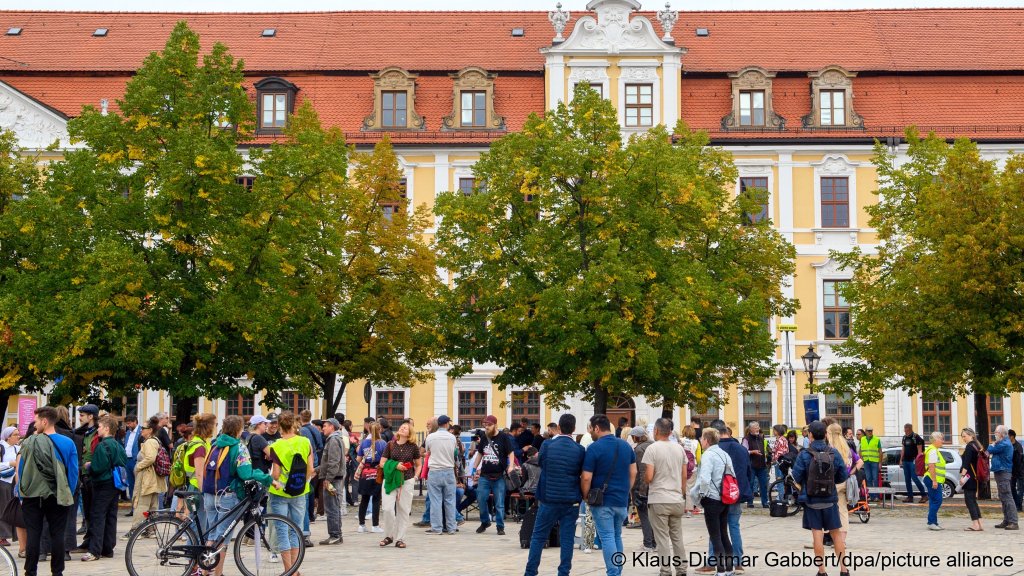
In response to what they warned is an increasingly hostile climate, approximately 150 immigrant-run restaurants, kiosks, barber shops and other businesses in the state capital Magdeburg last week temporarily closed their doors for five hours to protest.
Economists and local leaders warn that the AfD's anti-immigrant platform could severely weaken Saxony-Anhalt's economy.
The state has seen its population shrink by nearly 25 percent since German reunification in 1990, creating a critical labor shortage. Sven Schulze, a candidate for the conservative CDU, noted that the state currently sees only one new worker entering the labor force for every two who retire -- a deficit that local and regional residents alone cannot bridge.
While the AfD suggests addressing this demographic crisis through "baby bonuses" for German parents and incentives for citizens living abroad, employers report immediate difficulties in recruiting qualified staff.
"Saxony-Anhalt definitely has problems finding young talent," Talash's boss in the IT store, Matthias Herberg, told AFP. "Well-qualified people with a migration background could absolutely fill these gaps."
A new study by the German Economic Institute underscores the vital role of foreign workers in East Germany's economy, finding that employees without German citizenship contributed approximately 68.3 billion euros to the region's value creation in 2025 -- a figure that climbs to 92.4 billion euros when considering broader economic impacts.
As the region faces a shrinking workforce due to an aging population and return migration to other EU states, the study warns that failing to compensate for these labor shortages through immigration from non-European countries could severely threaten East Germany's prosperity and essential services, including healthcare.
Read AlsoScotland needs more migrants to meet economic and social needs, says SNP party
Dependency on foreign doctors
Pushing out migrants would especially hit the state's health sector, where thousands of doctors and nurses are foreign-born.
In fact, more than one in four doctors in Saxony-Anhalt's hospitals don't have German citizenship, according to a recent investigation by Germany's Migration Media Service.
Across hospitals, medical practices, government agencies, and other areas, the proportion of foreign-born physicians in Saxony-Anhalt was slightly lower, at almost 19 percent. Saxony-Anhalt is thus above the national average: Across Germany, about one in six doctors is not a German citizen, as a Migration Media Service investigation from May 2026 found.
"Without our highly qualified colleagues of foreign origin, we wouldn't be able to function," said Matthias Voth, clinic director in Quedlinburg, which has a population of some 23,000. "I would have to close the hospital," he added.

The reliance on foreign medical professionals is especially acute in rural areas. In the Altmarkkreis Salzwedel district, for instance, 67 non-German physicians make up 29 percent of the medical workforce.
Particularly in the countryside, "comprehensive care can no longer be guaranteed without foreign colleagues," Saxony-Anhalt's State Medical Association stated in a recent press release.
Most foreign doctors in Saxony-Anhalt hail from Azerbaijan, Ukraine, Russia, Romania -- and Syria, the aforementioned cardiologist Alyoussef's home country. He wanted to stay but was keeping his options open.
"Me and my family have a German passport, so I can work anywhere," he told AFP. "If I get the feeling that hatred is being spread here, then that's it, I'm done."
Migrant voters alienated by political parties
A new study published Monday (August 31) by the German Center for Integration and Migration Research (DeZIM), meanwhile, reveals a growing trend of political alienation among voters with a migration background.
The research, comparing survey data from the winters of 2023/24 and 2024/25, shows that these voters are distancing themselves from established political parties at a higher rate than the general electorate.
This disenchantment is most acute among those with roots in Turkey, the Middle East, North Africa (MENA), Afghanistan and Pakistan. For instance, the proportion of these voters who could imagine voting for the conservative Christian Democrats (CDU/CSU) plummeted from 67 percent to 50 percent in just one year, while support for the Social Democrats (SPD) dropped from 71 percent to 60 percent.
Previous studies showing that many immigrant voters have lost their faith in the leading parties support the DeZIM findings.
Read AlsoHow Germany’s AfD party tries to win over voters from immigrant backgrounds
At a DeZIM press briefing on Monday (August 31), Humboldt University researcher Özgür Özvatan said that the commitment among those with an immigrant background who can imagine voting for the AfD is usually very high due to pent-up frustration and anger, which makes it difficult to "win those people back."
"Among people of Turkish descent in particular, there is an enormous drive for social advancement -- and they've achieved success in that regard. This means that people are advancing into elite positions. But during and after their rise, they realized relatively quickly that the meritocracy was a myth."
Echoing Özvatan's statements, Turkish Community in Germany's managing director Martin Gerlach said that the feeling of not being represented among migrants in Germany has become much stronger in recent years. In its current form, some 12 percent of German members of Parliament have a migration history, compared to more than a quarter of the total population, according to the Migration Media Service. Moreover, fewer than half of the people with an immigrant background were allowed to vote in last year's federal election.
At the same time, Gerlach voiced his surprise and indignation that immigrant voters remain a neglected demographic across all democratic parties -- the conservatives (CDU/CSU), the social democrats (SPD), the Greens, the Liberals (FDP) and the Left Party -- in terms of migrant voting potential. Currently, more than 7 million eligible voters in Germany have an immigration background.
"In terms of percentage alone, that potential has long been the deciding factor", Gerlach said.
The DeZIM study also highlights a stark divergence in attitudes toward the far-right AfD. While the party faces a categorical rejection from approximately 80 percent of voters with MENA or Turkish ties, it finds a unique foothold among immigrants from former Soviet states. Nearly 45 percent of respondents from the latter group could imagine voting for the AfD -- significantly higher than the 28 percent recorded among voters without a migration history.
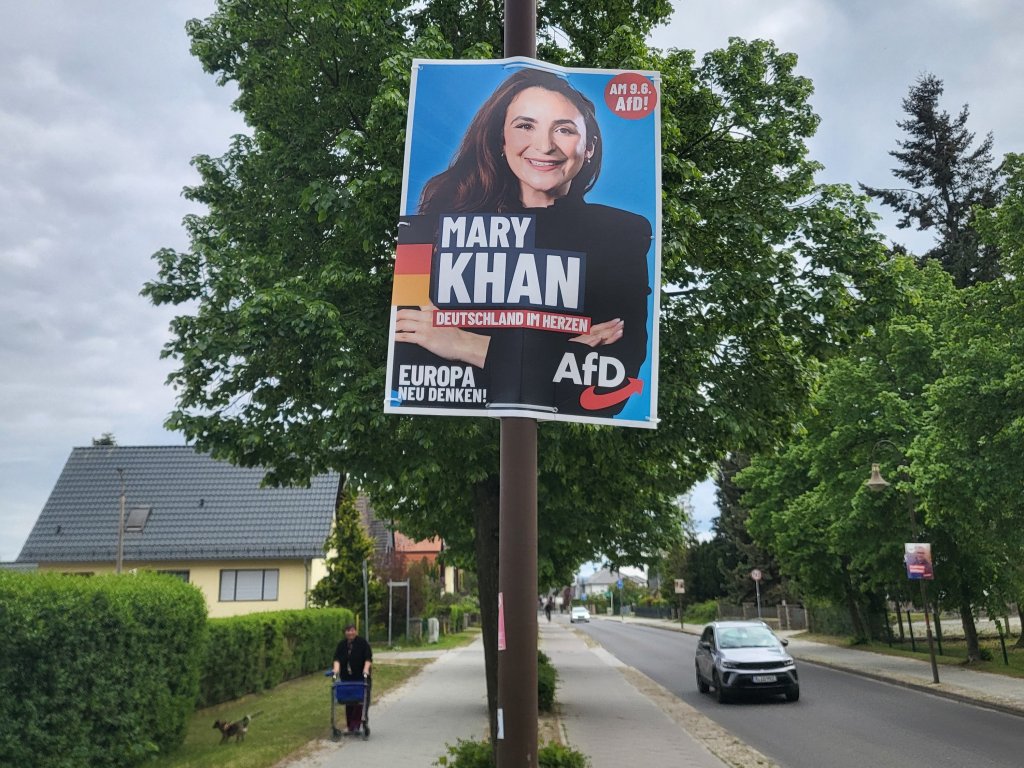
Despite this erosion of trust, the SPD remains the most viable option for this demographic, with two-thirds of eligible voters with a migration background considering the party a potential choice. The CDU/CSU follows in second place by a narrow margin.
Researchers noted that while region of origin is a significant factor in these political preferences, other variables such as age, gender and income play an equally critical role in shaping voter sentiment.
For the purposes of the DeZIM study, a person with an immigrant background is defined as someone who has one parent who was born without German citizenship. The definition used by the Federal Statistical Office, according to which approximately 21.8 million people had an immigrant background last year, includes those who have immigrated themselves or both of whose parents have immigrated to Germany since 1950.
German law stipulates that foreign nationals do not have the right to vote in federal or state elections.
with AFP, epd, dpa