
As the sea off Tunisia's coast claims more lives, Tunisia’s youth exodus reaches a grim milestone. With high unemployment and an ongoing economic crisis pushing thousands to emigrate, many are choosing the Mediterranean’s deadliest crossing over a future at home.
On August 22, 2026, a boat carrying 15 migrants capsized off the coast of Ben Guerdane in southeastern Tunisia, killing at least 12 people and leaving two others missing, according to the Tunisian National Guard. Only one survivor was found. The vessel set off early on Thursday, August 21, from a location between Zarzis and Ben Guerdane, sinking about 14 nautical miles (26km) off the coast of Zarzis.
By Sunday, August 24, a hospital in Ben Guerdane had received at least 19 bodies of migrants recovered from the sea over the previous two days, said Mostafa Abdelkebir, head of the Tunisian Observatory for Human Rights. It was not clear if all the bodies were from the boat that sank. Genetic testing was being carried out to identify the bodies and determine how many had been on board the boat.
As the town of Ben Guerdane erupted in violent protests following the tragedy, coastguard, military and civil protection teams, backed by two helicopters, continued to search for the missing.
Among those on board were seven members of the same family and a man with his pregnant wife, according to Abdelkebir. All of the migrants were from the Ben Guerdane area in southeastern Tunisia, with 14 from Ben Guerdane and one from Zarzis. The only person to survive drifted at sea for about 48 hours before being rescued by a commercial vessel.
On Wednesday, August 26, eight of the dead were buried in a single funeral in Ben Guerdane.
Later that day, Italy’s coast guard said it had received a report from an aid group concerning the sighting of three bodies in an advanced state of decomposition about 36 nautical miles from the coast of Zarzis, in a search-and-rescue area under the responsibility of Libya and Tunisia. An aircraft operated by an NGO spotted a decomposing body in the same area, but it was not clear whether it may have been one of the three.
According to the International Organization for Migration, at least 914 migrants have died or gone missing this year while attempting the central Mediterranean route. Across the Mediterranean as a whole, at least 1,065 people have died or gone missing.
Read AlsoIOM warns that migration routes to Europe are becoming more dangerous
Unemployment and brain drain
Tunisia’s youth unemployment rate stood at 37.5 percent in the first quarter of 2026, a figure that has remained largely unchanged since 2022, despite this being the most educated generation in the country’s history. More than three-quarters of young Tunisians have at least completed secondary education, yet they remain locked out of the labor market.
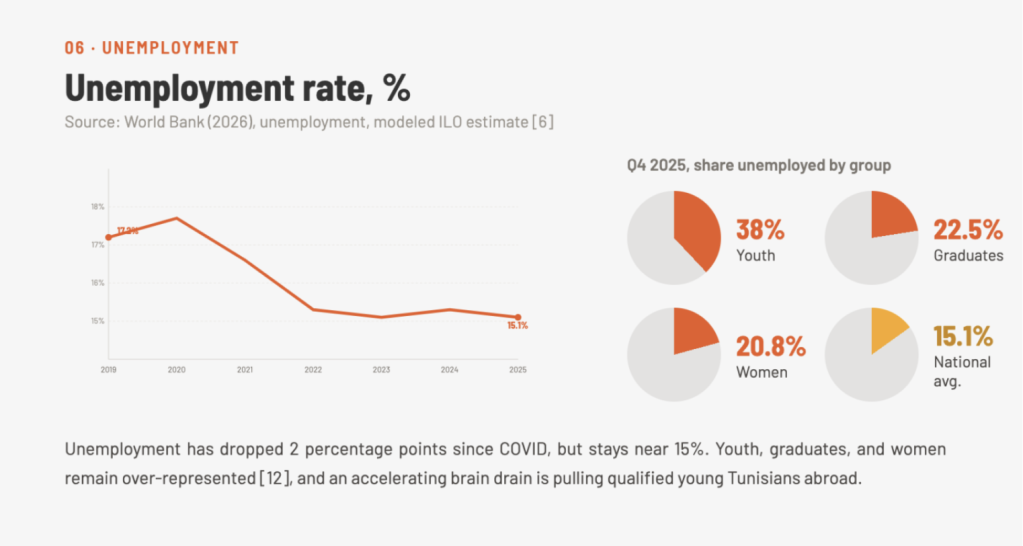
The most qualified leave the fastest. Of roughly 90,000 engineers registered with the national order, some 39,000 now live abroad -- an average of 20 engineers departing every day from a country that only trains about 8,000 annually. In medicine, of a recent graduating class of 1,900 doctors, 1,600 left to practice elsewhere, making Tunisia one of the leading suppliers of foreign doctors to France.
By end‑October 2024, Tunisia’s state employment agency (ATCT) had formally recruited 3,198 Tunisians to work abroad, with health and education being the two top sectors. Overall, around 26,000 Tunisians were recorded as employed overseas, with over 60 percent in health (31 percent) and education (37 percent). In 2024 alone, ATCT reported 88 specialist doctors, 22 general practitioners and 145 engineers leaving through its channels. In March 2024, ATCT said it had received approximately 23,000 applications from people seeking work abroad, mostly in education, electrical/mechanical engineering and electronics.
Read AlsoEurope's new migration deals promise 'safe and legal routes,' but who really has access?
Political consolidation and civic space
Since July 25, 2021, in the midst of the Covid-19 pandemic, President Kais Saied has governed by decree, dissolved parliament, reshaped the judiciary, and jailed or prosecuted critics, journalists, and activists. Rights groups describe arbitrary detention and legal harassment as central tools of governance, while dozens of civil society associations have been suspended or blocked.
Protests in 2025-2026 were held under the slogan "the people are hungry and prisons are full," linking political repression to cost‑of‑living pain, medicine shortages, and failing public services. Summer 2026 saw demonstrations over water and electricity cuts, with anger spreading from political demands to basic needs.
On August 20, 2026, hundreds of protesters marched through the streets of the capital Tunis calling for the ouster of President Kais Saied, the release of jailed opposition activists and journalists, and the restoration of democracy. A similar demonstration took place on July 26, 2026, coinciding with the fifth anniversary of Saied’s power grab.
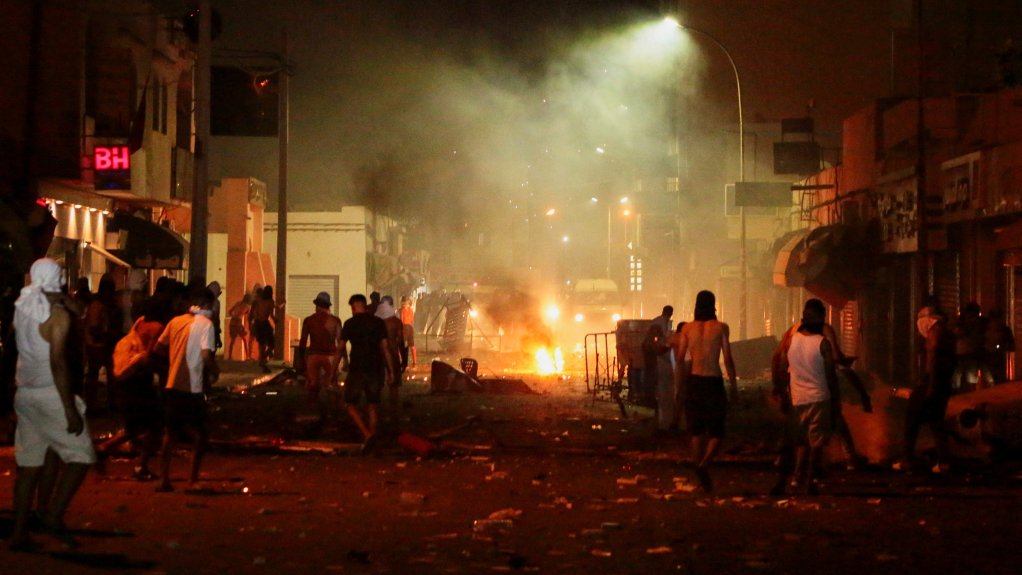
The recent deaths sparked further protests in Ben Guerdane, which turned violent as demonstrators burned tyres and blocked roads. Police responded by firing tear gas to disperse the crowds. Protesters demanded economic development and better living conditions, saying lack of opportunities and years of marginalization have pushed more and more young people to undertake dangerous sea crossings to Europe in search of a better life abroad.
Read AlsoTunisia: Deaths of 12 in migrant boat sinking spark protests
The EU-Tunisia migration deal
On July 16, 2023, the EU signed a Memorandum of Understanding with Tunisia, largely motivated by seeking cooperation to prevent boats from departing for Europe. Under the migration component, the EU and its member states have provided 105 million euros for interceptions at sea and border control activities in Tunisia.
Exactly three years later on July 16, 2026, 46 human rights and humanitarian organizations issued a joint statement saying the EU-Tunisia migration deal had fuelled and normalized serious human rights violations against migrants, asylum seekers, and refugees in Tunisia. These include dangerous interceptions at sea putting lives at risk, failures to individually assess protection needs, and unlawful collective expulsions involving torture and ill‑treatment, including rape.
The result: departures from Tunisia have fallen sharply over the past two years amid a crackdown and tighter maritime controls backed by European funding and modern border‑monitoring equipment. But the desperation has not abated. It has simply been pushed into more dangerous channels.
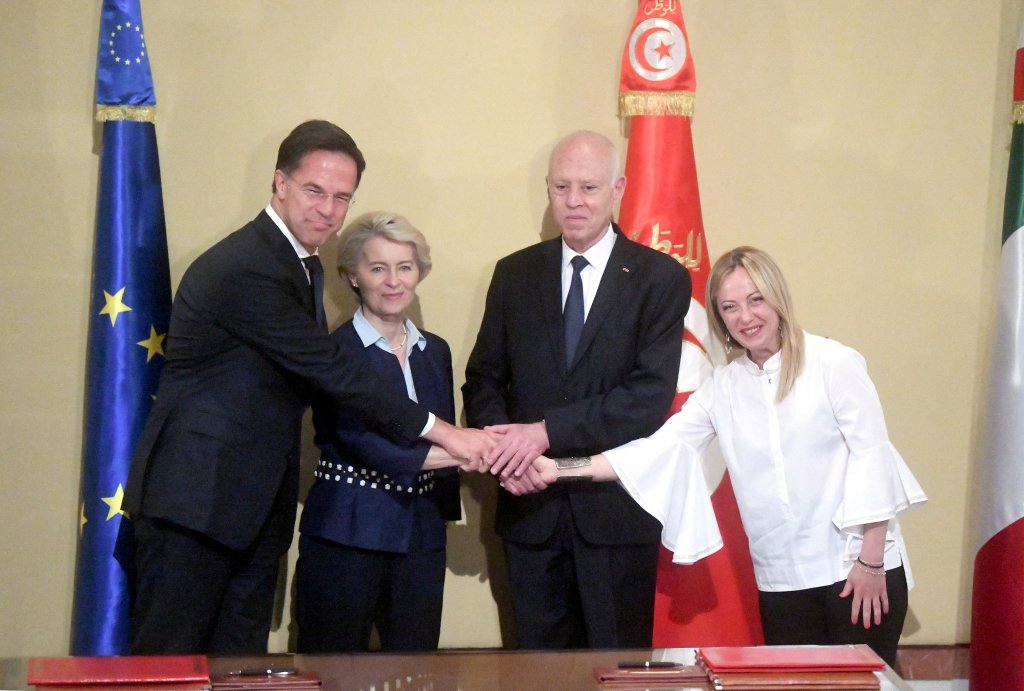
This pattern extends beyond Tunisia. The EU has pursued similar migration control agreements with other North African countries, including Libya and Morocco, providing funding and equipment to intercept migrants before they reach European shores. Human rights groups have documented that these deals have led to systematic abuses, particularly affecting sub-Saharan migrants fleeing violence. By outsourcing border control to countries with poor human rights records, the EU has effectively normalized a system where migrants are trapped in cycles of abuse, with fewer safe pathways to seek asylum or work legally in Europe.
In March 2026, President Kais Saied publicly called on French President Emmanuel Macron to revisit and “rebalance” the 2023 EU-Tunisia memorandum, arguing that cooperation must be made “more balanced, fair, and equitable” for both sides. Tunisian officials argue that the existing deal disproportionately burdens Tunisia with border control responsibilities while offering insufficient economic benefits and political support in return.
Read AlsoTunisia proposes revision of its EU migration deal
Remittances and return: the economic lifeline
Tunisians abroad now send home more money than the entire tourism sector earns. In 2024, remittances from Tunisians residing abroad reached 9.9 billion dinars (approximately 3.2 billion US dollars), marking a 12.7 percent increase compared with 2023. Transfers originating from European countries -- where more than 1.5 million Tunisians reside -- rose by 13 percent to 8.738 billion dinars in 2024, accounting for 87.9 percent of the total. France, the leading host country with nearly one million Tunisians, saw repatriated income grow by 14.8 percent to reach 4.197 billion dinars. Germany, the third host country with nearly 119,000 Tunisians, saw transfers surge by 14.4 percent to 1.891 billion dinars, according to a report by the Central Bank of Tunisia, cited by a Tunisian news portal.
By contrast, tourism revenues in 2024 reached 7.6 billion dinars (approximately 2.5 billion US dollars), a record at the time. In 2025, tourism revenues increased by 6.5 percent to 8.097 billion dinars, while remittances rose by 14.9 percent to approximately 11.3 billion dinars for the full year, based on Central Bank of Tunisia data.
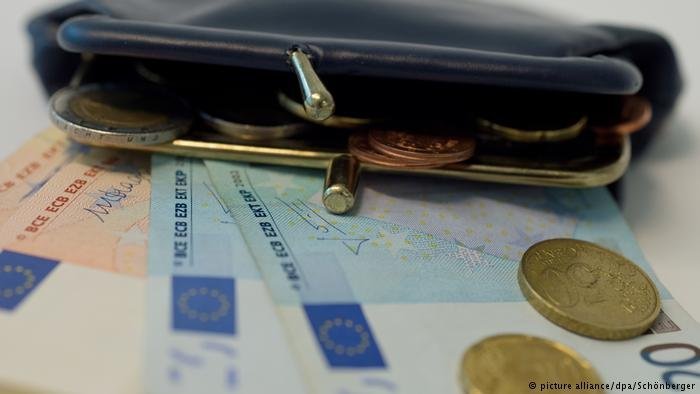
In the first nine months of 2025, combined tourism revenues and remittances exceeded 12.7 billion dinars (approximately 4.38 billion US dollars), covering 120.9 percent of Tunisia’s total external debt servicing of 10.55 billion dinars (approximately $3.63 billion). By November 20, 2025, the combined total had exceeded 15 billion dinars, with remittances at 7.776 billion dinars and tourism at 7.359 billion dinars.
In the first four months of 2026 alone, cumulative workers’ remittances reached 2.9 billion dinars, a 5.2 percent increase over the same period in 2025. As of August 20, 2026, combined tourism and remittance revenues had reached nearly 11 billion dinars, with remittances at 5.869 billion dinars (up 5.4 percent year‑on‑year) and tourism at 5.128 billion dinars (up 5 percent).
World Bank figures rank Tunisia 47th globally for remittances as a share of GDP, with diaspora transfers representing 6.34 percent of the national economy in 2024. The average transaction fee for sending money to Tunisia sits at around 8.7 percent, according to World Bank data.
Some Tunisians return as founders, mentors, and investors. The AI company InstaDeep, founded in Tunis with two laptops and 2,000 US dollars, was acquired by BioNTech in a deal worth over 500 million pounds in 2022, marking Tunisia as Africa’s leading DeepTech contender.
But for some, the exit door leads to coercion rather than opportunity. A February 2026 report by INPACT documented at least 1,417 African nationals integrated into the Russian armed forces since the war began, including seven identified Tunisians -- one recorded as killed in action. An April 2026 investigation by Inkyfada documented Tunisian students who left for Russia via agencies, were arrested on murky drug charges, then “chose” military contracts to escape prison -- only to be sent to the front in Ukraine and go silent.
Read AlsoTunisia: Authorities register a 'record number' of voluntary returns
Policy debates
In November 2024, parliamentarians proposed a law requiring graduates in medicine and engineering who work abroad in the first five years after graduation to repay up to 50 percent of tuition costs (cited as approximately 34,000 US dollars per graduate), via installments over five years; funds would go to universities. The proposal suggests a monthly deduction of 180 US dollars for a period of five years. Graduates who return to work in Tunisia before the five‑year period expires would be exempt, provided they remain and work in the country for at least three consecutive years.
The proposal has faced widespread rejection. Kamel Sahnoun, head of the Tunisian Engineers’ Syndicate, said the bill contradicts the constitution, which guarantees free education as a constitutional right for all Tunisians, and warned it would lead to fewer skilled Tunisians returning to the country.
Nizar Eladhari, Secretary‑General of the Tunisian Medical Syndicate, argued that imposing financial compensation on doctors wishing to work abroad would discourage young people from pursuing a medical career and close the door for those wishing to return and launch businesses. Dr. Bacem Mnif warned that emigrants would stop sending money back to Tunisia, producing a “double loss”: the loss of expertise that will never return, and the loss of much‑needed foreign currency from their remittances.
For Brussels, the choice is whether to continue funding border control that fuels abuses and pushes more people into the sea, or create safe, legal pathways that match the scale of the crisis. For Tunis, the question is whether to compete for talent or try to tax its exit.
Read AlsoMaghreb declining birth rate: 'We will need sub-Saharan migrants'
With AFP and Reuters