
Germany has deported another 23 Afghan men to Kabul, claiming they are criminals or security risks. But Berlin has quietly widened its policy to also remove Afghans with no criminal record, relying on "technical contacts" with the Taliban.
Germany has deported a further 23 Afghan men to Kabul on a charter flight from Leipzig, bringing the total to 228 Afghan men returned in this legislative period since Chancellor Friedrich Merz took office. All 23 had "come to the attention of the criminal justice system", according to a ministry spokesman, who said most were convicted of serious crimes including sexual offences and bodily harm.

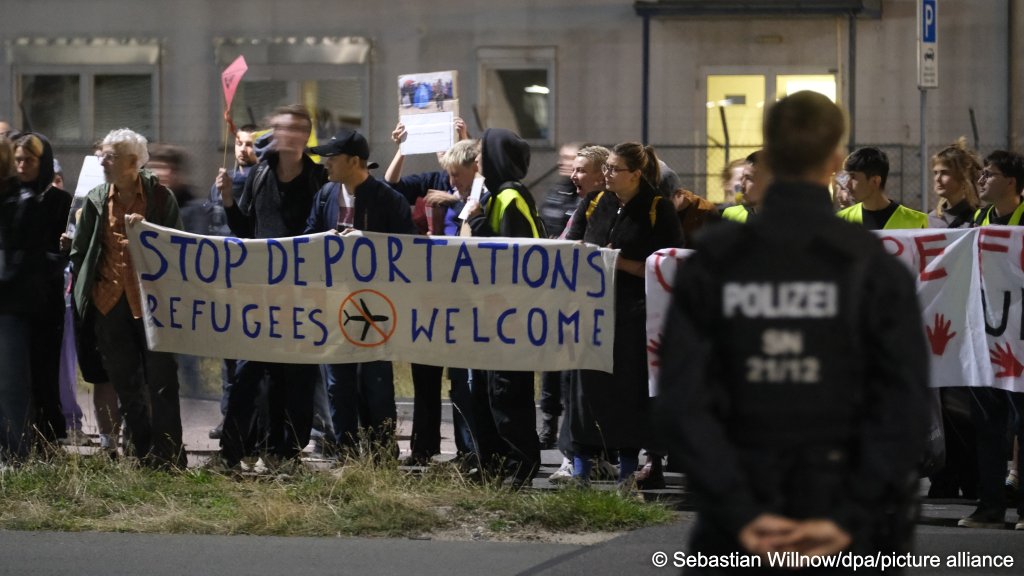
The operation, which began in the early hours of Tuesday, August 25, 2026, was met by around 50 protesters at Leipzig airport holding banners reading "Stop Deportations -- Refugees Welcome".
Read AlsoAfghan allies still waiting for the safety Germany promised
From convicted offenders to men without status
For years, Berlin insisted that deportations to Afghanistan would be limited to convicted criminals and people deemed a "security threat." German law and policy distinguish between two key categories in this context. Straftäter -- meaning "criminal offenders" -- are people who have been convicted of criminal offenses in Germany. While Gefährder, or "potential threats", are individuals considered a present danger to public safety even if they have not necessarily been convicted, often because they are on special police watchlists or under surveillance for suspected extremist or violent activity.
That framework has now been widened. In late July 2026, Germany carried out a flight that included, for the first time since the Taliban’s return to power, an Afghan man without a criminal record whose asylum claim had been rejected. Interior Minister Alexander Dobrindt has stressed that anyone without residency rights must expect to leave Germany, and that the government is "consistently implementing this course".

A spokesperson for Germany’s Interior Ministry confirmed to InfoMigrants at the time that Germany’s deportation policy does not only center around convicted criminals. "Our stated policy for this government, signed by all coalition parties, CDU, CSU and SPD, underlines that we will start up deportations to Afghanistan and begin with those who hold criminal convictions, but not limiting ourselves to that," the statement said.
Under the new approach, federal states are now including deportations of eligible Afghans even if they have no criminal record or security designation, and several men without convictions have been held in special deportation detention in preparation for removal. People already on special police watchlists as potential threats remain a priority for removal alongside convicted offenders, but they are no longer the only ones at risk of deportation.
Read AlsoGermany widens deportations to Afghanistan
Technical contacts with the Taliban
Germany and the EU do not officially recognize the Taliban as Afghanistan’s legitimate government, yet both have developed "technical contacts" with the de facto authorities in Kabul to enable deportations and readmission. The EU hosted a Taliban delegation in Brussels in June 2026 for talks focused on return and readmission, describing the meeting as "technical" and not amounting to recognition.

Germany has similarly held technical discussions with Taliban representatives, including allowing Taliban-appointed consular staff to work at Afghan diplomatic representations in Berlin and Bonn to facilitate deportation paperwork. These contacts are framed as pragmatic cooperation on documentation, identification and flight logistics, even as rights groups warn they risk legitimizing the Taliban regime.
Read AlsoFive years of Taliban rule, displacement, migration, deportation and a human rights crisis
Why women are not being deported
At present, Germany is deporting only men. Women are effectively excluded because German and EU authorities consider that women in Afghanistan face persecution on the basis of their gender under Taliban rule. This position is reinforced by a landmark judgment of the Court of Justice of the European Union (CJEU) on 4 October 2024 in Joined Cases C‑608/22 and C‑609/22 (AH and FN v Bundesamt für Fremdenwesen und Asyl).
In that ruling, the CJEU held that the cumulative effect of the Taliban’s discriminatory measures against women and girls -- including bans on most work and education, restrictions on movement and dress codes, and lack of protection against gender-based and domestic violence -- amounts to "acts of persecution" under EU asylum law.
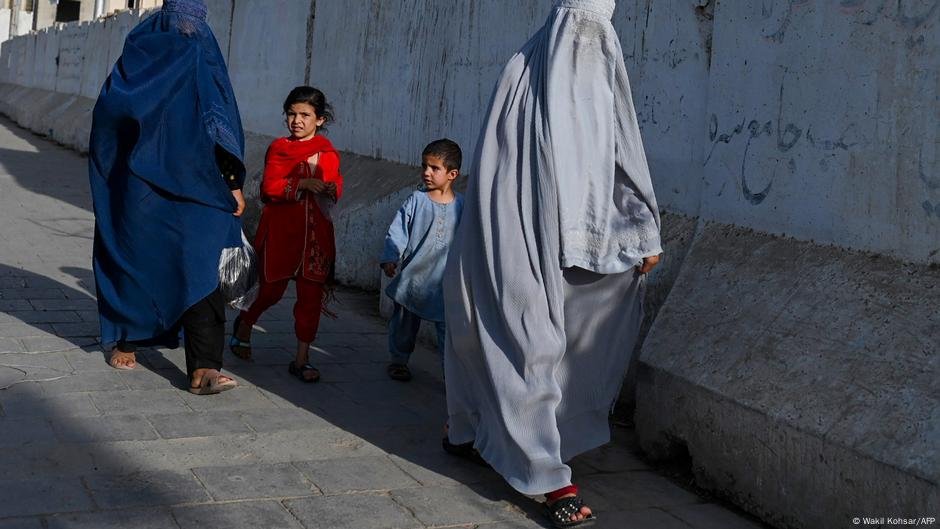
The court concluded that EU member states are entitled to recognize Afghan women as refugees solely on the basis of their gender and nationality, without having to prove additional individual risk factors. The judgment has been widely cited in parliamentary debates and guidance as establishing that Afghan women, as a group, are presumed to be subject to institutionalized persecution while the Taliban remain in power.
As a result, current deportation flights to Kabul have been composed exclusively of male returnees. While there is no explicit statutory ban on deporting women, the combination of the CJEU ruling, EU country guidance and individual risk assessments means that, in practice, women are not being removed to Afghanistan at present.
Read AlsoGermany: Top court rules on Afghan migrant policy
Arrival in a country in crisis
Returnees face a country in deep humanitarian and economic crisis. The UN World Food Programme has warned of unprecedented levels of undernutrition, and the International Labour Organization estimates that only around a third of the working-age population has a job.
The German news agency dpa reported that deportees describe severe difficulties on arrival. One man deported in July said he had arrived in Germany at age 14, had partly forgotten his mother tongue Dari, and was now separated from his wife and child in Germany. He reported that there was no work for him in Kabul and that, without his older brother’s support, he would be living on the street.
Rights groups warn that returnees can face exclusion, arbitrary detention, torture or worse, particularly if they are perceived as having been "westernized" or as having sought asylum abroad.
Protesters at Leipzig airport have argued that deporting people to the Taliban regime is "extremely dangerous", with some returnees likely to face persecution, destitution or violence. "People from Afghanistan seeking protection here are being deported to the Taliban regime where they face exclusion, torture or even death," said Kai Adeel, a spokesman for the Alliance Against Deportations, which organized the airport protest.
Read AlsoFive Afghan migrants found dead after attempting to cross into Iran
A political calculation
The expansion of deportations forms part of a broader shift under Chancellor Merz’s government, which has pledged tougher migration controls and more removals to counter the rise of the far-right Alternative for Germany (AfD). At the same time, human rights organizations and some politicians criticize the policy as undermining Germany’s and the EU’s human-rights commitments, especially given the Taliban’s record on repression, gender persecution and due process. Green Bundestag member Schahina Gambir has accused the government of fighting "only for its own deportation policy" instead of standing up for human rights.
Berlin has said it plans up to three charter deportation flights per month to Afghanistan, depending on operational arrangements with the de facto authorities. As these flights continue, the question is no longer only who has committed crimes, but who among the thousands of Afghans with rejected or expired claims will be next on the plane to a country many left as children and now barely recognize.
Read AlsoGermany: One year in, stop on family reunification continues to keep families apart
With AFP, dpa and epd