
An Opportunity Center in the eastern German state of Brandenburg is offering irregular migrants whose legal status is unclear a pathway towards integration, upskilling, and employment. The pilot project offers support for around 200 people annually.
Launched on June 1 and currently in its initial start-up phase, the center is aimed at better integrating people who lack a prospect of remaining in Germany but cannot leave for various reasons into education and employment. This would include people with a tolerated stay status, cases where legal clarifications are still pending, or those whose asylum application has been rejected but who cannot return to their country, for example due to a lack of identity documents or readmission agreements. It's meant to help these migrants enter the labor market, and potentially offer a pathway to remain in Germany in the future.
The center is set to support about 200 to 300 people annually with language classes, skills training, education, and links to employment or internships. Currently, around 100 men, women, and children are at the facility, which is expected to reach its full capacity this month.
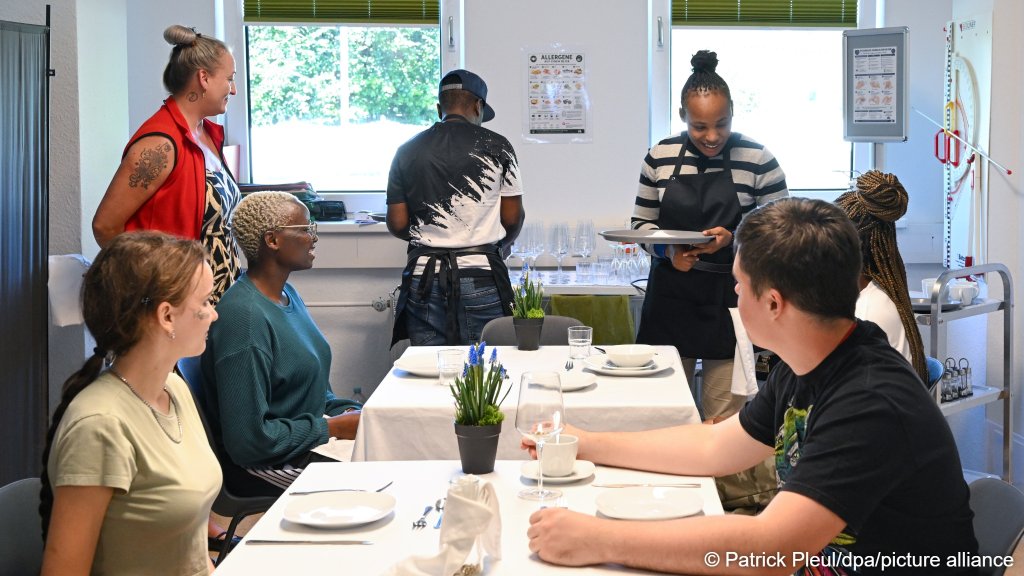
The first German course, with 17 participants mainly from Cameroon, Kenya, Afghanistan and South Africa, started this week. Many of the students were previously sheltered at the initial reception center in Eisenhüttenstadt.
Speaking at the opening on August 21, Minister of Migration and Integration in Brandenburg René Wilke said, "Integration is both an offer and an individual effort. Integration means work – for both sides. The country creates real opportunities; immigrants actively participate within their means."
"...Immigration does not automatically become an asset. It requires law, clear rules, functioning structures, and time. It requires a society that is ready and willing to let people arrive, develop, and be curious. To adopt what is helpful and reject what doesn't fit. It needs newcomers who accept and respect the existing conditions."
Read AlsoGermany: new deportation center for rejected asylum seekers opens in Saxony
Access to tools and training for integration
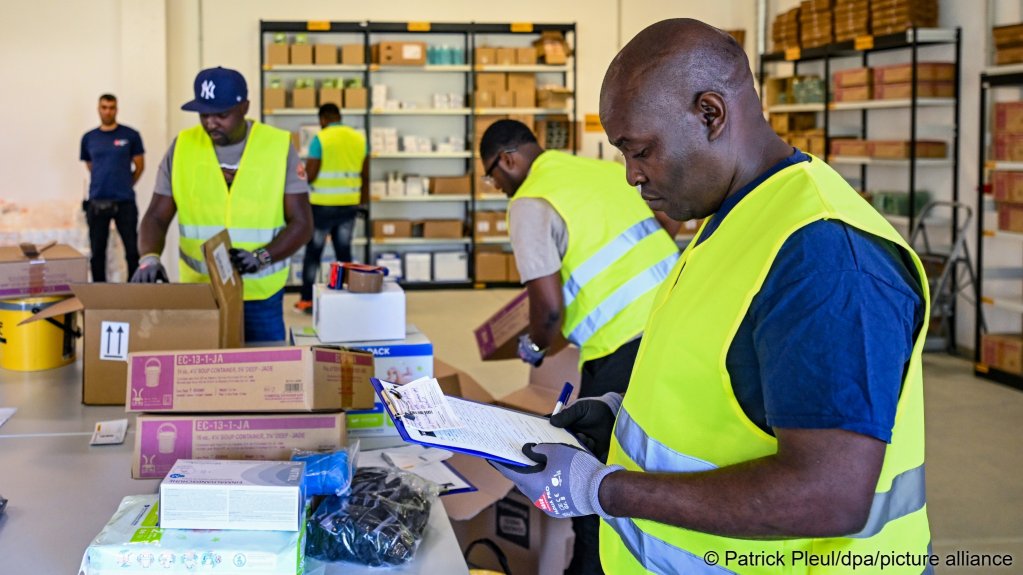
The facility offers migrants access to training and language courses, as well as childcare. One migrant from Nigeria interviewed by ARTE is learning how to handle parcels and says he wishes to find work in the logistics sector. In parallel, the state also assists with contacts to companies to facilitate job placements or internships with the objective of integrating people into the labor market as quickly as possible.
Brandenburg state expects a shortage of around 120,000 workers by 2031 and says foreign workers are necessary to plug the gap and sustain employment growth.
According to Wilke, in some regions, between 25 and 30 percent of the workforce could retire within five years. The transport, logistics, hospitality, retail, agriculture and care services are poised to be particularly affected.
The Central Immigration Authority of the state of Brandenburg (Zentrale Ausländerbehörde des Landes Brandenburg, ZABH) recorded 6,089 new arrivals last year, a quarter fewer than the 8,122 arrivals in 2024. The main countries of origin were Ukraine, Afghanistan, Syria, Russia, and Turkey.
Around 7,800 people in Brandenburg were required to leave at the end of June. Official government data indicates that from January to December 2025, a total of 1,275 stays in Brandenburg were terminated. In addition to the 1,090 voluntary departures, there were also 185 deportations and Dublin transfers (2024: 233). This represents an increase of one-third in the total figures compared to the previous year (2024: 955).
Nationwide statistics show that in Germany, at the end of 2025, 361,000 asylum seekers had an open protection status, meaning that their asylum application had not yet been legally decided. An estimated 178,000 asylum seekers were registered with rejected protection status after their asylum application was rejected or after losing their protection status, and were therefore subject to deportation.
Of this number, about 140,000 people, or 79 percent, had a temporary suspension of deportation (Duldung) while 14,000 asylum seekers (8 percent) were subject to latent deportation, meaning they could still appeal. Roughly 24,000 asylum seekers (13 percent) were subject to enforceable deportation, which means that the justification for their deportation is legally binding.
Read Also
Germany: Net migration falling due to changing policies and demographic patterns
Opposition and criticism
Others remained critical of the Opportunity Center.
Speaking to radio broadcaster RBB, Brandenburg Refugee Council spokesperson Kirstin Neumann said that while the center was a step in the right direction, structures at the community level should be strengthened, instead of supporting a select few in an opportunity center.
Neumann called for access to the job market, apart from a pathway to remain even outside the asylum procedure.
"People are in training, they're employed, and the immigration authorities either no longer allow them to work, or they don't even allow them to start, or they simply don't grant them residency. That's the real problem we're seeing," said Neumann.
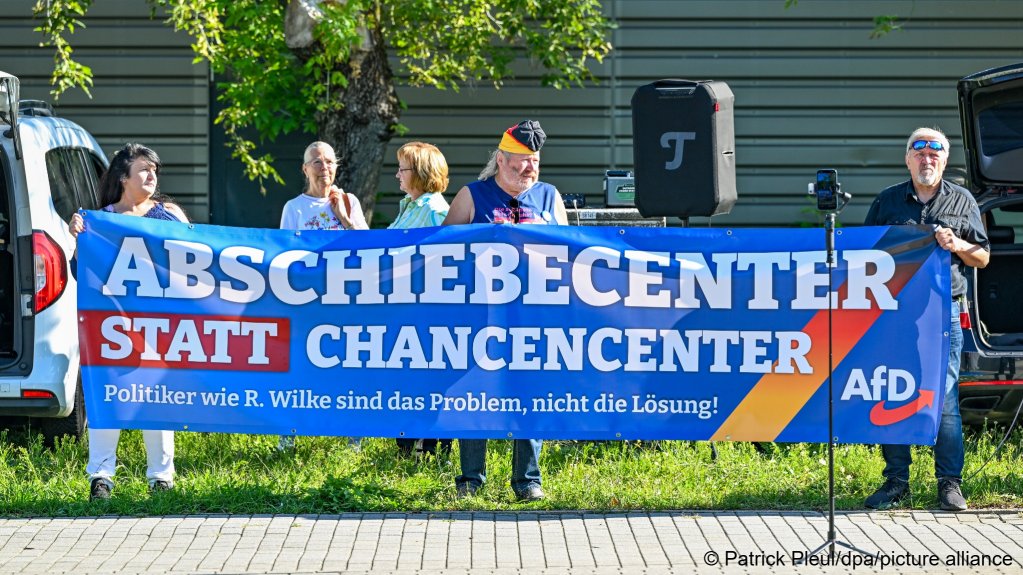
The far-right party, Alternative fur Deutschland, staged a protest outside the center on the day of the opening.
German newspaper Zeit reported that Hans-Christoph Berndt, chairman of the AfD parliamentary group in the state parliament, said that those in the center should be taken into asylum custody.
"Germany should remain the country of the Germans. And that's why we say: No 'opportunity center'. Rejected asylum seekers must leave the country," said Berndt.
Wilke reportedly approached the AfD demonstrators and said, "Listen and hear what I have to say. (...) I am truly convinced that it is a good and important project, and that even you should find it good and important."
Read AlsoGermany: Racism is almost a daily reality for Muslims