
More than 750 people have been intercepted along the West African coast within a matter of a few days, security forces said. The passengers were said to be making their way to Europe through the Canary Islands, Spain. A combination of displacement due to protracted hostilities, climate instability, and economic scarcity is linked to the increasing number of irregular crossings of the Atlantic into the Canary Islands.
Security forces in Mauritania and Senegal said they have intercepted more than 750 people between Wednesday and Sunday (August 19-23). All were said to be making their way to Europe through the Canary Islands, Spain.
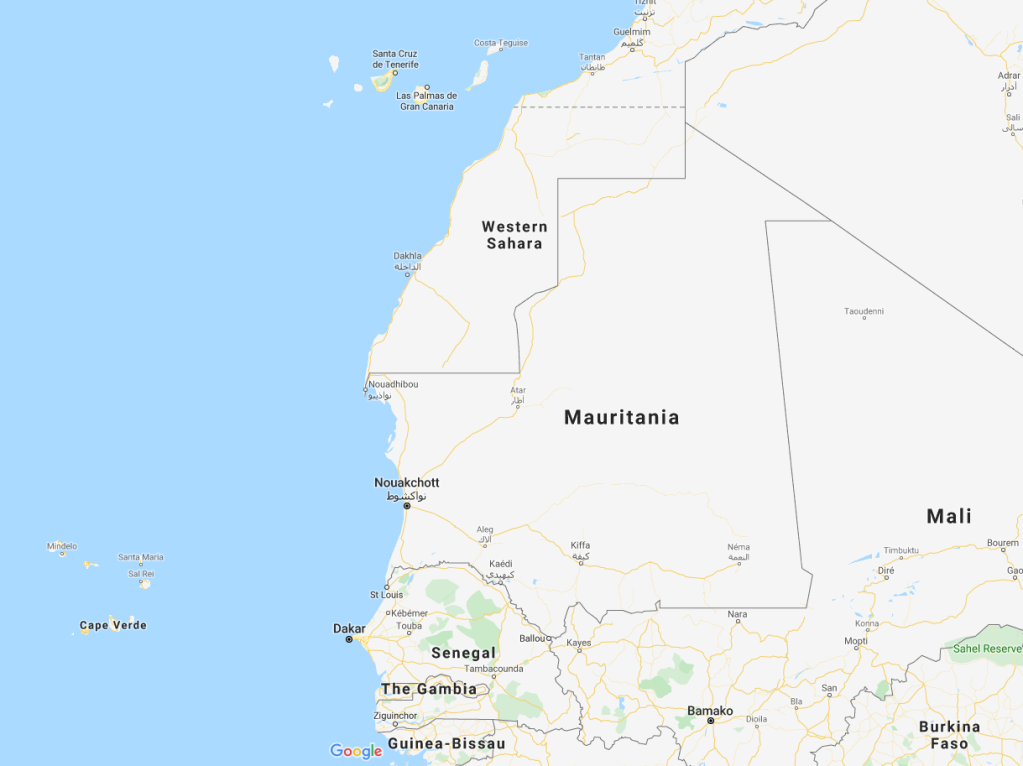
In a post on X, Senegal's navy said that it had intercepted a boat carrying 210 people on Saturday (August 22), some of whom had serious health problems. On Thursday, August 19, 2026, 246 migrants had already been rescued off the coast of Saint-Louis. The two operations resulted in the rescue of about 456 people during that week.
On Wednesday, the coast guard of Mauritania posted on X that it had rescued 315 people from a wooden boat that had set off from Gambia and were "in a difficult humanitarian situation" when they were picked up during the night of Wednesday to Thursday. A total of 40 children were reported to be among the passengers on board, AFP reported.
The coast guard's statement listed details about the passengers:
- 191 people from Senegal, including 3 women and 29 children
- 123 people from Gambia, including 40 women and 11 children
- 1 person from Mali
The Mauritanian Coast Guard forces intervened as part of their humanitarian and security missions, where all people on board the boat were rescued and dealt with in accordance with the applicable legal and humanitarian procedures, providing them with the necessary support.
Read Also
More deaths, fewer arrivals: Migration to Europe is becoming increasingly lethal
Jump-off point
The West African coast has emerged as a jump-off point on the Atlantic crossing to the Canary Islands, which belong to Spain.
Data from the Spanish Ministry of the Interior indicate that from January through August 15 of this year, a total of 14,411 people arrived in Spain by sea, a drop of 29 percent compared to the same period in 2025. In the case of the Canary Islands, this decrease doubles to 60 percent, as 4,808 people were recorded to have arrived in the Atlantic archipelago this year.
Despite the drop in the number of arrivals, the Atlantic route from western and northwestern Africa to the Canaries has become more dangerous, with the death toll rising to 4.5 percent this year (through July 9).
One reason is that boat journeys to the Canaries are starting further south: "While people used to leave from Morocco or Mauritania, they now start in The Gambia. These are extremely long journeys of more than two weeks, which increases lethality," a spokeswoman for the UN migration agency told InfoMigrants.
Read Also
'Our most tragic year': 2,170 people die trying to reach Spain, NGO