
Humanitarian sea rescue organizations continue to face obstructions to their operations, including reported harassment by the Libyan Coast Guard and dwindling funding. Germany, previously one of the few European governments providing dedicated support to search and rescue operations at sea, ended its funding program in March 2025.
Italian authorities have detained the humanitarian rescue ship Sea-Watch 5 for 45 days and fined the organization 7,500 euros. Italian Interior Minister Matteo Piantedosi confirmed the sanctions in a post on X on Saturday (August 22).
In response, Sea-Watch condemned the ruling, saying that it was treating saving lives as a crime. In a statement, Giulia Messmer, spokesperson for Sea-Watch, said, "While people drown seeking safety, Italy criminalizes rescue crews for doing their job. This is not migration policy — it is active obstruction of emergency assistance."
The blockade of the Sea-Watch 5 is the eighth such incident this year.
In June, a coalition of rescue organizations said Italian authorities have detained 41 civilian rescue ships for a total of 1,075 days since the Piantedosi law took effect in 2023. The law requires rescue vessels to sail directly to an assigned port after completing a rescue mission. Ships that fail to comply can be detained.
Rescue at sea
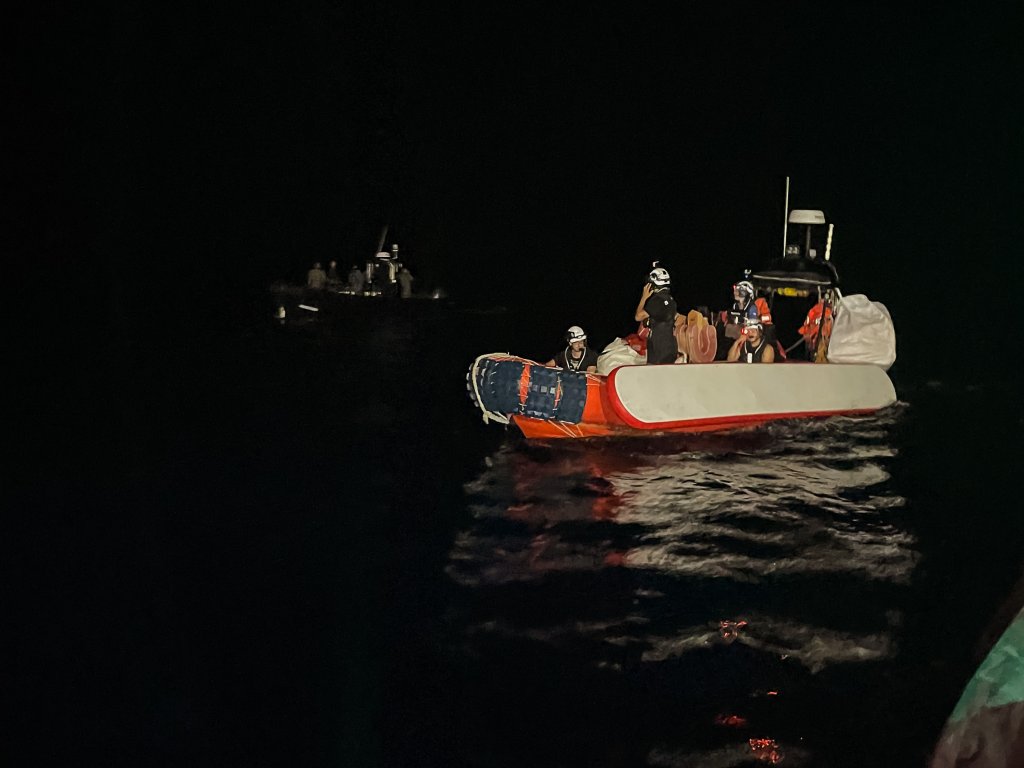
In a press statement describing the events that led to the sanctions imposed by the Italian authorities, Sea-Watch said that in the late hours of August 13, the Sea-Watch 5 rescued six people in international waters. Six people who were reportedly forced into the water by an unidentified vessel were found adrift and boarded into a lifeboat before being transferred to the Sea-Watch 5.
A video released by Sea-Watch shows the rescue operations taking place and passengers with life jackets helped onto the lifeboat. After the passengers were safely boarded onto Sea-Watch 5, voices are heard saying, "Stay down! They have weapons!".
"Immediately after the embarkation of the survivors and before the complete end of the rescue operation, the crew in the rescue boats was threatened again by an unidentified vessel, with armed men screaming and pointing a gun directly at the rescue crew," said the Sea-Watch statement.
Even before the conduct of the rescue operation, the Sea-Watch 5 crew were reportedly harassed and "manoeuvred around by several Libyan vessels over the course of a few hours."
Sea-Watch maintained that it had been in radio contact with the Libyan coastguard.
The vessel was assigned the port of Naples as a point of disembarkation. During the course of the four-day journey to Naples, Sea-Watch said it had to also document eight bodies.
On August 18, all survivors rescued by the Sea-Watch 5 disembarked in Naples.
Record of harassment
Justice Fleet, a coalition of NGOs involved in search-and-rescue operations, compiled a record of more than 60 violent incidents experienced by humanitarian search and rescue missions over the last 10 years. The incidents include boats reportedly of Libyan militias that have come dangerously close to rescue vessels, causing panic among the crew and the survivors. Other incidents include reports of being shot at.
"While the European Union and especially Italy have poured millions of European taxpayer Euros into the hands of these armed war criminals, supplied them with ships, training and official acknowledgement, civil search and rescue organizations have been documenting their erratic, violent and often murderous conduct," said Justice Fleet.
Read Also'Using the term collusion is a lie': Sea-Watch rescue NGO denies contact with smugglers
Dwindling funding, rising costs
The detention comes as civilian rescue organizations face both financial and regulatory pressure. Germany, one of the few European governments to provide direct funding for civilian sea rescue operations, ended the programme on 31 March 2025.
Before the scheme was discontinued, Berlin had allocated 2 million euros annually to rescue NGOs since 2022, and in 2025, around 900,000 euros had been disbursed during the first quarter of the year to organizations including SOS Humanity, SOS Méditerranée, Sea-Eye, RESQSHIP and Sant'Egidio. SOS Humanity for its part received about 215,000 euros in 2025 before the funding ended, according to the German government's official response to a parliamentary question.
Speaking to the media in June 2025, Niklas Wagner, a spokesperson for the German Federal Foreign Office, defended the move saying, "The German government remains committed to establishing a common, unified asylum system at the European level that is effective and functional. We are working on this in Brussels. The question now was whether we should continue this funding from the Foreign Office, and that question has been answered in the negative."
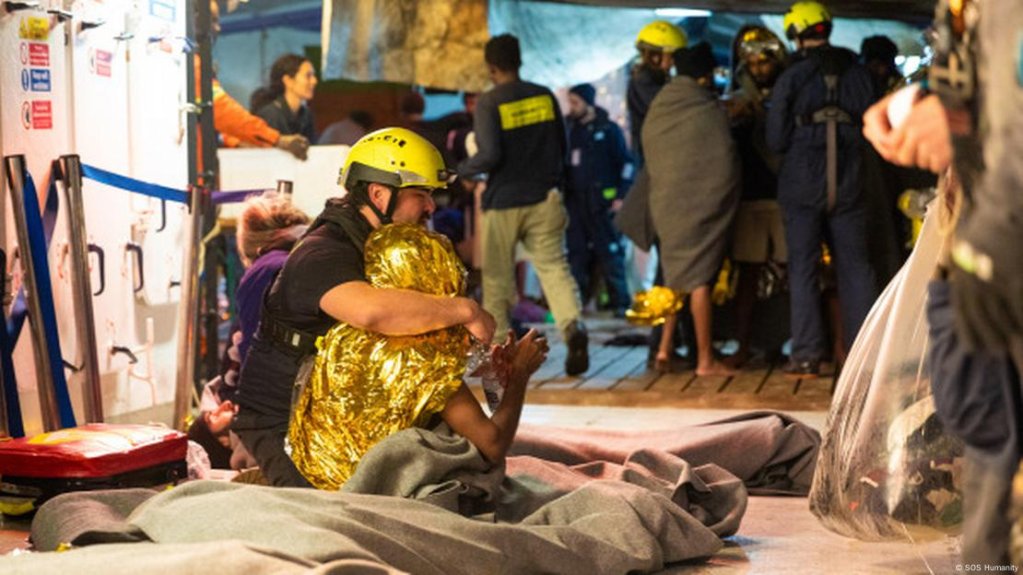
Parallel to the dwindling funding support, rescue organizations continue to face fines, administrative detentions and requirements to sail to distant ports assigned by Italy, increasing fuel, personnel and legal costs and reducing the time vessels can spend in the rescue area.
"Our rescue operations are on the brink. If we do not receive additional support, we will have to suspend missions. Given that more than one thousand people have already died in the Mediterranean this year, that would be a catastrophe. If non-governmental search and rescue also disappears now, significantly more people will drown. This is not an inevitable fate, but a direct result of political decisions," says SOS Humanity General Director Till Rummenhohl in a statement.
Additionally, general price rises are reducing the purchasing power of donation income, while operational costs, particularly for fuel, have risen significantly.
In 2026, more than 1,600 people have died or remain missing while attempting to cross the Mediterranean in search of safety.
Read AlsoIOM warns that migration routes to Europe are becoming more dangerous