
The report, compiled using open-source documents and interviews with experts, identified what Amnesty International described as violations related to sea rescue operations and conditions in detention facilities. Amnesty called for the immediate termination of the Italy-Albania migration deal and urged other EU states not to pursue similar arrangements.
Italy’s operation of migration facilities in Albania has exposed refugees and migrants to arbitrary detention, inadequate healthcare, obstructed legal assistance and possible unlawful deportation, alleges a report by human rights organization Amnesty International released on Thursday, August 20.
The 34-page report utilized desk research conducted from January 2024 to June 2026 to draw its findings. Researchers reviewed official documents, court judgments, parliamentary and ombudsman inspection reports, and material published by NGOs and news organizations. Amnesty also corresponded with the Interior Ministry and interviewed Italian detention ombudsmen, representatives of UNHCR and the International Organization for Migration, and two lawyers representing Gjader detainees. Amnesty did not interview detainees directly because the ministry denied its requests to enter the centers.
Under an agreement signed in 2024, some people rescued at sea by Italian ships are to be taken directly to Albania, where their asylum claims will be processed. Two centers were constructed in Albania for asylum seekers to be processed and detained prior to deportation or sent on to Italy.
Between October 2024 and January 2025, Italian authorities transported 74 people from international waters to Albania in three operations. Twelve people, translating to about 16 percent, were later identified as minors or otherwise vulnerable and sent to Italy. Italian courts declined to validate the detention of the remaining men, bringing the initial transfers to a halt.
- October 2024: The Italian navy ship Cassiopea transported to Albania 16 male foreign nationals (10 from Bangladesh and 6 from Egypt),
- November 2024: The Italian navy ship Libra transported 9 people (7 of them from Bangladesh and 1 from Egypt)
- January 2025: The Italian navy ship Cassiopea transported to Albania 49 male foreign nationals (38 from Bangladesh, 8 from Egypt, 2 from Gambia and 1 from Ivory Coast)
Read Also
EU states press Commission to fund 'return hubs' outside the bloc
Violation of human rights and international law
The report detailed what Amnesty International described as practices that violated the human rights of people intercepted at sea and were inconsistent with international legal obligations.
Endangering people at sea
According to the report, the arrangement of intercepting people in distress at sea and transporting them to Albania placed rescued migrants at additional risk. The voyage required two or three additional days to Shengjin, more than 500 nautical miles from common rescue areas. The organization said such delays prolong survivors’ distress, keep rescue vessels away from the central Mediterranean and conflict with obligations to disembark rescued people promptly in a place of safety.

Gaps in identifying vulnerabilities during the pre-screening process
Amnesty states that screening conducted aboard ships failed to identify some children and people with medical or other special needs. Amnesty said survivors of torture or trafficking and people with mental-health conditions require confidential assessments by specialists, which cannot reliably be provided in the chaos following a rescue onboard crowded vessels surrounded by security personnel.
De facto detention
According to Amnesty International, people rescued at sea and selected for transfer to Albania were effectively confined from the moment they boarded Italian "hub ships," in some cases for up to four days before reaching Gjader. The organization characterized this as "de facto detention" without a sufficient legal basis. Amnesty further argued that, once in Albania, detention was applied routinely rather than after an individualized assessment of whether it was necessary and proportionate.
Weakened access to asylum and legal representation
Amnesty International also argued that the accelerated procedure limited access to asylum and legal representation. According to the report, lawyers were sometimes appointed only hours before hearings and were unable to meet their clients beforehand. Detainees participated remotely from Albania while their lawyers and judges sat in Italy. One lawyer told Amnesty that the video connection showed only the upper half of his client’s body, preventing an assessment of possible injuries or ill-treatment.
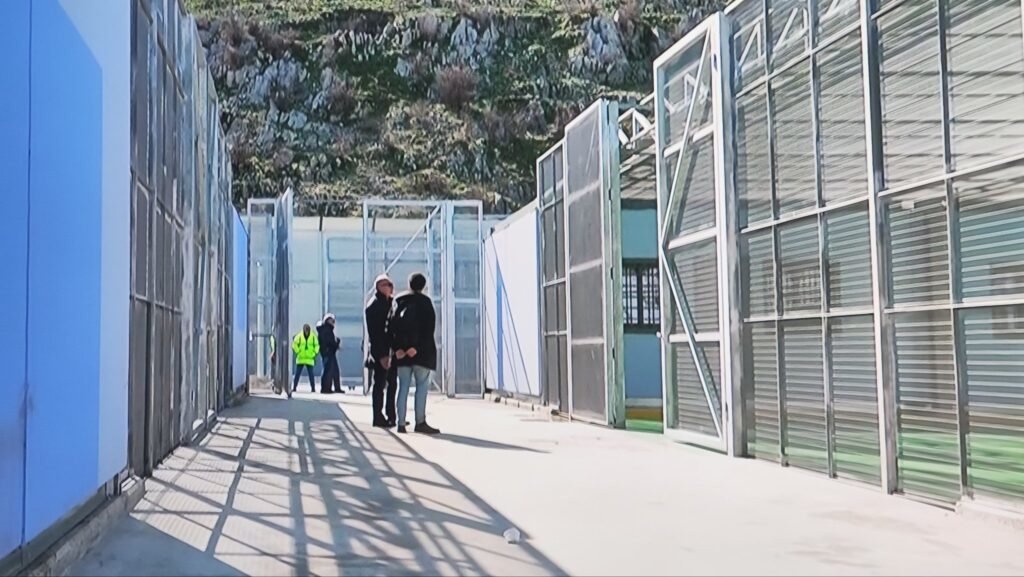
Deplorable conditions at detention centers
Amnesty International said monitoring reports described what it called a "security-focused environment" that hindered communication with family members and lawyers and made access to healthcare more difficult. Records cited in the briefing documented dozens of critical health incidents, including self-harm and suicide attempts. Additionally, the report highlighted that the distance from medical services in Italy could worsen psychological and physical conditions.
Deportations as a violation of non-refoulement principle
Amnesty International also raised concerns about deportations carried out directly from Albania. Detainees were allegedly moved from Gjader through Albanian territory to an airport under procedures not regulated by the agreement or its implementing legislation. Limited access to lawyers prevented detainees from raising claims that return would expose them to persecution, torture or other serious abuse, according to the report.
Read Also'Not our problem…ask the Italians': Albanian PM Edi Rama says of Italian migrant hubs
Lack of transparency
Amnesty International also emphasized how independent monitoring of the operations at the Albanian detention centers has also been restricted. Parliamentary visitors, ombudsmen and civil-society representatives reported difficulties accessing cells, official data and confidential conversations with detainees. Italy’s Interior Ministry repeatedly rejected Amnesty’s requests to visit Gjader, citing security and public-order concerns.
Last month, a delegation of Green politicians from the European Parliament was denied entry to the Italian-run migrant detention center in Gjadër, northwest Albania. It was an unplanned visit made on the sidelines of parliamentarians meeting with environmentalists and civil society leaders protesting the construction of a mega-luxury resort on Sazan Island in the Adriatic Sea off the southwestern coast of Albania.

Amnesty called on Italy to terminate the agreement, return Gjader detainees to Italy and use detention only as a last resort. It also urged other European governments not to reproduce the "return hubs" model.
Under the overhauled European Union Migration Pact, which came into force in June, several countries have expressed their intention to explore outsourcing asylum procedures to third countries outside the EU.
Read AlsoCouncil of Europe: Externalized asylum policies must align with international human rights law