
The Spanish government has said it’s working on the transfer of 500 migrant girls from its Ceuta enclave to the mainland. The EU, meanwhile, has signaled its support for the repatriation of unaccompanied minors from Ceuta to Morocco.
The Spanish Ministry of Youth and Children is working on an emergency evacuation plan to relocate 500 migrant girls from the enclave of Ceuta to the Spanish mainland, news agency EFE and other Spanish media outlets reported on Wednesday (August 19).
The initiative, which comes almost three weeks after the mass arrival of irregular migrants from across the Moroccan border, aims to address the critical lack of suitable reception infrastructure in the autonomous Spanish city, where hundreds of unaccompanied minors remain in precarious conditions.
Under the proposed framework, one of several considered by the ministry and authorities in Ceuta, specialized child protection organizations are set to assume responsibility for daily care and housing in improved facilities throughout Spain. To expedite the logistics of this transfer, according to EFE, Ceuta will maintain legal guardianship, ensuring the legal process does not hinder the urgent distribution of these youths.
In the interim, authorities have already transferred approximately 100 girls, aged 9 to 17, to more adequate local housing in Ceuta as a temporary measure.
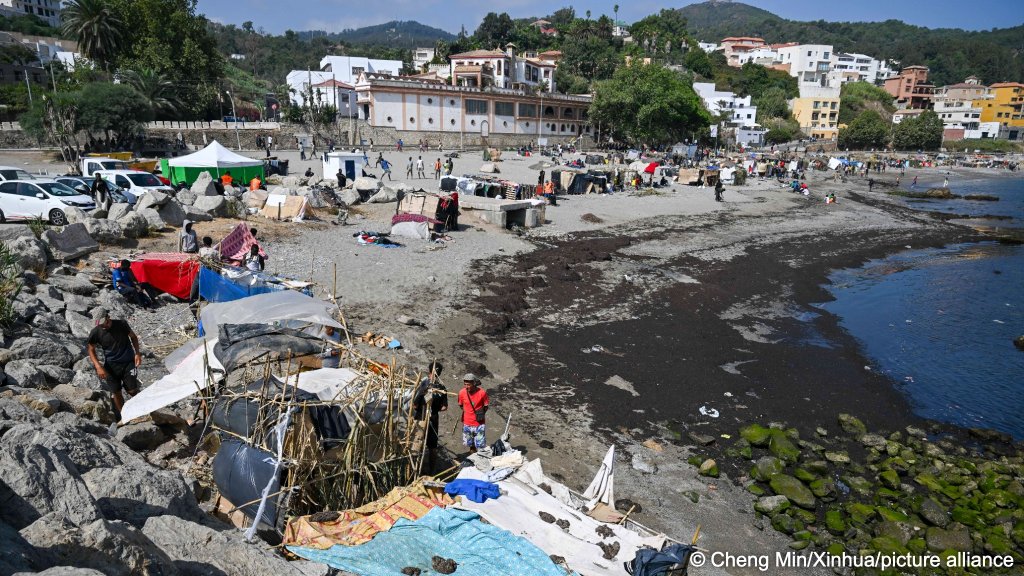
While official figures remain elusive, EFE reports that approximately 1,800 minors have been identified, with 600 more currently under assessment. However, UNICEF warns the true number is likely higher, as many children remain unaccounted for. These unidentified minors are reportedly surviving on the streets in dire conditions, often sleeping outdoors without access to basic necessities like food or healthcare.
Read AlsoSocial media's role in the Ceuta crossings: From viral videos to deadly waters
EU backs repatriation of unaccompanied minors
The European Union has meanwhile voiced support for the repatriation of unaccompanied migrant minors from the Spanish enclave of Ceuta to Morocco.
The move brings the contentious issue of child migration and border management back into the spotlight.
The endorsement reflects a broader EU push to manage migration flows more strictly at its external borders. However, the plan has reignited a fierce debate between those prioritizing border security and human rights advocates, who emphasize the paramount importance of the 'best interests of the child' in any repatriation proceedings.
"The return is regulated under the EU return directive, which will soon become the EU return regulation," said European Commission spokesperson Markus Lammert, adding that the return of "illegally staying unaccompanied minors" is also covered by EU law.
Authorities in Ceuta estimate that more than 1,000 unaccompanied minors remain in the territory, InfoMigrants reported on August 6. Local authorities have been asking that they be transferred to Spain amid alarms about overcrowding of suitable reception facilities for them.
On Tuesday (August 18), in contrast, Spanish news outlet Antena 3 News reported that the Interior Ministry has identified 2,168 unaccompanied minors.
According to Spanish estimates, around 72,000 migrants managed to enter the Spanish enclave on July 30 and 31. Most of them have been returned to Morocco.
Read AlsoCeuta: A test of the EU’s new migration strategy and its internal solidarity
Unaccompanied minors face uncertainty
The move by the Spanish government comes amid growing alarm from NGOs, including UNICEF, who have repeatedly warned of the dire situation facing hundreds of unidentified minors currently forced to live on the streets.
For unaccompanied minors staying in Ceuta, the future remains uncertain. International law and EU regulations generally dictate that any return process must involve a rigorous, individual assessment of the child’s circumstances, including potential risks they may face upon returning.
Rights groups and observers caution that repatriations without adequate safeguards can expose vulnerable youths to significant danger.
As Spain and Morocco continue their diplomatic navigation of the Ceuta crisis, the focus for the international community remains on ensuring that migration control does not come at the expense of fundamental protections for the world's most vulnerable travelers.
with EFE, Euronews