
Italy and Germany continue to be caught up in a diplomatic spat over the issue of returning irregular migrants under EU rules. As talks continue, some members of the Italian government have raised the issue of migrants rescued at sea by private NGOs operating under the German flag, linking it to broader exchanges with Berlin.
Italy's Interior Minister Matteo Piantedosi has asked German authorities to provide funds to help take care of migrants who are pegged to be returned to Italy from Germany under EU rules.
Germany has not agreed to any such financial contribution to date, while Piantedosi continues to be engaged in talks with his German counterpart, Interior Minister Alexander Dobrindt, in hopes of finding a solution.

However, other senior Italian officials appear to have taken a less diplomatic approach as these bilateral discussions continue:
Italy's Deputy Prime Minister Matteo Salvini has announced that if Germany failed to cooperate on this issue, he would instead seek financial assistance from the German government to provide care for migrants rescued in Italian waters with the help of private rescue ships sailing under the German flag, who make up a much larger number in total.
Technically speaking, any vessel in open waters has to adhere to the laws of its flag country, which also implies that the flag country is responsible for all people onboard — including anyone rescued at sea.
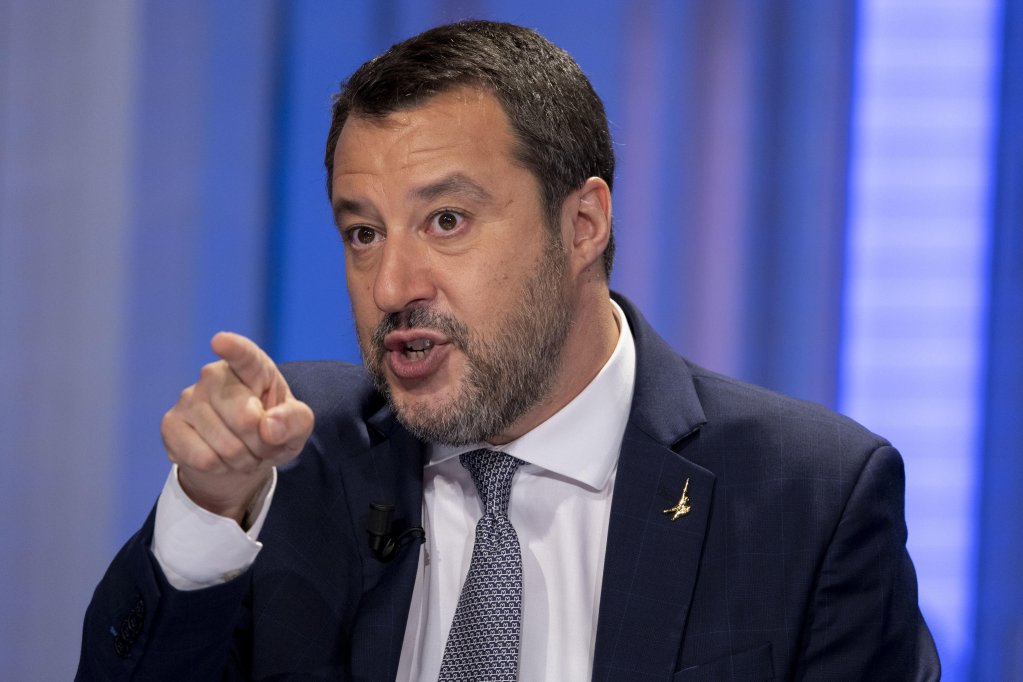
Meanwhile, Salvini also said that if German officials failed to "rein in" the operations of German aid organizations involved in such rescues, Italy could decide to refuse to provide safe harbor to these vessels.
However, if Salvini were to make good on that threat, Italy would be in breach of international maritime law and face sanctions.
Read AlsoECJ judge shares legal opinion on cases where Dublin returnees are rejected
Italy: German rescue groups bring lion's share of migrants ashore
There are several German rescue organizations tasked with saving the lives of migrants who are stranded at sea within the Italian search-and-rescue zone; NGOs like Sea-Eye, Sea-Watch, and Resqship operate various vessels to save migrants taking irregular journeys from the North African coast to Europe.
However, their operations are believed to jointly constitute only about 10 percent of the overall arrival numbers of irregular migrants in Italy. However, Italian authorities say that these private rescue vessels incentivize migrants to embark on the dangerous crossings, which result in hundreds of deaths each year, in the first place.
Read Also'Every life lost at sea is a tragedy' -- EU on migrant deaths in the Mediterranean
A newly released report by the Italian Interior Ministry, cited by German media including Frankfurter Allgemeine Zeitung (FAZ) and Die Welt, reportedly states that since Italian Prime Minister Giorgia Meloni entered office in October 2022, German NGOs have taken at least around 22,500 migrants ashore at Italian ports — out of a total of about 42,300 people brought to Italy on such private rescue ships during the same period.
If accurate, the figures suggest that German NGOs were responsible for more than half of all migrants brought ashore by private rescue groups in Italy during this period.
After Germany, NGOs from Spain make up the second-largest number of such privately run rescue teams operating in the Mediterranean.
According to UNHCR data, roughly 319,000 migrants have arrived in Italy by sea since October 2022. The approximately 22,500 people rescued by German NGOs would therefore represent about 7 percent of total sea arrivals during that period.
Against the backdrop of sea arrivals continuing, Meloni has repeatedly called on the EU to externalize asylum procedures to places located outside the bloc in order to suspend certain EU protections, speed up processes and accelerate deportations where applicable.
Read AlsoEuropean court rules Germany not obligated to recognize refugee status granted by other EU countries
Differences in interpretation of Dublin-III regulation
Salvini's calls to interfere with sea rescues are largely being regarded as a publicity stunt in response to the ongoing disagreement between the two EU members about the prospect of Rome accepting back migrants from Germany who had initially entered the bloc through Italy.
Under the EU's Dublin III regulation, migrants are supposed to have their asylum application assessed in the first country they enter within the European Union; however, many move on to other countries within weeks or months of their arrival.
If the secondary country learns details about an asylum seeker's first country of arrival, it has the right to return the person to be processed there under the Dublin rules. This is the approach Germany is taking with dozens of people who have lodged asylum claims in the country but were later proven to have entered the EU through Italy.

Read AlsoThe EU Pact on Migration and Asylum: Questions answered
Italy, however, has a different interpretation of this arrangement; while it isn't opposed to the principle, the government believes that certain migrants no longer qualify for the regimen as of July, when new asylum rules took effect across the EU.
In Italy's view, this means that all pending Dublin cases were closed at this point, leaving migrants in secondary countries in the care of authorities there.
Normally, secondary countries only take over the duty of care if they fail to issue a deportation order to the country of entry within six months; asylum cases involving vulnerable people such as unaccompanied children are usually exempt from the Dublin Regulation.
Read AlsoGermany: Court rules on secondary asylum applications
Questions over application of EU solidarity mechanism
Interior Minister Piantedosi has repeatedly told Germany that Rome is more than reluctant to take back asylum seekers under the Dublin arrangement since the EU's Pact on Migration and Asylum went into effect on June 12.
The Italian government believes that this new legislation has effectively reset the clock on all asylum-related issues that weren't under its care before already.
Piantedosi has said that Italy would only cooperate on Dublin returns from prior to the launch of the new laws if Germany made financial contributions.
He has stopped just shy of invoking the new solidarity mechanism which forms part of the pact; under this aspect of the new legislation, countries considered to have a disproportionate burden with migrant arrivals can request help from the rest of the bloc.
This can either mean migrant transfers to other EU members or financial contributions to fund the care of these asylum seekers.
Furthermore, Rome has requested some more time to observe Dublin cases, which have occurred in the last two months since the enactment of the pact, to assess how the pact works in practice -- without expressing outright opposition to upholding the Dublin principles in these cases.
Read AlsoEU Court: Germany may ultimately be responsible for asylum seekers who first landed in Italy