
The bodies of at least 32 migrants have been recovered in several discoveries over the past few days – on Libya's Mediterranean shore near Tripoli, where the Red Crescent says they found the bodies of 11 migrants; and at sea in international waters, where several NGOs spotted 21 bodies and also rescued 50 migrants from distress at sea.
A total of 32 bodies believed to belong to migrants have been recovered in the past five days from Libyan shores and off the northern African country in international waters.
On Tuesday (August 18), the Tripoli Red Crescent branch said in a Facebook post that it discovered 11 bodies on the Mediterranean coast near the Libyan capital Tripoli after the victims' boat capsized.
According to a post published a day earlier, the bodies were recovered from Tajoura, a suburban town east of Tripoli.
Citing a Tripoli Red Crescent representative and local authorities, news agency Reuters reported that the capsized boat carried around 19 people. As a result, it was likely that more bodies will wash ashore in the coming days.
"The search and recovery operations are still ongoing in coordination with the relevant authorities, under field conditions that require continuous effort and an urgent humanitarian response," the Tripoli Red Crescent told Reuters.
Separately, a local TV channel in Libya reported that security authorities in eastern Libya on Wednesday intercepted five inflatable boats carrying 202 migrants off the coast of Tobruk.
Read AlsoOcean Viking rescue ship saves 14 people adrift off Libya
Emergency NGO recovers seven dead migrants, rescues 50
On Monday (August 17) morning, meanwhile, the crew of the Life Support migrant rescue vessel took seven bodies and 50 survivors on board from a double-deck wooden boat in distress in international waters off the coast of Libya.
That's according to the Italian NGO Emergency, which operates the vessel. In a press release, the NGO said the migrants had died during the crossing, and that two of the survivors were in critical condition "due to suffocation".
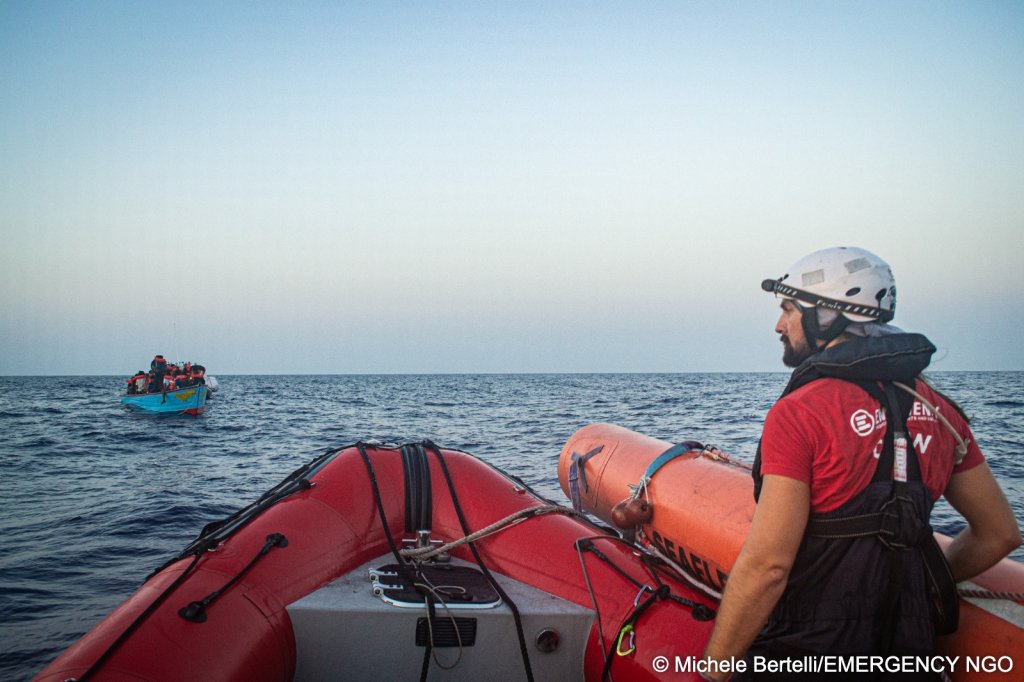
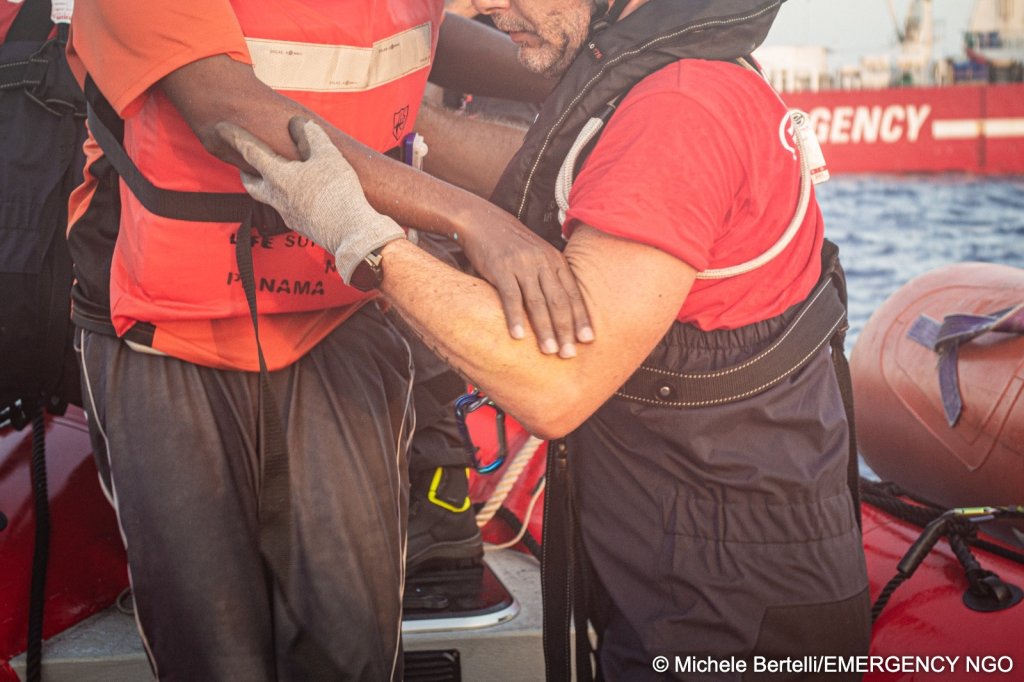
"We saw an overcrowded wooden boat and a Libyan patrol boat that was approaching and began heading towards our vessel. A mile away, we contacted them to inform them that the rescue operation was already underway: the Libyan vessel remained on standby to monitor the operation for its entire duration", an Emergency representative is quoted as saying in the press release.
The NGO also said that the two people in critical condition were evacuated on Monday.
According to Emergency, the survivors reported that they had set off at dawn on Sunday from the coastal city of Zuwara west of Tripoli. The group of migrants originally hailed from Somalia and Egypt and consisted of five women and 45 men, including 29 mostly male unaccompanied minors.
Italian authorities allocated the port of Bari on Italy's southeastern coast as a port of disembarkation, Emergency said in the press release, which is more than 1,000 kilometers away from the place of rescue -- despite the NGO requesting a nearby place.
Emergency told InfoMigrants that the journey, which will take around three days, will "prolong the time at sea for people who have already endured a difficult and traumatic crossing and delaying their access to protection, healthcare and psychological support."
Read AlsoFrom Juba to Libya: A journey marked by illness and exploitation
14 additional bodies found on Friday and Saturday
Before Monday's rescue by Emergency, three other rescue organizations reported discovering a total of 14 bodies, also in the Central Mediterranean off Libya.
European NGO SOS Méditerranée said its reconnaissance aircraft spotted 11 bodies in the water off the Libyan coast on Friday (August 14). Meanwhile, ResQship and Germany's Sea-Watch said in a press release that their aircraft located three more bodies on Saturday.
None of the bodies could be recovered due to "the state of decomposition and the limited recovery capacities of the civilian vessels," Sea-Watch said in the press release.
The Central Mediterranean route from Libya and Tunisia to Europe remains one of the deadliest migration corridors in the world. In late June, at least 26 migrants died in a shipwreck with dozens more feared dead. In late April, at least 17 people reportedly died after their boat broke down off Tobruk in eastern Libya.
According to the UN, 910 migrants have died or gone missing so far this year on the Central Mediterranean route, up from 702 during the same period last year.
Abuse and exploitation in Libya
Libya plunged into turmoil following a 2011 NATO-backed uprising against longtime dictator Muammar Gaddafi. Since 2014, the country has been split between western and eastern factions, with rival administrations governing from Tripoli and from Benghazi, each backed by militias and foreign powers. As a result of the political chaos, human traffickers have been thriving for years.
Still, the country has become a key transit route for hundreds of thousands of migrants fleeing conflict, poverty and insecurity across Africa, parts of the Middle East and other areas and countries including Bangladesh, hoping to cross the Mediterranean to Europe.
Although authorities in Libya have recently bolstered efforts to dismantle human trafficking and smuggling networks amid growing international concern over irregular migration flows across the Mediterranean, trafficking and smuggling networks adapt and instability endures.
With poor security throughout the country, many migrants in Libya remain trapped in a cycle of abuse and exploitation on land as well as life-threatening journeys at sea.
Those intercepted and returned by the so-called Libyan coastguard are often placed in detention centers, some of which are run by smuggling gangs and other criminal organizations. The situation at these facilities is reportedly far worse than at official facilities, with sexual assault, slavery, extortion, torture and murder recorded across the board.
with Reuters