
New polling commissioned by the International Rescue Committee (IRC) shows 59 percent of Britons want a more balanced debate on refugees – but rising anti‑migrant rhetoric, a hostile political climate, where migration is often framed as a problem, and racism in the NHS point in the opposite direction.
New YouGov polling commissioned by the International Rescue Committee (IRC) finds that 59 percent of Britons think too much attention is paid to how refugees arrive in the UK and not enough to why they are coming here.
The findings point to public appetite for a more constructive debate: one that recognizes concerns about arrivals while also explaining the conflicts, persecution and crises that force people to seek safety, and the practical solutions that can make refugee protection work better.
According to the poll results, more than three quarters (76 percent) of Britons say it is important to distinguish refugees fleeing war, persecution or serious danger from the wider migration debate. Six in ten (63 percent) are sympathetic towards refugees fleeing war, persecution or serious danger, and 53 percent say they are proud of Britain's history of offering asylum to people fleeing war, persecution or serious danger, compared with 34 percent who say they are not proud.
The view that too much attention is paid to how refugees arrive and not enough to why they are coming here is shared across the political spectrum: 76 percent of Green voters, 72 percent of Labour voters, 72 percent of Liberal Democrat voters, 46 percent of Conservative voters and 43 percent of Reform UK voters agree.
The findings came ahead of the 75th anniversary of the Refugee Convention on 28 July and alongside a new IRC report warning that the global refugee protection system is under the most sustained pressure in its history. The report Protection Under Pressure warns that, with more than 50 million people forcibly displaced across borders, the Convention has never been more needed. Yet its central promise -- that nobody should be returned to danger -- is being eroded by collapsing humanitarian funding, shrinking resettlement commitments and governments increasingly willing to turn people away.
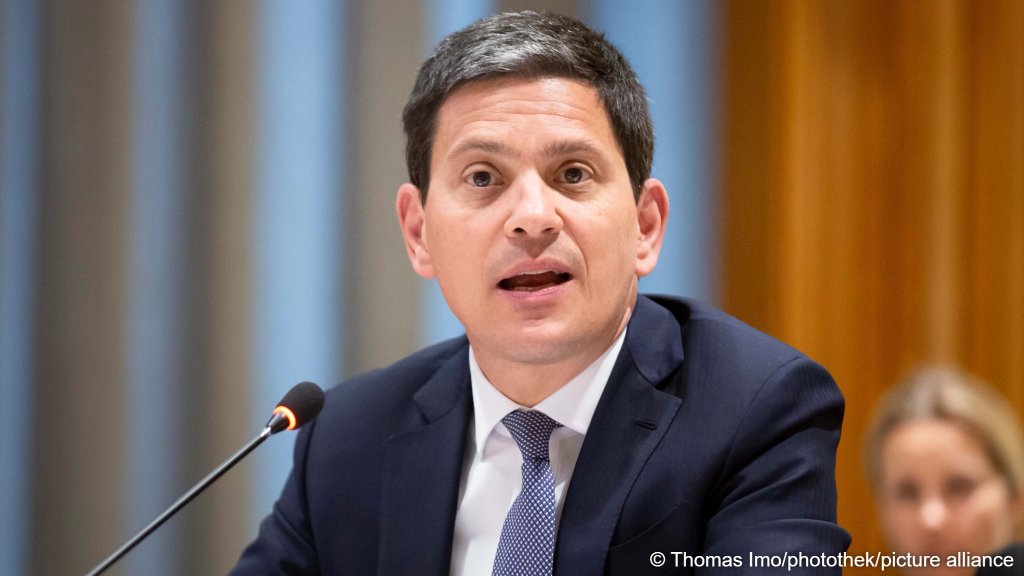
"The Refugee Convention was a promise, made in the shadow of one of the darkest chapters of history, that nobody fleeing persecution should ever be sent back to danger," David Miliband, IRC President and CEO stated in a press release. "That promise remains as vital today as it was in 1951."
For Miliband, the anniversary is less about ceremony than about choices. "This anniversary is a moment to celebrate what the Convention has achieved, defend what works, and fix what doesn’t," he said. "We’ve seen what works: giving refugees legal certainty, investing early in integration, and sharing responsibility fairly. The question isn’t whether solutions exist. It’s whether governments will muster the political courage to implement them."
Read AlsoEuropean nations join calls to alter ECHR to enable sweeping asylum restrictions -- but how?
Understanding the realities behind displacement
The polling suggests many people in Britain want the national conversation to reflect the realities behind displacement, including the individual risks of conflict and persecution faced by people from countries such as Afghanistan, Sudan, Eritrea, and Iran. A clearer understanding of why people seek refuge can also support a more informed discussion of the solutions that work -- from fair asylum decisions and safe routes to early integration support.
"Too often, the debate on refugees in the UK begins and ends with how people arrive," IRC's UK Executive Director Flora Alexander noted. "This polling suggests the public wants a more constructive conversation -- one that addresses why people are forced to flee, and focuses on solutions that work."
Alexander warned that when coverage focuses narrowly on arrivals, "the human reality of displacement is lost. That does not help people seeking safety, and it does not help the public understand how a fair and effective system can respond," she said.
The IRC works across the full arc of displacement -- from emergency response in countries affected by crisis to helping refugees in the UK learn English, find work, recover and regain their independence. "Our experience shows that practical support and early integration help people contribute to their communities and build new lives," Alexander added.
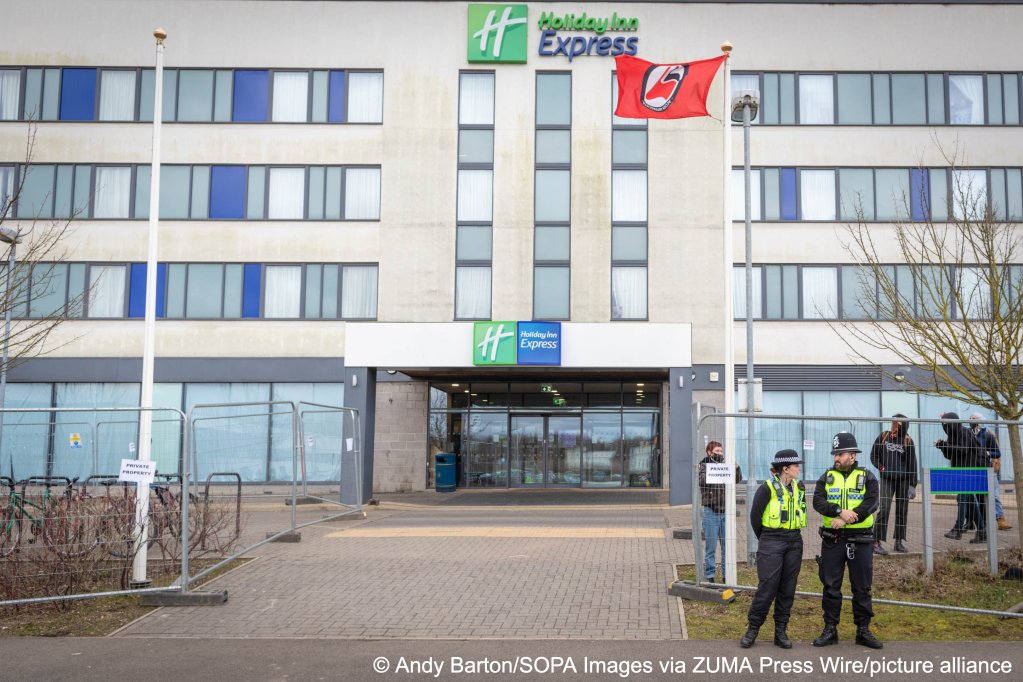
On that basis, the IRC is calling on the UK Government to properly resource fair, humane and well‑functioning asylum and reception systems. Its recommendations include investing early in integration support so refugees can work, learn and rebuild their lives; recommitting to international cooperation, including reversing cuts to humanitarian aid; and strengthening and expanding safe routes.
"The Convention’s anniversary should be a moment to establish clearer understanding of why people seek refuge," Alexander said. "It’s a moment to push for fair asylum systems, safe routes and integration policies that deliver better outcomes for refugees and communities alike."
Shabana Mahmood’s reappointment as Home Secretary means she will continue to oversee the Government’s approach to asylum and refugee protection as it enters this new political chapter. The IRC’s message to her, and to the new government more broadly, is that the public is open to a more balanced debate, but that political choices will determine whether the system becomes more humane or more hostile.
Read AlsoRefugees and migrants should not be exploited as political tools in campaigns, warns UN
A hostile political backdrop
The IRC's call for a more constructive conversation lands in a markedly different political atmosphere from the one that shaped the original Refugee Convention. Anti-migrant rhetoric has become increasingly mainstream in UK electoral politics, and right across Europe, with diversity and national identity framed as zero-sum. Recent polling shows growing hostility to immigration overall, including among 2016 Remain voters, and a rise in the share of people who believe immigration has been "mostly bad" for Britain.

That tone has electoral consequences. Reform UK’s surge has been built in part on hardline messaging on migration and asylum, and the party’s leader, Nigel Farage, triggered a snap Clacton by-election in July 2026 after resigning as MP amid intensifying scrutiny of his finances. Farage framed the contest as a referendum on his honesty and the "establishment," but it also became a focal point for wider debates about money in politics and the influence of opaque donors. It was announced on August 14 that he had re-won his seat, with around 1,000 more votes than he gained last time.
Although Farage resigned in an apparent bid to avoid an ongoing parliamentary standards investigation, the probe was merely suspended and is set to resume now that he has been re‑elected. The standards commissioner is examining whether Farage should have declared a five million pound personal gift from crypto‑billionaire Christopher Harborne before taking his seat, as well as alleged benefits from convicted fraudster George Cottrell.
A separate Metropolitan Police investigation into donations to Reform before the 2024 general election is also reported to be under way.
Read AlsoFact check: Can the British navy be deployed to stop migrants in the Channel?
The NHS, racism and the human cost of the rhetoric
Rights groups and monitoring bodies now describe the UK’s broader climate as one of "hostility to rights," with migrants "particularly targeted" and "increasing open racism" creating a "culture of hostility" towards racialized communities. More than 200 refugee charities have warned that government rhetoric aimed at people seeking asylum has "contributed to a febrile environment of racist violence on our streets and the emboldening of the far-right," and are calling for an end to "harmful rhetoric" from ministers.
Meanwhile, anti-discrimination campaigners report that slogans such as "stop the boats" and "send them back" are now being chanted at football matches across England, with anti-immigrant abuse reports more than doubling compared with the previous two seasons combined.
The same anti-migrant climate that shapes Westminster debates is also visible inside public services. A new survey by the Society of Radiographers found a "noticeable" rise in overt racist abuse directed at non-white NHS staff over the past 18 months, including racial slurs, and patients refusing to be treated by Black or Asian clinicians. One in five Black and minority-ethnic NHS staff reported abuse, bullying or harassment from patients or the public, compared with one in 20 white staff, according to the latest NHS staff survey.
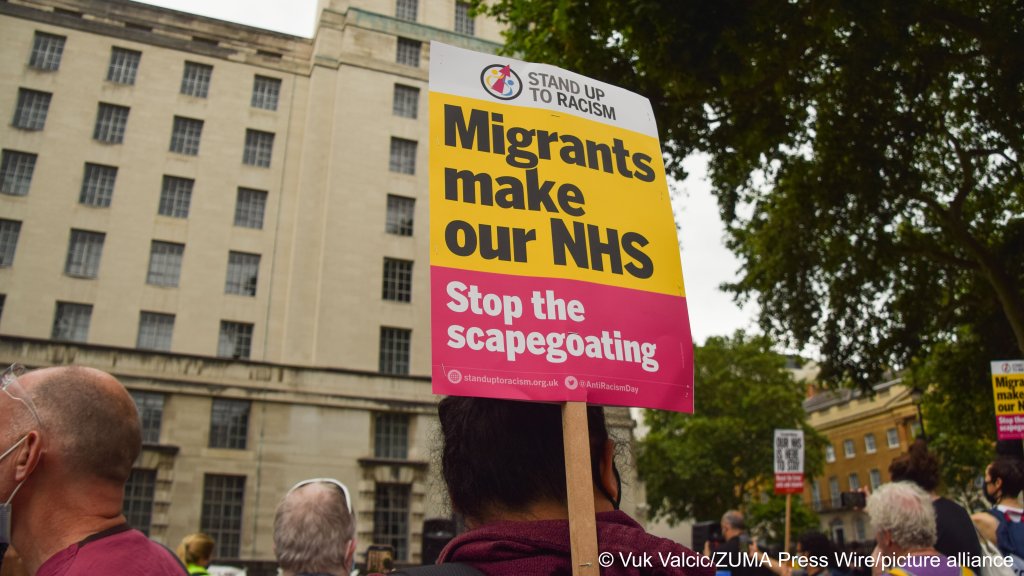
Professional bodies link this increase to the broader rise in anti-immigrant rhetoric in politics and media. That matters for refugee policy in two ways. First, it undermines the claim that hostility is only about "numbers" or "system pressure," and shows how dehumanizing language translates into everyday discrimination against the very workers who keep essential services running.
Second, it makes the IRC's call for a more humane, solutions-focused debate more urgent: if the public conversation continues to center on arrivals and threat, it becomes harder to sustain support for fair asylum systems, safe routes and integration policies that depend on public institutions, including the NHS, functioning without racial hostility.
What a constructive debate might look like
The IRC polling suggests a clear path: distinguish refugees fleeing war and persecution from broader migration debates, explain the drivers of displacement, and focus on practical measures that improve outcomes for both refugees and host communities. The organization's recommendations include early integration support, recommitment to humanitarian aid and expanded safe routes. These are aimed squarely at making protection work in practice, not just in principle.
Against a backdrop of electoral incentives to stoke fear, and a public service sector grappling with rising racism, that message is both timely and politically difficult.
However, based on the polls, the majority of the British public, including a significant share of Conservative and Reform voters, are open to a conversation that starts with why people flee, not just how they arrive. The question for policymakers is whether they are willing to match that public openness with the political courage to resource fair, humane asylum systems and push back against the rhetoric that makes them harder to sustain.
Read AlsoUK and German governments deploy AI in asylum process, as activists call out potential dangers