
France's Institute for Demographic Studies is warning that if the number of deaths eventually overtake births across North African countries such as Tunisia, Algeria, and Morocco, immigration might be the only solution in maintaining population growth. Their study also suggested that migrant workers will become increasingly vital in addressing labor shortages as the working-age population declines.
France's Institute for Demographic Studies (INED) has warned that if deaths eventually exceed births in Maghreb countries, immigration would become the only way to maintain population growth.
"We will need sub-Saharan migrants," Tunisian demographer Hassen Kassar has said.
A recent study from INED found that the decline in birth rates in countries such as Algeria and Tunisia had been unusually fast and appeared to be "lasting." Tunisian demographer Mohamed Ali Ben Zina described the change as "profound." The study also noted that migrant workers could also become increasingly important in addressing labor shortages as the working-age population shrinks.
Tunisia currently records the lowest fertility rate in the Maghreb, at 1.58 children per woman in 2023 and an estimated 1.53 in 2024. The corresponding figures were 1.97 in Morocco and 2.61 in Algeria.
Economic uncertainty, shifting social expectations and changing lifestyles are encouraging couples across Tunisia, Morocco and Algeria to have fewer children, the study found, with fertility across the Maghreb reaching a historic low.
Youth unemployment remains high across the Maghreb, reaching 29.8 percent in Algeria, 22.1 percent in Morocco and 40.1 percent in Tunisia in 2024, according to the International Labour Organization (ILO).
Economic instability discouraging young people from starting families
According to several interviews conducted with experts and couples by Agence France Presse (AFP), several reasons pointed to the decline, including longer periods of education, expanding career ambitions and women's integration into the workforce, higher divorce rates and the financial pressures facing younger generations.
The development reflects a broader global pattern, but in the Maghreb it runs counter to the long-standing perception that families in the region tend to be large, AFP reported on Thursday (August 13).
In Tunis, Nadia Jaouadi, 42, said she remains comfortable with the decision she and her husband made about 10 years ago not to have children.
"Nothing encourages having even a single child," Jaouadi, a civil servant, told AFP, noting Tunisia's economic difficulties and wider social environment.
Official figures show that fertility rates in all three Maghreb countries have fallen by more than half since the 1970s.
Read AlsoNiger: Nearly 15,000 migrants pushed back from Algeria so far in 2026
'The child today costs more than he brings in immediate economic terms'
Kassar attributed much of the region's fertility decline to major social transformations, including the "modernization of families" and urbanization, both of which have contributed to smaller households.
In Algiers, Algeria's capital, Said, a 66-year-old retired former finance executive who declined to give his full name, said he was one of 10 children.
"My father struggled to provide for the whole family," he recalled. "So I decided not to have more than two children. What's important is that they eat their fill, dress properly and live in good conditions," he told AFP.
Chaimae Drioui, a researcher and professor at INSEA, said the fertility decline represented "a rational decision by families in response to a new economic and social context".
Children were once sometimes portrayed in popular culture as an investment for the future, particularly in lower-income households where parents expected their children to provide support later in life. But that perspective "has now been reversed," Drioui said. "The child today costs more than he brings in immediate economic terms."
The psychological and physical demands associated with raising children are also influencing decisions about parenthood.
"After giving birth, I realised how much motherhood was a challenge for my mental and physical health," said Zina, a 42-year-old Algerian who gave birth to a daughter at 38 and has decided against having another child.
In Rabat, Kaouthar, a 38-year-old public-sector manager who also declined to give her full name, said she intended to remain without children
"I chose to live a peaceful life away from the worry and stress inherent in raising a child," she told AFP.
Drioui said greater access to education for women and their increasing empowerment had played a major role in reshaping traditional family structures.
Read AlsoDeath toll of migrants in the Mediterranean nears 1,000 in 2026
Ageing population puts pension system under strain
The reduction in birth rates is also contributing to population ageing throughout the Maghreb. This comes on the heels of similarly ageing populations in Europe, although the trend in Europe is even more stark.
In Tunisia, people aged 60 and above now make up 17 percent of the population, equivalent to almost two million people.
The shift is less pronounced in Algeria, where those aged 60 and over accounted for around one tenth of the population in 2023. In Morocco, the same age group represented 13.8 percent of the population in 2024. The changing demographic structure could place additional strain on pension systems while reducing the ratio of working-age people to retirees.
Read AlsoMore bodies washed ashore from migrant shipwreck off Libya
Sub-Saharan migrants met with hostility across North Africa
The topic of immigration and migrant workers is a politically sensitive one, particularly in popular migrant "launchpad" or transit countries such as Tunisia, Algeria, Libya, and Morocco where people smugglers take migrants in small boats on dangerous sea journeys across the Mediterranean to Italy or Spain. Though the so-called transitory migrants come from across Asia and Africa, migrants from sub-Saharan Africa particularly are met with discrimination and xenophobia in the North African countries.
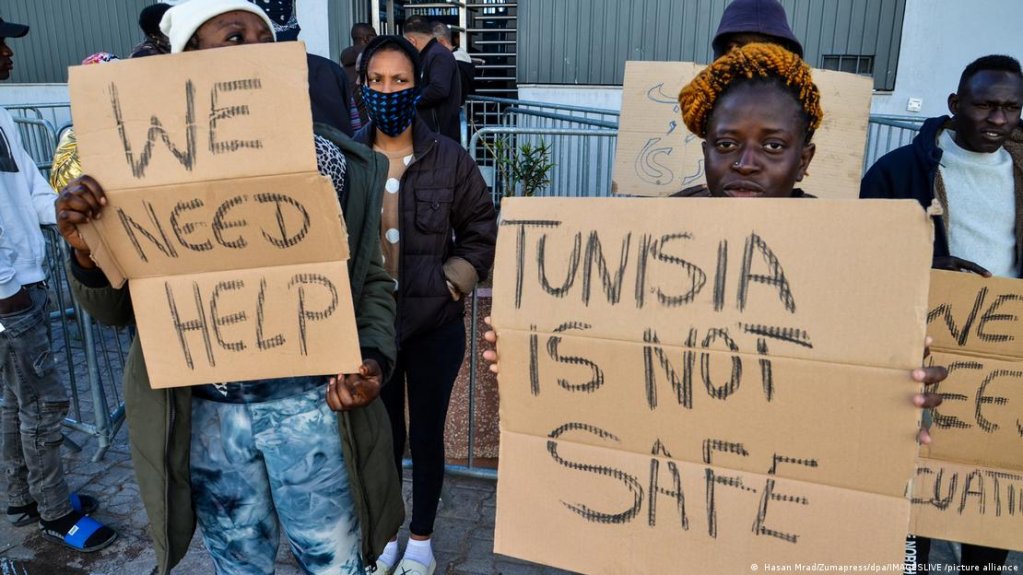
Across the Maghreb, UN agencies and rights groups have documented widespread discrimination and abuse against Black sub-Saharan migrants.
In Tunisia, Human Rights Watch and the UN reported racist attacks, arbitrary arrests, evictions and expulsions following President Kais Saied’s 2023 speech portraying sub-Saharan migrants as a demographic threat.
In Morocco, Human Rights Watch and Amnesty International have documented beatings, racial profiling and forced displacement of migrants, while Amnesty’s investigation into the 2022 Melilla border deaths found evidence warranting investigation into racial discrimination by Moroccan (and Spanish forces). In Algeria, rights groups have documented mass arrests and expulsions in which Black migrants were reportedly targeted on the basis of their skin colour and have condemned collective expulsions.
Migrants in Morocco, a case study
According to the US Carnegie Endowment Fund for International Peace, in a study published in January 2026, "the Moroccan state has increasingly framed migration policy through a security lens rather than a human rights one, justified by the need to counter terrorist threats. This shift is reflected in Law No. 02.03 on the entry and residence of foreigners, whose provisions emphasize control measures and impose restrictive conditions on the residence of foreign migrants in Morocco."
Although demographers might emphasize that more migrant labor might be needed in the future, it is difficult to see how they might easily be employed if they continue to face controls, restrictions and discrimination.
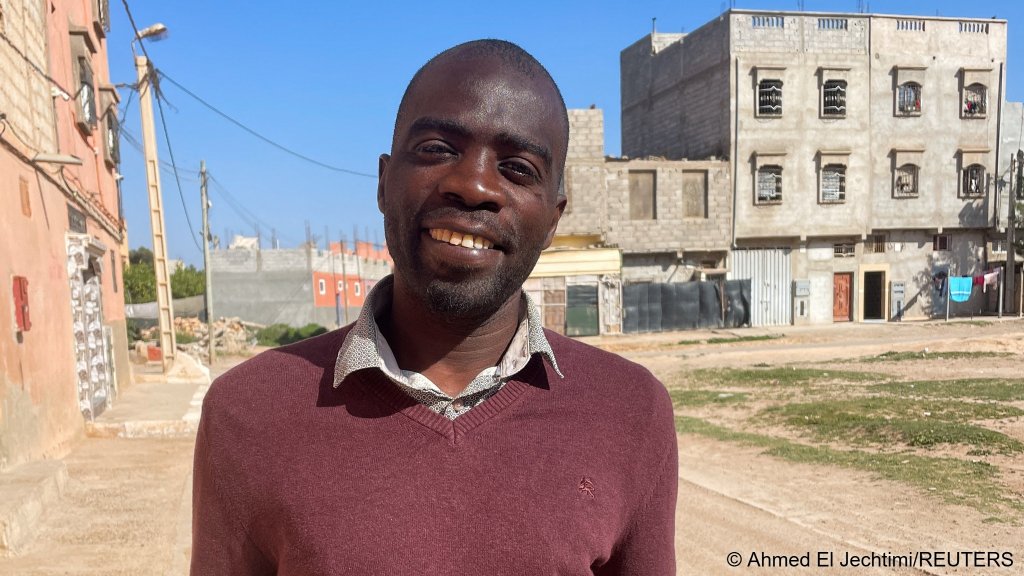
Over the last decade, notes the Carnegie Endowement Fund report, the Moroccan state has regularized around 43,000 migrants in two phases. According to the last census in 2024, Morocco had around 142,152 migrants registered in the country. "Nationals from sub-Saharan Africa constitute the largest share of this population, led by Senegalese migrants, followed by Ivorians, Guineans, and Malians. Together, these groups account for 59.9 percent of all foreign residents in Morocco in 2024."
The report noted that sub-Saharan African migrants tended to be concentrated in urban centers, because of the better job opportunities usually on offer there. It also noted an increase in the number of female migrants migrating to Morocco, in particular from Ivory Coast.
The Moroccan Institute for Policy Analysis (MIP) noted in a report a few years ago that in 2023, there were also around 75,000 irregular migrants in the country.
The report from the Carnegie Fund added that because of current Moroccan law, most migrants are excluded from trade union membership, often find it difficult to register their children in schools and mostly find work outside of the normal safeguarding contracts, particularly in construction and agriculture. This makes life in the country difficult for them, even while they will be more and more in demand in the future.
With AFP