
In this mini-series, InfoMigrants has selected three films that explore the impact of migration on women and their journeys to rebuild their lives. The film Persepolis explores the pain of exile through the exuberance and humour of its narrator, Marjane Satrapi. (Part three of a three-part series)
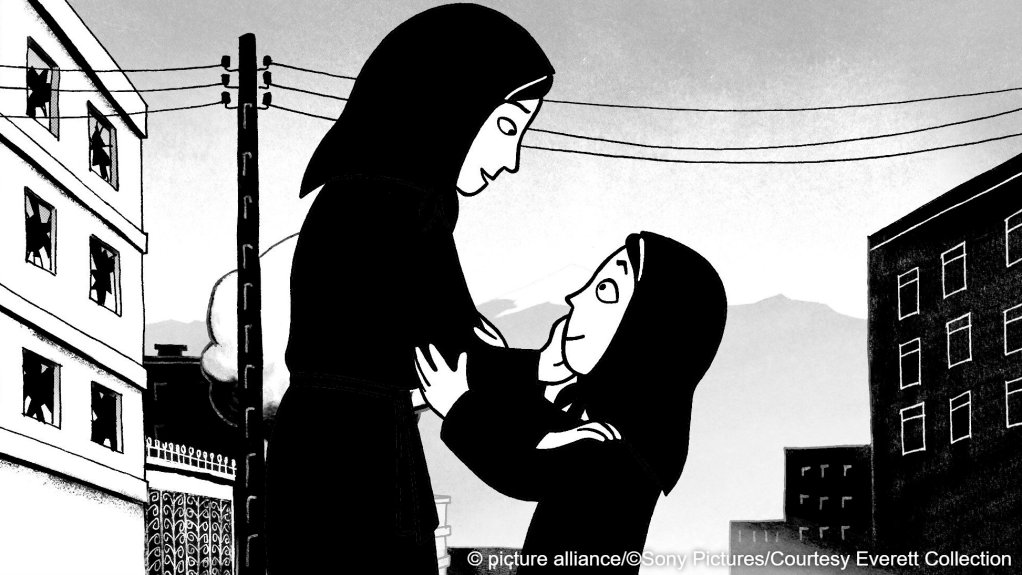
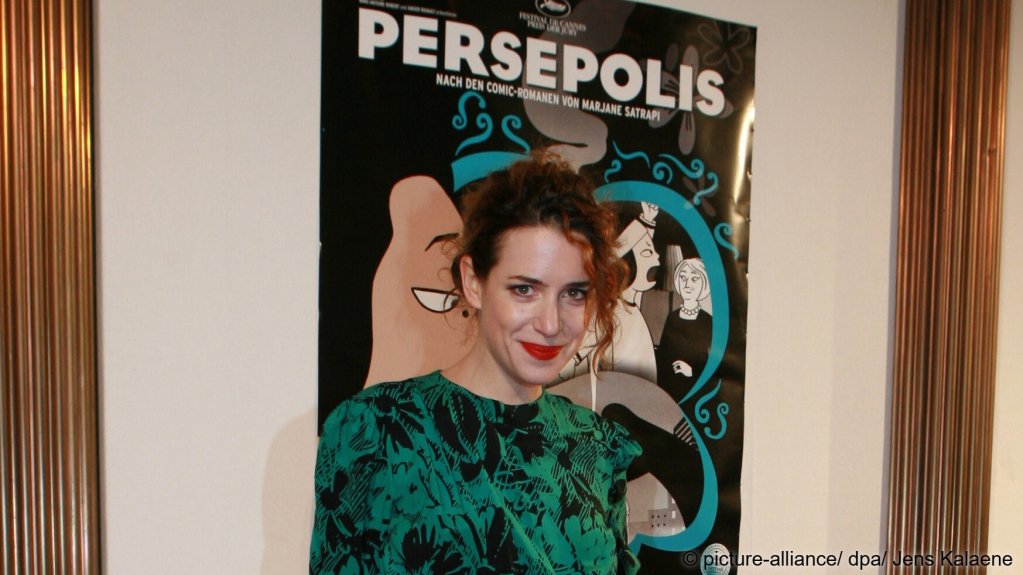
The 2007 film "Persepolis" directed by Marjane Satrapi and Vincent Paronnaud begins as 19-year-old Marjane adjusts her veil in the bathroom of an airport and prepares to return to Iran after several years living in Austria. Her sad face fills the screen as she ties the garment over her head.
Adapted from Satrapi’s 2000 graphic novel, the film traces Iran’s history from the Islamic Revolution in 1979 to Satrapi’s final departure for France in 1994, marking her permanent exile from her country of birth.
For a film about revolution, war and exile, "Persepolis" can be surprisingly funny.
Between two worlds
Told through "Marji's" perspective when she was a child and adolescent, it shows the contradictions of living as a migrant in the West while trying to preserve memories from Iran. Her identity eventually risks falling in between the two.
Satrapi was 10 when the Islamic Revolution radically changed the face of Iranian society. After Iraq invaded Iran, the laws became progressively stricter. Women wore black-robes and men grew beards.
Yet the many restrictions never intimidated Satrapi. Bright, rebellious, and obsessed with heavy metal, "Persepolis" shows her going out on Gandhi street and bartering for discs with men carrying suitcases.
At one point, the music she discovers on the Iranian black market leads to a dangerous run-in with the morality police. They stop her because of her punk shoes and Michael Jackson pin, the "ultimate symbol of Western decadence", according to one of the matrons.
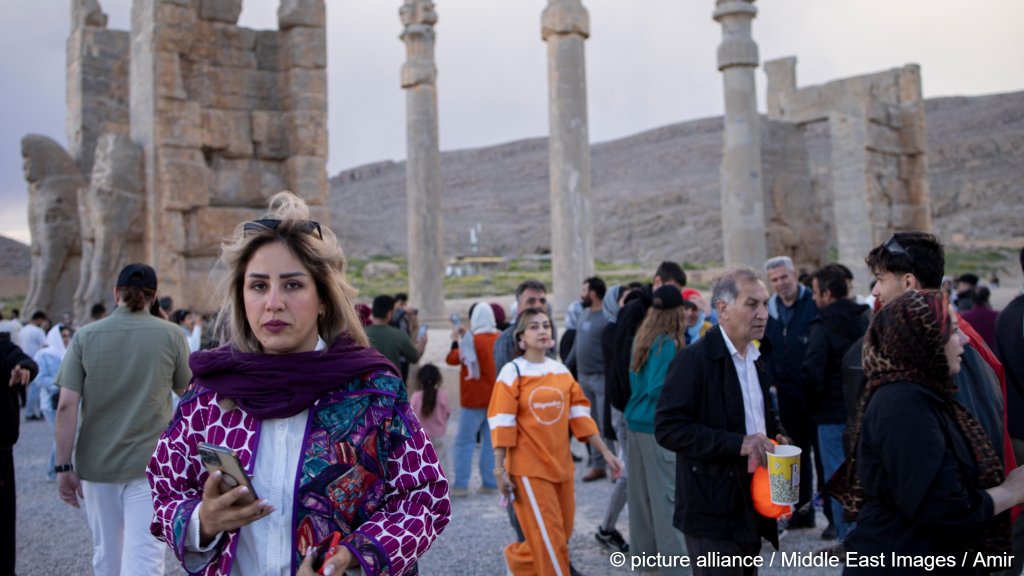
Read Also'My people need support': An exiled Iranian artist and activist's fight from France
Expelled from school
After she is expelled from school for speaking her mind, Satrapi’s parents send her to Austria to continue her education when she is 14. In Europe, she experiences a brief period of euphoria that gradually gives way to a sense of dislocation. She can party, embrace punk culture, experiment with drugs and meet boys. Yet, as she assimilates, she begins to feel a deep sense of shame and disconnection.
It also doesn't gain her acceptance from her peers, some of whom are blatantly racist. "When I say where I’m from, they treat me like a savage. They think we’re all crazy fanatics who spend all our time killing each other," she tells her grandmother who appears to her as a vision as she walks home from a party late at night in Vienna.
"You must always stay true to yourself," her grandmother insists.
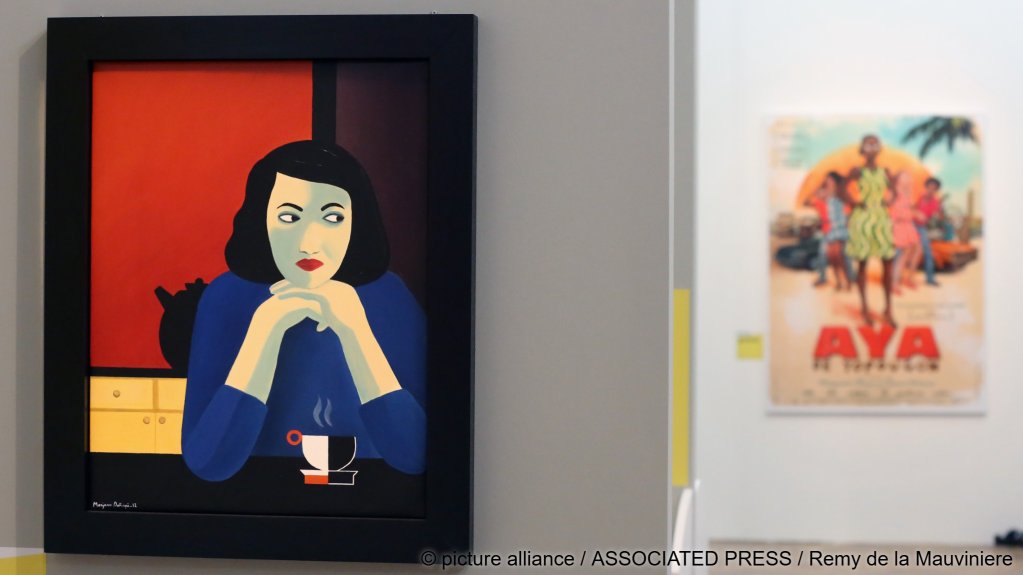
To understand more, InfoMigrants spoke to Firouzeh Nahavandi, a professor at the Free University of Brussels, about the significance of "Persepolis" for the Iranian diaspora and Satrapi’s own relationship with exile.
InfoMigrants: What does Marjane Satrapi's film "Persepolis" represent for the Iranian diaspora?
Firouzeh Nahavandi: The graphic novel "Persepolis" and its film adaptation represent a way for the author to make Iranian society comprehensible to a foreign audience. That was her first objective.
But for the diaspora, the film also makes the experience of exile comprehensible. This is important because "Persepolis" clearly shows all the contradictions, the heartbreak, and the problems this diaspora faces.
Could you elaborate on the contradictions faced by the diaspora?
For someone who fled their country and who lives abroad in exile, there is always this attachment to the country with traditional values and the traditional way of life. And then there is the arrival and life in a new country where they encounter new values and a new way of life.
These different lifestyles (from the native country and the adopted one) can eventually contradict one another.
It’s a choice that must be made by those who go into exile which isn’t always easy to live with. They often find themselves in an "in-between" space between their country of origin and their host country.
Read AlsoUK: Thousands of refugees affected by ongoing family reunion suspension
What was Satrapi’s relationship to her own exile?
Marjane Satrapi went through this experience of heartbreak. It is particularly significant because she returned to Iran after living in Europe, allowing her to experience the contradictions between Iran and France, where she had found refuge. Ultimately, she did not stay in Iran; she returned to France because she realised that Iran had become a completely transformed country. After the revolution, Iran had changed in ways that no longer corresponded to the traditional values and way of life that had existed before. It was no longer the same Iran that Satrapi had known.
Why was life in Europe difficult for Satrapi?
She could never entirely forget the country where she was born. On the one hand, she actively participated in protest movements against the regime. But she deeply loved Iran, where she spent her childhood and had her family experiences.
Yet living in her country of exile, France, she faced a different set of values. Satrapi feared betraying Iran. She also feared betraying France, which gave her the opportunity to do everything she did and welcomed her, though it was sometimes a difficult country to embrace. I think this is the position of everyone in the (Iranian) diaspora – whether they are exiles or immigrants. They need to find a place for themselves between two sets of values.
Read AlsoFrance: Report documents impact of administrative procedures on foreign workers' mental health
Could you describe the Iranian system of values that Satrapi wanted to stay loyal to?
The value of family in Iran is not quite the same as in France. There is loyalty to the family, solidarity, and also the hospitality of Iranians. It’s about remaining deeply loyal to that entire system.
Also Satrapi was hurt about France's failure to condemn the Islamic regime currently in place in her home country and its lack of real support for the protest movements in Iran.
The repression of women was a constant theme in Satrapi’s work. What was her relationship to feminism?
She was profoundly feminist in her defense of women’s rights and their emancipation. Satrapi had an issue separating women from men (in the struggle for women’s rights); she wanted to show them on the same side fighting against the regime.
In the struggle for Iran, even though women have been at the forefront since the "Women, Life, Freedom" movement (and anti-regime protest wave from 2022), men have also contributed and supported women’s demands. Yet we must be careful. Patriarchy is still very much alive in Iran.
So we can say that a portion of men, and especially young men, have supported women.
For example, in universities, men broke down the walls separating the women’s cafeteria from the men’s cafeteria. This was a clear and direct expression of support. Nevertheless, in the movement broadly known as "Woman, Life, Freedom," which brought Iranians onto the streets, the entire population was united by a single desire: regime change.
It was announced that Marjane Satrapi died at the beginning of June 2026. This was a year after the "love of her life" -- her husband Mattias Ripa -- died. The couple's grave is situated in the famous Paris cemetery Père Lachaise. The French state honoured Sartrapi after her death as an important figure in French culture, whose work acts as an international ambassador for freedom and peace.