
Morocco and Spain are reinforcing the Ceuta and Melilla borders amid social media calls for new mass crossings on August 15. Meta, TikTok, and the European Union have also announced they are stepping up efforts to counter disinformation following July’s deadly mass arrivals, while Madrid has rejected talks regarding the sovereignty of Ceuta and Melilla.
Morocco and Spain are strengthening security around the borders of Ceuta and Melilla in North Africa, after a new wave of social media messages called for mass crossings into the Spanish territories on August 15.
Moroccan authorities said Wednesday (August 12) that they had taken additional measures to prevent what they described as illegal collective crossings after monitoring anonymous social media posts and messages that urged people to try and enter Ceuta and Melilla. The origin of the messages remains unclear but Spanish intelligence have said they are conducting investigations.
The warnings come less than two weeks after at least 72,000 people entered the Spanish enclave within 24 hours, according to Spanish authorities, who said that most subsequently returned to Morocco.
Morocco's Interior Ministry said security measures near the two borders were being continuously reinforced and adapted according to developments and the perceived risks. Authorities also announced that a group of people suspected of inciting new crossing attempts had been detained and placed under investigation.
Read AlsoWhy young Moroccans risked everything to reach Ceuta
Legal action against people circulating disinformation about migration
The ministry said legal proceedings would be taken against those promoting the calls online and urged people not to follow what it called suspicious and misleading messages, warning that attempts to cross the border unauthorized could put lives at risk.
Spanish authorities confirmed that at least 77 people died on the Spanish side of the border, the majority by drowning as they tried to swim to Ceuta. However, the Moroccan Association for Human Rights, a non-governmental group, estimated the death toll to be at least 141.
Moroccan authorities said they recovered 11 bodies following the surge, while Morocco's Justice Minister Abdellatif Ouahbi said his country was prepared to identify more than 80 bodies remaining in Ceuta through genetic testing and receive them for identification and return to their families.
The July arrivals were also accompanied by false online rumors that the border was open. Moroccan officials have argued that misinformation played a role in encouraging people to attempt the crossing.
Read AlsoCeuta: A test of the EU’s new migration strategy and its internal solidarity
Spain reinforces barriers at Ceuta and Melilla
The Spanish Civil Guard has said the border would remain closed and warned migrants not to be misled by stories that it would open. The Civil Guard said they have introduced "new containment barriers," adding that people attempting to cross them would be returned. Spanish forces had already installed containment barriers in the immediate aftermath of the July 31 border breach.
In Melilla, the Spanish Interior Ministry has also installed a floating barrier at the end of the southern breakwater, complementing a temporary fence put in place the previous week.
The structure is intended to strengthen the maritime perimeter in an area separating Melilla from the Moroccan port of Nador. The southern breakwater has been closed to vehicles and pedestrians. Spanish authorities have also reinforced police controls in both Melilla and Ceuta.
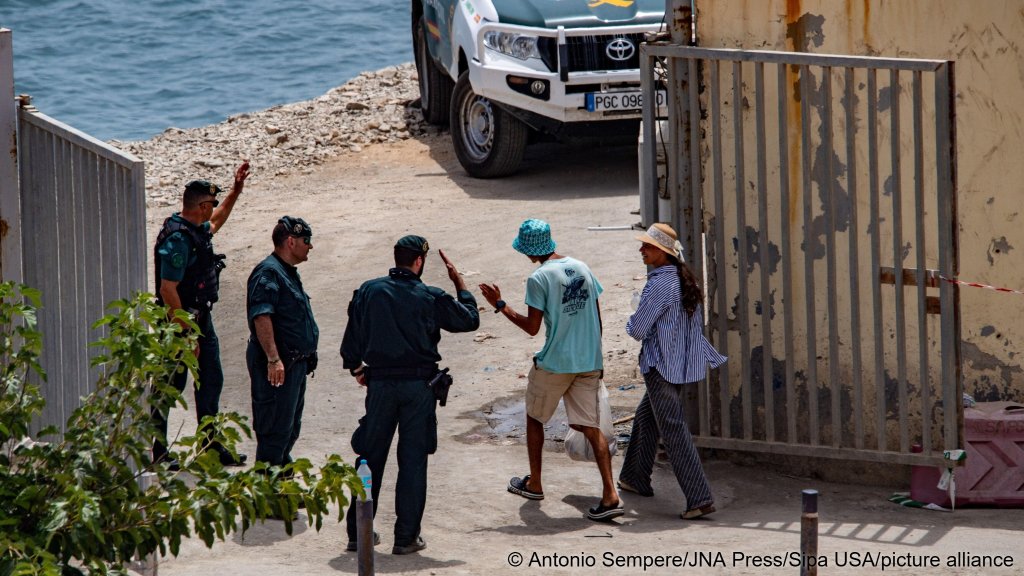
Defense Minister Margarita Robles has said that any new attempt at a mass entry must be stopped. She described responsibility for addressing the movements circulating through social media as a shared one and said that an aggression against Ceuta or Melilla would be an aggression against Spain as a whole.
Spanish officials said Wednesday that the status of Ceuta and Melilla as Spanish territories is not open to negotiation, after Morocco’s Justice Minister Abdellatif Ouahbi renewed Rabat’s claims to sovereignty over the North African cities. Ouahbi’s remarks to Asharq TV on Tuesday marked the first time Morocco has publicly revived the contentious territorial issue since the border crossings in Ceuta in late July.
Read AlsoFact checked: The Spanish regularization campaign did not drive the 60,000+ arrivals in Ceuta
Misinformation circulating on social media and messaging platforms
The latest security preparations have been driven largely by online messages claiming that the border between the Moroccan town of Fnideq and Ceuta will be open on August 15, a public holiday in Spain. Moroccan authorities have warned that the messages are disinformation and forms of incitement.
The European Commission said Thursday (August 13) that it was also increasing cooperation with digital platforms and fact-checkers in response to reports of a possible new mass entry into Ceuta on Saturday (August 15).
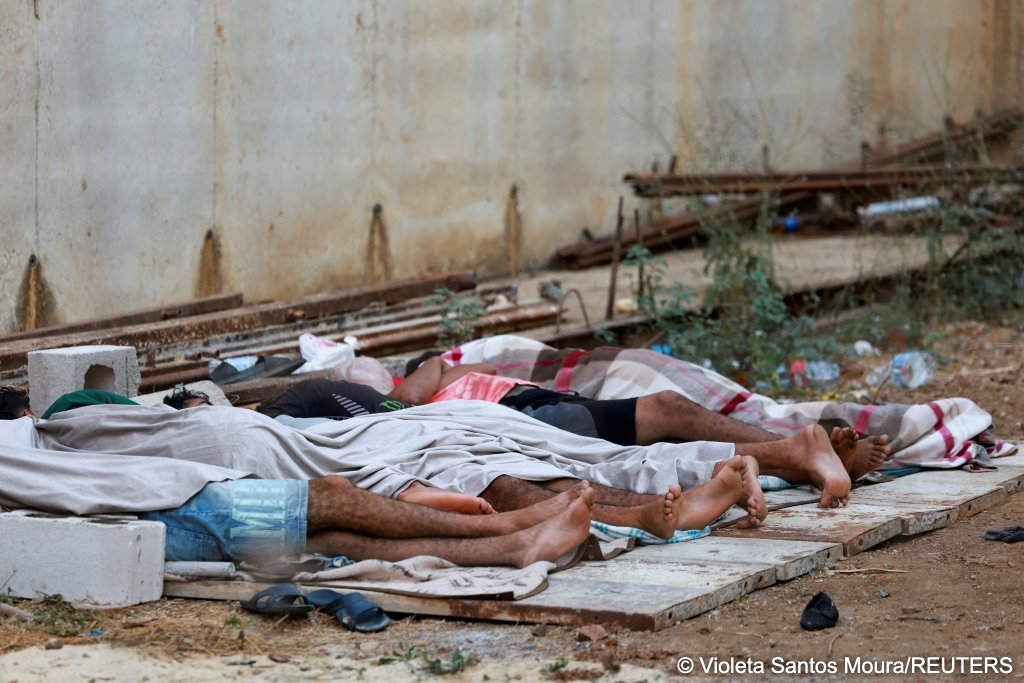
Commission spokesperson Arianna Podesta said cooperation with platforms including Meta and TikTok had been strengthened and that fact-checkers were working to identify misleading information, adding that the cooperation had already resulted in measures against content relating to people trafficking and violence.
The Commission has not yet activated the emergency mechanism under Article 36 of the Digital Services Act, with officials saying the existing cooperation with the platforms did not make such action necessary for now.
Ceuta-Melilla heightens Morocco-Spain tensions
The latest measures have also exposed wider disagreements between Morocco and Spain over migration policy. Ouahbi criticised Spain for what he described as accepting migrants after Moroccan authorities had attempted to prevent them from leaving the country. He called for clearer bilateral procedures and questioned why Morocco should stop migrants if they are subsequently accepted in Spain.
He also renewed Morocco's demand for the return of Moroccan minors who remain in Ceuta following the July arrivals, arguing that they should return to their families and schools before the start of the academic year.
Ouahbi said Morocco was still willing to work with Spain on a long-term solution to migration, including through new deals between the two countries. However, he also warned that Morocco could suspend its extradition agreement with Spain, citing problems with the way wanted individuals are handed over between the two countries. Ouahbi said Morocco’s claim to the two Spanish territories remains unresolved, and that the Moroccan government wants to pursue its claims through long-term dialogue with Spain.
Melilla's government rejected those claims, insisting that the city is Spanish and that there is nothing to negotiate regarding its sovereignty.
Read AlsoMorocco says 'misleading information' fueled Ceuta migrant arrivals
What will happen on August 15?
For now, Morocco says its heightened state of security is not tied exclusively to August 15 but forms part of a permanent security posture around the two borders.
The Moroccan Interior Ministry said authorities would continue to act "with firmness and responsibility" to protect people's safety, combat irregular migration and human-trafficking networks, and maintain a "high level of vigilance."
Spain has similarly made clear that its borders will remain closed and that additional containment barriers are in place. With August 15 approaching, neither Moroccan nor Spanish authorities have confirmed that any attempts of a mass crossing will occur.
With AP, AFP, EFE, LUSA, Reuters, and dpa