
Migrant deaths more than doubled on the Central Mediterranean and tripled on the Eastern Mediterranean route in the first four months of 2026, even as arrivals to Europe fell sharply. New IOM data highlight increasingly dangerous journeys driven by severe climate, conflict, changing migration policies and patrols, and shifting migration routes.
The number of migrants arriving in Europe declined substantially on several major migration routes between January and April 2026, but the drop did not translate into safer journeys, according to a recent report from the International Organization for Migration (IOM) on Wednesday (August 12).
According to the report, 821 people died or went missing on the Central Mediterranean route, a 111 percent increase compared with the same period in 2025. At the same time, arrivals fell 46 percent to 8,577, almost all of them recorded in Italy. Some organizations estimate the death toll on that route in that period as even greater, more than 1,000 at least.
The report cited extreme weather as a major factor with more than half of the deaths (430) being recorded in January, when Cyclone Harry struck the region. The Eastern Mediterranean reported an even sharper rise in fatalities. IOM recorded 244 migrant deaths, up 259 percent from a year earlier, with a number of deadly sea crossings from Libya ending in disasters near the Greek island of Crete.
"Fewer arrivals do not mean safer journeys," IOM Deputy Director General Ugochi Daniels said, warning that increasingly difficult journeys are leaving families "waiting for news that never comes."
According to the report, lower numbers of migrant arrivals have coincided with a significant increase in deaths, suggesting that tighter controls and changing routes may be reducing visible migration without removing the dangers faced by those still attempting the journey.
The IOM also noted that its figures are likely to underestimate the true number of people who died or disappeared.
Read AlsoCanaries: 150 migrants land on Lanzarote
Spain arrivals via Western African Atlantic route drops 78 percent
The report shows that migration patterns toward Spain changed noticeably during the period. Arrivals via the Western African Atlantic route fell 78 percent to 2,276, the largest decline among the European routes monitored by IOM. The reduction in arrivals, however, has been accompanied by a potentially more dangerous development such as departure points for the Canary Islands moving farther south along the West African coast.
The Gambia and Guinea-Bissau have increasingly become departure or transit points as cooperation between the EU and Senegal and Mauritania has been bolstered, the report argued. The report also highlighted that longer crossings mean people spend more time at sea and face greater exposure to bad weather, poor sailing conditions and other hazards.
The demographics of arrivals are also changing, with Gambian nationals accounting for 27 percent of arrivals during the reporting period, overtaking Malians, while Senegal remained a major country of origin. Surveys found that nearly half of migrants arriving on this route had passed through The Gambia.
Read AlsoSpain: Dozens rescued near El Hierro after desperate search
Spain arrivals via Western Mediterranean route increases 66 percent
In contrast to declines on several other routes to Europe, arrivals to Spain along the Western Mediterranean route increased by 66 percent to 5,647 between January and April, according to IOM.
The increase was driven particularly by land crossings into Spain's enclave of Ceuta in North Africa and, to a lesser extent, the other enclave of Melilla. Some 2,164 people arrived by land, compared with 541 during the same period in 2025, showing a 300 percent increase. Maritime arrivals also rose 22 percent to 3,483.
According to IOM, land crossings on the route tend to occur sporadically, often involving big groups attempting to cross at once, rather than the steadier pattern associated with sea arrivals. The sharp increase may also reflect attempts to avoid maritime patrols along Morocco's coastline.

The IOM reporting period, however, ended in April and therefore does not capture the subsequent increase in arrivals in Ceuta in July. Spanish government data showed that by the end of May, 2,281 people had entered Ceuta irregularly by land, more than three times the number recorded during the same period in 2025. Research by the Mixed Migration Centre similarly identified Ceuta as the principal entry point into Spain along the Western Mediterranean route during the first quarter.
The scale of the shift became particularly visible in the summer though, when tens of thousands of people attempted to reach Ceuta, mostly by swimming from Morocco. The events demonstrated how quickly pressure can build at particular entry points, despite relatively moderate arrival numbers over a longer period.
The route connects Morocco and Algeria with Spain through several possible crossing points, including the land borders at Ceuta and Melilla and maritime routes across the Alboran Sea and Strait of Gibraltar. Nationalities also vary by route according to IOM, with Moroccan nationals traditionally attempting crossings into Ceuta and Melilla, while Algerian nationals use a wider range of maritime routes. In recent years, growing numbers have also arrived from West and Central Africa and the Horn of Africa.
According to the report, Algerian and Moroccan nationals accounted for 64 percent of arrivals during January to April, while Sudanese arrivals rose sharply from 98 to 570. Economic hardship was the most frequently reported driver, followed by war and conflict, targeted violence and environmental pressures.
Read AlsoUnderstanding Ceuta: A contested borderland in Europe’s African enclave
Economic hardship, conflict, and environmental factors drive migration
IOM surveys conducted with migrants on the route in 2025 found that economic factors were the most frequently cited push factor, reported by 53 percent of respondents. War and conflict were cited by 31 percent, targeted violence by 23 percent and gradual environmental change by 14 percent. Environmental changes such as rising temperatures and desertification can also worsen economic conditions and make it harder for people to maintain their livelihoods. Conflict and insecurity can likewise undermine economic stability and push people to seek opportunities elsewhere.
The changing composition of arrivals reflects some of these wider pressures. Algerian and Moroccan nationals remained the two largest groups, accounting together for 64 percent of arrivals during the January to April period. But the number of Sudanese arrivals rose sharply, from 98 in the same period of 2025 to 570 in 2026, increasing their share from three percent to 11 percent.
IOM links the broader increase in Sudanese movement to the continuing conflict in Sudan, which has entered its third year and is affecting migration patterns across Africa and beyond.
As enforcement and patrols change the conditions for maritime crossings, migrants may seek alternative ways of reaching Spain, including land crossings or different departure points. IOM has observed a similar pattern on the Western African Atlantic route, where stronger border cooperation has coincided with a shift in departure points farther south along the West African coast.
For Ceuta, the January-April figures may provide an indication of a broader shift already under way, rather than a complete picture of developments during the summer. The sharp increase in land crossings shows how quickly pressure can accumulate at particular entry points, while the July events underline the volatility of movements along a route where migrants continually adapt their journeys to changing border conditions, opportunities and even social media algorithms.
Read AlsoGermany and other EU countries need to catch up on asylum reform, report finds
Some routes register greater numbers of arrivals, others fewer
Elsewhere, migration routes also diverged, with arrivals on the Eastern Mediterranean route dropping to 30 percent to 9,032, while onward movement through the Western Balkans rose 38 percent to 11,035. IOM said the difference may partly reflect delays between people arriving in Greece, Cyprus or Bulgaria and continuing their journeys through the Balkans.
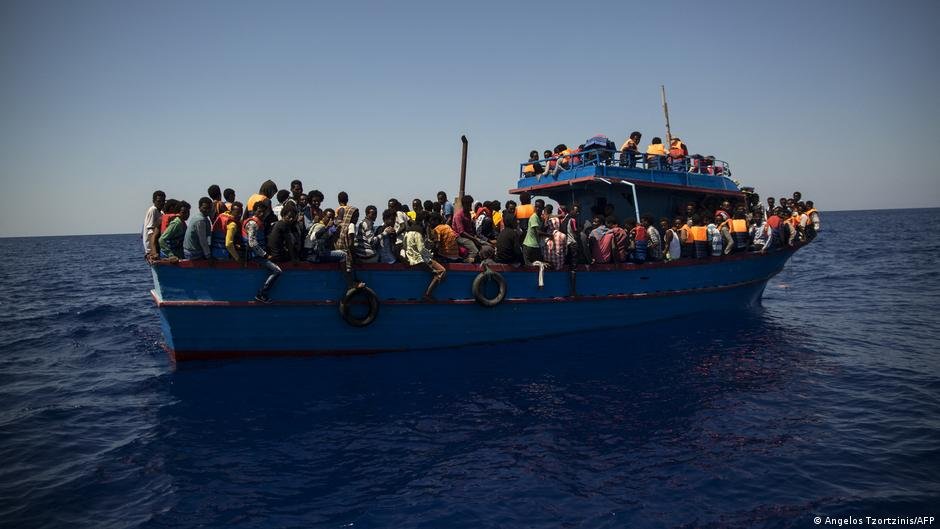
According to the report, border policies, weather, conflict and changing conditions in countries of origin and transit are continually redirecting movement. Conflict in Sudan, now in its third year, has continued to influence migration patterns across Africa and toward Europe, with Sudanese and Somalian arrivals increasing on several Mediterranean routes.
Conflict in the Middle East during the reporting period also affected migration, with Lebanon experiencing large-scale displacement, while returns to Syria increased in March and April. The report noted that wider conflict also put pressure on labor migration and remittance flows connecting South Asia, the Middle East and Africa.
Despite the focus on irregular journeys toward Europe, IOM stressed that most international migration does not involve crossing continents. UN data for 2024 show that 45 percent of the world's 304 million international migrants lived within their region of origin. The share was particularly high in sub-Saharan Africa, where 64 percent of migrants actually remained within the region.
Movements are also driven not only by attempts to reach Europe, but also by employment, family, education, security and economic survival, the report noted.