
Italian and Danish leaders Giorgia Meloni and Mette Frederiksen are renewing calls for migrant return hubs outside the EU while linking irregular migration to crime, violence, and threats to "European values," despite empirical evidence demonstrating otherwise. Their statement, however, comes amid a significant decline in detected irregular border crossings into the EU in recent years.
Italian Prime Minister Giorgia Meloni and Danish Prime Minister Mette Frederiksen are once again calling for migrant return hubs in countries outside the European Union, saying Europe must address what they describe as "uncontrolled immigration."
In a joint statement published Monday (August 10) on Frederiksen’s Instagram account and shared by Meloni on Facebook, the two leaders said they supported a tougher approach to migration and the establishment of mechanisms outside Europe for people whose asylum claims have been rejected.
"We don't accept uncontrolled immigration to Europe, and we have spearheaded a strict immigration policy both in our home countries and in Europe," the statement said.
Meloni and Frederiksen reiterated their call for the creation of facilities outside the EU to enable the return of rejected asylum seekers, saying that "return hubs in third countries and other innovative solutions outside Europe must be implemented."
Return centers outside the EU have been debated by European governments for years, but remain politically and legally controversial. Many human rights defenders have raised concerns about asylum rights, legal safeguards, offshore detention risks, and the responsibilities of European states.
Read AlsoRwanda confirms talks with EU to potentially host migrant return hubs
Meloni and Frederiksen link crime and violence to migration
Meloni and Frederiksen argued that irregular migration has consequences for European societies and attributed crime, pressure on public services, erosion in public distrust and sexual violence to irregular migration, but did not provide statistics or other evidence to support their allegations.
"No one can deny the negative impacts of illegal immigration on our societies: rising crime rates, increasing pressure on public services, and an erosion of citizens' trust. It is particularly serious when illegal migrants who have no right to remain in our countries commit violent crimes, traffic drugs, or are responsible for sexual violence," the statement read.
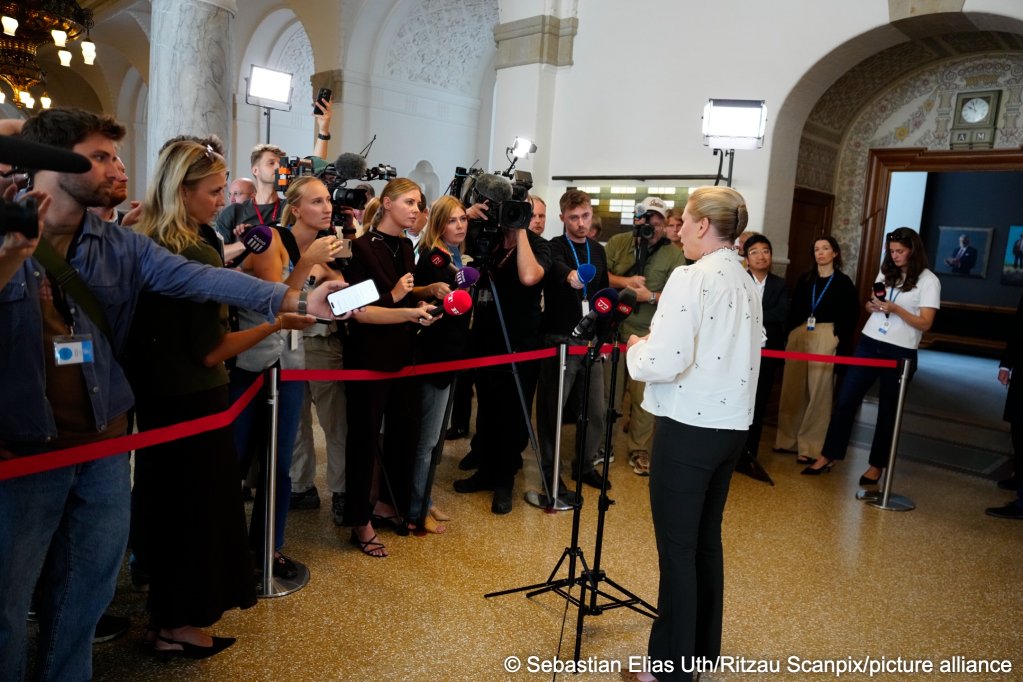
They continued to use populist and stigmatizing rhetoric such as: "Illegal migrants who have no right to remain in our countries commit violent crimes, traffic drugs, or are responsible for sexual violence…"
Extensive research shows that migration, unauthorized migration, and the number of migrants do not, in fact, cause higher crime rates in host countries. Large-scale studies from for example the IFO Institute in Germany and international researchers have shown that an increasing share of migrants or refugees does not correlate with rising local violent or property crime. And according to a Yougov poll from May, Western European countries, including Denmark and Italy, believe crime is rising in their country, despite long-term overall crime rates falling across the region since the mid-1990s.
Asked whether people believed violent crime was also rising, 52 percent of respondents in Denmark and 76 percent in Italy said they thought violent crime had increased a lot or a bit.
According to Eurostat, Italy’s annual murder rates have dropped from 1,917 in 1991 to 327 in 2024, giving it one of the lowest rates in the EU.
A rise in gang-related drug violence and increased reporting of sexual and domestic violence have dominated media attention. Combined with politicians scapegoating migrants and blaming them for crime, these developments have contributed to obscuring the broader, long-term decline in crime.
Read AlsoWhy young Moroccans risked everything to reach Ceuta
A threat to 'European values'?
Both Meloni and Frederiksen come from different political traditions, but both have been accused by rights critics of using migrants as scapegoats to gain voter support in their home countries. Meloni leads Italy’s right-wing nationalist Fratelli d’Italia party, while Frederiksen heads Denmark’s Social Democrats and leads a center-left coalition government. Their joint statement acknowledged their political differences, noting that they "come from very different political stances," and "certainly do not agree on everything. But we are united in our desire to protect Europe," it added.
"We are both proud of Europe’s Christian cultural heritage and want to protect it. We expect those who come to our countries and choose to make Europe their home to respect our values and not seek to impose ways of life on us that we do not share," they said, without elaborating on what they meant by "imposing ways of life" or citing examples.
The statement then framed migration as a question of "European values," portraying migration as an invasion and threat to the continent and those values.
"We believe this is the right path to protect Europe and our shared values," it said.
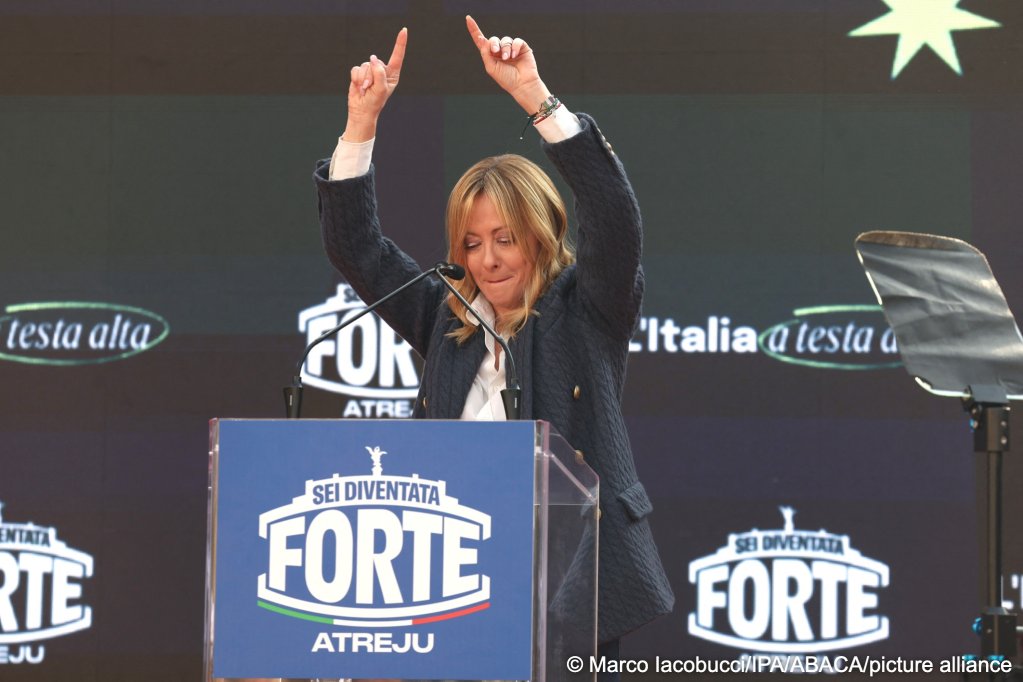
"We need to establish return centers in third countries, as well as other innovative solutions outside Europe. We are working hard on this. But this is not enough. Respect for our laws must go hand in hand with respect for European values…" it continued.
Read AlsoCeuta: A test of the EU’s new migration strategy and its internal solidarity
Ceuta puts migration back in focus
The renewed call comes following the recent mass migrant arrivals in the Spanish enclave of Ceuta in North Africa, which has intensified political debate over irregular migration and the EU’s external borders.
More than 70,000 migrants moved into the territory, prompting a response from European governments, with Italy subsequently reintroducing border checks with Spain at Meloni’s instruction. Subsequently Spain retaliated and introduced its own checks on travelers arriving from Italy.
The developments also prompted Denmark and Italy, together with other European governments, to press the European Commission for action at the EU’s external borders.
The events have highlighted divisions among European governments over how responsibility for migration should be shared and how rejected asylum seekers should be returned.
At the same time, irregular border crossings into the EU have in fact fallen significantly in recent years. According to Frontex, detected irregular border crossings into the EU fell by 38 percent in 2024 to just over 239,000, marking the lowest level since 2021. The downward trend continued into 2025, with crossings falling a further 20 percent year-on-year in the first half of the year to around 75,900, a substantial decline from the more than 380,000 detections recorded in 2023.
The EU Pact on Migration and Asylum, which includes stricter procedures and controls at the bloc’s external borders, entered into force in June.