
Migration Commissioner Magnus Brunner says the EU has managed the immediate crisis in Spain’s North African enclave. But Ceuta also shows that Europe’s border policy remains dependent on neighboring countries and vulnerable to political disagreement among member states.
The European Commissioner for Internal Affairs and Migration, Magnus Brunner, presented the recent events in Ceuta as both a warning and an indication that the bloc’s new approach to border management is starting to work. In a press conference this week he stated that "Europe has not had this much control over [irregular] migration in decades."
Brunner also warned that the EU remains vulnerable if the security of its external borders depends on "the goodwill of one neighboring state." At the same time, Spanish and EU officials said that no one who entered Ceuta had reached mainland Spain or moved onward to another EU country, and that the situation had been brought under control through cooperation between Spain, Morocco and the European Commission.

The episode therefore highlighted two aspects of the same system. The EU was able to respond quickly, but its response depended heavily on cooperation with Morocco and emergency support for Spain. Ceuta showed that the bloc has more tools than it did in 2015, while also underscoring the limits of its control.
Read AlsoEU defends border response after Ceuta crossing
A test of the new system
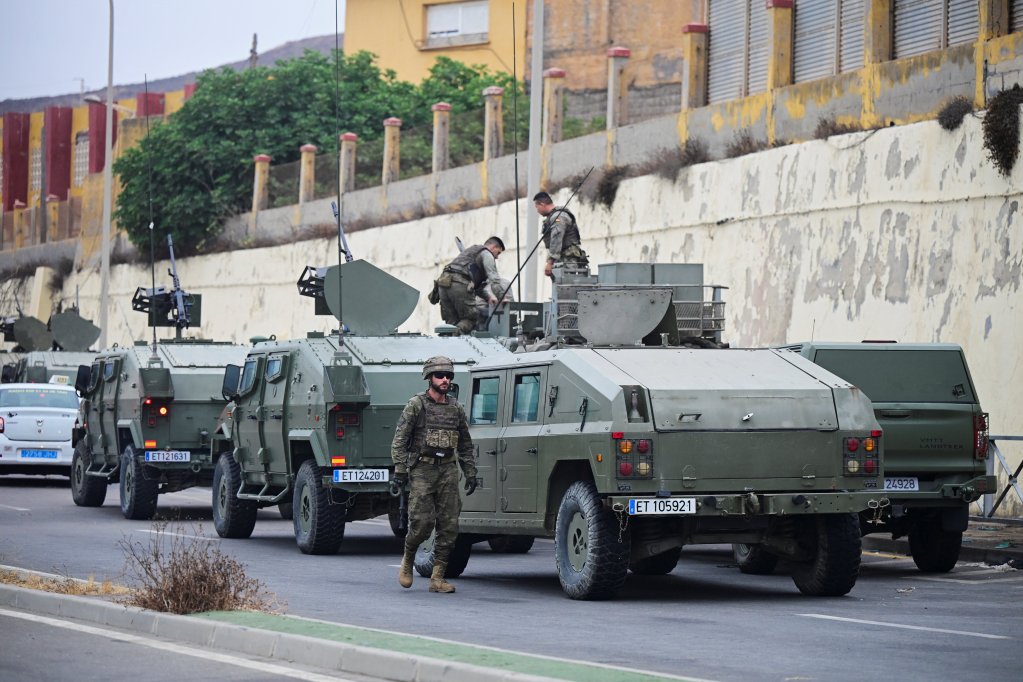
According to EU officials, more than 70,000 people crossed into Ceuta within hours, in an incident Brunner attributed to criminal smuggling networks and disinformation on social media. Spanish authorities have said at least 100 people died and that several thousand remained in the enclave although the vast majority have since returned to Morocco. Brunner described the episode as "a test of our European resilience on the one hand and of the security of our external borders." He also insisted that the EU had passed this test.
Spain said that people who entered Ceuta had not moved on to mainland Spain. The EU’s border agency Frontex and other agencies provided operational support, and the Commission approved emergency funding for border management, returns, and measures aimed at preventing secondary movement.
The commissioner’s argument was designed to show that the European migration framework adopted in recent years is now being applied. He pointed to the implementation of the reformed Common European Asylum System, including screening at the border, faster procedures, and new rules on returns. He also noted that irregular arrivals and asylum applications have decreased significantly compared with previous years, a trend confirmed by recent Frontex data.
It is important to distinguish between managing arrivals once they occur and influencing the conditions that lead to those movements. The EU can register people, assess protection needs, and organize returns only after they reach its borders. But before that point, it depends on neighboring countries to patrol their own side of the frontier, to prevent departures where possible, and to accept people back when they cross into EU territory.
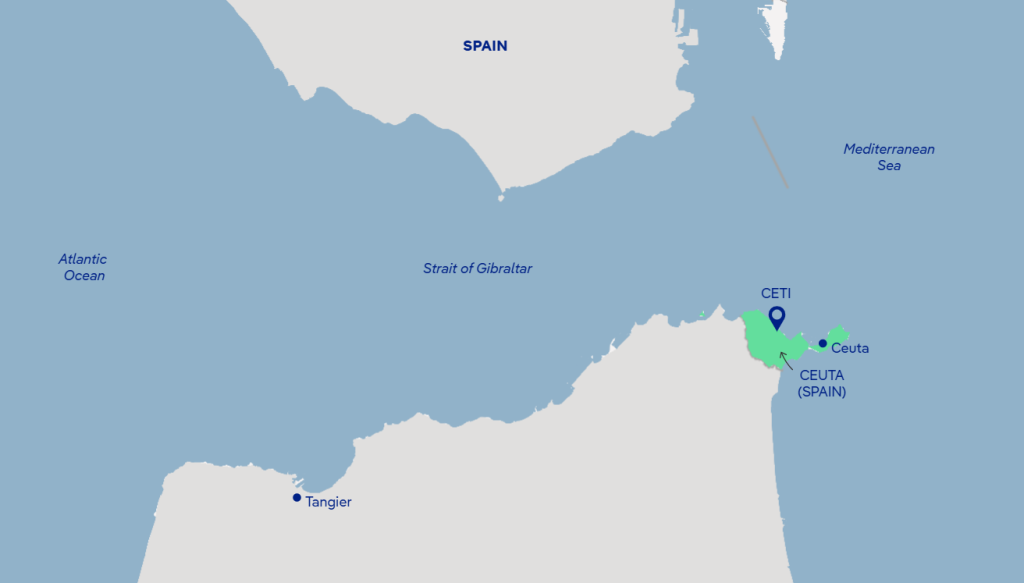
Ceuta and Melilla, Spain’s two enclaves in North Africa, also operate under a special regime. They are part of Spain and subject to the Schengen rules, but they are treated differently from other Schengen territories: checks are carried out on exit rather than entry, and there is no land border with other EU member states. Anyone traveling from Ceuta or Melilla to mainland Spain or another Schengen country must pass through identity and document controls, so irregular entry into the enclaves does not automatically become entry into the wider Schengen area.
Read AlsoUnderstanding Ceuta: A contested borderland in Europe’s African enclave
Migration diplomacy and external partners
In response, Brunner called for stronger “migration diplomacy.” He said the EU should use all the tools at its disposal -- including trade, visa policy, and development assistance -- to deepen partnerships with neighboring countries. A planned strategic partnership with Morocco, he noted, would include migration cooperation as a core component.
This approach may increase the EU’s ability to influence events beyond its borders. It also confirms the dependence that Brunner himself highlighted -- European border security is closely tied to the state of relations with non-EU partners and to their willingness to engage in joint efforts on border control and returns.
The Commission's five point plan
Brunner outlined a five-point plan: working more closely with partner countries to prevent irregular migration; speeding up returns; reinforcing external borders and Frontex’s role; building early-warning systems, especially around disinformation; and targeting smuggling networks through sanctions and international cooperation.
Taken together, these measures reflect a more security-focused European migration policy. They also show that the EU is trying to address political pressures around migration through a mix of enforcement, diplomacy, and administrative reforms.
The focus on returns and deterrence is meant to reassure member states that the EU can manage migration collectively. The focus on partnerships with third countries aims to reduce pressure before people reach EU territory. References to disinformation and smuggling networks frame the Ceuta episode in terms of organized activity rather than spontaneous movement or diplomatic conflict.
However, any system that depends on cooperation from outside the EU has to take into account the possibility that that cooperation could weaken, cease, or be used as leverage in other disputes. Ceuta is not only a technical border-management issue. It is also a reminder that migration arrangements are part of broader political relationships, influenced by diplomatic considerations, domestic politics, and strategic decisions in neighboring states.
Read AlsoCeuta: EU calls borders a 'shared European responsibility'
Italy brings the crisis inside the Union
The immediate events took place at the EU’s external border, but the political implications quickly affected relations within the Union.
Italy reacted by temporarily reintroducing controls on travel from Spain. Because Italy and Spain do not share a land border and because irregular entry into Ceuta does not give people direct access to the Schengen area, the measure applied to air and sea travel and did not correspond to a direct route from Ceuta to Italy. Analysts and rights groups therefore described it mainly as a political gesture, signaling concern over Spain’s border management and migration policies rather than addressing a specific operational risk.
The move also led to misunderstandings about Schengen. Italy could not suspend the entire Schengen regime or remove Spain from the area of free movement. Under existing rules, it could temporarily reintroduce internal border controls. But the episode showed how a crisis at the EU’s external border -- and the images it generated -- could be reframed as a domestic political issue, even when the practical risk to Italy was limited.
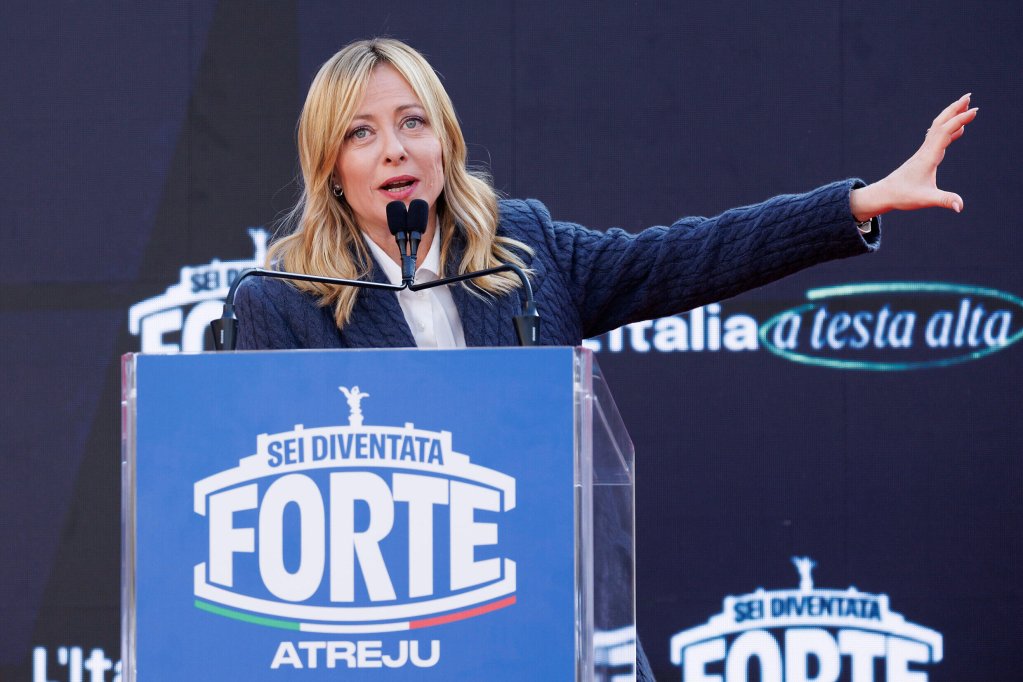
While Brunner called for a united European response, Italy used the episode to highlight its differences with Spain over migration and border control. The decision also came amid preparations for Italy’s 2027 election, with Meloni’s coalition facing pressure from more restrictive anti-immigration forces.
Although this does not establish that electoral considerations drove the policy, it helps explain why a measure with limited operational value attracted significant political attention.
Read AlsoFact checked: The Spanish regularization campaign did not drive the 60,000+ arrivals in Ceuta
A broader test for the EU
The European Commission wants Ceuta to be seen as evidence that Europe’s migration and border tools are more effective than they were a decade ago. Italy’s reaction indicates that there is still disagreement among member states about how those tools should be used and who is accountable when they are tested.
For Spain, the crisis took place on EU territory at a border whose security depends heavily on cooperation with Morocco and on Ceuta’s special Schengen arrangements. For Italy and other member states, it became an opportunity to call for stricter controls and question Spain’s more regularization- and integration-focused approach. For Brussels, it was a chance to defend the Migration and Asylum Pact while promoting stronger external-border controls, faster returns and deeper partnerships with North African countries.
That approach is already central to EU migration policy. The bloc has increasingly linked border management, returns and the prevention of irregular migration to broader partnerships with countries including Morocco. Brunner said the EU should use trade, visa policy and development assistance to strengthen these relationships, while the Commission has proposed additional technical and financial support for Morocco’s border-management efforts.
Read AlsoEU reported to be considering 12 possible countries to site migrant 'return hubs'
With dpa and Reuters