
Police in Thetford have made five arrests after three nights of disorder in which crowds targeted homes believed to accommodate asylum seekers and officers were injured while intervening. The unrest comes amid a wider political dispute in the UK over immigration, housing and access to public accommodation.
Three consecutive nights of unrest in Thetford, Norfolk, have led to arrests, property damage and injuries to police officers. Crowds gathered to protest against asylum-seeker accommodation in the town and proposed accommodation at nearby RAF Barnham.
Norfolk Police said officers responding to an incident on Wednesday (August 5), were met with "significant aggression." A male officer was struck by a rock, a female officer was seriously bitten and a third officer was spat at. Two officers were taken to hospital.
The disorder followed alleged attempts by groups to enter residential properties believed to be housing asylum seekers. Police said windows, fences and letterboxes were damaged during incidents on Tuesday (August 4), while a resident was allegedly forced from one property and had a mobile phone taken.
On Wednesday, officers were called to a property after reports that between 30 and 50 people were attempting to gain entry. Police subsequently escorted residents away from some properties for their safety.
Read AlsoUK immigration falls sharply, but the perception that it is increasing is still widespread
Homes targeted amid unrest
Witnesses reported that a crowd of up to 200 people gathered on Clover Way just north of the RAF Barnham military base, where eggs and stones were thrown and some protesters shouted, "We want them out." The homes had reportedly been identified because of claims that they were being used to accommodate asylum seekers.
The residents’ immigration status has not been publicly established in every case. Nor does the targeting of a property, based on information circulated online, confirm that its occupants were connected to the proposed accommodation at RAF Barnham.
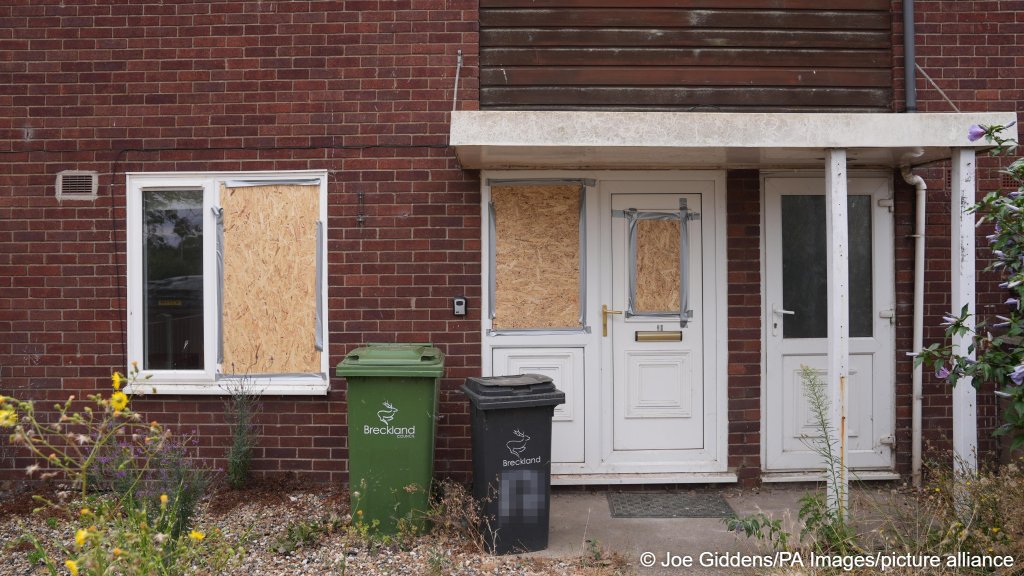
This distinction is key because mistaken identification can expose asylum seekers, other migrants and local residents to threats or violence. The events also raise concerns about hostility directed at people because they are believed to be asylum seekers, rather than because of any specific conduct.
South West Norfolk MP Terry Jermy, who has previously criticized the lack of clarity around plans to use RAF Barnham for asylum accommodation, condemned the disorder while acknowledging residents' right to protest. He described the events as "mob rule and vigilantism" and said people from diverse backgrounds had contacted him with concerns about their safety. "Whatever our own individual views on immigration – mob rule and vigilantism is not acceptable," he said.
Read AlsoUK: Further delays in using Cameron Barracks to house asylum seekers
Arrests and police response
Two men in their 40s were arrested on Thursday (August 6). One was held on suspicion of inciting racial hatred in connection with events the previous day, while the other was arrested on suspicion of being drunk and disorderly and failing to provide information to police.
Three other people had already been arrested in connection with the earlier disorder, including a 68-year-old man charged with possessing a wooden bat.
Local police increased its presence in the town and introduced additional public-order powers. The measures required people to remove face coverings when asked and allowed officers to direct people suspected of committing, or likely to commit, antisocial behavior to leave the area.
Norfolk Chief Constable Paul Sanford said some asylum seekers had been escorted from properties after protesters targeted addresses they believed were being used to house asylum seekers. Speaking to the BBC’s Today program, he said residents had to be moved "for their safety" and that, without police intervention, protesters were likely to have entered at least one of the properties.
Sanford rejected accusations that officers had used excessive force, saying police had been "firm with people who had broken the law." The police force also defended its use of Pava spray (a synthetic pepper gas spray) after witnesses criticized the police response and reported that a woman using a mobility scooter had been sprayed. Norfolk Police said the spray had been used proportionately in response to behavior in the crowd.
Read AlsoUK: Prime Minister Burnham promises to be 'relentless' on migrant Channel crossings
A wider pattern of unrest
Thetford is the latest example of tensions surrounding asylum accommodation in the UK.
In Epping, Essex, demonstrations took place outside the Bell Hotel during the summer of 2025 after an asylum seeker staying there was arrested and charged in connection with alleged sexual offenses involving a 14-year-old girl. The defendant denied the charges, but was later found guilty, sentenced and deported. While many of the protests were peaceful, some developed into violent disorder, with police reporting assaults on officers, damage to vehicles and other criminal offenses. Six men were found guilty for violent disorder in separate trials in April and in June 2026, according to the BBC.
The issue also prompted protests and counter-protests in other parts of England, Scotland, Wales and Northern Ireland. Demonstrations were reported in places including Bristol, Liverpool, London, Diss, Mold, Perth and County Antrim, with some events resulting in arrests or clashes between opposing groups.
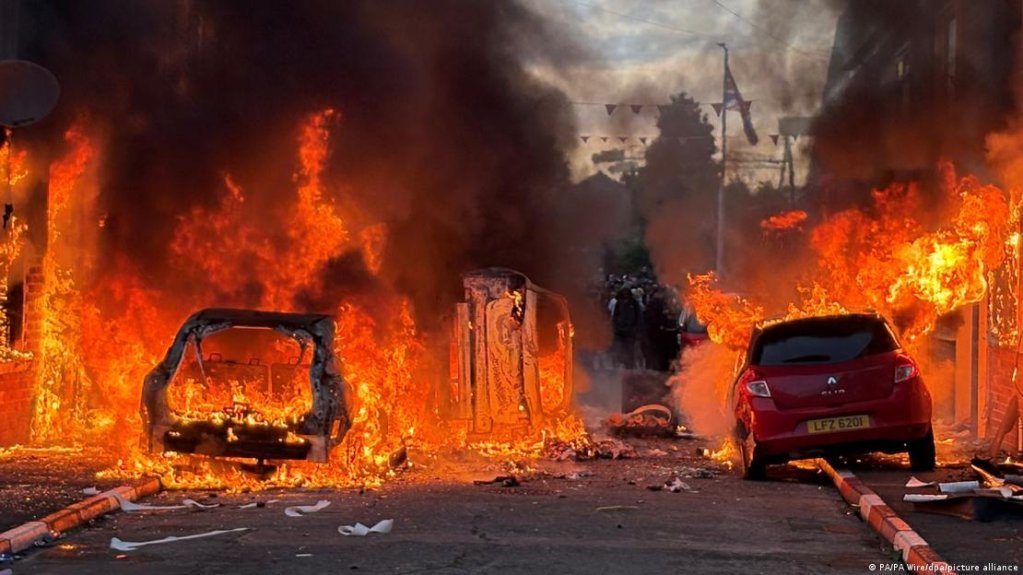
In Belfast, anti-immigration violence in June 2026 followed the arrest of a Sudanese man in connection with an alleged knife attack. Protesters attacked homes, businesses, vehicles and a public transport bus, while police used water cannon and plastic bullets during the unrest. The violence displaced families and was condemned by UK and Northern Ireland politicians as racist violence.
These incidents varied in their immediate causes and scale, but they show how disputes about asylum accommodation can become flashpoints for wider anger about immigration and social change.
Read AlsoAnti-migrant violence in Northern Ireland raises questions about peace in the region
How asylum accommodation works
The protests have also highlighted confusion about the difference between asylum accommodation and social housing.
Asylum seekers who would otherwise be destitute can receive accommodation and financial support from the Home Office while their claims are considered. The accommodation is generally provided on a "no-choice" basis, meaning applicants do not decide where they are placed. It is procured and managed through private contractors rather than allocated directly by local councils.
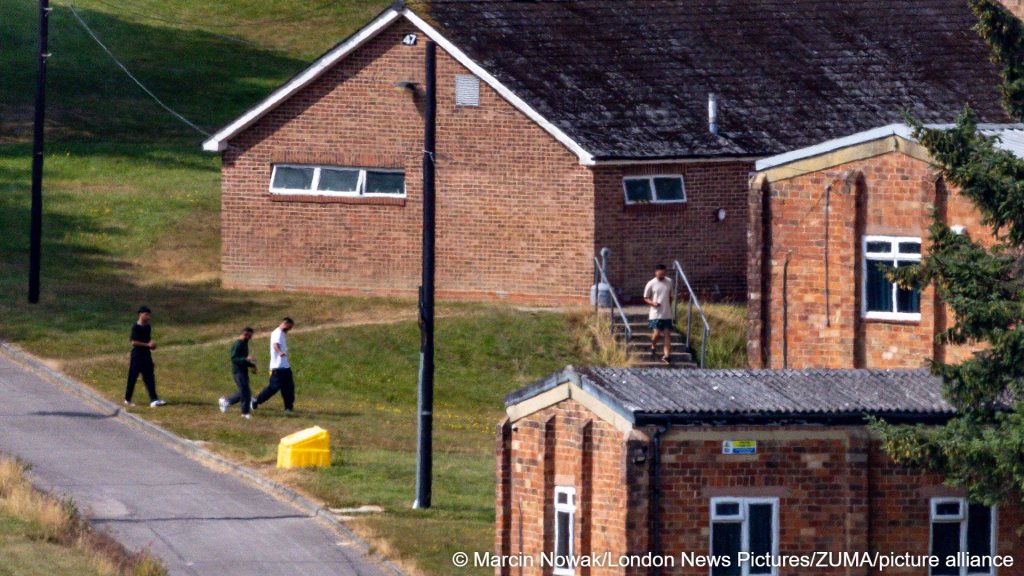
Dispersal accommodation commonly consists of flats or houses in local communities, including houses of multiple occupation. According to a briefing from the Migration Observatory, hotels are classified as contingency accommodation, used when the government cannot source enough longer-term dispersal accommodation. Hotels accounted for 21 percent of asylum accommodation at the end of March 2026, compared with 41 percent at the end of 2023.
The use of residential properties can make asylum accommodation less visible as a national government policy while making its effects more immediate for local residents. This can contribute to concerns about consultation, housing supply and pressure on public services, particularly where communities believe decisions have been made without sufficient explanation.
Read AlsoUK: Government explores plans to ask asylum seekers to pay back costs of asylum
Housing and political debate
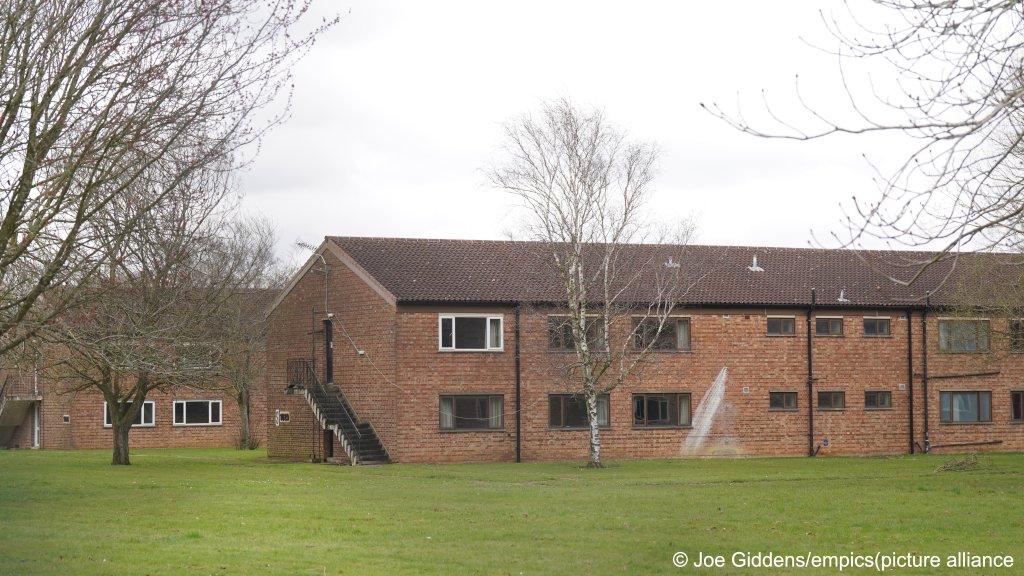
The proposed use of RAF Barnham, a former military site near Thetford, has generated concern about housing, public services, local consultation and the impact of accommodating a large number of people in the area. Recent reports have put the potential capacity at up to 3,750 people, although the government still needs to clarify the final figure.
The issue forms part of a broader political dispute over access to housing. The Conservative Party has proposed ending social-housing eligibility for most foreign nationals in England if it returns to government, claiming that approximately 230,000 homes could become available to British families. The party’s estimate is specifically 228,144 homes.
Under the proposals, new tenancies would generally be restricted to British and Irish citizens and people with EU settled status. Some existing tenants without those statuses could be expected to leave their homes within six months. The policy has been condemned by opponents and housing organizations as divisive and potentially damaging to families, refugees, pensioners and workers in essential public services.
The proposal is separate from asylum accommodation. Asylum seekers are generally not eligible for social housing, although foreign nationals with refugee status or certain forms of humanitarian protection may qualify under existing rules. The two issues have nevertheless become part of the same broader political argument about immigration, housing shortages and publicly funded accommodation.
Read AlsoUK: First asylum seekers moved into Crowborough military site amid protests
Protest and intimidation
Thetford is the latest in a series of protests across the UK in which disputes over asylum accommodation have exposed wider tensions around migration, housing and public services. Similar unrest has occurred in Epping, where demonstrations outside the Bell Hotel led to arrests and clashes with police, and in Belfast, where anti-immigration violence left homes and other property damaged. Although these incidents are not identical, they show that hostility towards migrants and refugees is not a new phenomenon.
The violence also comes amid a deeper crisis of housing and living standards, shaped by the long-term shortage of social housing, limited public investment, rising costs and the political and economic consequences associated with Brexit. As pressure has grown, migrants and refugees have increasingly become visible targets for anger that also reflects decisions made by successive governments about housing supply, public spending and the allocation of resources.
Thetford illustrates how vulnerable groups can become scapegoats for failures that are broader, deeper and more longstanding than the presence of asylum accommodation itself.
Read AlsoAsylum seekers in the UK scapegoated amid economic precarity