
Online rumors, misleading legal claims and videos of successful crossings helped shape the movement toward Ceuta, where at least 100 people have died. But social media was only one factor in a crisis also shaped by economic pressures, border conditions and tensions between Spain and Morocco.
It began with posts suggesting that Spain’s border with Morocco was opening. On Instagram, Facebook and TikTok, users shared rumors, tracked coast guard patrols and circulated possible swimming routes into Ceuta.
As the material spread, people began traveling toward Fnideq, the Moroccan city closest to the Spanish enclave. Buses, trains and taxis carried people toward the coast, while online groups shared information about routes and equipment.
While social media did not create the desire to migrate, it may have influenced when people traveled, how they assessed the risks and how many reached the border at the same time.
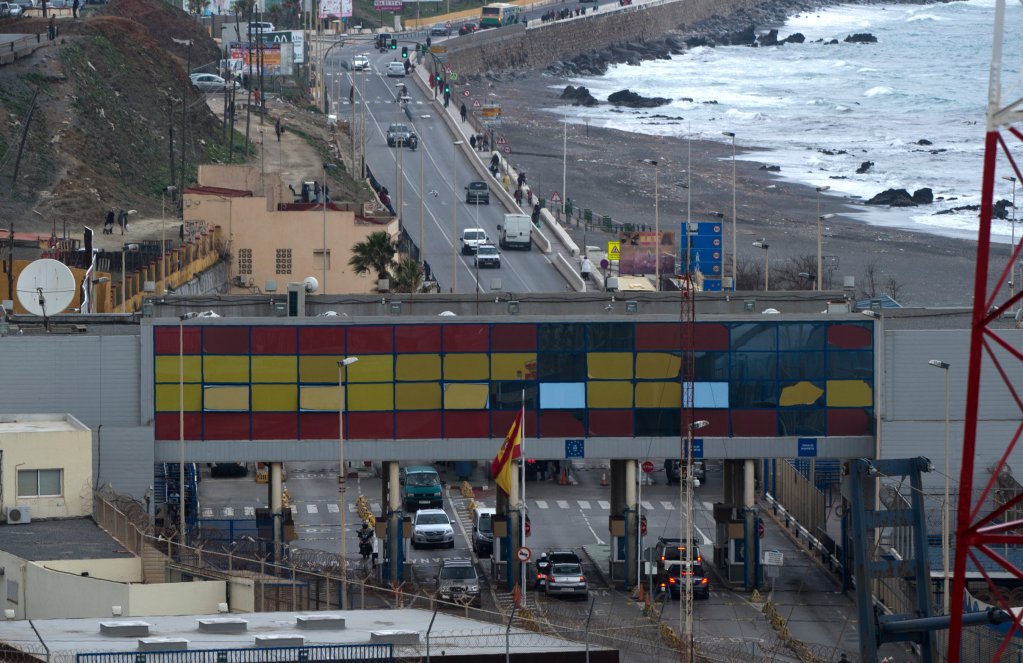
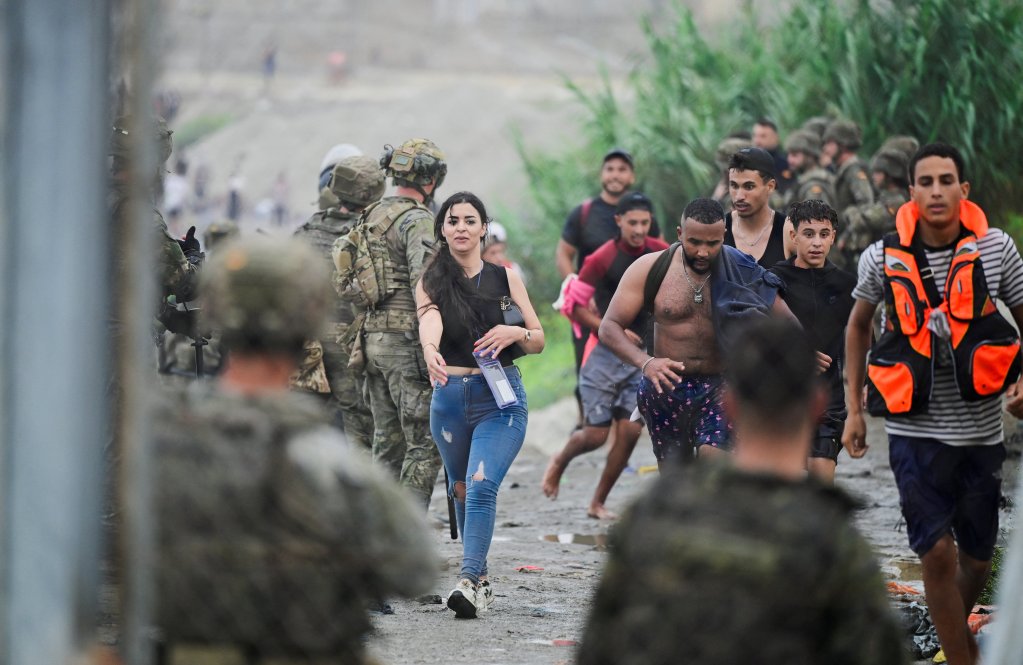
Tens of thousands of people eventually reached or attempted to reach Ceuta. Spanish authorities later estimated that approximately 72,000 people had reached the enclave, although earlier reports cited lower figures. Ceuta’s regional president, Juan Jesús Vivas, told members of the European Parliament on August 6 that around 100 people had died during the border crossings. Earlier official figures recorded 72 deaths on the Spanish side and 11 on the Moroccan side, while reports also referred to 88 bodies recovered in Ceuta. The final toll remains subject to verification.
Many people drowned. Others died in the congestion at the coast, where large numbers tried to climb a narrow and slippery breakwater at the same time.
Read AlsoCeuta: A test of the EU’s new migration strategy and its internal solidarity
From rumor to reality
In the northern Moroccan city of Larache, around 150 kilometers from Ceuta, three friends reportedly watched a video posted by an Instagram account called Haraga Ceuta. The account claimed that the border would be open, and the men decided that the journey was worth attempting.
Other migrants described similar experiences. "I saw online that the border was open, and I decided to go," 17-year-old Omar Danbor told the Associated Press as he walked back along the coast.
The content also included practical information. A TikTok video reportedly showed a possible swimming route. Facebook users shared screenshots from vessel-tracking platforms to identify periods when coast guard patrols appeared less visible. Some groups discussed inflatable boats, while others advertised wetsuits.
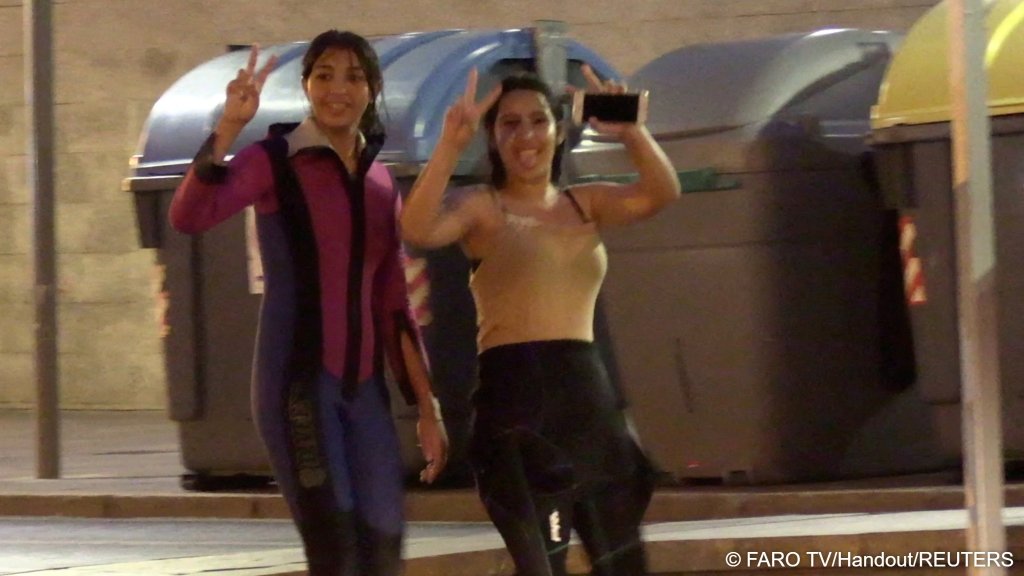
Social media therefore served two related functions: it shaped perceptions of Spain’s migration rules and provided practical information about where to travel, what equipment to use and when the crossing might appear more feasible.
The episode has also prompted discussion of whether migration-related disinformation should be understood as part of a broader hybrid-threat environment. In a post on X, European law professor Alberto Alemanno argued that border-control policy could not be separated from the management of hybrid threats, referring to the role of online information in the Ceuta crisis. His comment reflects a wider debate about whether digital platforms are becoming part of the infrastructure through which border pressure can be created, amplified or exploited.
That broader interpretation remains contested. Some officials and analysts have alleged that Russian-linked networks amplified images and narratives about the crisis in order to deepen divisions within the European Union. However, available reporting does not establish that Russia initiated the original rumors or directed the crossings. The European Commission has said that investigations into the information campaign are ongoing and that no complete picture of the actors involved has yet emerged.
Read AlsoFact check: Did disinformation trigger the Ceuta crisis?
Legal uncertainty and influencers
One of the main rumors concerned a Spanish Supreme Court decision, taken in June, on the return of migrants intercepted at sea while attempting to reach Ceuta or Melilla. The ruling did not create a right to remain in Spain or travel onward to mainland Europe. It required some people intercepted at sea to go through the ordinary returns process rather than being immediately returned under the special border procedure.
This distinction was reportedly misunderstood online, with some posts suggesting that anyone who reached Ceuta could not be sent back. However, legal experts later stressed that the ruling did not mean the border was open, it required basic legal safeguards before certain returns but did not prevent a person from being returned through the relevant process.
A later analysis by the Spanish fact-checking organization Maldita.es identified 215 posts carrying substantially the same wording on July 30, published by 727 different users. The pattern suggests rapid repetition, although it does not establish where the message originated or whether sharing was centrally coordinated.
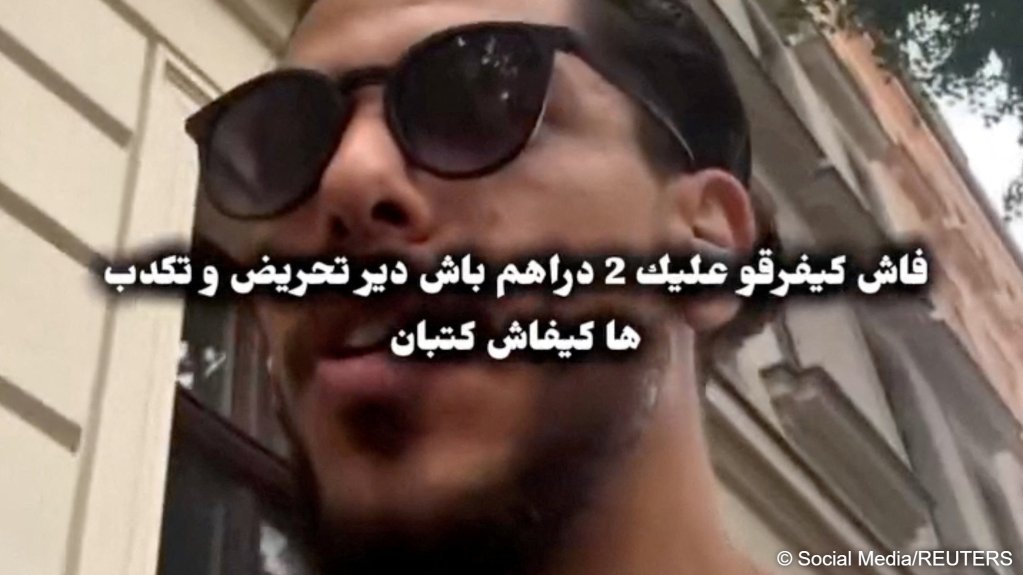
A video recorded in Leipzig, Germany appeared to reinforce the broader interpretation. A young Moroccan man said: "Never believe those who tell you that if you get into Ceuta, they will send you back. You will not be sent back." The video was later deleted but was reposted by other accounts.
The speaker has not been publicly identified, and the available reporting does not establish his motives or whether he intended to encourage people to cross. His apparent location may nevertheless have affected how viewers interpreted the message. A Moroccan already living in Europe could have appeared to offer relevant personal experience.
Other videos showed migrants and influencers swimming toward Ceuta. Reuters reported that some influencers posted footage of themselves wearing wetsuits or using swimming rings. Mounim Belhaj, who had around 31,000 Instagram followers, said he traveled after seeing reports about migrants receiving accommodation in Ceuta. Footage of smiling arrivals published by El Faro de Ceuta was also described by migrants as encouraging further attempts.
Read AlsoWho is responsible for the Ceuta border surge?
Misleading images and AI
The information environment became more confused as genuine footage circulated alongside recycled videos, misleading captions and AI-generated images.
Euronews identified an image presented as a Reuters photograph that appeared to show a soldier raising a large rock over a migrant climbing an embankment. There was no evidence that Reuters had published the image, and an AI-verification tool identified it as having been generated using artificial intelligence. Another image, said to show shoes floating in the sea, was also identified as AI-generated.

Other material was real but miscaptioned. A video presented as showing migrants reaching mainland Spain was reportedly at least three years old and unrelated to the Ceuta crossings. A separate video of a young man swimming was attributed to a journey toward Ceuta, although it had been recorded in El Jadida, on Morocco’s Atlantic coast, where the man had been documenting a local swim.
The combination of authentic footage, recycled material and AI-generated images made verification more difficult. It also allowed different audiences to construct different narratives from the same event. For some viewers in Morocco, the images suggested that reaching Europe was possible. For others in Europe, they appeared to show a loss of border control.
Read AlsoMorocco says 'misleading information' fueled Ceuta migrant arrivals
From individual posts to collective movement
The online campaign appears to have expanded beyond isolated posts. A report by security analyst Chema Gil estimated that material circulating from early July generated approximately 11 million potential impressions. That figure should not be interpreted as 11 million individual viewers or as evidence that all those who saw the material believed it. It does indicate that the border rumor circulated well beyond a small group of users.
An open-source investigation by the private technology company Golden Owl concluded that the activity showed signs of deliberate organization. Other reporting identified accounts and groups sharing mobilization messages, route information and practical advice. These findings suggest that some online activity may have involved coordination, but they do not establish a single organizer or prove that one organization directed the crossings.
The available evidence therefore points to a distributed process rather than a clearly identified operation. Messages may have been copied by influencers, repeated by ordinary users and amplified by platform algorithms. Moroccan and Spanish authorities referred to disinformation and possible smuggling networks, but neither government identified a specific organization responsible for the online claims.
Consequences of online imagery
Migrants interviewed by the Associated Press said that people were knocked back into the water or became trapped beneath others.
The reported deaths were associated with several overlapping risks -- the dangers of the swim, the physical conditions at the breakwater and the sheer number of people at the same location.
Online posts did not directly cause individual deaths, but they may have contributed to the size and timing of the crowd at the crossing.
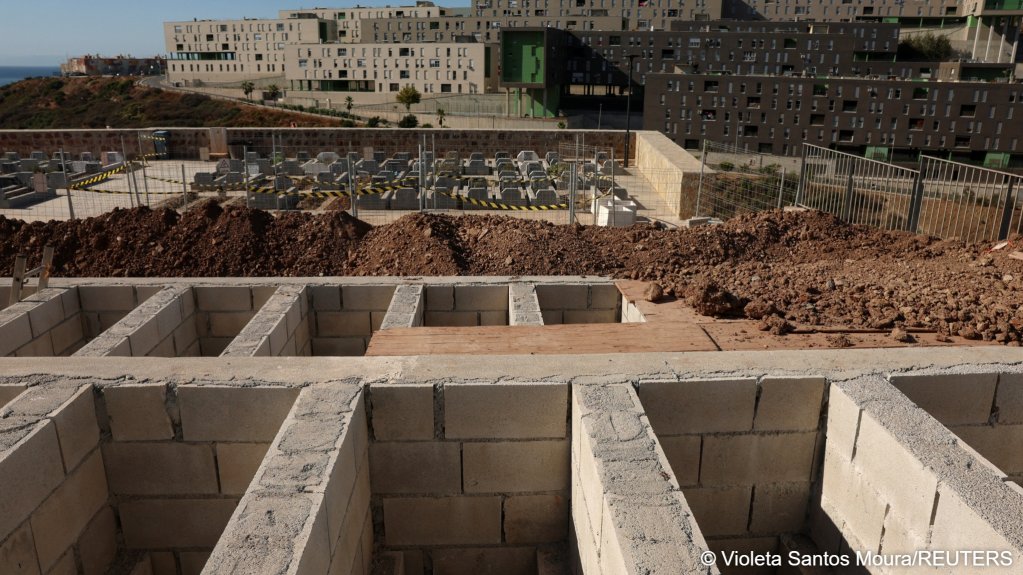
The images also shaped how the crisis was understood outside Morocco and Ceuta. Footage of large groups communicated the scale of the event, but could make individual circumstances less visible.
EU Migration Commissioner Magnus Brunner said that "dramatic images" had overshadowed broader statistics showing a decline in irregular border crossings across the EU. His comment highlights the political effect of visual coverage, which can create an immediate sense of emergency, even when the wider data presents a more limited picture of movement into the EU.
Research on refugee imagery has examined this through the "identifiable victim effect" and related work on visual dehumanization. The identifiable victim effect generally refers to the tendency to respond more sympathetically to a specific and recognizable person than to an anonymous or statistical group.
Studies of refugee imagery have found that images of large groups in which individuals are difficult to identify can produce less sympathetic attitudes than images showing recognizable individuals. One series of studies involving almost 4,000 Europeans found that participants shown images of large refugee groups were less supportive of pro-refugee policies and more likely to endorse anti-refugee petitions.
This does not mean that the scale of a humanitarian crisis should be hidden. Wide-angle images and casualty figures remain important. They can, however, be accompanied by individual stories, names and testimonies, allowing audiences to understand both the scale of the event and the people within it.
Read AlsoFamilies search for missing loved ones after deadly Ceuta crossing
The diplomatic and EU response
The online activity developed within a sensitive diplomatic setting. Ceuta is a longstanding point of tension between Spain and Morocco, and the 2021 crisis -- when Morocco appeared to relax border controls during a dispute over Spain’s treatment of Polisario Front leader Brahim Ghali -- remains an important precedent.
That history raises questions about whether Moroccan authorities permitted or failed to prevent the 2026 crossings. Ceuta’s president said the movement appeared to have been at least "encouraged or permitted" by Morocco, while Rabat rejected responsibility, there is no evidence to suggest that the Moroccan authorities organized the crossings.
The events have also prompted EU governments to consider closer monitoring of social media as part of migration early-warning systems. Following an emergency meeting of interior ministers, member states said that early-warning systems could be strengthened through monitoring online platforms. They also called for better coordination and more consistent communication during crises.
Brunner attributed the scale of the crossings to "criminal smuggling networks and social media disinformation."
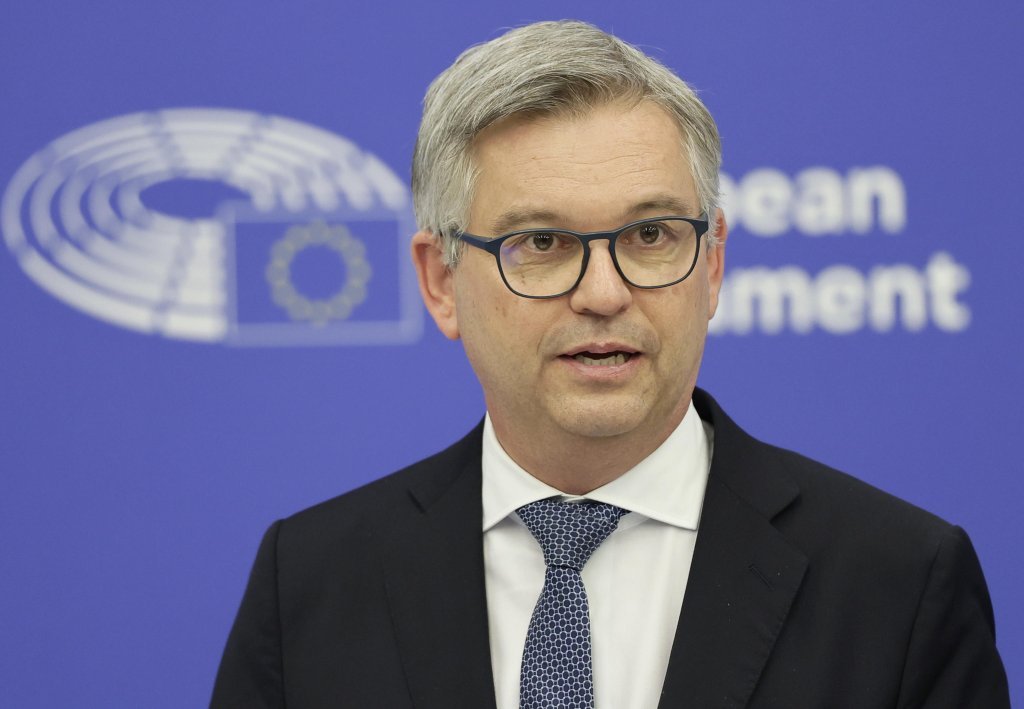
Monitoring public online activity could help authorities identify a developing movement before large numbers of people reach a dangerous crossing point. But it also raises questions about privacy, freedom of expression and the distinction between inaccurate information, personal testimony, legitimate migration information and evidence of coordinated mobilization.
Early-warning systems would need to be accompanied by rapid and accessible information about legal rules and physical risks. Monitoring alone would not address the economic and political pressures that made the online claims persuasive.
Social media was most likely neither the sole cause of the Ceuta crossings nor an incidental backdrop. Online posts and videos appear to have influenced how some migrants understood the border, the legal position and the risks of the journey. They may also have contributed to the timing and concentration of the movement.
While the deaths cannot be attributed to social media alone, the episode demonstrates how digital information can form part of the infrastructure of migration -- and how quickly a rumor can become a mass movement at a dangerous physical border.
Read AlsoCeuta: EU calls borders a 'shared European responsibility'
With AFP, AP, dpa and Reuters