
In this mini series, InfoMigrants has selected three movies which show the impact of migration on women and their path to rebuilding their lives. Released in French cinemas in June, the film 'The Stranger' ("L’Étrangère" in French) depicts a Syrian refugee’s life in Bordeaux through a love story. (Part two in a series of three)
In one of the most poignant moments of the film 'The Stranger', directed by the Franco-Syrian director Gaya Jiji, the refugee Selma Nassar (Zar Amir) moves into her new "home" in Bordeaux, France. The underground room is dark, and the feet of passersby can be seen from the grated windows up above. Yet Selma’s green eyes only reflect enchantment.
Settling into her new space, she opens her phone and plays a song by the Arab diva Asmahan, whose nostalgic voice fills the room like honey.
The year is 2016. Selma is one of the million refugees who reached Europe after fleeing the civil war in Syria. From fighting with another migrant as they struggle to get out of the sea, to fighting for the right to asylum, Selma gradually builds a new life for herself in Europe.
The audience learns she left Syria after being summoned multiple times by the regime for questioning. Her husband Iyad (Amr Wake) has been languishing in a Syrian prison for years and she doesn't even know if he is still alive. She focuses on bringing her young son to live with her in France.
Read AlsoFilm: ‘The Lion at My Back’ shows the resilience of migrant women
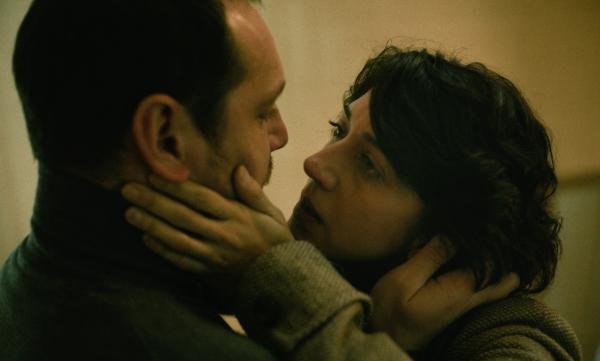
The many obstacles she faces only reinforce Selma’s determination. "You will be able to live now," says her lawyer Jérôme Delaunay (Alexis Manenti) when she informs him that the OFPRA (French Office for the Protection of Refugees and Stateless Persons) accepted her asylum request. At that point, she realizes she is in love with him.
The film is not only a portrait of a Syrian refugee, but of a woman’s quest for independence and the fulfillment of her desires. InfoMigrants spoke to Jiji about her choice to make a film about migration through the prism of a love story.
InfoMigrants: Many films have shown migration through administrative obstacles. Why did you decide to approach the subject through a love story?
Gaya Jiji: I wanted to treat the subject differently and show the psychological, sentimental, and intimate journey of these people, because that exists. In films, these people are often reduced to their refugee status or their journey. Yet they still have their desires, feelings, intimacy, dreams, and a desire to live, not just survive. Refugees have a difficult administrative path, which leaves an impact on everything they do daily. They also have an inner life common to any person.
The film’s opening scene literally plunges the audience into Selma’s migration journey by showing her underwater, gasping for breath and fighting with another female refugee as they both struggle to reach land. Is there a symbolic meaning to this scene?
There is a realistic aspect in this scene which shows what many immigrants experience during their journey. Yet there is also a symbolic dimension which is accentuated by the way the action is filmed. When Selma is drowning in that dark sea, she fights with another woman who could be herself. To go into exile, one must "kill" part of oneself to build another. We leave behind our country, our memories, the people we love, the experiences we have lived through; all of that becomes distant. Reconstruction means maintaining a distance with all of this and building another part of oneself. It can be a difficult path.
Read Also'My people need support': An exiled Iranian artist and activist's fight from France
As she travels along the Balkan route, Selma is finger-printed in Hungary, even though she wants to go to France. Why did you choose to show the consequences of the Dublin procedure, which requires asylum seekers to file for protection in the first country that registers them?
I found that there was an absurdity in this procedure. People must leave their fingerprints in the first country where they are arrested, even if those countries – like Hungary – don’t want them. It complicates the asylum process later when they leave for other countries.
On another level, fingerprints represent our identity; they are specific to each person. When this woman realizes a part of her body will be used against her, she self-mutilates [by cutting her fingertips with a razor] and becomes a stranger to her own body. That is why she later wants this body to be desired and loved.
Selma must also contend with patriarchy, which extends its control over her even when she arrives all alone in Europe. How did you intend to show this form of domination in the film?
Of course, it exists. There is the Syrian family which helps her but under certain conditions and rules, which is why she leaves. There is a masculine domination over her, and that’s why she decides to leave their home. For me, she is a woman who becomes more determined the more she is told "no."
The situation with her husband is more complex. He has survived a terrible experience in prison, and when he realizes that his wife has had a relationship with another man, he does not react with violence. He leaves and says she can join him, saying "if you want." He implies that she no longer needs to be loyal or feel guilty because of him. He leaves the household so that she can choose.
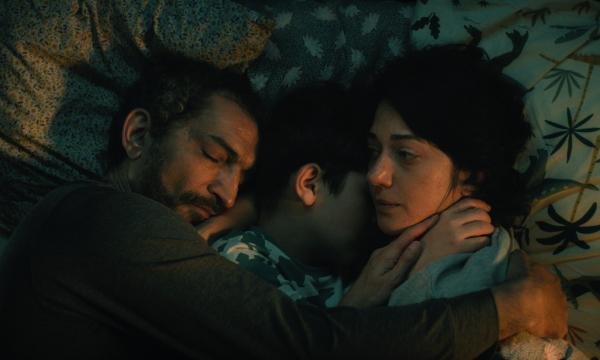
The end of the film is ambiguous and one doesn’t know if she will choose her husband or Jérôme…
The question isn't whether she will live with her husband – which I think is impossible; their reunion is impossible – or if she will continue her love story. The real question is the journey she made, which is a story of liberation. In the final shot, we see the sun and light on a beach. The dark sea she was drowning in at the start is now behind her and replaced by a luminous image. Each viewer can imagine the ending they prefer, but it’s really a story about the emancipation of a woman.
The film also traces Selma's path from invisibility as an undocumented migrant to becoming visible – to herself and to others. Where does the path to reconstruction begin?
She is invisible at the start of the film. When she takes the tram, the city is blurry because it doesn’t exist for her yet, and she doesn’t exist for the city. She works in offices before the employees arrive or in a restaurant where she isn’t allowed at the counter. This is the case for many migrants who don’t feel visible to society. She becomes visible through her struggle and through this love story which is revelatory for her. When the lawyer tells her, "You are a brave woman," it’s as if she realizes it for the first time. She feels guilty for leaving her son, but the lawyer helps her see her actions as heroic. This is the moment she truly becomes visible.
Read AlsoAnatomy of a migratory route: 'I was a Stranger' highlights the stories of refugees
How did you choose the actress Zar Amir who plays Selma, and how did her own migration shape her performance?
I chose Zar after seeing her in the film Holy Spider by Ali Abbasi, a role for which she won the Cannes Film Festival Award for Best Actress. She is Iranian but I saw the character of Selma in her. I was fascinated by her acting and by her face. I saw my character in her, which I didn’t see in any other Syrian actresses or other actresses from the Arab world. I wasn’t looking for an actress who went through the same events as Selma. I chose Zar for her acting, her physique, her gestures, her look, all of it.
Her past as a migrant helped. It brought us closer while we were filming. This is what we have in common: we both left our countries behind us. It also helped her because she went through this process, so she had to relive things she already experienced.
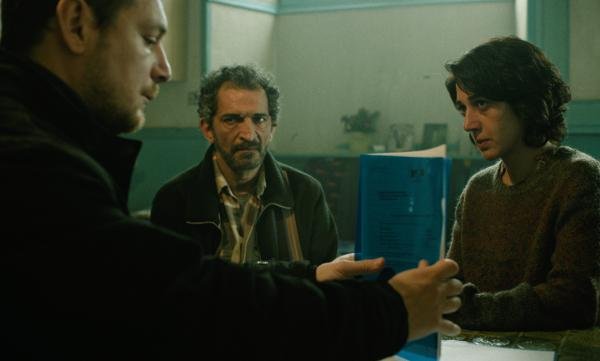
The Syrian regime inflicted different kinds of violence on Selma and her husband Iyad, who go on to share their stories. What inspired you to talk about their experiences in your film ?
I know people who have had these experiences and of course it inspired me a lot. I gathered many accounts for this film, whether it was people who underwent the journey themselves or gone through the process of requesting asylum or been political prisoners in Syria.
This film is part of a trilogy, beginning with "My Favorite Fabric," continuing with "The Stranger" and ending with a third film that you are currently at work on. How does the last film complement the previous two?
The last film is a period film set in Syria in the late 1980s. It is a film about childhood and nostalgia. While the first two films deal with war and exile, the last one is a return to childhood with a contemporary aspect that explains what happens later in the country.
Will certain scenes be filmed in Syria?
I hope so. Maybe not the entire film. It really depends on the conditions of the production and funding. I will film exterior scenes there for at least a week if all goes well.
To end on a personal note, do you feel the need to return to Syria yourself?
No, I don't think so. Syria is becoming more and more distant; my life is here in France now. Homeland is the place where we find safety and the people who make up our lives. Syria represents my childhood and adolescence, but my life is here now.