
Dozens of Moroccan families remain at the Ceuta border searching for missing relatives after last week's mass crossing that left as many as 88 dead. While around 70,000 migrants have returned, at least 2,000 remain in the Spanish enclave -- including roughly 1,000 unaccompanied minors whose fate remains uncertain.
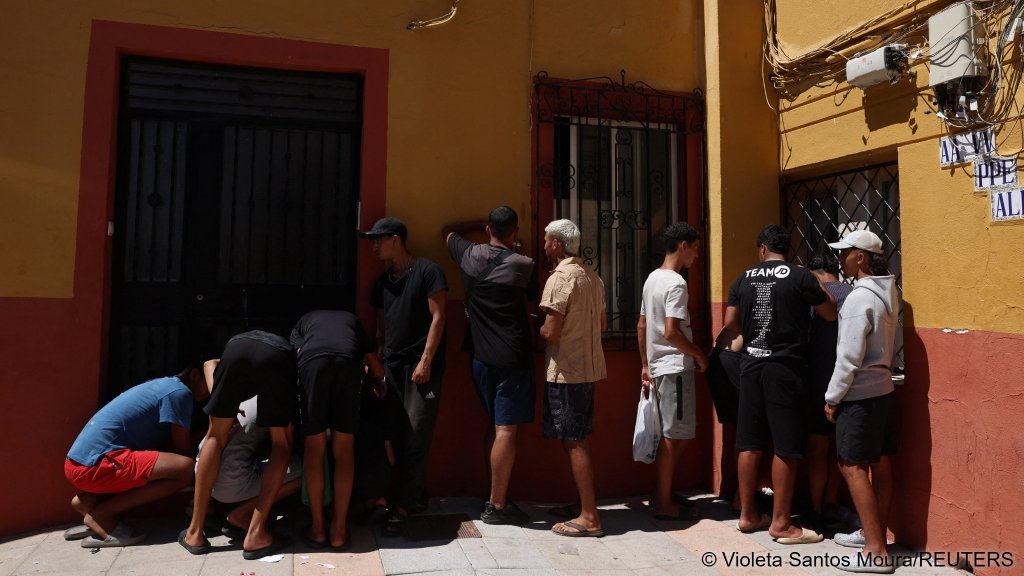
On the Moroccan side of the border with Spain's Ceuta enclave, relatives stand for hours in the heat, holding printed photographs above their heads. They stop each returning migrant, one by one, asking the same desperate question: "Have you seen my son? My daughter? My brother?"
Some families have been reunited with their children. Others have learned their loved ones died trying to swim around a breakwater barrier. But for dozens more, there is only silence -- and the agonizing uncertainty of not knowing whether their family member is alive, detained, or among the dead.
"I have been looking for my son for five days now," said Ibtissam Chari, whose 24-year-old son Rayan crossed into Ceuta with friends after hearing rumors that the border had opened. "He called me when he arrived, and since then I haven't heard anything from him."
Another woman stood silently facing the border fence. She has heard nothing from her 12-year-old son, who crossed with his older brother. Only the older one returned. "I have nothing else to do but come here and wait," she said, speaking on condition of anonymity to protect her children. "I spend all my days here. I will come back tomorrow again."
Read AlsoCeuta: Concern over unaccompanied minors and young people
Thousands still missing
Between July 30 and August 1, an estimated 72,000 migrants -- mostly Moroccans, but also people from sub-Saharan Africa -- crossed into Ceuta, one of Spain's two North African enclaves. It was the largest single migration event in Europe's recent history.
As of August 5, Spanish authorities confirmed that 77 people died on the Spanish side of the border, most by drowning as they tried to swim around a maritime barrier. Morocco's interior ministry reported 11 additional deaths on its side, all but one by drowning. That brings the total confirmed death toll to at least 88.
But Ceuta's regional government says its morgue received 88 bodies -- including earlier drownings from the preceding two weeks -- and local Civil Guard unions estimate approximately 100 deaths.
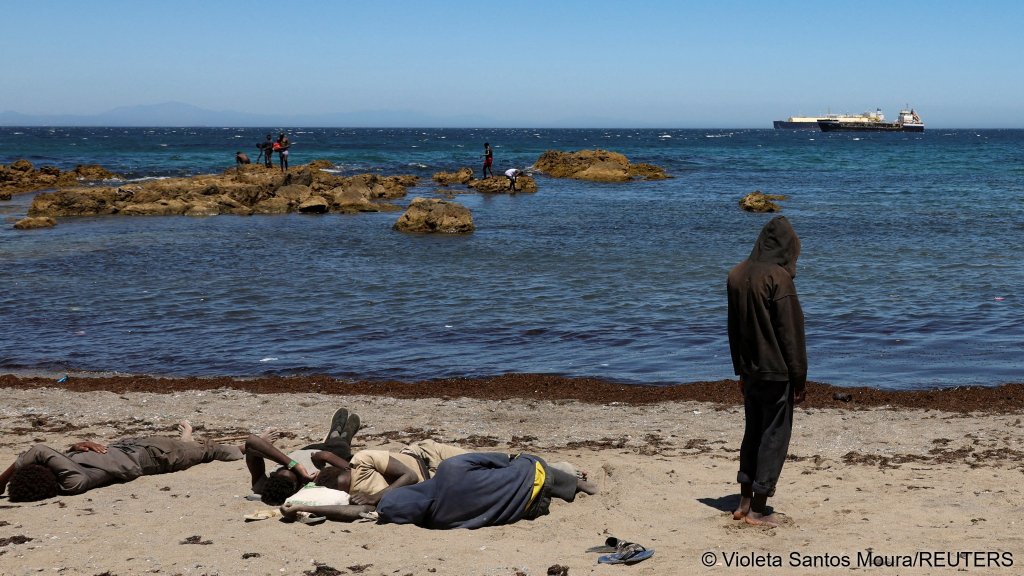
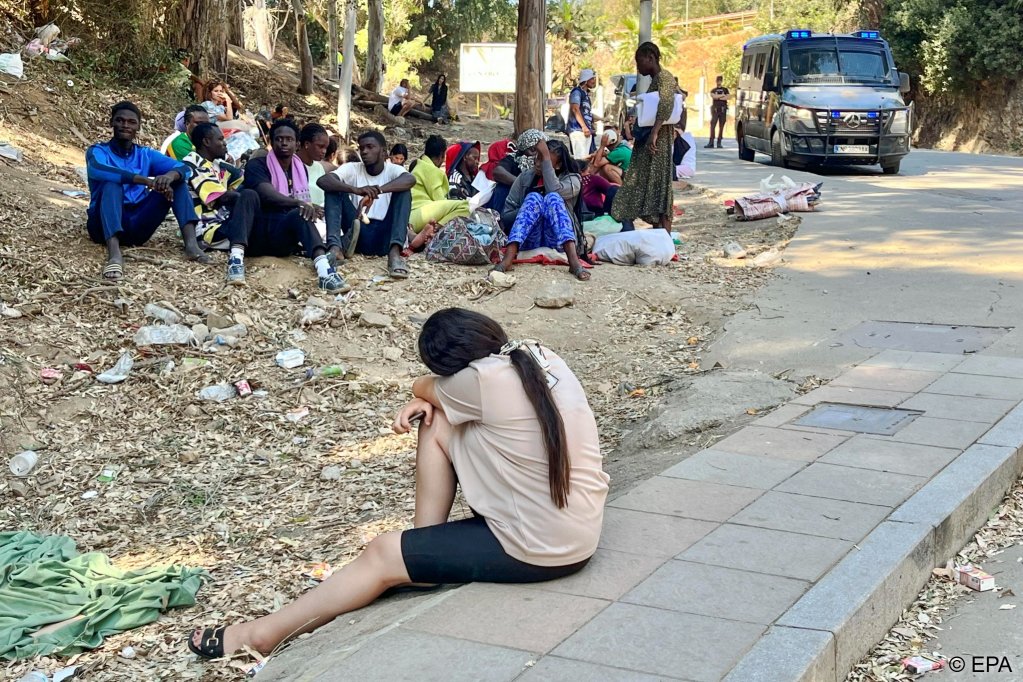
Of the 72,000 who crossed, around 70,000 have returned to Morocco, either voluntarily or after being expelled by Spanish authorities. Approximately 2,000 remain in Ceuta, including an estimated 800 to 1,100 unaccompanied minors -- children and teenagers who arrived without parents or guardians.
Spanish law prohibits expelling minors, but their fate remains uncertain. Many are sleeping in forests, on beaches, and in makeshift camps with limited access to food, water, shelter, and sanitation.
Read AlsoFact checked: The Spanish regularization campaign did not drive the 60,000+ arrivals in Ceuta
Names behind the numbers
While officials debate death tolls, families are searching for specific people -- sons, daughters, brothers, sisters -- whose whereabouts remain unknown.
Omar Lotfi, 24, left his hometown of Dar Bouazza, near Casablanca, on July 31, hoping to reach Ceuta. He was last seen in the Moroccan border town of Fnideq. Since then, nobody has been in contact with him, his sister Mariem told CNN.
"We do not know where he is, whether he is safe, whether he was taken to a hospital, detained, or if something else happened," Mariem said. "The uncertainty has been devastating for our family."
The family has contacted hospitals, aid groups, and authorities on both sides of the border. "Omar is not just another missing person," Mariem said. "He is a beloved son, brother, and friend. He has dreams, hopes, and a family that loves him deeply. Every day without any information about him brings more fear, pain, and uncertainty."
Nada Al-Shiba, 14, was heading to the Ceuta border crossing with her mother when they got separated. Nada went through the border; her mother did not and ended up returning to Morocco. Nada's uncle Yousef told CNN he is "very depressed, very stressed" about her fate.
"I have no idea where she is and if she's OK or not," Yousef said. His brother Mohammed, Nada's father, has been traumatized ever since. "I cannot blame Nada for this because all the youngsters in Morocco know that a better future lies in migrating to Spain," he added.
Read AlsoLife in limbo: Migrants stranded in Ceuta after mass crossing
How the situation unfolded
The mass arrivals started to gather pace on Thursday, July 30, after online rumors spread on Facebook groups and social media that the border was open and anyone who entered would not be returned. One viral post claimed: "Spain prohibits the return of those who swim." Another video circulated with audio saying: "Whoever enters by sea will not be returned."
Tens of thousands of people -- many from Morocco's impoverished inland regions, where youth unemployment is high and economic opportunities are scarce -- converged on the border town of Fnideq. Some waded through shallow waters; others attempted to swim around a 500-meter breakwater barrier extending into the Mediterranean Sea. Many were crushed in stampedes trying to scale fences.
By Friday, July 31, Spanish authorities had deployed the military to restore order. A floating containment barrier was installed along the maritime border. More than 48,000 of those who crossed returned to Morocco within 48 hours, either voluntarily or after being expelled.
But the human cost was already mounting. Bodies were recovered from the sea. Families began receiving panicked calls -- or no calls at all.
Read AlsoFact checked: The Spanish regularization campaign did not drive the 60,000+ arrivals in Ceuta
Identifying the dead
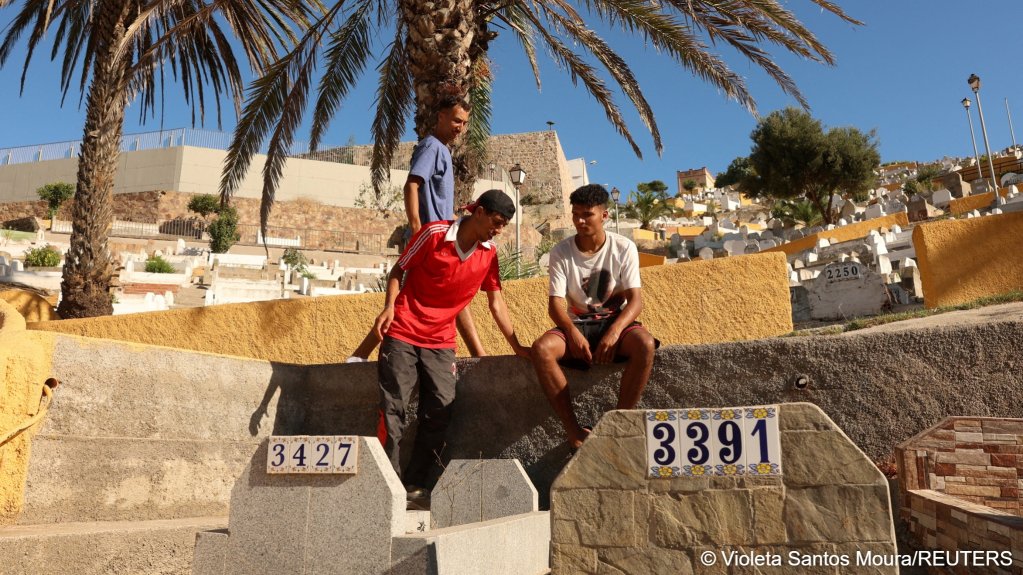
In Ceuta's military hospital, a makeshift macro morgue was established within 24 hours, with cold storage rooms installed to hold the recovered bodies. Six forensic experts -- two from Ceuta's Legal Medicine Institute and four reinforcements from mainland Spain -- are working around the clock. Spanish officials stated: "We have never recovered so many bodies."
As of August 5, 77 autopsies had been completed. Only two individuals had been identified -- both were already registered in Spain's fingerprint database.
"To be able to identify the rest, the fingerprint data will have to be sent to Morocco for their possible recognition," Spanish forensics experts said in a statement. DNA samples are also being collected from bodies and will be compared with genetic samples from families.
The full identification process is expected to take at least another week, possibly longer.
Read AlsoSpain: Migrant death toll nears 100 this week, en route to Ceuta and Balearic Islands
Social media helps locate some missing
While Facebook groups initially fueled the situation by spreading rumors about open borders, many have since pivoted to helping families find missing relatives.
Pages like "El Faro de Fnideq" and "Tetuán Tube" are now filled with posts showing photos of missing migrants, accompanied by descriptions of what they were wearing, their physical characteristics, and last known locations.
"If anyone has seen this girl in Ceuta or Castillejos, please let us know. Her family is going crazy," one user, Hiba Nakaax, wrote in the Facebook group Fnideq Bab Sebta.
The appeals have worked in some cases. After photos of missing migrants were posted, local networks reported that "a large number of young people" had been located and reunited with their families.
But for many, the search continues.
Read AlsoFact check: Did disinformation trigger the Ceuta crisis?
What happens next?
The Spanish Civil Guard has opened a missing persons office at the customs house in El Tarajal, Ceuta, where families can file reports. An email address has been provided for families to submit information, including physical descriptions, medical operations, scars, tattoos, and personal belongings.
As of August 5, approximately 50 missing persons reports had been filed through official channels -- though dozens more are believed to be missing but not yet formally reported.
Meanwhile, the Moroccan Association of Human Rights has called on both Moroccan and Spanish authorities to open "independent, urgent and transparent investigations" into the deaths at the crossing and to help "grieving families to know the fate of their children and recover their bodies for dignified burial."
Save the Children has urged Spanish authorities to prioritize child protection over politics. "No child should spend a single night without a safe place to sleep, specialized care, or an assessment of their protection needs," said Jennifer Zuppiroli, migration specialist at Save the Children in Spain. "Ceuta cannot be left to face this alone."
"Any decision affecting an unaccompanied child must follow Spanish law," Zuppiroli added. "A child does not stop being a child simply because they crossed a border."
Read AlsoEU agrees to send border aid to Spain after Ceuta talks
With AFP, AP and Reuters