
German and Serbian authorities have arrested three Syrian nationals suspected of leading separate migrant-smuggling networks operating along the Mediterranean and Balkan routes, in a Europol-coordinated operation involving 240 officers and searches in Saarbrücken and Belgrade.
German and Serbian authorities have arrested three Syrian nationals suspected of holding senior roles in two international migrant-smuggling networks, in a coordinated operation supported by Europol.
The networks are believed to have organized the smuggling of more than 900 migrants into the European Union along the Central Mediterranean and Western Balkan routes. Europol said all three suspects had been designated as "High Value Targets" because of their alleged roles in coordinating large-scale operations across several countries.
The action, carried out on August 5, targeted suspected smuggling structures linked to Libya and the Western Balkans. German authorities searched six properties in and around Saarbrücken, including a large warehouse, while Serbian police arrested two suspects in Belgrade under international warrants. Around 240 officers were deployed in Saarbrücken.

Europol’s European Center Against Migrant Smuggling supported the investigation by facilitating intelligence-sharing, identifying links between separate cases, and coordinating operational activity on the day of the raids. Eurojust also established a joint investigation team between German and Serbian authorities to support the cross-border proceedings. The operation was conducted as part of the EU’s EMPACTcycle, which targets serious and organized international crime.
Read AlsoGermany: Migrant smuggling down almost 42 percent
Dangerous crossings from Libya to Lampedusa
The Traunstein Public Prosecutor’s Office and the Munich Federal Police Criminal Investigation Unit allege that one international group transported at least 125 predominantly Syrian nationals from Libya to the Italian island of Lampedusa from October 2024 onward. In some cases, migrants were allegedly taken onward to Germany.
Investigators say the journeys were conducted in unseaworthy and overcrowded boats. Up to 61 people were reportedly placed on individual vessels without basic safety equipment, including life jackets. The authorities allege that those organizing the crossings knowingly accepted the serious risks to passengers in order to maximize profits.
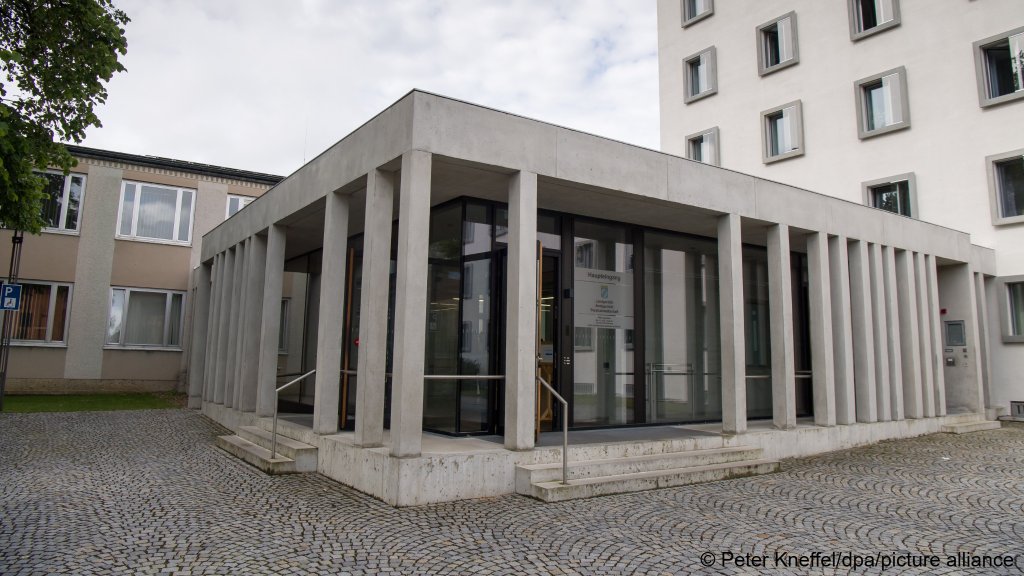
According to the German investigation, migrants paid between 6,500 and 7,800 euros per person. The group is believed to have generated at least 875,000 euros from five smuggling operations involving the 125 people.
A 26-year-old Syrian national was arrested in Saarbrücken. Authorities allege that he was the principal suspect in this branch of the investigation. He had previously come to the attention of German border police during several checks since February 2025.
Investigators also accuse him of attempting to enter Germany unlawfully from Austria in February 2025. During a check at the Walserberg border crossing, police allegedly found suspected counterfeit currency with a nominal value of 77,350 euros. Authorities say he was later stopped on three further occasions in Germany carrying additional suspected counterfeit money, with nominal values ranging from almost 30,000 euros to approximately 100,000 euros.
Read AlsoGermany: Bavarian court sentences two men for migrant smuggling
Balkan route network
A second investigation led by the Landshut Public Prosecutor’s Office, which also deals with large-scale smuggling cases in Bavaria, resulted in the arrest of a 31-year-old Syrian national in Serbia. He was detained under an international arrest warrant after several years of investigative work.
German authorities accuse him of acting as a leading figure in a smuggling organization associated with the so-called Al-Sarawi clan. Europol had classified him as a "High Value Target," reflecting his alleged position within the network.
Investigators allege that, between April and November 2022, the suspect helped organize at least 17 smuggling cases involving a minimum of 152 migrants, most of them Syrian nationals. He is accused of recruiting prospective clients in Serbia, negotiating prices, and coordinating transport along different stages of the central Balkan route, in some cases as far as Germany.
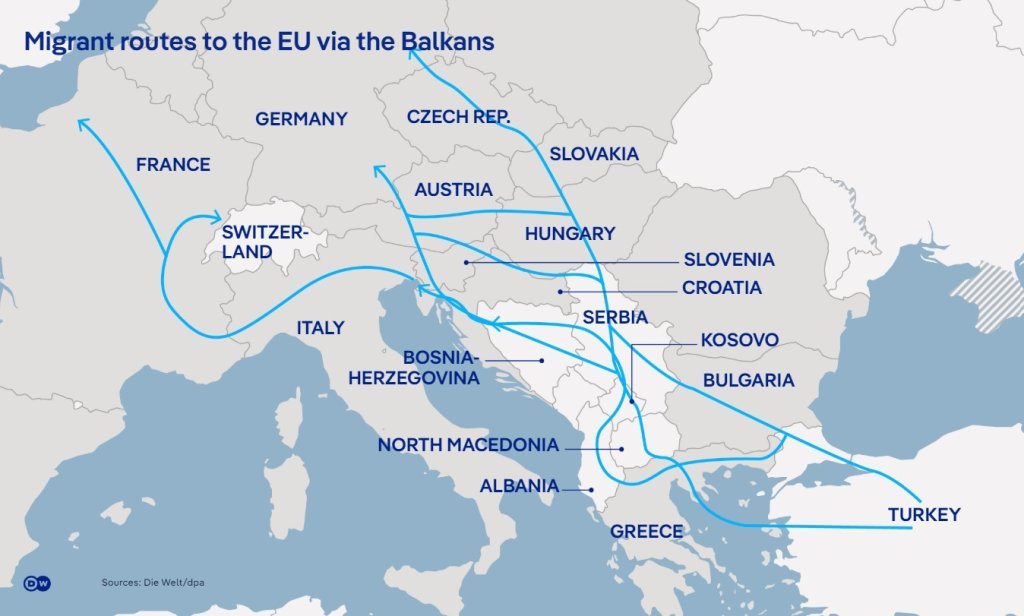
Serbian police also arrested a 32-year-old Syrian national in Belgrade on behalf of German prosecutors in Weiden. He is accused of playing a central role in a separate network that allegedly transported at least 625 people in 37 cases between June 2023 and June 2024.
According to investigators, the network charged between 2,000 and 10,000 euros per person. Migrants were allegedly moved from Serbia through Hungary, or from Bosnia and Herzegovina through Croatia, before being transported onward by car, van, or truck through countries including Slovakia, the Czech Republic, Poland, and Austria.
German authorities say the 32-year-old suspect was mainly based in Serbia, where he allegedly brought migrants to the area around Sombor and handed them over to other members of the network. He is also accused of personally escorting selected groups across the Serbia-Hungary border.
Five other alleged members of the same network were arrested in Germany, the Netherlands, and Bosnia and Herzegovina during a coordinated operation in 2025.
Read AlsoBalkans: Europol arrests five suspected migrant smugglers
The 'Traunstein model'
All three investigations were conducted under the so-called "Traunstein model," a specialized approach to combating cross-border organized crime. First introduced at the Traunstein Public Prosecutor’s Office in 2018, the model has since been adopted by other Bavarian prosecutors’ offices operating near Germany’s international borders.
The approach brings together specialized prosecutors, police investigators, and international partners at an early stage. It is designed to move beyond the arrest of drivers and other low-level facilitators by identifying organizers, financial structures, and links between apparently separate smuggling cases.
The authorities said the investigations also involved cooperation through joint investigation teams and Europol’s Operational Task Force framework. Europol can support such operations by analyzing large volumes of cross-border data, coordinating the exchange of operational information, and deploying specialists for real-time intelligence support or digital forensics.
The operation comes as several indicators of irregular migration have declined. Germany’s net immigration fell by 45 percent in 2025, to approximately 235,000 people, according to the Federal Statistical Office. Around 1.48 million people moved to Germany during the year, while approximately 1.25 million left the country. Across the EU, Frontex recorded a 26 percent decline in irregular border-crossing detections in 2025, including a 42 percent fall along the Western Balkan route.
German authorities have separately reported a 41.9 percent decline in recorded migrant-smuggling operations. That figure should be interpreted cautiously, however: recorded cases reflect enforcement activity and detected operations, not the total volume of smuggling, and criminal networks may respond by shifting routes, methods, and points of departure.
The figures suggest that overall irregular movement has fallen, but that organized smuggling networks remain active and capable of operating across multiple jurisdictions. German authorities have said searches in the Saarbrücken area were still ongoing and that further information would be released once investigators had secured verified findings.
Read AlsoEuropol: Seven people arrested across three countries in migrant smuggling crackdown
With dpa