
Thousands of migrants who remain in Ceuta are facing overcrowded facilities, limited access to basic necessities and growing uncertainty about their future as Spanish authorities respond to the aftermath of last week's mass arrivals. Many unaccompanied minors in the small territory are left without adequate food or shelter, while struggling to find ways to continue their journey to mainland Spain. Some also say that smugglers are demanding large sums of money to facilitate the crossing.
Days after at least 60,000 people managed to cross the border from Morocco into Spain’s North African enclave of Ceuta, thousands of migrants who remain behind are facing overcrowded facilities, limited access to basic necessities and uncertainty over their future, as Spanish authorities work to manage the aftermath of the mass arrivals.
Many unaccompanied minors are also finding themselves in the small territory without accommodation and food, struggling to find ways to continue onwards to mainland Spain.
Spanish officials estimate that between 3,000 and 5,000 migrants remain in Ceuta after the majority of those who crossed into the territory returned to Morocco voluntarily, or were pushed back by police over the border.

On August 4, following a press conference with Spanish Interior Minister Fernando Grande-Marlaska, Spanish newspaper El Pais reported that the Interior Ministry had now upped their estimate of arrivals to 72,000 and claimed that around 70,000 of these people had been returned. Several other news agencies, including Reuters and the BBC had been reporting estimates similar to these for at least a day.
The crossing resulted in at least 72 deaths on the Spanish side of the border, estimate Spanish authorities, mostly in the waters separating Morocco and Ceuta, while Moroccan authorities reported 11 additional deaths.
Read AlsoCeuta: EU calls borders a 'shared European responsibility'
Who are the migrants remaining in Ceuta?
The people still in Ceuta represent a diverse group of migrants, including large numbers of minors, as well as adults from Morocco and other countries. Local officials said the enclave was processing around 860 migrant children, who are entitled to special legal protections under Spanish law.
Among those remaining are people from Sudan, the Palestinian territories, Afghanistan and several African countries. Many Moroccan adults have either returned voluntarily or have been expelled by Spanish authorities, leaving a population of migrants who are more difficult to remove under international and Spanish legal protections.
Under Spanish law, unaccompanied migrant children must receive protection and care from authorities. Adult migrants can apply for asylum, but those whose applications are rejected may face removal procedures. Moroccan nationals generally face a high threshold for receiving humanitarian protection.
Ceuta’s two migrant reception facilities, one for adults and one for minors, have reached their limits. The city’s main migrant center, designed to accommodate around 600 people, is now said to be full.
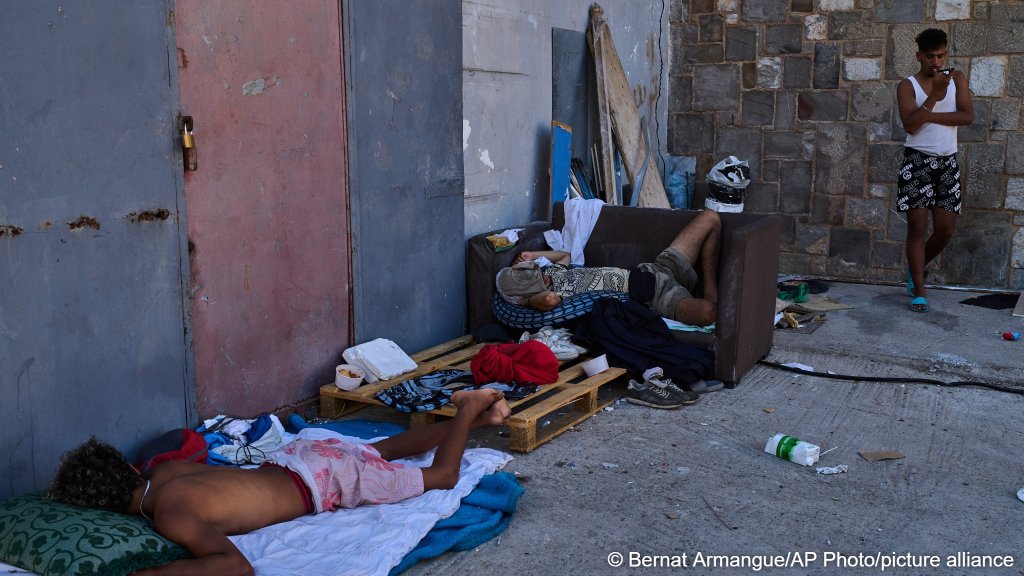
Smugglers demand hefty sums to facilitate journeys to mainland Spain
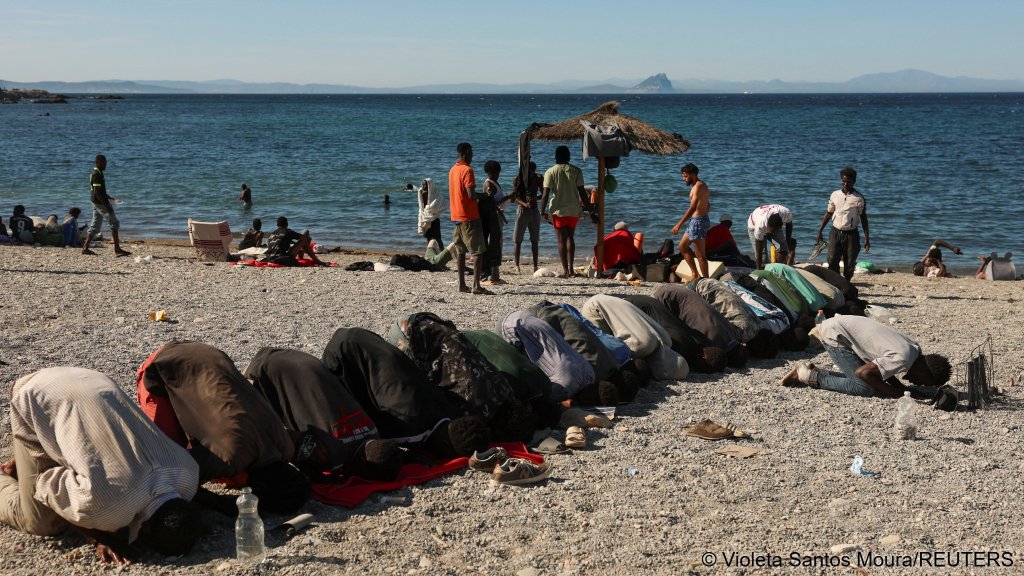
Local authorities have struggled to provide shelter for the number of people still in the enclave, with some migrants sleeping outdoors on beaches and hills around the territory.
"Here I slept the first time on the street. I woke up every two hours, see people running, I see police…that was so bad…" 15-year-old Omar, from Morocco, told DW. He traveled to Ceuta alone.
"I saw a lot of people go back to Morocco because the police was like, ‘go!’ You don’t have money, life for minors in Morocco, it’s so difficult, even for older people just to get work, that’s so hard," Omar explained. After just several days in Ceuta his hopes and expectations were shattered.
"They say with minors, Spain gives minors everything, but we came here and there was nothing…no food, no support, no anything. They will hit young take you back to your country."
He walked around Ceuta knocking on doors of several migrant centers for minors. One didn't answer while at another he was told by someone staff will not speak with him.
Omar explains there are smugglers in Ceuta that will take him to mainland Spain, but that it is too expensive.
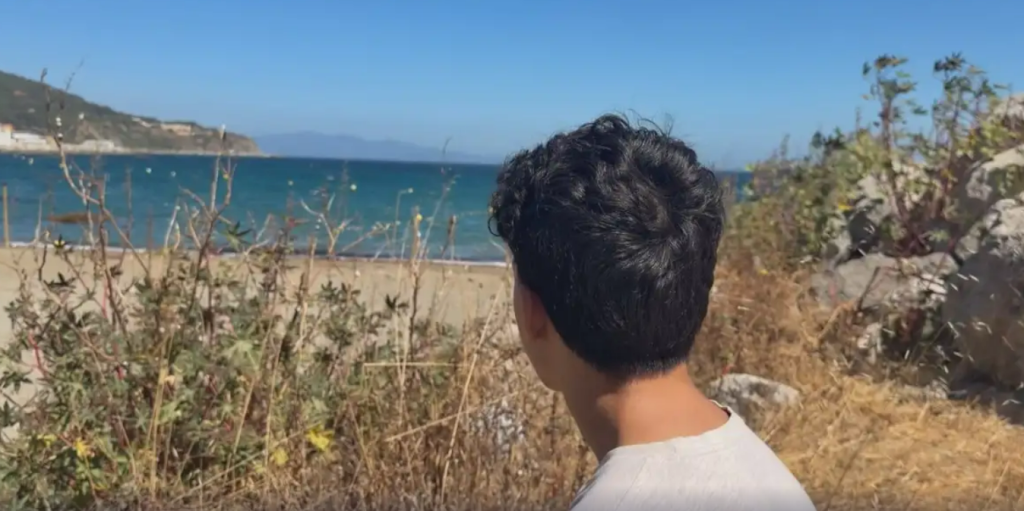
"I will get you there, and you will give me the money, and literally you need to pay lots of money and then they can take you, or just push you into the water and they just leave you there." Nevertheless, Omar is hopeful that one day he will reach mainland Spain.
"There are nice people, maybe they can take you, or maybe there’s other options…I’m still searching, but as soon as I find any option that will take me, I will go right away."
Read AlsoAlone in Ceuta, 15-year-old Moroccan teen faces uncertainty
Ceuta migrant reception system has 'collapsed'
Footage from the Reuters news agency showed groups of migrants resting on El Trampolin beach, using towels for protection against the wind while police and military vehicles monitored the surrounding area.
The situation has placed significant pressure on Ceuta's authorities. Local official Alberto Gaitan said the administration was handling hundreds of minors requiring protection and care, while Ceuta’s regional leader Juan Jesus Vivas warned that existing reception systems had effectively "collapsed."
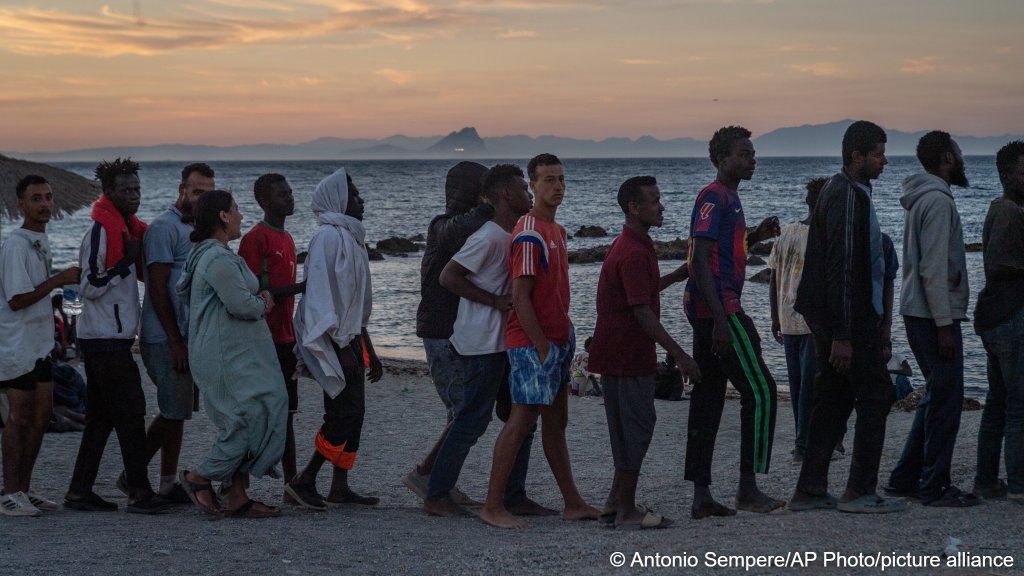
The Spanish government has moved to return many of those who crossed, saying that cooperation from Morocco allowed most returns to happen quickly. Spanish Interior Minister Fernando Grande-Marlaska said Morocco provided police support without conditions, while Morocco’s Interior Ministry blamed the mass crossing on misinformation spread through social media, human trafficking networks and confusion over Spanish legal decisions.
Read AlsoUnderstanding Ceuta: A contested borderland in Europe’s African enclave
Sudanese migrants' journey to Ceuta began years ago
For some migrants, the journey toward what they describe as "European paradise" did not begin last week.
In an interview with InfoMigrants Arabic, Mohamed Nawai recounts a journey that began in 2021, when he left Khartoum, Sudan for Libya in search of a route to Europe. He says he was detained for three years in a detention center before securing his release by paying 3,000 Libyan dinars (approximately 410 euros). Then he began trying to reach Ceuta.
"We have been without food or water for five days," Nawai says, "since we arrived in Ceuta by swimming…The conditions are extremely harsh," he said, explaining that some of his companions have lost consciousness because of hunger and thirst.
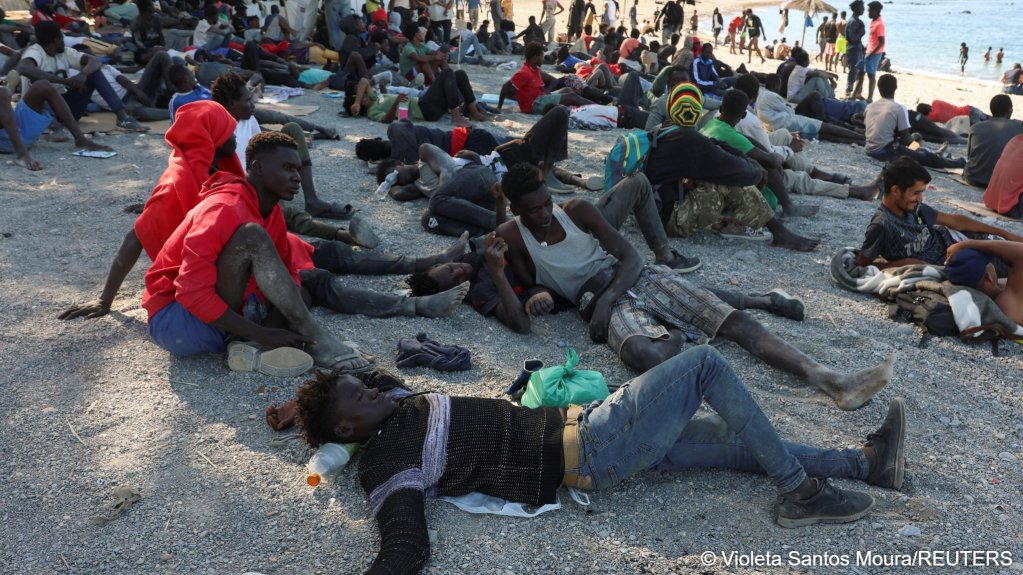
"We are currently suffering from hunger and thirst, and some of the young men can no longer endure these conditions," he continues. According to Nawai, several members of the group went to nearby shops to buy food and water but were arrested and deported.
Many of those who reached Ceuta remain gathered near the reception center, hoping their asylum applications will be accepted and that they will not be deported.
Read AlsoMorocco: Families search for those missing after attempting to swim to Ceuta
'We are now trapped'
Badr al-Din Mantou, another Sudanese man who also arrived in Ceuta by swimming, told InfoMigrants Arabic that "The situation has become more complicated after the recent developments." According to Mantou, more than 800 Sudanese, along with around 20 Yemenis, 10 Egyptians, and dozens of migrants from other African countries, including Niger, Nigeria, and Chad, remain gathered near the reception center. He says they have been living for more than four days in "difficult conditions," without sufficient food or water, while waiting for their asylum applications to be processed.
"We are now trapped, and we have been asked to move to another location near the sea," Mantou says. "But we are afraid because this place has previously witnessed the deportation of large numbers of people. Therefore, we fear that it is a trap to deport us."
Mantou says the army instructed the group to move to an area near the coast, telling them that the Red Cross humanitarian organization would distribute food there.
"We fear being sent back to Algeria, then transferred to desert areas that could threaten our lives," he says. "We are asylum seekers, and we demand protection and respect for our right to submit asylum applications."
Another Sudanese migrant, Hassan, described to InfoMigrants how he crossed into Ceuta. "We saw a group of Moroccans running toward the sea, so we followed them," he says. "There were a large number of them, and we were able to enter Ceuta by swimming. The journey took about twenty minutes."
Hassan says that after reaching Ceuta, they were detained. "We are now inside a bus, and there are ten buses transporting people of different African nationalities. We did not reach the organization, and we were detained."
He says he arrived in Morocco about a year and a half ago and attempted to cross into Europe four times before succeeding in reaching Ceuta during his latest attempt, only to be arrested by the authorities.
According to Hassan, he spent two days in a detention facility. "There are more than a hundred of us inside a container, and the place includes men, women, and children," he says, adding that detainees are living in "harsh conditions" inside the facility.
The line while talking to these Sudanese migrants was frequently breaking up, so it was difficult to ascertain or double check some details of their journeys. InfoMigrants has not been able to independently verify their stories.
InfoMigrants also approached the Spanish Interior Ministry on Monday (August 3) to ask for more details about the conditions the migrants describe, but has not yet received an answer to our query.
With additional reporting by Nada Faroog Abdalfatah Gaber who interviewed some Sudanese migrants in Ceuta by phone for InfoMigrants Arabic.