
Reform UK has announced plans to deploy the Royal Navy and Royal Marines to stop migrant boats in the Channel. But, even if Reform were to win power and enact their plans, whether it can become reality depends on overcoming legal, diplomatic and operational obstacles, including France’s cooperation. So is it possible?
On Monday (August 3), Reform UK unveiled a sweeping proposal to deploy the Royal Navy and Royal Marines to intercept and return migrant boats crossing the English Channel if the party wins the next UK general election. The hard-right, anti-migrant party led by Nigel Farage has described the plan as "the largest military operation" in the Channel "since World War II."
The proposal, dubbed 'Operation Fortress,' would represent one of the most significant changes to Britain's border policy in decades, if it were to be enacted. But military experts, policy and legal specialists and political opponents have questioned whether the main parts of the plan could be implemented in practice without cooperation from the French government or changes to international legal arrangements.
The announcement is also spreading concerns amongst human rights defenders. Meanwhile, Chris Philp, the Conservative shadow home secretary, said that the UK government's priority should be leaving the European Convention on Human Rights if it wants to control irregular migration.
"That would enable us to deport every single illegal immigrant within a week of arrival," Philp told BBC Breakfast. "Either back to their country of origin if possible, or a safe third country, for example Rwanda, if not."
He added this would introduce a "deterrent effect" as migrants would reconsider crossing the Channel if they would be deported immediately upon arrival.
So how could the plan affect migration? And is it even possible under the current laws? InfoMigrants breaks it down:
Read AlsoUK: Thousands of refugees affected by ongoing family reunion suspension
What has Reform UK declared on migration, and how would it impact migrants?
Reform UK says that, if it forms the next government after the general election due by 2029, it would immediately begin deploying the Royal Navy and Royal Marines to stop small boats crossing from northern France.
Under the proposal, vessels carrying migrants would be intercepted at sea and returned to France rather than being allowed to reach British shores. Reform says it first wants an agreement with France allowing migrants to be transferred to a French port. However, the party says that if the French government refused to collaborate, Royal Marines would instead return migrants directly to the French coastline.
"Under a Reform government, within a fortnight, there would be no more boats," Farage declared, launching the policy.
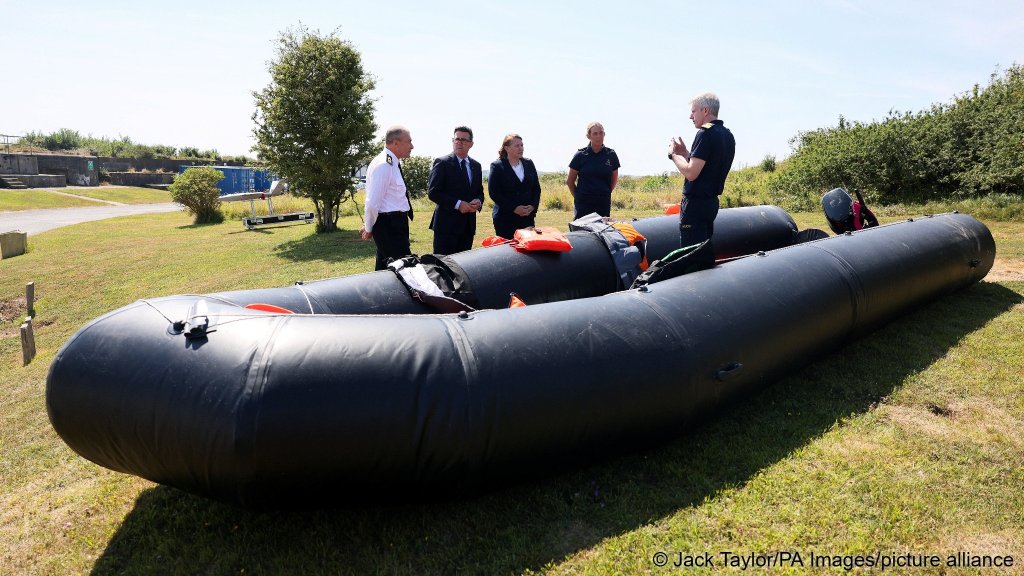
The party argues that removing the prospect of reaching the UK would deter people from attempting the crossing in the first place, and undermine the business model of criminal smuggling networks.
Farage also went on to describe the crossings as a national security issue, while Reform's home affairs spokesman Zia Yusuf said the operation would combine military assets, intelligence and surveillance to monitor the Channel.
The proposal, however, assumes the UK could return migrants to France immediately, an assumption that depends heavily on legal authority and French consent.
On the BBC on Monday, when pushed on this point, Yusuf admitted it was unlikely that the French would consent to this kind of plan, but said he wasn't afraid of getting into an argument with them about this.
In fact, later on Monday, the French government released this statement on their Interior Ministry website: "This would constitute a violation of French sovereignty, as well as a violation of the law of the sea and international law."
A spokesperson for the department told the BBC that measures agreed with the UK, as well as "operations deployed at the local level", had already led to a reduction in crossings so far this year compared to the same period in 2025.*
Why now?
The announcement followed a significant increase in migrants entering the Spanish North African enclave of Ceuta from neighboring Morocco over the past week. The Spanish authorities told InfoMigrants that they estimate between 50,000-60,000 migrants arrived on Friday (July 31), an incident that has further ignited debate across Europe about irregular migration and border security.
Farage cited the events directly when unveiling the policy. "What happened in Ceuta over the weekend shows you just how serious this situation is," he said, though Ceuta is geographically separate from the English Channel, and migrants arriving in Ceuta first need to get to mainland Spain, and then make their way through Spain and France before arriving at the Channel coasts.
The timing also coincides with renewed political debate in the UK over Channel crossings. Though arrivals were more than 42 percent lower during the first half of 2026 than a year earlier, crossings have risen again in recent weeks, including the year's highest daily total of 752 arrivals on July 29.
The announcement also comes during a turbulent political period for Reform, which is facing scrutiny over party finances and donations. The party, which had led national opinion polls for around 18 months, has recently lost that lead amid investigations into donations and financial disclosures involving senior figures. Reform denies wrongdoing, and Farage rejected suggestions the migration announcement was intended to distract from those issues. But rival parties have accused him of deflecting attention from these issues.
Read AlsoUK: Government explores plans to ask asylum seekers to pay back costs of asylum
Who is Reform UK and what do they want?
Reform UK is a right-wing political party led by Farage. He was one of the leading figures behind the UK's Brexit campaign. The rise in the number of boat crossings actually began after Britain had voted to leave the EU, and when they were no longer able to send migrants back to France under the terms of the Dublin regulation. This fact though is often brushed away by supporters of Farage's politics.
Immigration remains one of the party's central political priorities. Reform argues that Britain's current asylum system encourages irregular migration (or as the party calls it, 'illegal migration') and says stronger enforcement is needed to restore border control.
The party also advocates for wider changes to asylum rules, tax reductions, public sector reform and a smaller role for the state in several policy areas. Its latest migration proposals build on longstanding calls to deter Channel crossings by ensuring migrants cannot settle in the UK after arriving by small boats.
What measures does Reform UK want to introduce?
Operation Fortress includes several proposed measures:
- Deploying the Royal Navy and Royal Marines to intercept small boats.
- Returning intercepted migrants to France.
- Creating a joint military and intelligence command to monitor the Channel.
- Expanding surveillance using military and intelligence assets.
- Declaring irregular Channel crossings a national security emergency.
- A formal agreement with France for the transfer of intercepted migrants while maintaining that returns would continue even without French approval.
Farage also pointed to Australia's policy of turning back migrant boats, a policy that has been heavily condemned by human rights advocates and organizations, as an example Reform believes the UK should follow.

Read AlsoUK wins court case over canceled Rwanda asylum plan
How realistic are the proposals?
The proposals are likely to face significant legal and practical hurdles. International maritime law, asylum obligations and the UK's relationship with France would all play an important role in determining whether the policy can go through.
Former British Army officer Andrew Fox, questioned whether the proposal could be implemented legally or operationally, saying the plan "sounds magnificent, provided you know nothing about ships, sailors, France or the law," Agence France Presse (AFP) reported.
Fox argued Britain cannot simply move military vessels into French territorial waters, seize boats or disembark migrants in France without permission from the French government, describing that as "the gap at the center of the policy."
Former Royal Navy commander Tom Sharpe also questioned the proposal, saying deploying naval vessels was "not really where the solution lies."
He added: "There's a lot the navy can do but the idea of ... ferrying people back to France, against French will, to me just doesn't add up," AFP reported.
Sharpe was then interviewed on BBC Radio 4's Today Programme on Monday, where he explained that it wasn't logistically sensible to deploy huge million pound warships with loads of technology on board to be used as a ferry, and that "an actual ferry" or smaller Border Force vessels designed to do the job would work much better. He also pointed out that trying to bring a huge warship alongside a tiny dinghy would not work in a practical sense, let alone the potential dangers and loss of life it could create in trying to do so.
Sharpe concluded saying he believed the plan "lacked quite a lot of substance." He also said that in reality, the British Navy doesn't have so many ships to do this kind of job anymore.
Reform disputes those assessments. Farage said the party was "very confident that our policy of securely picking people up and safely taking them back to France ... falls within other conventions of international law."
Many aspects of the proposal would depend on negotiations with France, interpretations of international law and, before any of that, Reform first winning a parliamentary majority at the next general election.
Read AlsoFrance extends 'one in, one out' migrant swap scheme with UK
How are other parties and countries reacting?
The ruling Labour party has dismissed the announcement as a repackaging of previous immigration proposals and accused Reform of attempting to shift attention away from questions surrounding its finances and scrutiny.
The Labour government has instead focused on increasing cooperation with France to target organized smuggling networks. Earlier this year, the UK agreed a new three-year funding arrangement worth up to 766 million euros to strengthen French enforcement efforts along the northern coastline.
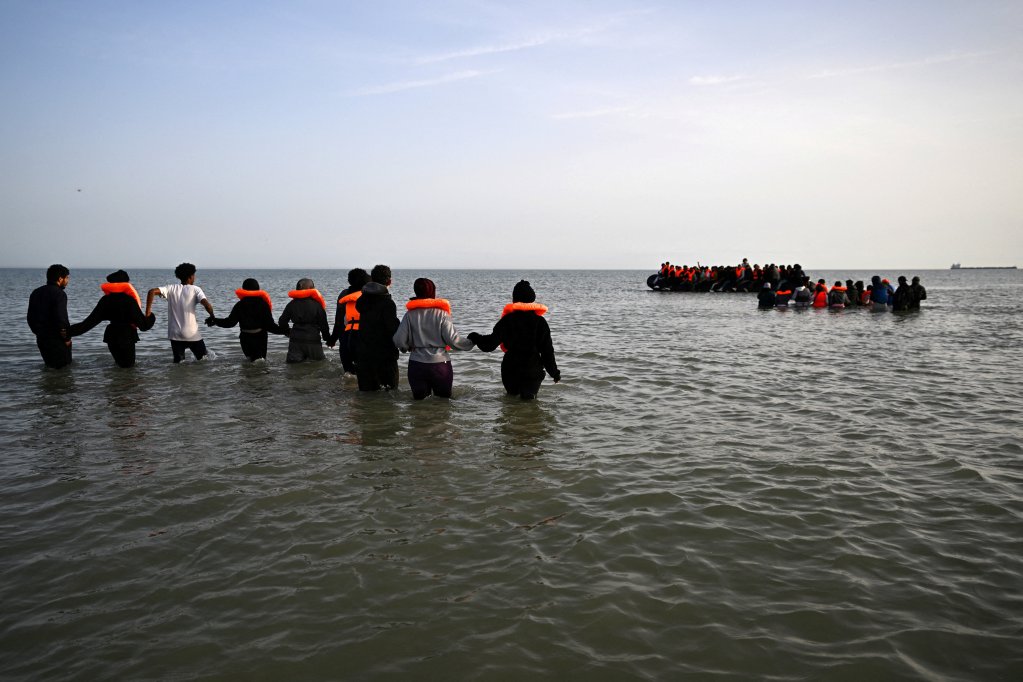
Prime Minister Andy Burnham has pledged to take "relentless" action against Channel crossings while continuing Labour's strategy of working with France rather than pursuing unilateral maritime returns.
France has not indicated any willingness to accept a policy under which British naval vessels could return intercepted migrants without prior agreement. French cooperation would almost certainly be essential for any returns arrangement to operate in practice.
So for now, Operation Fortress remains a political proposal rather than government policy.
*This article was updated on August 4 to reflect the fact that the French government responded to say that they would not accept the British navy unloading migrants on their shores. They said it would be a "violation of the law of the sea and international law."
We also updated the title picture at the same time, to show a picture of Reform UK's Nigel Farage and Zia Yusuf unveiling their plans.