
The border collapse in Ceuta last week was due to "malicious exploitation" of online spaces, with human trafficking networks also playing a role, Moroccan authorities have said. Hundreds of migrants remain in the Spanish enclave on the African continent.
The mass crossing of the Spanish border at Ceuta was driven by "the malicious exploitation of the digital space" and "misleading information," the Moroccan Interior Ministry said in their first statement on last week's incident.
Read AlsoUnderstanding Ceuta: A contested borderland in Europe’s African enclave
They also pointed to "the role of human trafficking networks," and blamed misinterpretation of data, including the recent decision by a Spanish court that banned the immediate return of migrants arriving by sea.
Together, these factors formed "an illusion" that EU territory can be entered easily and "without legal consequences," Rachid Khalfi, spokesperson for Morocco’s Ministry of the Interior, said on Sunday (August 1) in the evening.
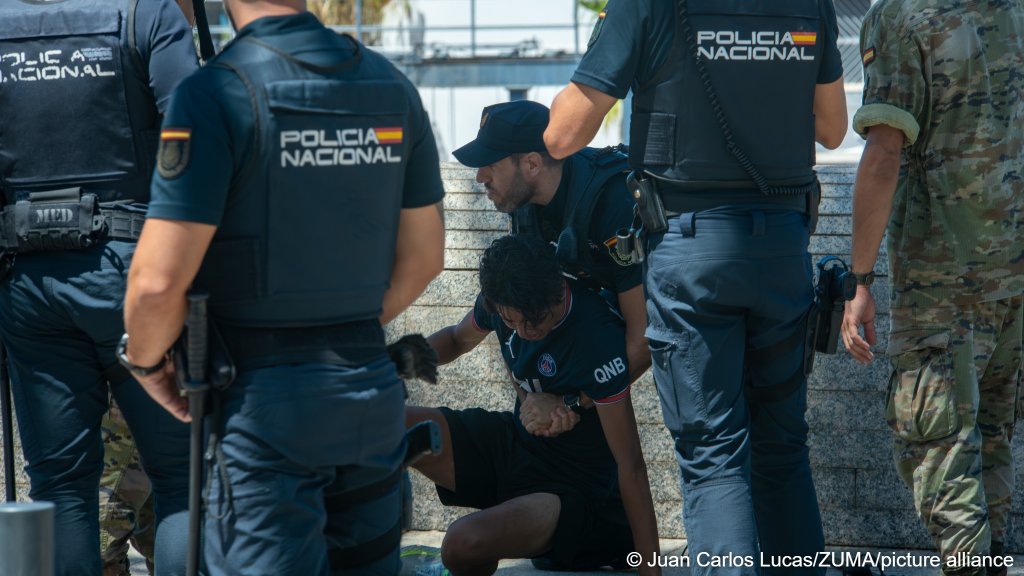
The ministry did not provide details on who was behind the spread of this misinformation online.
Is Morocco sending a message to Spain?
Talking to DW, migration analyst Gerald Knaus confirmed "there was a lot of false information along the lines of Spain was opening its borders" circulating on social media.
"There were invitations issued in different social networks, and there also appears to have been no effort by the Moroccan authorities to stop people," said Knaus, who serves as director of the European Stability Initiative think tank in Berlin, and was one of those who advised on the EU-Turkey deal in 2016 to prevent similar mass attempts to cross the border from Turkey into Europe at that time.
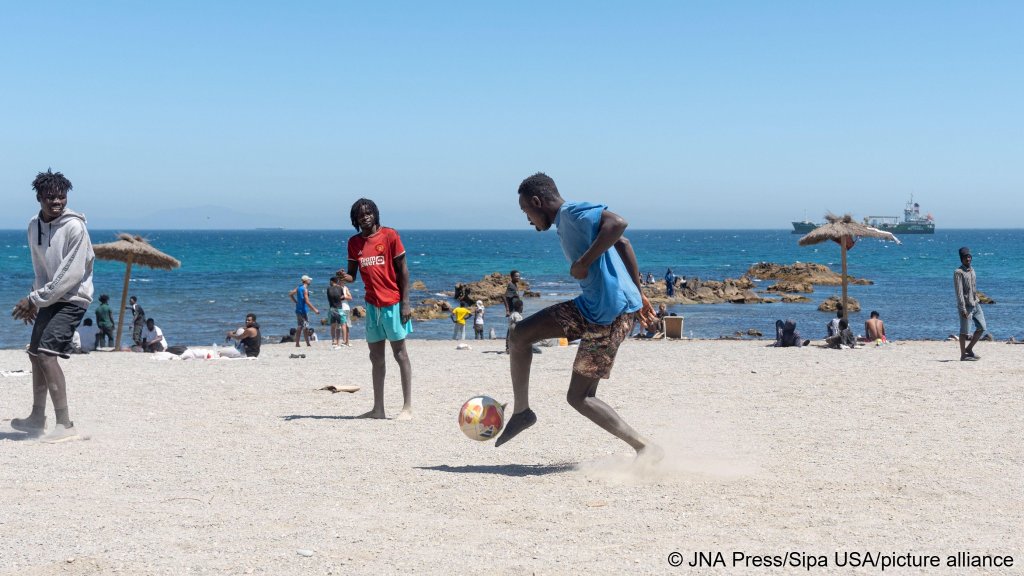
Neither Spain nor Morocco commented on the unconfirmed accounts, shared by some migrants, that Moroccan police officers allowed them to reach and overwhelm the border fence with Ceuta.
The incident also sparked comparisons to the latest mass crossing in 2021, when up to 10,000 people entered Spain after Morocco reportedly loosened its border checks. This was widely seen as Rabat putting pressure on Spain in response to Madrid allowing a separatist leader, from the Western Sahara region, to be given medical treatment on Spanish soil. Morocco rejected the claims of deliberate inaction, saying that any lapses in security were exhausted after Ramadan.
"This time we don't know," Knaus told DW on Monday (August 3). "There are lots of rumors, lots of hints, lots of speculations."
"What we know is that if the Moroccan authorities want to stop people reaching Ceuta in such numbers, they could and they haven't done it, but I wouldn't speculate."
Hundreds of migrants stay behind in Ceuta
Moroccan officials also said 11 people died and 40,000 made the crossing into Spanish territory during the mass incursion. This marks a stark difference from the account previously provided by the Spanish authorities, who put the death toll at 72, and confirmed to InfoMigrants that between 50,000 and 60,000 irregular migrants entered Ceuta last week.
Rabat also said its officials were working with Spanish authorities to verify the data regarding the other deaths last week, and that Moroccan prosecutors were investigating "various acts and facts related to these events."
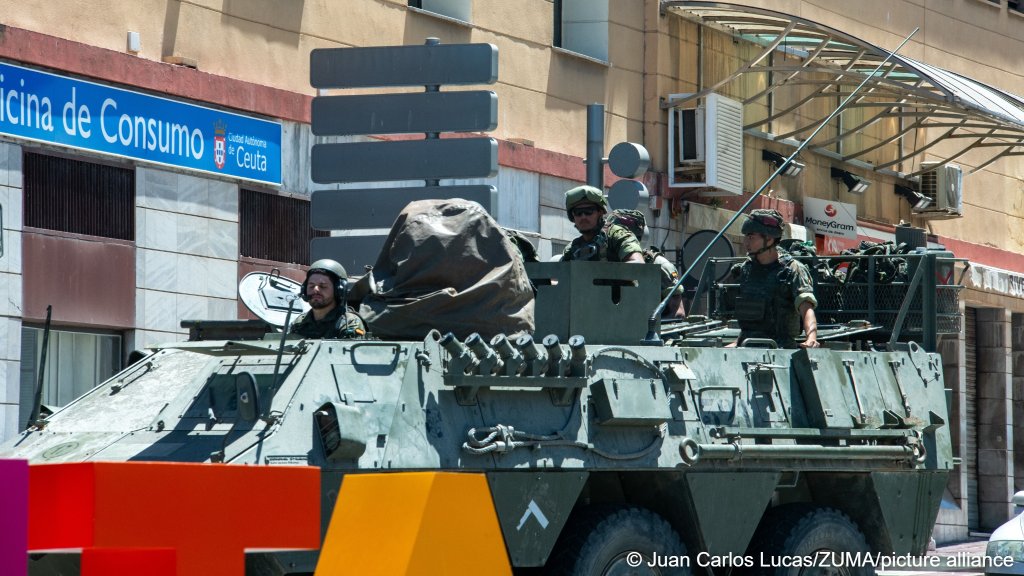
On Saturday, media outlets cited the Spanish Interior Ministry as saying some 53,000 of the newcomers had already returned to Morocco. When contacted by InfoMigrants on Monday, the ministry said they had "no specific data" on how many migrants remained in Ceuta.
However, DW correspondent Jan-Phillip Scholz, who was on the ground in North Africa over the weekend, reported seeing "hundreds" of migrants still at the beach and around Ceuta city center on Monday morning.