
UK Prime Minister Andy Burnham has promised to be "relentless" in combatting irregular Channel crossings, saying his government would intensify efforts against people-smuggling networks while expanding legal migration routes. He said the strategy was already delivering results, with fewer crossings and more removals from the UK.
UK Prime Minister Andy Burnham has vowed to be "relentless" in preventing irregular boat crossings across the Channel, saying his government is pursuing a fundamentally different approach to irregular migration in the wake of the recent arrivals of migrants into the Spanish territory of Ceuta.
Speaking during a visit to Dover on the south coast, the prime minister said recent events in the Spanish enclave had underlined the need for closer cooperation with European partners while maintaining stronger action against people-smuggling networks operating across the English Channel, British media has reported.

Burnham said he had spoken with Spanish Prime Minister Pedro Sánchez, who told him that around 98 percent of the estimated 50,000 migrants who entered Ceuta had already been returned to Morocco. However, Burnham maintained that longer-term questions remained over Europe's border policies and organization.
"There's a broader issue about the Schengen area and our relationship with it, and of course, I would want to be in regular dialogue with the EU on those issues," Burnham said, referring to the passport-free travel zone made up of European countries that have removed internal border checks, allowing people to move freely between member states without routine passport controls at their shared borders.
'We also need to build a system that offers safe routes for people'
The UK prime minister said his government would crack down on organized immigration crime while also expanding legal alternatives for those with legitimate protection needs.
"People want to see this issue addressed," he said. "We also need to build a system that offers safe routes for people as well, because that also takes away the selling point of the gangs."
According to Burnham, the government's strategy was intended to restore confidence in border security without politicizing the issue.
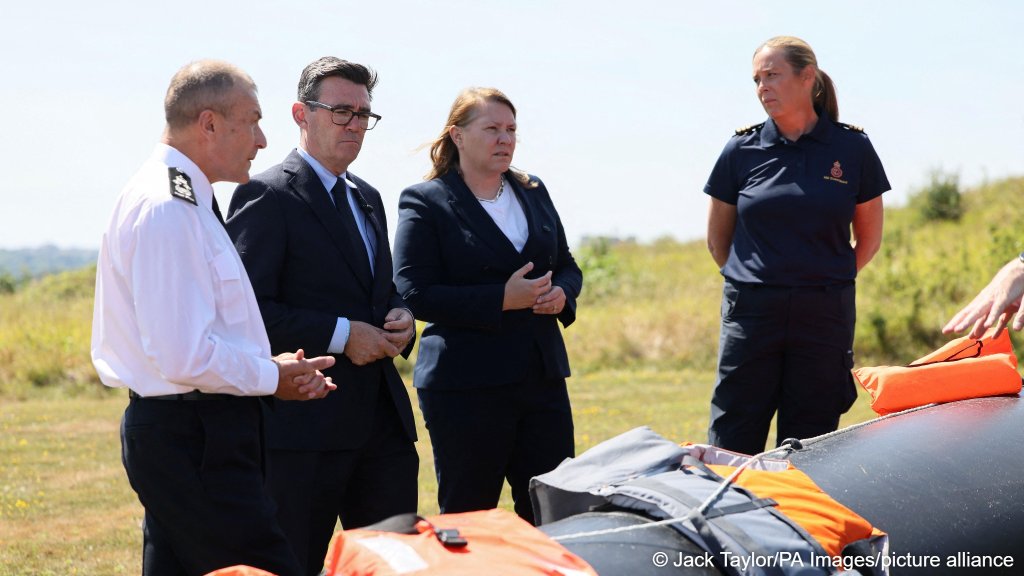
"I want to deal with the issue rather than play politics with the issue," he said. "The public don't like the idea that the border looks like it's not controlled. We need to bring back that control. But also we need to offer support for people who genuinely need it."
He then added that "It's about changing the whole approach, and slowly but surely we are putting in place those building blocks of a very different approach to this issue."
Read AlsoChannel crossing: French coast departures claim more lives as migrants attempt to reach UK
Channel sees overall drop in irregular crossings
The Home Office said the number of National Crime Agency officers dedicated to dealing with organized immigration crime has increased from 376 at the beginning of 2025 to almost 800, with Burnham also saying the number of French officers involved in enforcement efforts had similarly doubled.
Official figures released on Sunday (August 2) showed nearly 300 suspected members of smuggling gangs were arrested last year, while authorities seized more than 1,100 boats and engines. According to the Home Office, the recovered equipment could have been used to facilitate around 72,000 additional irregular crossings (however, that estimate has not been independently verified).
More than 2,000 people have crossed the English Channel in small boats since Burnham became prime minister on July 20, according to Home Office data. A total of 326 people made the journey on Saturday (August 1) in four boats, bringing the total to 2,057 since he entered office.
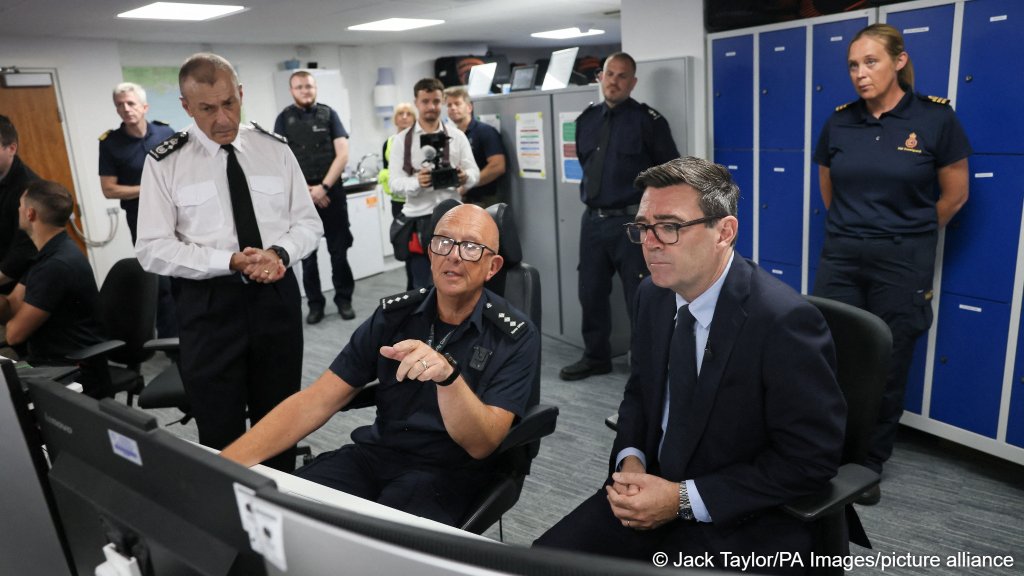
Despite those arrivals, provisional figures indicate that 14,526 people have crossed the Channel so far this year, around 43 percent fewer than at the same point last year and 14 percent below the equivalent figure for 2024. Last Wednesday though still marked the busiest day for crossings this year, with 752 people arriving.
Read AlsoUnderstanding Ceuta: A contested borderland in Europe’s African enclave
'I want them to change their mind about whether they get on the boat in the first place'
Meanwhile, Home Secretary Shabana Mahmood, who was visiting the National Crime Agency headquarters in Stratford, told local media that reforms were designed "to address the pull factors that draw people into boats in the Channel", adding: "I want to change the calculus. I want them to change their mind about whether they get on the boat in the first place."
Mahmood dismissed suggestions that the UK should replicate Spain's response in Ceuta by immediately returning migrants to Morocco, arguing that the circumstances differed greatly because Spain shares a land border with Morocco and has an existing returns agreement (in addition, the swimming distance between the two countries across the border breakwater close to the Tarajal area is around 200-300 meters), while the Channel presented more complex operational challenges involving maritime crossings and people-smuggling networks.

The events in the contested and politically sensitive territory Ceuta have intensified debate across Europe over migration policy. At least 72 people are reported to have died attempting to reach the enclave. The quick arrival of tens of thousands of migrants in a short time period overwhelmed the tiny territory and prompted Spain to install a 500-meter floating barrier along part of its maritime border with Morocco.
The situation in Ceuta has also prompted wider political repercussions across the European Union. EU interior ministers are due to hold emergency talks on Tuesday (August 4) after leaders from 22 member states called for a coordinated response aimed at preventing further uncontrolled crossings and restoring a common European approach to migration.

The UK has in the past urged France to step up cooperation in tackling small-boat crossings of the English Channel, with many British politicians accusing the French government of taking what they describe as an overly laissez-faire approach. At the same time, Belgium has reported a rise in irregular small-boat departures to the UK, a trend that migration analysts attribute to tougher enforcement and increased patrols along the French coast and in the Channel.
The UK has long sought to deter irregular migration across the English Channel. About 41,000 people arrived on England's south coast in small boats in 2025. Burnham said the government's strategy was bringing results, citing a fall in Channel crossings and a rise in the number of people removed from the UK.
With Reuters and AFP