
With funding from Italy and Malta, the center is part of the European Union's policy to reduce migration on one of the most active irregular routes towards Europe. The center will be established in territory controlled by General Khalifa Haftar's forces, which are aligned with eastern Libyan authorities not officially recognized by the EU.
The European Union will establish a "Maritime Rescue Coordination Centre (MRCC)" in Benghazi, eastern Libya, the EU ambassador to Libya, Nicola Orlando, announced on Thursday (July 30).
"We finalized the procedures to establish a MRCC in Benghazi under Operation IRINI, with funding from Italy and Malta," Orlando posted on social media platform X after a meeting with Khairy Tamimi, secretary-general of the command of the Libyan Arab Armed Forces, and officials representing Malta and the EU's Operation IRINI.
The new center is likely to coordinate the rescue and interception of migrant boats in eastern Libya. This could potentially lead to more interceptions of migrants trying to reach Italy or Greece, and more returns of people to Libya.
There have been plans to build such a center since 2017.
"The Center, together with dedicated training by IRINI and EUBAM Libya (the EU Border Assistance Mission in Libya), will strengthen Libya's capacity to search and rescue operations at sea in line with international standards and human rights," Orlando claimed.
Irini operation, collaboration with Libyan coast guard controversial
The Irini operation is an EU military mission launched in 2020 in the Mediterranean with the primary stated goal of monitoring a UN arms embargo towards Libya. But Irini is also supposed to monitor illicit oil trafficking and disrupt human smuggling networks. European military have also trained Libyan coast guards and navy as part of the Irini mission -- which human rights advocates have criticized.
The planned Benghazi center has been met with warnings from human rights organizations, which say that expanding Libya’s maritime enforcement capabilities could lead to more migrant interceptions, illegal pushbacks, and forced returns to Libya where migrants can be at risk of arbitrary detention, exploitation, torture, rape, and mistreatment.
EU seeks engagement with unrecognized Benghazi government
Libya has remained an important transit and departure point for migrants trying to cross the Mediterranean, with human smuggling networks exploiting the country’s prolonged political fragmentation, weak institutions, corruption, and competing authorities, including the UN-recognized Government of National Unity in Tripoli and forces aligned with Khalifa Haftar in the east, which includes Benghazi.
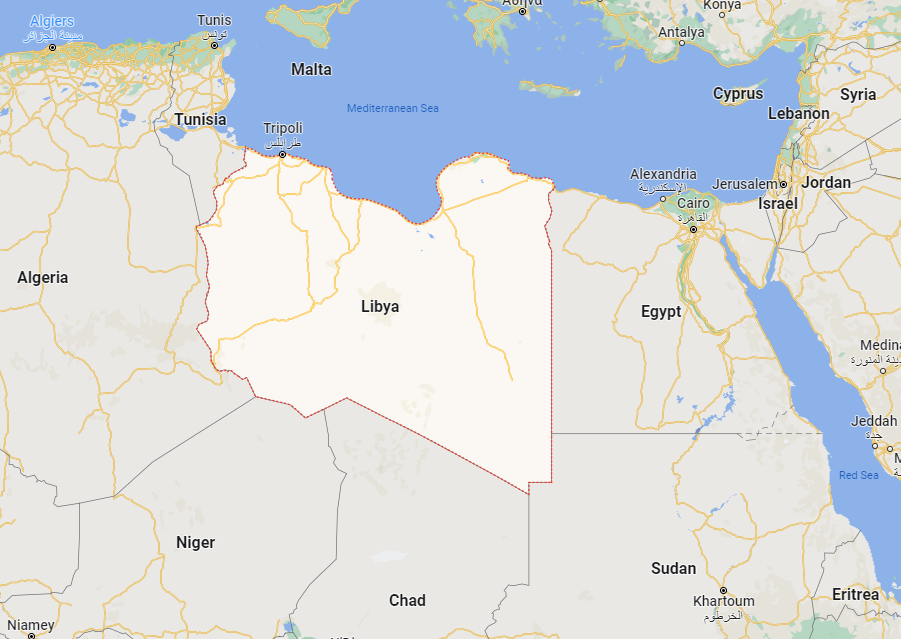
Hundreds of thousands of migrants attempted to make the dangerous journey from Libya to Europe across the Mediterranean Sea since the 2011 NATO-supported uprising that toppled long-time leader Muammar Gaddafi. Gaddafi's removal left a power vacuum that allowed criminal networks and other illicit activities to thrive.
The fact that the EU and several member states have for years provided assistance and training to the Libyan coastguard, which intercepts migrant boats at sea, has been highly controversial. Human rights groups have accused coast guards of carrying out abuses, including unlawful pushbacks and violence against migrants; migrant advocates have also accused the EU and European states of being complicit in the abuses because of their cooperation.
Though the EU officially recognizes only the Tripoli-based Government of National Unity, it has increasingly engaged with authorities in eastern Libya over the past year as part of efforts to reduce irregular migration across the Mediterranean, a policy that has also drawn criticism from rights organizations.
EU officials argue that cooperation with Libyan authorities is essential to improving maritime rescue operations, disrupting smuggling groups, and preventing further loss of life in the Mediterranean.
In January this year, when asked about the planned MRCC in Libya, an EU spokesperson told InfoMigrants: "This MRCC would contribute to coordinating Libyan coast Guard activities in search and rescue in the east of the country, in line with international agreements and standards."
When asked at the same time about criticism of cooperating with Libyan forces, the EU spokesperson told InfoMigrants: "As we said many times, the European Commission is committed to working and cooperating with all key actors in Libya to address common challenges, including migration management. Our engagement in Libya has always been to support a comprehensive and rights-based migration management, including the protection of migrants, refugees and asylum-seekers in full respect of international standards and rules. This includes supporting the capacity of relevant Libyan actors to save lives and combat smuggling networks, including through enhanced coordination and operating procedures at sea in line with international standards. We support any initiatives that contribute to these objectives."
With Reuters and AFP