
In this mini series, InfoMigrants has selected three movies which show the impact of migration on women and their path to rebuilding their lives. The film 'The Lion at My Back' is the story of a friendship between a local Cypriot woman and an African migrant as they seek to overcome traumas from the past. (Part one in a series of three)
The film "The Lion at My Back" begins with a celebration in a facility for unaccompanied minors. A Senegalese refugee named Mariama (Sokhna Diallo) is turning 18, which means her time in the shelter is running out. She will soon be required to leave because of her age. The camera zooms in on a birthday cake as a shaky hand lights the candles one by one, leading up to the fatal 18th candle which spells out eviction and homelessness, as well as a significant moment in the young woman's life, the official entry to adulthood.
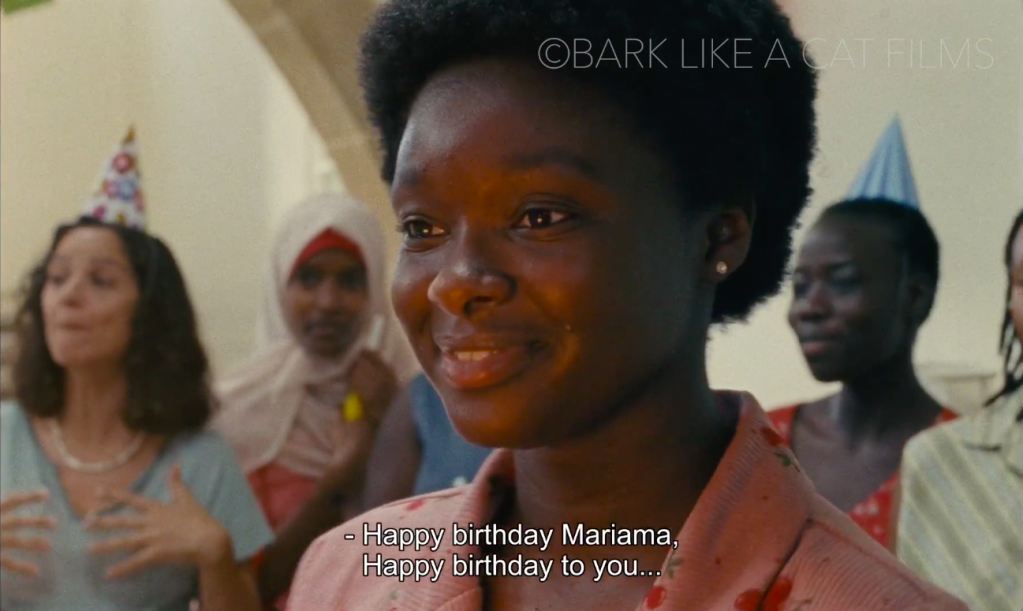
The hand lighting the candles belongs to Stella, a local Cypriot woman recently hired to work as a cleaner in the center. She is facing some serious issues of her own.
"I don’t return to the darkness; my light is stronger," she repeats one night after a dealer delivers her a smaller amount of CBD drops than they had previously agreed upon. The incident triggers a series of emotions across her face: first rage, then panic, and finally hope of one day conquering her addiction.
The developing friendship between these two women forms the backbone of the film.
Living in the margins
Mariama waits for her inside. Stella is temporarily providing her with housing because she needs to pass a drug test required by her employer. She knows she will fail it, so she recruits the homeless teenager to provide her with a pee sample.
As they face difficulties with housing, jobs and patriarchal systems, the two women strike an unlikely friendship. After living in the margins for so long, they become visible in each other’s eyes. Yet danger is always near: in an echo of the film’s title, the camera stalks Stella and Mariama like a predator in the dark alleys, and follows them along the narrow strip of coast where they walk.
Mariama might be the key to Stella’s salvation, the film suggests. "You did a very brave thing," Stella tells Mariama, as they watch carefree children play on flimsy, inflatable boats in the sea. The scene might be a nod to Mariama’s journey to Cyprus; something she rarely talks about.
InfoMigrants spoke with the film’s director Tonia Mishiali for more about her choices for the film and how she wanted to portray the strength of migrant women:
InfoMigrants: Mariama turns 18, which means she can no longer stay in the center for unaccompanied minors. The center throws her a joyous birthday party before sending her off into the streets. Why did you choose to begin the film here? Why make her destiny coincide with Stella’s?
Tonia Mishiali: It was important that that was the beginning of the film from the very first draft. I wanted this contrast to show that it’s a fun time for Mariama but then again it coincides with her leaving. The next day, she must leave [the shelter].
I wanted both Mariama and Stella to have their backgrounds, problems and traumas. By meeting, they help each other grow. At first, it seems that it would be the older one who could help the situation. It ends up being the youngest one who provides support, which is not what you would expect.
It’s important that we see these two women living on the sidelines of society and struggling to find themselves, establish themselves, be accepted for who they are and lead the life they want in the future.
Read AlsoMigrant women in France face 'double violence' when reporting abuse
The film shows the double oppression of women through economic and social layers. Why was the struggle against patriarchal constraints particularly important for you to show?
Well, I live in Cyprus. I was born here and the society is quite patriarchal. I was raised in a kind of patriarchal system, even though it’s quite hidden behind closed doors. It’s not very visible now. Before, when I was growing up, it was quite apparent. I was very bitter about it and passionate and angry with this situation. I wanted to talk about these issues, so I started with my first film that was about this, and then I continued and apparently it comes from inside! [laughing].
I’m appalled with these situations, and I cannot stand discrimination and women not feeling that they are enough or that their safety is not intact. They must fight for their safety. They must fight for their rights, for their words to come out (on what they want and need). It’s a basic struggle, so it’s very important for me to speak about this – even in a film.
Are migrant women especially vulnerable?
Of course. All women are vulnerable and being an immigrant is even more of a difficult situation than just being a woman. It’s even worse; also because most of them are black. There is also discrimination about their color, gender, how they want to live their life, if they can speak out and be safe…
Stella and Mariama are opposites, but it seems as though Mariama’s path to rebuilding her life might be easier. Was this intentional on your part?
Yes, I didn't want it to be like the typical thing: the white, older woman saves the younger one who is in a more miserable situation. It’s also because I met a lot of these asylum seekers, especially women from Africa, and I found them to be very resilient. I envied their resilience and their positivity towards life. They went through so much, but they are still there. They only look ahead; they live in the present.
It is important for me to show the difference, because in the Western world, we don’t really have problems, if you compare what they go through. Of course, everyone has their own problems and their own traumas (some bigger, some smaller) but if you meet these women, I find that they are very positive. It was very important for the film.
Of course, Stella is not like that. She is also resilient but in a different way. She is a bit angry and bitter.
Read AlsoGreece: Series of arrests for smuggling migrants in vehicles
Why did you include a scene where Mariama and her new friend Pantelis transport a group of migrants who arrived in the north to an emergency reception before they can be intercepted by traffickers?
Stella has that scene in the club where she has to confront her demons. I wanted something equivalent for Mariama, where she has to confront her past. That’s how she came to Cyprus and that’s what she went through. We wanted to explore her character more deeply, because we don’t see Mariama’s inner world as much as Stella’s.
Stella makes what she feels more external, whereas Mariama keeps it more internal. With that scene, we see her vulnerability and what she went through. Even though she sees everything positively, the audience can see that her path wasn’t easy.
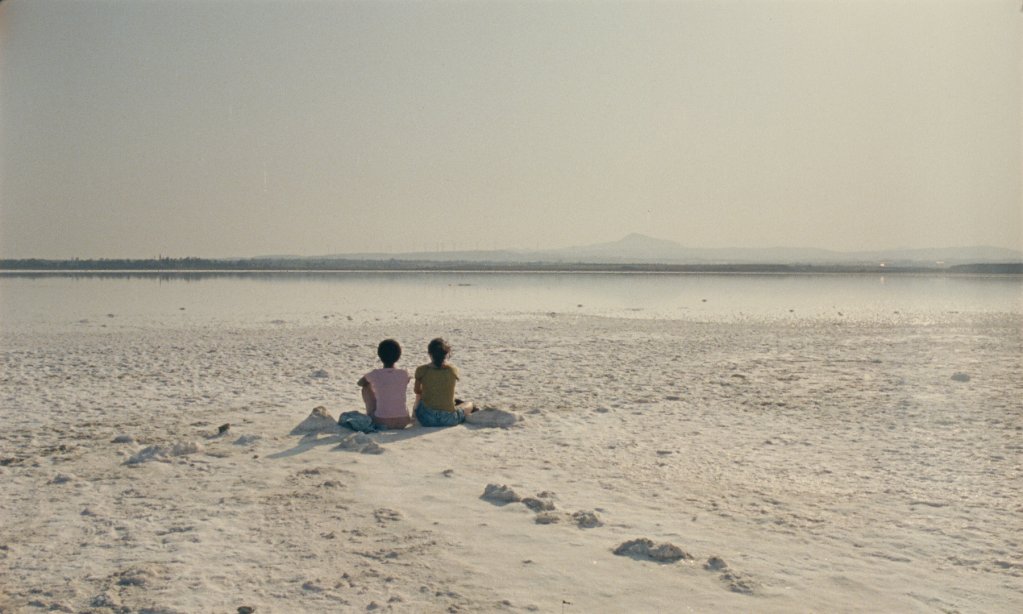
At one point, Stella tells Mariama “this island [Cyprus] has a way of getting to your soul”. Is this true?
I think so. It’s not like a Greek island which is part of Greece. It’s an island country. You feel excluded from everything, and you feel trapped, because you can’t leave the country unless you get on a plane. It’s not easy – it gets to you. Since the society is quite closed, people who are more open-minded are struggling with patriarchy and other societal issues. It can be very suffocating, you know?
How did your family’s own experience of being refugees influence the film?
I was born in Famagusta, which is a city in Cyprus, which was occupied by Turkey in 1974. We had to flee our home and move to another part of Cyprus because they occupied one-third of the island, and they still occupy it. So, one-third of the island is considered Turkish but it’s illegal. It’s not recognized by the United Nations, Europe or the world. Only Turkey recognizes it.
I was a baby when we left, so I never experienced it first-hand, but the trauma that the family carries for all these years kind of stigmatizes you emotionally. It remains in your soul. It stayed with me even though I didn’t experience it firsthand. I have always felt close to immigrants and very empathetic towards people who must flee their homes.