
The British and Germany governments have moved to implement immigration systems that use artificial intelligence to standardize the processing of asylum, visa and residence applications. In the case of the UK, rights groups have warned that a potential racial bias in these systems could affect unaccompanied minors.
The British and Germany governments have moved to implement immigration systems that use artificial intelligence to standardize the processing of asylum, visa and residence applications. Human rights advocates have warned that such processes risk data protection and "adultifying" children or classifying a minor as adult, stripping them of safeguards specifically meant for children in vulnerable situations.
German authorities announced yesterday (July 29) the approval of a draft law authorizing the Federal Office for Migration and Refugees (BAMF), local immigration offices and the Foreign Office to use data from previously completed asylum and immigration cases to train, validate and test AI models and develop artificial intelligence systems and other automated programs. These programs can analyze process flows and decision-making patterns for the purpose of accelerating the processing of applications and decision-making.
"This is intended to make asylum and residency procedures more efficient, standardized, and secure," the government said in a statement.
The draft AI Migration Administration Act, based on legislation adopted in November 2025, is aimed at modernizing processes for skilled worker immigration and "intended to significantly reduce processing and waiting times" by using AI to support everyday administrative tasks.
"Making Germany's administration and administrative processes more modern, digital, and efficient is a high priority for the Federal Government and a coalition project," said the statement.
Read AlsoForeign minors face hearings at Paris airport 'waiting zone'
'Adultifying' children?
Meanwhile, in the United Kingdom, the government is poised to deploy Facial Age Estimation (FAE), an Artificial Intelligence (AI) age assessment tool to detect adult migrants posing as children, at its borders starting next year.
The move has been condemned by 62 civil-society organizations calling on the UK Home Office to halt plans to use FAE technology in assessments of young asylum seekers.
In an open letter published on June 18, the organizations which included Human Rights Watch and the Electronic Frontier Foundation warned that the AI systems could threaten children’s rights by reproducing discrimination, generating inaccurate results and processing sensitive personal data without sufficient transparency or permission. The signatories demanded disclosure of the system’s testing, training data, safeguards and appeal mechanisms. The organizations also called for suspended implementation while the system's accuracy, legality and effects on children are independently scrutinized.
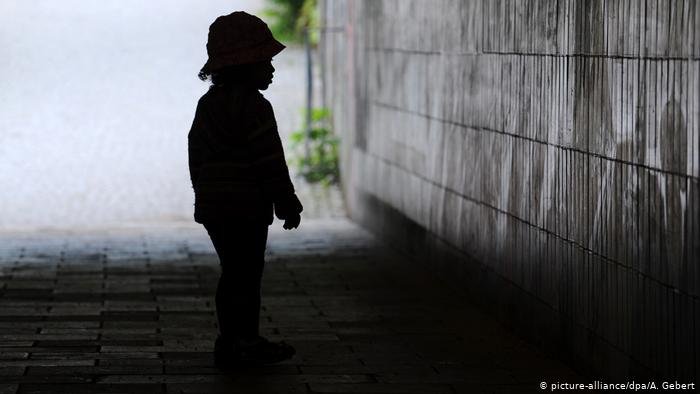
In the open letter, which was addressed to Alex Norris the UK Minister of State for Border Security and Asylum, the signatories cited evidence that facial age-estimation systems can perform differently according to ethnicity, skin tone and sex. Available testing suggests that some systems perform best on Eastern European men, while producing less reliable estimates for women and people of color, which are precisely the groups likely to seek asylum.
They noted that the Home Office’s own guidance acknowledges these variations particularly in the the margin of error of about 2.5 years in assessing age. This inaccuracy at the crucial boundary between childhood and adulthood could result in a child being classified as an adult and consequently placed in adult accommodation or migrant detention.
The letter also questioned whether training a model specifically on asylum-seeking children would raise separate legal and ethical questions. The organizations asked what photographs and data were used, where they came from, how consent was obtained and what lawful basis permitted their processing.
Read AlsoNearly one in four asylum applicants in the EU are minors
Aged by trauma
Additionally, rights groups also highlighted that minors seeking asylum may not have legal documents certifying their age.
"Many children from countries such as Afghanistan, Sudan and Eritrea are unable to show official identity documents, such as passports or birth certificates, because they have never had them, they have been destroyed, lost or taken, or the child has been forced to travel on false documentation," the Helen Bamber Foundation, a human rights group that focuses on supporting survivors of human trafficking, said in statement.
Compounding the situation is often the physical toll that the perilous journey of irregular migration takes.
"Children seeking asylum often suffer from trauma-induced aging," EFF said in a statement, explainining that malnutrition, dehydration, exhaustion and sleep loss can visibly affect skin, body composition and facial expression.
AI cannot account for such factors that can significantly alter a young person’s appearance and make them appear to be older than they are.
In guidelines on the use of FAE for initial age estimations, the Home Office, acknowledged that some people arrive in the UK with no documents or limited information making it difficult to determine if they are an adult or a child.

"FAE could offer an additional information source to support age decisions. It allows officers to test their judgement against an estimate with known limits to its accuracy. It does not replace that judgement – the decision on whether to treat an individual as a child or an adult will always be taken by the officer," the guidelines stated.
The guidelines also state that FAE does not identify individuals and does not search any databases but only estimates an age from an image.
"The Home Office has been clear that FAE would be used only as a supplementary tool for immigration officers, providing additional information to help them make initial age decisions. It won’t be relied upon to make a definitive age decision or to replace holistic approaches," the explanatory guidelines concluded.
According to the UK Refugee Council, in the year ending March 2026, 6,420 people had an age dispute raised in the asylum system. Of the cases recorded as closed, 57 percent of resolved age disputes were found to be children.
Read AlsoUnaccompanied foreign minors in Italy: Only a small fraction lived with foster families in 2025
InfoMigrants approached the UK Home Office for comment on July 30, we will add a response here if we receive one.