
Refugees are becoming "scapegoats for wider social, economic and political anxieties," UNHCR has warned. People fleeing persecution and war are facing increasing barriers to seeking asylum against a backdrop of rising global economic anxieties that are fuelling anti-migrant sentiment.
The United Nations has warned about the politicization of refugees and how migrants are becoming scapegoats in the current political landscape. Refugees escaping persecution are often faced with barriers to their right to seek asylum, and discourse around international protection is becoming increasingly politicized, UN Refugees (UNHCR) said on Tuesday (July 28).
Speaking at an event commemorating the 75th anniversary of the 1951 Refugee Convention, UNHCR chief Barham Salih also appealed for a global shift away from managing high levels of displacement towards addressing its root causes and pursuing sustainable solutions.
"We gather at a time of increasingly politicized debates about refugees and asylum," said Salih, a former president of Iraq.
"Too often, people forced to flee become scapegoats for wider social, economic and political anxieties," he said at the UN's Palais des Nations in Geneva, where the convention was first opened for signature on July 28, 1951. "Too often, refugees are portrayed as burdens or threats rather than as fellow human beings," he added.
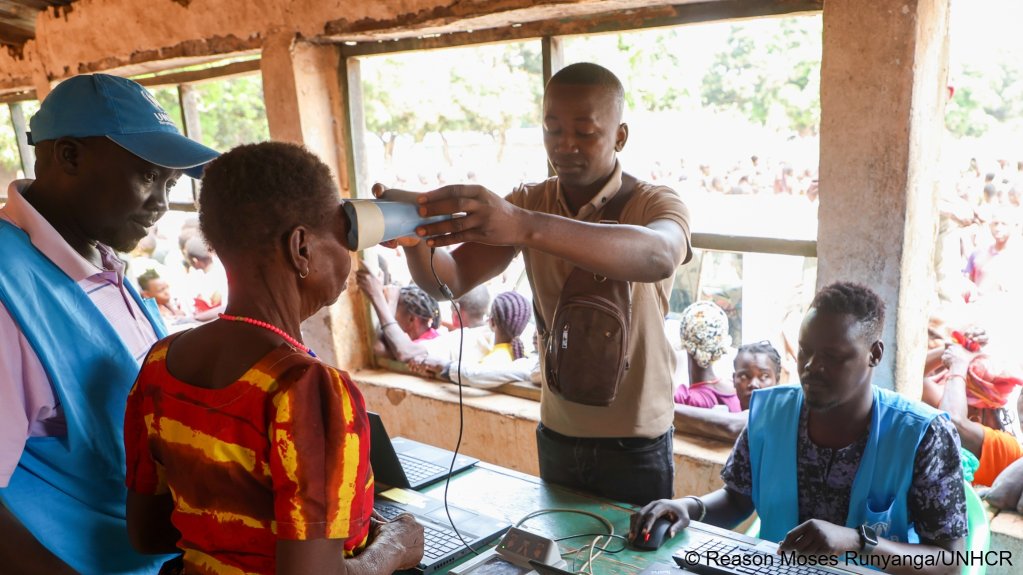
Salih stressed the importance of protecting asylum systems while preventing abuse. He noted that though countries have the right to manage and secure their borders, refugees make up a "unique category" of people escaping violence and persecution, rather than individuals "seeking a better life."
Read AlsoRefugees and migration: Is Europe closing its doors?
'Historically high' numbers of global displacement
According to UNHCR, 117.8 million people globally were forcibly displaced by the end of 2025, down from the 123.2 million recorded in 2024, but global displacement remains at historically high levels.
Of the 117.8 million displaced people, 35.6 million were refugees under UNHCR's mandate, with nearly two-thirds originating from Venezuela, Ukraine, Syria, Afghanistan and Sudan.
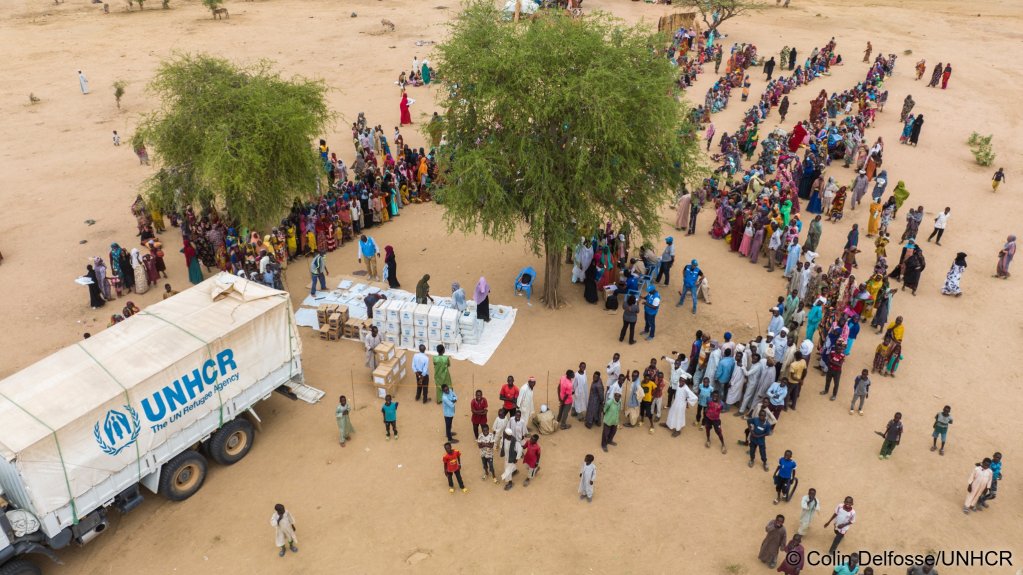
The decline marked the first reduction in global displacement in a decade according to UNHCR, largely driven by returns from Iran and Lebanon, where many refugees went back to countries including Syria and Afghanistan despite facing political and economic uncertainty.
Salih, who is scheduled to visit Syria next week, said that earlier international action to end the country's civil war between 2011 and 2024 could have prevented mass displacement and millions from fleeing to neighboring countries and Europe.
Read AlsoGermany relies on Syrian workers amid return debates
Guterres: 'Right to seek asylum too often questioned, restricted, or denied'
In a recorded message, UN Secretary-General Antonio Guterres said the Refugee Convention, adopted in the aftermath of World War II, had "saved millions of lives."
"Today, that promise is under strain. Conflicts are multiplying, persecution persists, and growing numbers are forced to flee. Meanwhile, the right to seek asylum is too often questioned, restricted, or denied," he said.
The number of people forcibly displaced worldwide has nearly doubled over the past decade, despite slashes in humanitarian funding. The US, historically one of UNHCR's largest donors, has drastically cut back on overseas development and humanitarian aid, while many other governments have also curbed spending.
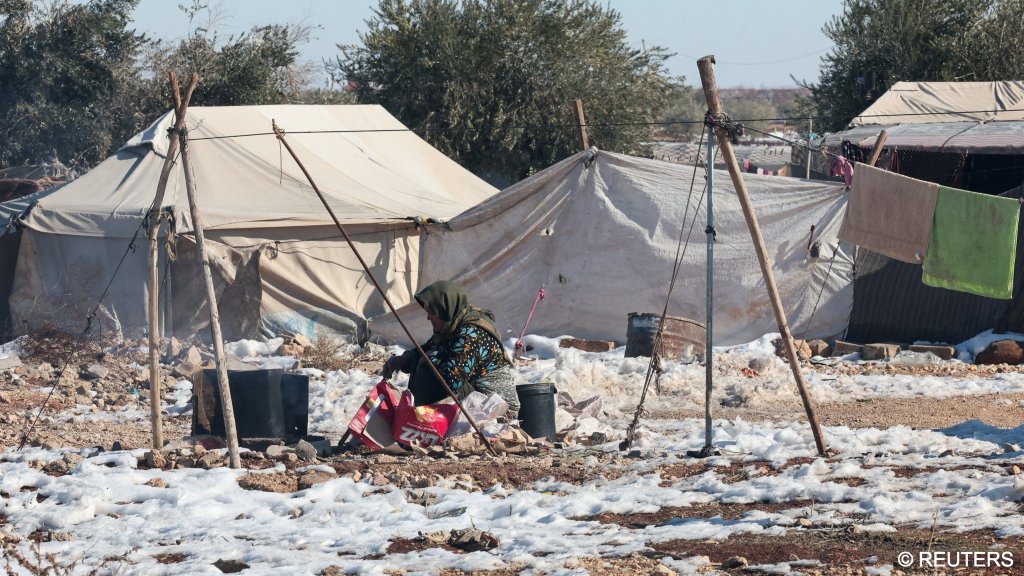
UNHCR's funding fell by approximately 35 percent last year, forcing it to cut nearly 5,000 positions in 2025 (more than a quarter of its workforce).
Salih said the budget cuts have had a deep impact on UNHCR's ability to deliver assistance, and called for more support, adding that he is hopeful the agency's collaboration with the US will continue.
Read AlsoBrussels: EU bolsters ties with Syria in the hope of increasing returns
Families returning to Syria find infrastructure 'completely destroyed'
Also speaking about the consequences of war on Syria, refugee and Olympic swimmer Yusra Mardini, 28, who survived a precarious sea crossing before competing at the 2016 and 2020 Olympic Games, said she had recently returned home to Syria for the first time since fleeing the war and watched "families crossing back into their country with tears of joy, only to find homes, schools, roads and hospitals completely destroyed."
Mardini is among the first 75 signatories of the so-called "Promise" initiative, which advocates for the right of people fleeing persecution to find safety in other countries.
Fellow signatories include actors Angelina Jolie, Cate Blanchett and Ben Stiller, as well as Nobel Peace Prize laureates Malala Yousafzai and Nadia Murad.

'Germany should keep its doors open to refugees'
Mark Ankerstein, national director of UNO Flüchtlings Hilfe, the German branch of UNHCR, has also urged the German government to keep its doors open to refugees and uphold its humanitarian obligations.
"I certainly believe that we should not stray from the principles of the Geneva Convention on Refugees, to which we are committed," he told German media outlet, Redaktionsnetzwerk Deutschland, adding that Germany's commitment is closely tied to its own historical experience.
Ankerstein also warned against using refugee policy as a political tool during election campaigns. "That is unfair and discredits those who come to us with a legitimate claim to protection and are seeking help." He warned that any debate on the issue should be grounded in facts and "not so heavily emotionalized." He condemned the negative portrayal of refugees, emphasising that those granted protection have a legitimate right to remain in Germany.
"People are rightly granted protection here… After all, people who were not born in Germany have always lived in our country. That has not harmed Germany."
With AFP and KNA