
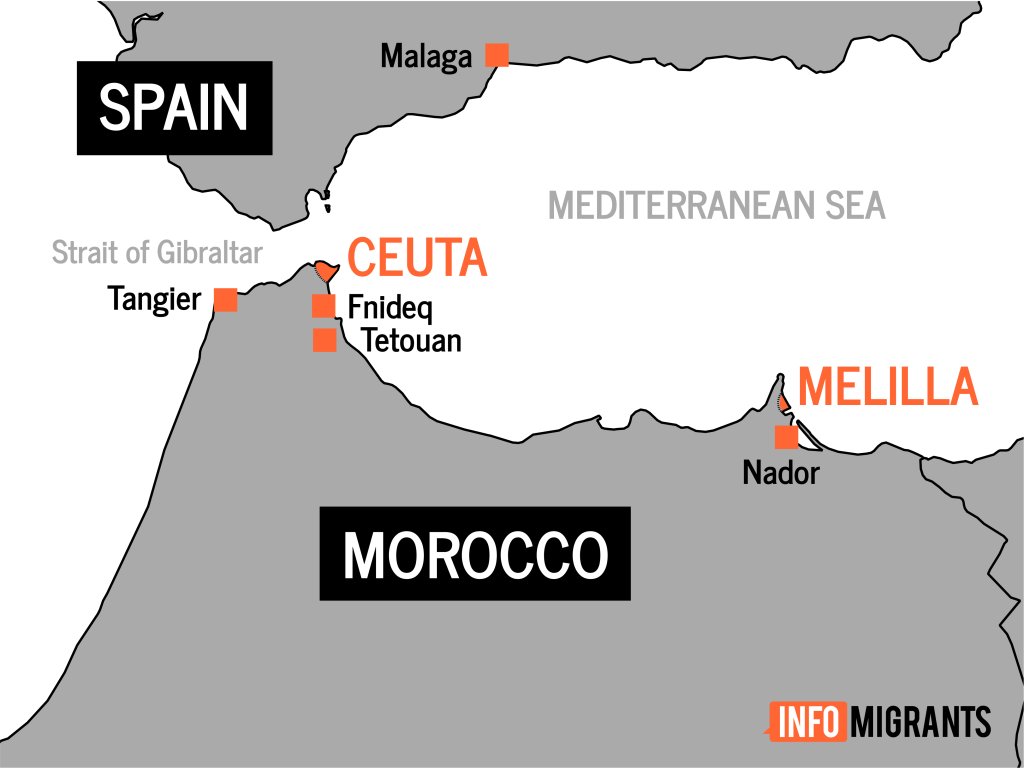
Braving the waters that separate Morocco and the Spanish enclave of Ceuta by swimming has been gaining momentum among young Morrocans since the rise of social media channels like TikTok. A new ruling on "hot returns" is seen as now further propelling attempts. In the last week, more than 1,000 arrived in Ceuta, amid local press reports of possibly four deaths and around 20 missing.
Families in Morocco are appealing for information about their young sons and brothers who have gone missing after attempting to reach Spain by swimming around breakwaters and into the Spanish enclave of Ceuta, on the north African coast.
On Sunday (July 26), Spanish local newspaper El Faro de Ceuta published photographs and identifying details for more than 20 missing youths. Some were last seen around Castillejos (known in Morocco as Fnideq) while others had traveled to the northern coast from cities as distant as Marrakech.
Some were brothers. Others were reported to have been seen wearing black or grey wetsuits indicating that they had prepared for the journey by sea. Others set out with friends, while some traveled alone.
Their families supplied El Faro with their contact numbers, photographs of their missing loved ones along with some distinguishing marks such as scars and tattoos.
The reports of disappearances come shortly after reports of an increase in attempts to cross the border by swimming, or climbing the fence. Over the last week, Spanish and Moroccan press reports estimate that more than 1,000 people have crossed into Ceuta. Some estimate that at least eight people may have died attempting the crossing this month and at least 27 since the beginning of the year. The Spanish press dubbed last Sunday 'tragic Sunday' after news of the potential deaths and disappearances began to come through.
Last week, it was reported that Spain's World Cup victory triggered attempts by "hundreds" of migrants, many Algerian and Moroccan males to swim into the Spanish and EU territory.
'Extremely serious'
Authorities in Ceuta have declared an "extremely serious" migration situation after more than 1,100 adults and minors reached the Spanish enclave in slightly more than a week. Local media reports indicate that many entered by swimming from Morocco.
Ceuta is asking Spain's central government in Madrid to accelerate transfers of both adults and unaccompanied minors to mainland Spain. Its Temporary Immigrant Stay Center (CETI) is already accommodating more than 600 people, while approximately 500 others are waiting for admission, leaving reception facilities under severe pressure.
A Supreme Court ruling issued earlier this month banned the practice of 'hot returns' or the application of border rejection to people intercepted at sea while trying to enter Ceuta and Melilla by swimming.
Swimmers must instead be handled through the ordinary return procedure of Spain’s immigration law. That process provides procedural safeguards rather than permitting immediate handover to Moroccan authorities.
El Faro reported a sharp increase in attempted swims following the ruling, estimating more than 200 attempts on some nights.
Spanish Interior Ministry data show 2,826 irregular arrivals in Ceuta between January 1 and July 15, 2026, compared with 1,133 in the equivalent period last year, translating to a 149 percent increase. There were 244 recorded arrivals during the first half of July alone.
The majority of these arrivals up until June were actually via the land routes to Ceuta, rather than swimming, stated Spanish Interior Ministry graphs. This showed irregular migration via land routes into Ceuta between January 1 and June 15 increased by 215 percent compared to the same period in 2025. That meant that in 2025, 791 migrants crossed into Ceuta via a land route and in 2026 during that period 2,493 did so.
Read Also
TikTok supplies instructions — and visible proof of arrival
Some analysts believe that social media may be contributing to downplaying the treacherous waters that separate Morocco and its nearest European enclave, Ceuta in Spain. TikTok videos document successful arrivals, identify equipment and routes and, in some cases, present step-by-step accounts of preparation and avoiding detection.
Successful swimmers, like those who arrived this weekend, provide something particularly persuasive: visible proof that reaching Ceuta is possible.
In 2024, a photograph posted by 19-year-old Chaimae El Grini after a reported five-hour swim attracted more than four million views. She appeared smiling in a wetsuit, with wet hair and a raised thumb.
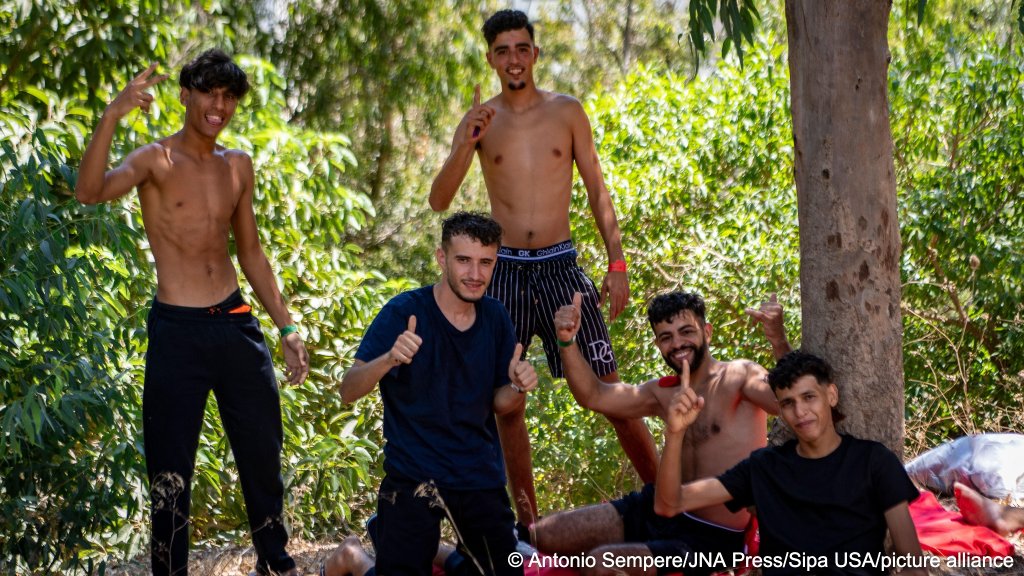
Similar scenes were captured this weekend, as large groups of mostly young people sat, still dressed in swimming shorts and celebrated with smiles and thumbs up gestures for the cameras.
Read AlsoCeuta: 6 arrested in operation against migrant smuggling network
A guide in the opposite direction
As online videos explain how to leave, Moroccan mothers and sisters are building a parallel information network explaining how to search for those who do not return.
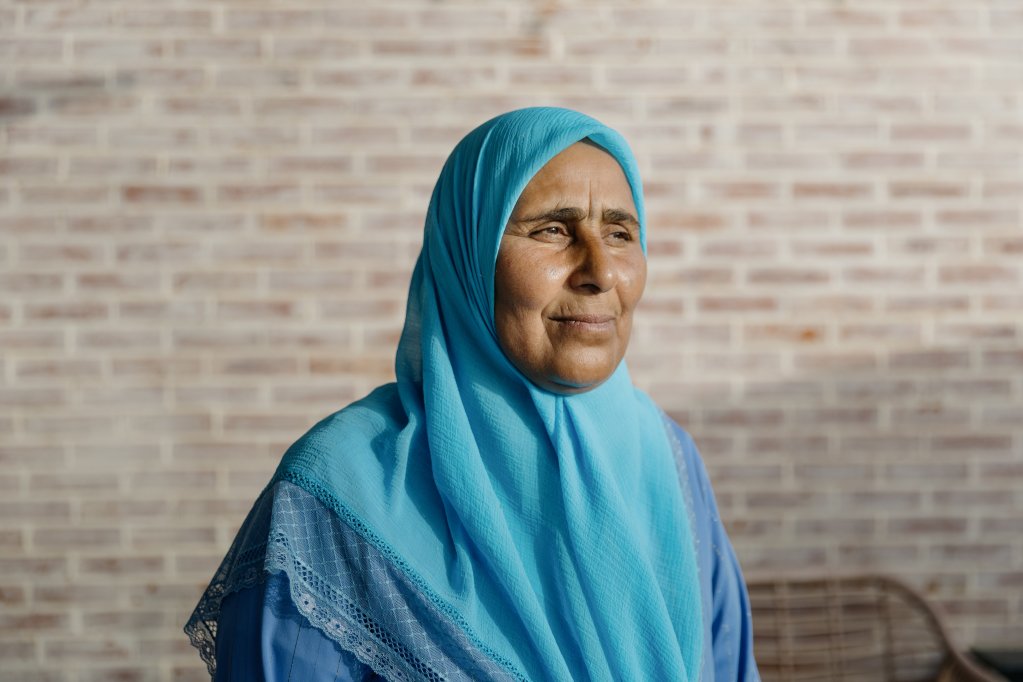
A collective representing families of missing migrants has brought together nearly 1,000 relatives. Its illustrated guide explains how to report a disappearance and contact police, foreign ministries, consulates, Red Crescent or Red Cross offices and authorities in the countries where a relative may have traveled.
The guide also warns families about false information and scams as well as common dangers when relatives are desperate for news.
Finding out acccurate information about those missing can be difficult and confusing. Some of the families featured in El Faro's latest report, have already been searching for weeks or even months for their loved ones. Others have just begun the potentially long wait for news.
Read AlsoIn Morocco, 1,000 mothers and sisters join forces to speak about their loved ones' disappearances