
Germany's Federal Constitutional Court ruled that the government must continue considering visa requests from Afghan applicants on a case-by-case basis, even after ending a special admissions program. The ruling concerns an Afghan woman living in Pakistan and her two sons, whose planned entry to Germany was cancelled.
Germany will need to assess visas for Afghans on a case by case basis, according to a Constitutional Court ruling on Friday (July 24).
The Karlsruhe court ruled that authorities must take into account the personal circumstances of each foreign national when considering their case, despite Germany having ended its special admissions program for Afghans.
The ruling referred to the "Human Rights List" admissions scheme, which the government has already discontinued.
Although the ruling states that each case must be considered, it does not say that the government must reverse its block on the evacuation programs. If after consideration, reported Germany's public broadcaster ARD's news show Tageschau, it is decided that the person cannot come to Germany, that would be allowed. So, the decision, say campaigners for the more than 400 Afghans waiting in Pakistan to be allowed to travel to Germany, is only a "partial success" for them.
Read AlsoFive Afghan migrants found dead after attempting to cross into Iran
Afghan woman in Pakistan has Germany admission revoked
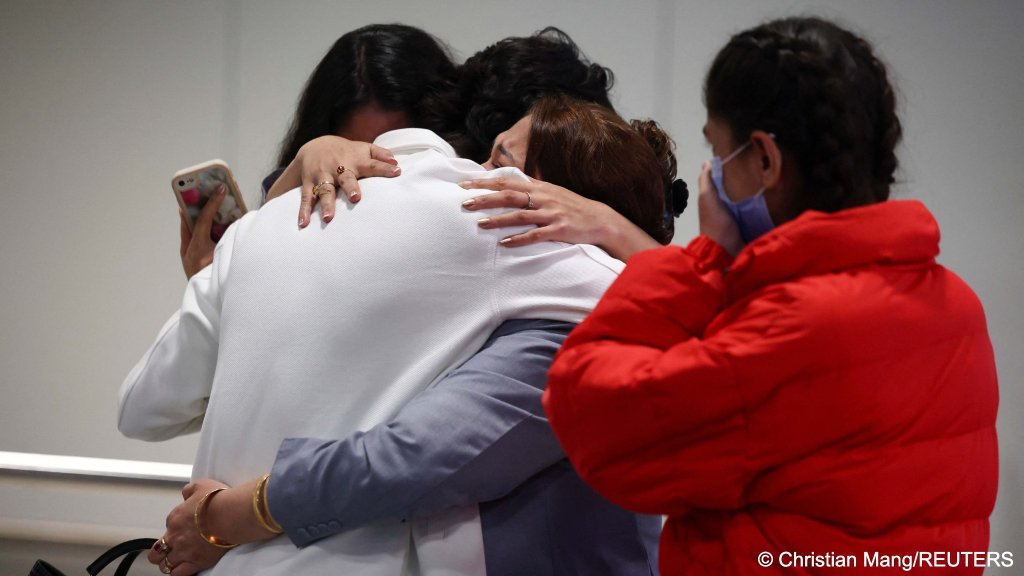
The case heard was brought by an Afghan woman currently living in Pakistan, who had applied for German entry visas for herself and her two young sons. Germany granted the family an admission commitment in 2021, but this was revoked in December 2025. A higher administrative court in Berlin-Brandenburg later ruled that they had no legal right to the visas.
Germany's Federal Constitutional Court, however, overturned that decision, arguing that the lower court had incorrectly interpreted the constitutional ban on arbitrary state action set out in the country's Basic Law.
"The Federal Ministry of the Interior's declaration of revocation of December 2025 does not satisfy the requirements of the prohibition of arbitrariness," the court stated, referring the case back to the Higher Administrative Court, which must now reconsider the applications, and if necessary, issue an interim ruling.
Read AlsoAid to Afghanistan drops to record low, as more people are forced to return
Germany must assume responsibility for family, Constitutional Court says
The Constitutional Court said the Higher Administrative Court must assume that Germany remains responsible for supporting the woman and her children in Pakistan until they are granted visas or the Interior Ministry formally confirms that the admissions program no longer applies. Until then, the German government must continue working with Pakistan to ensure the family is not detained or deported to Afghanistan, according to the court.
"I'm really happy today. I can hardly describe how relieved I am," the Afghan plaintiff, who is currently in the city of Peshawar in northern Pakistan, told the German Press Agency (dpa). "It was a very long, agonizing wait."
Germany's Interior Minister Alexander Dobrindt said the ruling did not require the government to take any immediate action. The Interior Ministry would wait for the Higher Administrative Court to rule on the case before deciding on its next steps, he said.
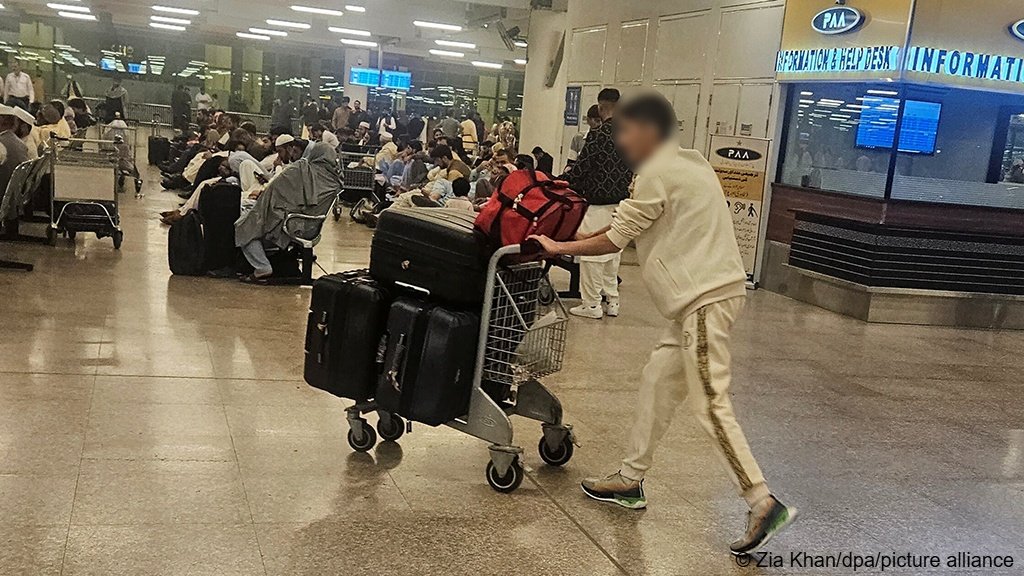
According to the Berlin-based Society for Civil Rights (GFF), the case is one of 31 constitutional complaints submitted as part of a collective legal action through the organization. The GFF had previously said the decision could "change the fate of around 400 other Afghans," dpa reported. Those affected are currently living in German-run shelters in Pakistan while waiting for authorization to enter Germany, according to GFF.
"If the ruling is negative, they face deportation to Afghanistan and, consequently, imprisonment, torture, and death," the GFF said, adding that the woman who brought the case is considered especially vulnerable because of her work promoting women's rights in Afghanistan, which has put her at risk from the Taliban.
"Those hoping for protection [in Pakistan] did not win a total reversal of the policy, and they will not automatically be able to travel to Germany following this decision," explained Dedekind to ARD.
Evacuation programs
According to German government data and reports in the German press, more than 36,000 Afghans were airlifted to Germany via a variety of programs since the Taliban took power in Afghanistan in August 2021.
The French news agency Agence France Presse (AFP) stated that around 15,000 of these were brought to Germany because they needed protection as a result of their work on human rights. AFP added that around 640 people on the 'Human Rights list' had had their permissions to come to Germany revoked.
On Friday, the organizations Kabul Luftbrucke (Kabul Air Bridge) and GFF, said in a press release that Germany's administrative court has around 30 similiar cases waiting to be tried.
In reaction to the judgement, Helen Rezene Director of the organization Pro Asyl told the Catholic news agency KNA, "once granted, commitments to accept highly vulnerable people are not a political commodity that can be arbitrarily confiscated."
Pro Asyl called on the government to reassess each individual case as soon as possible.
With dpa, AFP, Reuters and KNA