
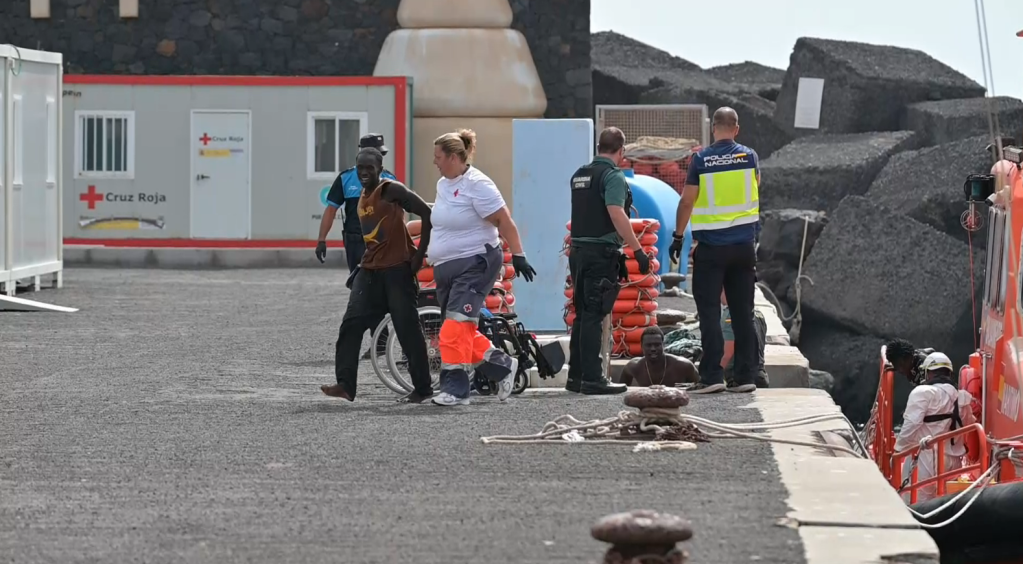
Spanish rescue services brought 165 migrants to shore off one of the smallest of the Canary Islands archipelago, El Hierro earlier this week. The rescue comes in the wake of hundreds of "tragic maritime incidents," in which at least 144 migrants are believed to have died or remain missing off the Mauritanian coast, at the start of the journey towards the Canary Islands.
Spanish rescue services rescued 165 migrants near the island of El Hierro earlier this week, part of the Canary Islands archipelago in the Atlantic Ocean. One woman, however, was reported to have died on the journey. According to the regional Spanish news portal Canarias7, the woman was reported to be "middle aged."
Members of the emergency response teams told the EFE news agency that one baby rescued during this mission remained in a critical condition. In all, 13 minors were reported to be on board, of which four were babies between five and seven months old. 42 women in total were on the boat.
The infant was taken by helicopter to a hospital on Tenerife, another island in the Atlantic archipelago, while 14 of the evacuees were lifted to hospital on El Hierro to receive medical attention.
Canarias 7 stated that according to the migrants' account, they made an eleven-day journey from Banjul (Gambia) and there were people from Gambia, Senegal, Mali and Guinea-Conakry on board the vessel.
Around 150 migrants of those on board were taken to the Temporary Foreigners Care Center CATE in San Andrès and cared for by members of an NGO collective, known as "Corazón naranja – Ebrima Sonko".
Still missing
According to the UN refugee agency UNHCR, 144 people remain missing after a rescue mission at sea last weekend on the western African part of the route.
The group of migrants had reportedly departed from The Gambia, heading for Spain's Canary Island in a gruelling journey that left them stranded at sea for 25 days. The small vessel is believed to have run out of fuel, leaving those on board without food or water.
In that group, only 37 people were confirmed to have been taken to safety ashore, according to Mauritania's Ministry of Fisheries. Only one body has been recovered so far.
Among those rescued were two Senegalese children, who are believed to have lost all of their family members during the perilous crossing.
UNHCR spokesman Matthew Saltmarsh said that these "refugees and migrants were reported dead or missing after attempting the perilous sea journey from West Africa towards Europe, highlighting the continued human cost of these dangerous routes."
Read AlsoFamilies of lost migrants: Waiting for answers that may never come
MSF: 'No one should have to ensure this suffering'
In response to this latest tragedy, Doctors Without Borders (MSF) is called for strengthening search-and-rescue mechanisms along the route to the Canary Islands.
"The deaths of these people must not be met with silence; we call on governments and authorities to place the preservation of human life at the center of their migration policies," said Fouzia Bara, the head of MSF's migration program.
"One of the survivors said she had watched her sister die right before her eyes. No one should have to endure such suffering while seeking safety or dignity," she added.
Almost 350 people rescued off Mauritania
Meanwhile, there were two successful rescue operations in roughly the same maritime region:
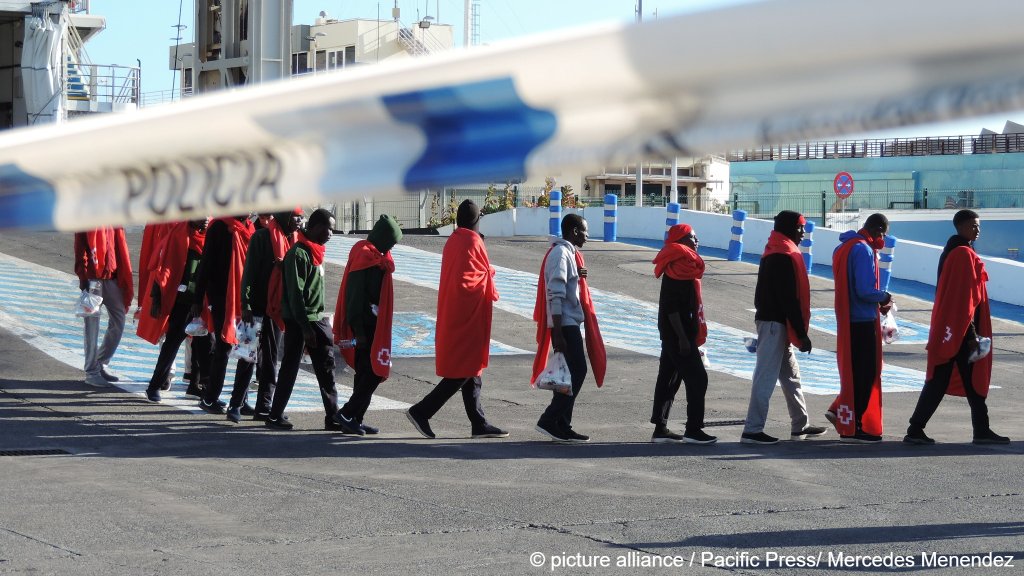
A rescue operation on July 18 saw 179 people brought to safety to the northern Mauritanian port city of Nouadhibou, which bordered the Western Sahara region, administered by Morocco. That migrant boat is believed to have departed from Senegal, according to the dpa news agency.
Another mission, a few days earlier on July 14, resulted in the rescue of another 170 people; however, one person is believed to have died on that vessel prior to the rescue. This group of migrants was also taken to Nouadhibou.
Nearly all migrants from the two rescues were reported to originate from sub-Saharan Africa.
Read AlsoMauritania rescues 216 migrants as 144 reported dead or missing on Atlantic route
Thousands of deaths on Atlantic route
Saltmarsh also stressed that "the Atlantic route from West Africa towards the Canary Islands remains one of the world's deadliest mixed movement corridors due to long distances, unpredictable ocean conditions, unseaworthy overcrowded boats and limited access to timely rescue."
These recent rescues "highlight the persistent risks faced by refugees and migrants attempting to reach Europe, many of whom are embarking over 2,000 kilometers away from their intended destination," he added.
With Mauritania receiving additional funds from Spain, the number of migrant interceptions at sea has risen off the West African nation's coast.
According to UNHCR, a total of 2,147 migrants have been rescued to date in 2026 during a total of 17 rescue and disembarkations in Nouadhibou and the capital, Nouakchott.
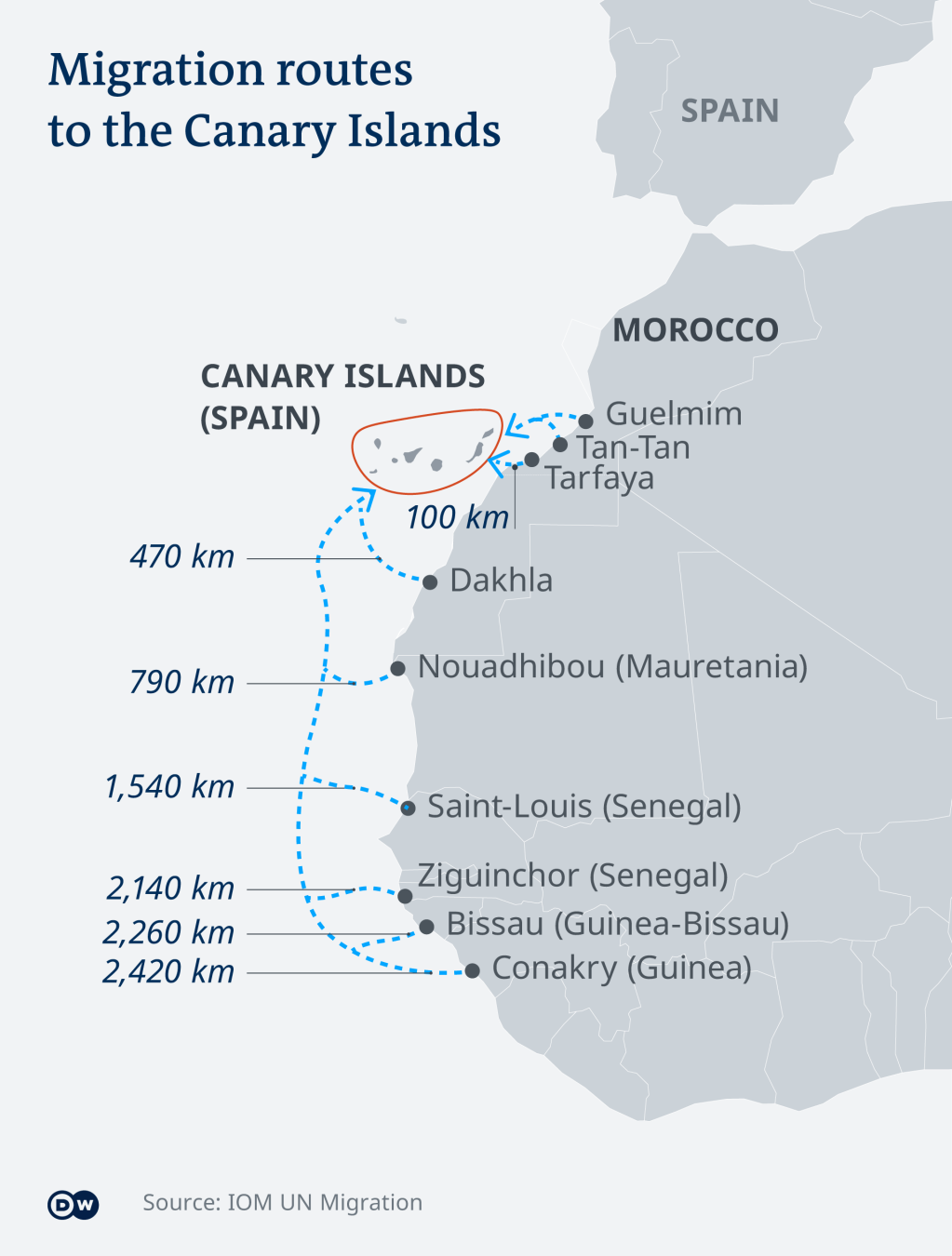
However, it is unclear how many migrant boats have sunk in Atlantic waters during the same period; according to the IOM, 168 people were confirmed to have died prior to the latest tragedy — though the real number of unreported deaths is thought to be significantly higher. According to data from the Spanish migration NGO Caminando Fronteras, more than 1,300 migrants are believed to have died while trying to reach the Spanish coast in the first five months of 2026.
Caminando Fronteras data also highlights that last year, 3,000 people are thought to have died or gone missing on this route last year, with a total of more than 10,000 migrants thought to have drowned on the Atlantic route in 2024.
Read AlsoOver 3,000 people died while trying to reach Spain in 2025
UNHCR highlights that these deaths continue to take place at sea at "alarming levels, with many incidents occurring far from public attention and often resulting in entire boats vanishing."
At the same time, the number of irregular arrivals on the shores of Spain's Canary Islands has fallen notably in the past 12 months, according to UN information; only 4,400 people have managed to reach the Canary Islands this year, marking a decrease of 60 percent compared to the previous year.
Read AlsoMore deaths, fewer arrivals: Migration to Europe is becoming increasingly lethal
with AFP, dpa, EFE