
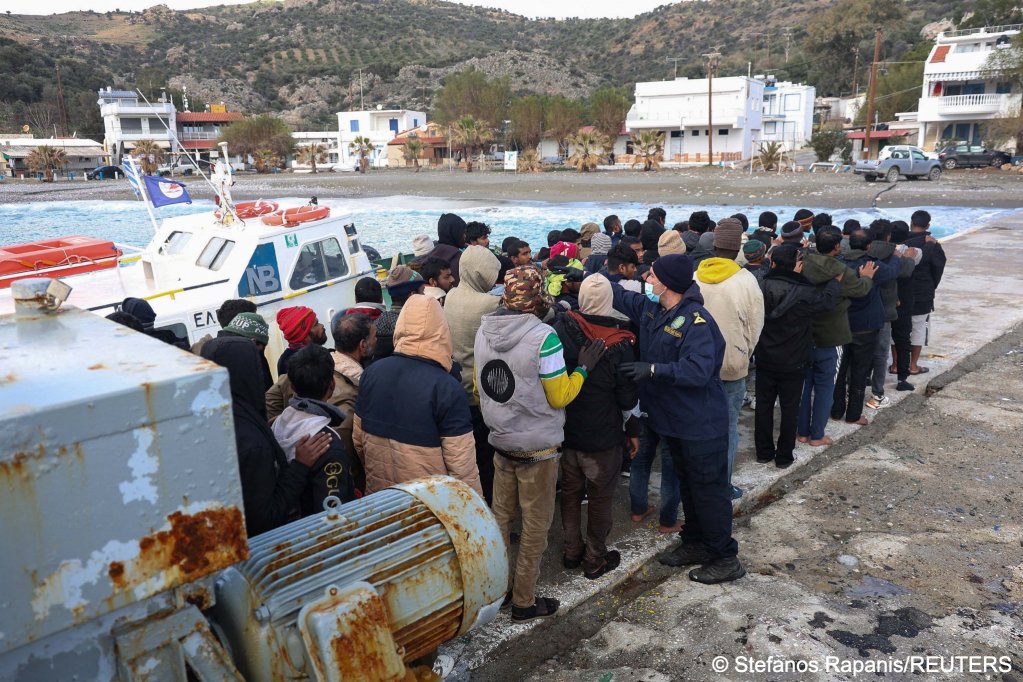
In an overnight operation, the EU border agency Frontex saved more than 40 people near the coast of Crete. The southern Greek island remains the biggest gateway for irregular migrants trying to reach the EU member state.
A Frontex vessel rescued 42 migrants in waters south of Crete, according to local authorities.
The Greek news platform ekathimerini reported (Friday, July 24) that a Frontex aircraft had spotted the group of irregular migrants about 100 kilometers away from the island's port of Kaloi Limenes.
It is unclear whether the small boat was in distress at the time; however, Frontex nevertheless launched a rescue mission, asking three cargo ships in the area for assistance.
All the migrants were saved and ultimately taken to Kaloi Limenes, where they will be processed and assessed for asylum; there is no immediate information available yet on their nationalities.
Warm temperatures around the Mediterranean have led to more and more migrant boats departing towards Europe in recent weeks, with Crete remaining a prime destination for irregular entry.
Read AlsoGreek coast guard, Frontex pick up around 400 migrants from small boats in two days
Death and suffering on migrant routes
Frontex vessels routinely aid the Greek coast guard in the southern Mediterranean Sea with intercepting and rescuing migrants.
The majority of these small and typically unseaworthy vessels carrying migrants depart from the Libyan coast in North Africa, where roughly a million people from various parts of the world are hoping to reach Europe.
In addition to refugees who flee war and persecution in their home countries, there are many migrants among them who are seeking better lives and greater opportunities in Western countries.
Journeys across the Mediterranean are largely controlled by criminal gangs who engage in people smuggling and human trafficking. Migrants frequently report exploitation, violence and detention at the hands of the gangs, who often extort migrants for even more money, and exploit them for sometimes months in Libya before finally allowing them to board a boat.
Each year, thousands of people lose their lives to smugglers, not only during perilous sea crossings but also on land, with abuse and violence against migrants rife among these criminal gangs and their supporters.
Read AlsoMore deaths, fewer arrivals: Migration to Europe is becoming increasingly lethal