
The fatal stabbing of a student in Trier has renewed political pressure to deport convicted foreign offenders, including to conflict regions. But as the government pushes for tougher rules, rights advocates warn of legal limits and rising violence against migrants.
One week after a 22-year-old student was fatally stabbed on a street in Trier, the case has become a flashpoint in Germany’s ongoing debate over migration, mental illness and public safety. Interior Minister Alexander Dobrindt yesterday reiterated his commitment to deporting convicted offenders -- including to Afghanistan -- despite the absence of formal diplomatic relations with the Taliban government.
"I still consider this an absolutely necessary measure, and I will continue to push for deportations to countries such as Afghanistan," Dobrindt told reporters in Berlin on Tuesday. "Society has a clear right to expect that foreign convicted criminals be removed from the country."
His remarks came as the parents of the victim, Marius Dick, publicly appealed for political consequences, saying "something has to change in Germany" after their son was killed by a man reported to be a 22-year-old man of Afghan origin who, according to investigators, attacked him without any known motive.
Read AlsoGermany: Is the government planning to deport Afghans who have not committed crimes?
A policy response to violence
The Trier attack follows a number of other high-profile knife assaults in recent years -- in Solingen in 2024 and in Aschaffenburg in early 2025 and elsewhere -- that have repeatedly forced migration to the center of German political debate and policy. Each incident has prompted calls for stricter deportation rules, tighter weapons laws and more robust security measures, often with an eye on upcoming elections and the rising far-right Alternative for Germany (AfD).

"Such things can divide society. People will be more fearful of foreigners," one resident told AFP after the Solingen attack in 2024, capturing a sentiment now echoed in Trier. At the same time, others warn against linking migration too simplistically to violence, noting that most refugees are not offenders and that mental health, integration and social policy also play crucial roles in these kinds of crimes and possibly the prevention of them.
Read AlsoGermany: Asylum seeker denied protected status for repeated criminal violations
Push to lower threshold for deportations
Under current German law, deportation is already possible for foreign nationals who "endanger public security and order" or who have committed serious crimes, including offenses against life, physical integrity and sexual self-determination. A particularly serious public interest in expulsion exists, for example, where a person has been sentenced to at least two years in prison, or to at least one year for certain violent or sexual offenses; in such cases, deportation is generally required unless overriding protection needs apply. For less severe sentences or when someone is deemed a threat, authorities apply a balancing test that weighs the severity of the crime against the individual’s protection needs, as set out in Sections 53 and 54 of the Residence Act.
Deportations to countries like Afghanistan are currently restricted and often blocked by courts. In practice, only a small share of those ordered to leave are actually deported each year, and many remain in legal limbo for years.

As he indicated after the attack, Dobrindt wants to treat mental illness less as a barrier to removal and more as a risk factor when combined with dangerous behavior, potentially speeding up transfers from forensic psychiatric care to deportation. He is also pressing for returns to Afghanistan to be pursued more aggressively, even without formal diplomatic ties, possibly through informal arrangements with Taliban authorities.
In this latest case, the suspect, according to some press reports, may have been subject to some treatment related to his mental health, although it is not clear what, when, or potentially how much, or whether that may have had any bearing on the events. However, this may have prompted Dobrindt to speak out against the tacit assumption implied by those who want to look less at an alleged crime and more at what might have caused those actions, including at potential failings in the host societies. According to the German press agency dpa, "these suggestions, that are brought up over and over again, [that we should be helping traumatized people] we are not the region of the world responsible for all psychologically ill people and all trauma, to put it bluntly."
Chancellor Friedrich Merz’s conservative-led government coalition has already announced tougher asylum and security regulations, including limits on family reunification and plans new deportation facilities. The Trier case adds urgency to these measures and fuels the political argument for "visible action" on removals.
Read AlsoTaliban expands diplomatic presence in Germany to facilitate returns
Legal and human rights constraints
Rights groups and legal experts caution that faster, broader deportations -- especially to countries like Afghanistan -- run into hard limits under international and European law.
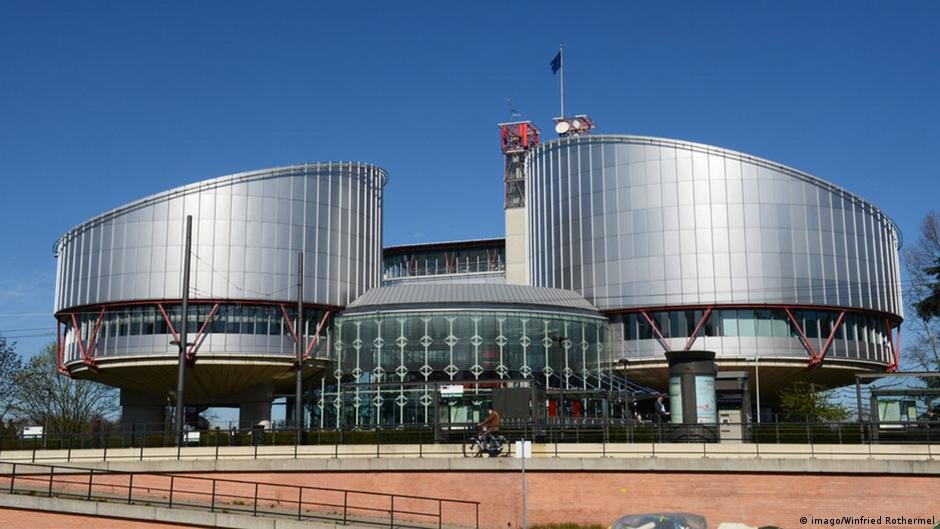
Deporting people to a war zone or an authoritarian government could potentially infringe on the principle of non-refoulement under the European Convention on Human Rights and EU asylum law, to which Germany is a signatory. Deportation is prohibited where a person faces a real risk of capital punishment, torture, or persecution based on race, religion, nationality, political opinion or membership of a particular social group.
Reports of mental illness surrounding the Trier suspect add another layer of complexity. Under German law, people with severe psychiatric disorders may be found to have limited criminal responsibility and are often placed in forensic psychiatric hospitals rather than ordinary prisons. Dobrindt’s insistence that Germany should not be responsible for the world's traumas marks a shift toward viewing such cases primarily through a security lens, rather than a medical or humanitarian one.
Critics argue this risks undermining due process and individualized assessments of risk and protection needs, stigmatizing both migrants and people with mental health conditions by linking them more tightly in public discourse, and violating international obligations if people are returned to situations where they may face serious harm.
Read AlsoGermany deports 32 Afghans to Taliban-controlled Afghanistan
Who can actually be deported?
Even with political will, operational constraints limit how many people can be removed. Many foreign offenders cannot be deported because their home countries refuse to accept them, they lack valid travel documents, or courts block removal on human rights grounds. Authorities must coordinate between local immigration registration offices, the Federal Office for Migration and Refugees (BAMF), police, and psychiatric services -- a process that is often slow and resource-intensive. Research on large-scale deportations suggests they rarely deliver significant reductions in crime or migration, and can sometimes fuel instability or violence in origin countries.
Nonetheless, the government is pressing ahead with plans to expand deportation capacity, including the Munich airport facility intended to handle up to 35,000 removals per year by 2027, up from around 300 currently.
Read AlsoMunich Airport to build migrant deportation terminal
Voices from the ground
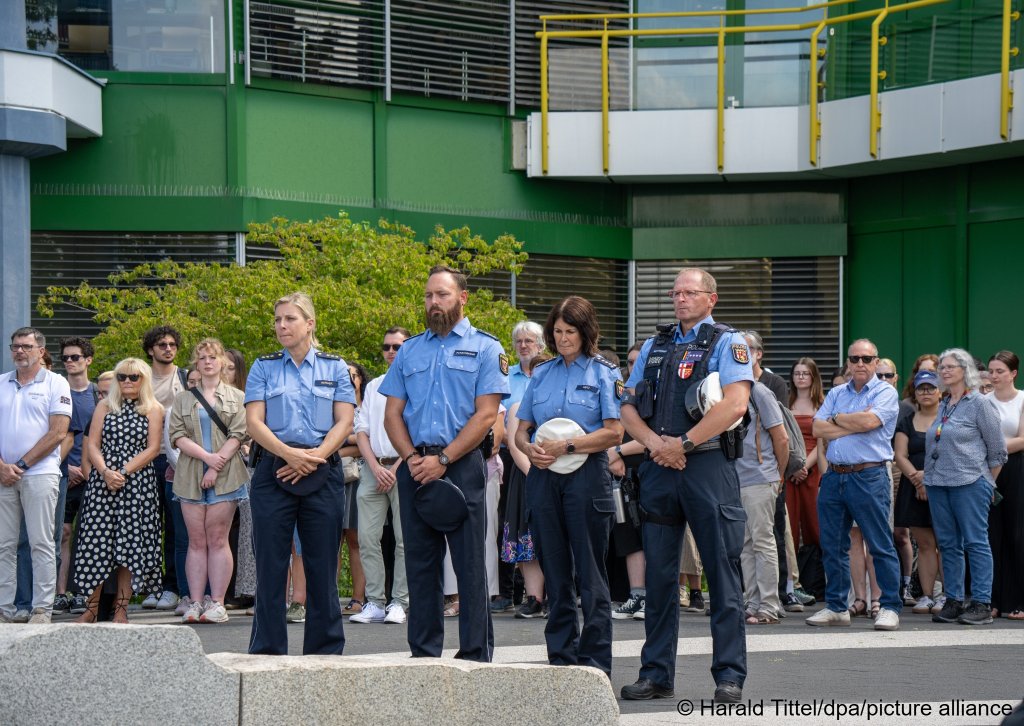
In Trier, the human cost of the attack remains palpable. Flowers and candles mark the spot on Petrisberg where Marius Dick was killed. "It feels strange and somehow unreal," said one young mother who lives nearby. "You never think something like this could happen in your city, right on your doorstep."

At the same time, some residents warn against reducing the tragedy to a simple migration debate. One bus driver, speaking anonymously, said he hoped politicians would draw consequences but cautioned against blaming the suspect’s origin "too quickly." Others, like the father of Ann-Marie Kyrath, killed in a 2023 train attack by a stateless asylum seeker, accused politicians of offering "the same platitudes" without real change.
"For me, it’s always the same perpetrator profile -- and in the end, the same platitudes from the responsible politicians. Everyone says: 'It’s unimaginable,' but no one acts," he told the German tabloid Bild.
Read AlsoStudy finds racism has grown in Germany
Rising attacks on migrants and refugees
The debate over deportations unfolds against a backdrop of record levels of politically motivated violence in Germany. According to Interior Ministry figures for 2025, authorities recorded 85,837 such crimes, the highest total since the statistics began in 2001. Right-wing extremists were responsible for 42,544 of those offenses, including 8,396 xenophobic hate crimes and 1,598 violent attacks on migrants, refugees and political opponents, which injured at least 1,146 people.
Interior Minister Alexander Dobrindt described the overall figures as a record high and said right-wing extremism remains the dominant threat. "By far the highest number of offenses were committed by right-wing and far-right extremists, demonstrating once again that the greatest danger currently stems from right-wing extremism," he told a press conference in Berlin.
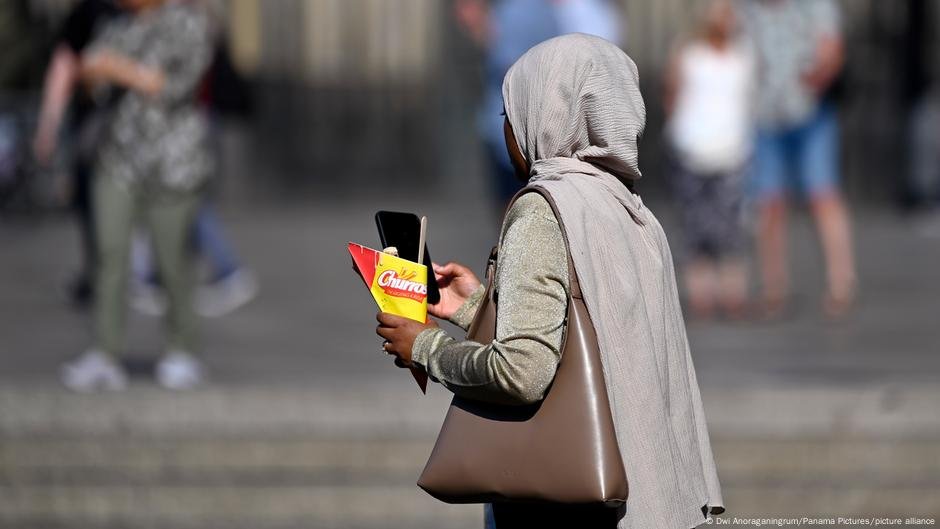
Rights groups and migration advocates say these numbers underscore the risks of a political climate in which migration is increasingly framed as a security problem. They warn that harder rhetoric on deportations and "law and order" can embolden extremists and make refugees and migrants more vulnerable to harassment and violence. At the same time, the ministry’s data also show a sharp rise in left-wing extremism, with 13,490 crimes recorded in 2025, a more than 35 percent increase from the previous year, highlighting the broader polarization around migration and security issues.
Read AlsoGermany: Racism is almost a daily reality for Muslims
High political stakes
The Trier attack arrives as migration remains one of the most divisive issues in German politics. The AfD, which campaigns heavily on anti-immigration and "law and order" issues, has gained ground in several states (some of which are due for state elections in September) and is expected to benefit from heightened security concerns. Mainstream parties, particularly the CDU/CSU, face pressure to show toughness on crime and deportations without abandoning core commitments to human rights and the rule of law.
Similarly to other states across Europe, where right-wing populists are gaining ground in the polls (including the UK, France and Italy), the AfD's predicted popularity in upcoming and important state elections is pushing the agenda on their core topics, like migration and security, towards the right across the political spectrum.
Chancellor Merz has already called for stricter border controls and faster removals after earlier attacks, framing the issue as one of "basic security" for citizens. Dobrindt’s Trier comments reinforce that line, presenting deportation as not just a legal tool but a moral obligation to protect society.
Read AlsoGermany: More than half of survey respondents in favor of full closure of the borders
A policy dilemma: security, rights, and evidence
For policymakers, the Trier case sharpens a long-standing dilemma: how to respond to rare but highly visible acts of violence in a way that protects citizens, respects human rights, and is grounded in evidence.
Supporters of this policy see it as a numbers game, arguing that deporting convicted foreign offenders -- particularly those with violent histories or serious mental illness -- shrinks the pool of potentially dangerous people and reassures the public.
However, rights advocates warn of the wider human rights implications of such policies, claiming that broad, fast-track deportations risk breaching international bans on sending people back to conflict zones -- eroding due process and further marginalizing vulnerable groups. In addition, researchers point to evidence that large-scale deportations do little to curb overall crime or migration, and can even fuel instability in the countries people are sent back to.

As Germany grapples with these tensions, the Trier attack is likely to accelerate legislative and administrative changes on deportations, even as courts, rights bodies and civil society push back where proposals conflict with constitutional and international standards.
In the coming weeks, the details of any new laws or policies -- and how they are applied in cases like Trier -- will determine whether this moment becomes a turning point in German migration policy or another episode in a recurring cycle of tragedy, outrage and partial reform that critics say risks eroding human rights more than it protects citizens.
Read AlsoRefugees and migration: Is Europe closing its doors?
With dpa